
 KOR
KOR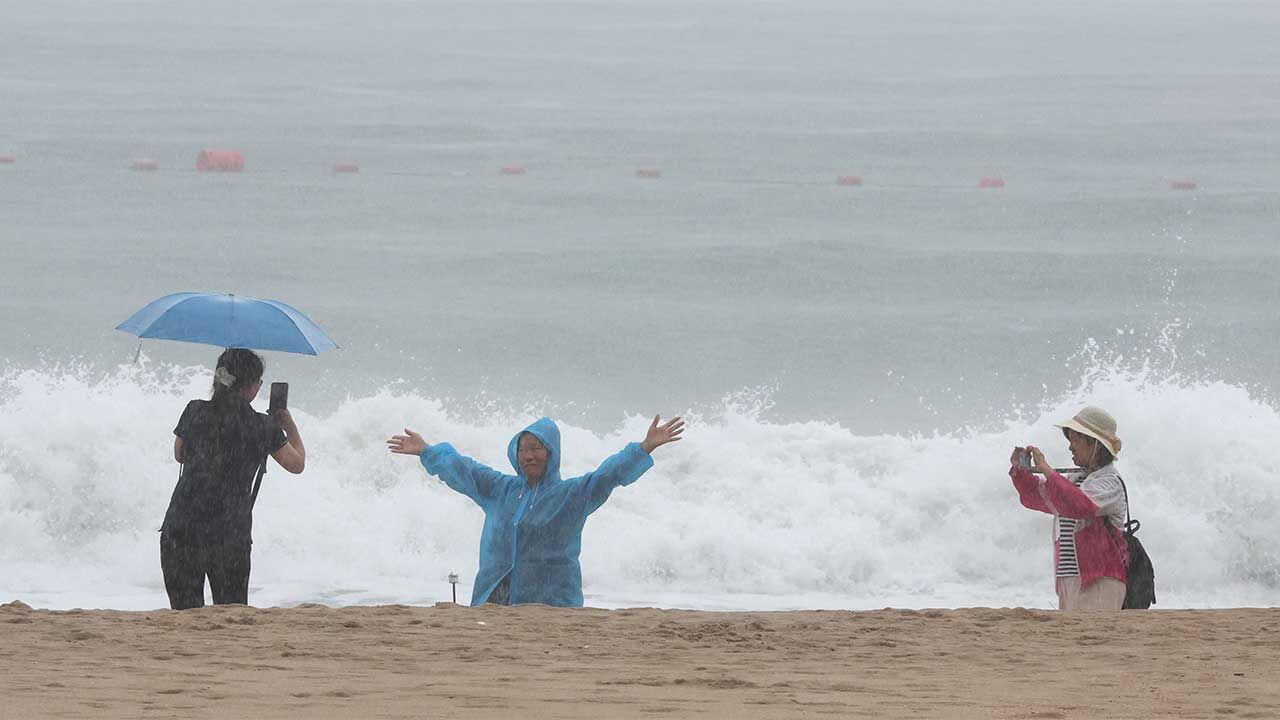
▲ Foreign tourists take photos with the sea in the background at Haeundae Beach in Busan on August 28, when rain fell across most parts of the country.
Experts have suggested that to translate the heightened global interest in South Korea driven by the spread of K-culture into regional tourism, unique local contents must be fostered and private investment revitalized.
The Federation of Korean Industries (FKI) and the National Assembly Tourism Industry Forum jointly hosted a seminar on "Improving Tourism Laws and Systems to Boost Regional Economic Vitality" at the National Assembly Library today (September 22).
Kim Chang-bum, executive vice chairman of the FKI, said in his opening address, "As of the second quarter of this year, the regional visitation rate for foreign tourists stood at 34.2%, which is an improvement from the previous year, but still two-thirds remain concentrated in the Seoul metropolitan area."
He went on to emphasize that the global craze for K-culture, including food, films, music, and beauty, must be connected with unique local tourism resources.
Shin Hak-seung, a professor in the Department of Tourism at Hanyang University, introduced cases such as Naoshima, the Snow Country tourism zone, and Ghibli Park in Japan during his presentation, advising a transition toward stay-over tourism that combines unique local contents with private investment.
To achieve this, he proposed creating investment funds for local content development, designating tourism regeneration special zones in depopulated areas, offering tax benefits for investments in stay-over tourism infrastructure, and making roadmaps for the post-use of international event facilities mandatory.
He also stressed that tourism performance should be evaluated qualitatively based on length of stay and spending per capita, rather than simply by the number of visitors.
Chae Ji-young, a senior research fellow at the Korea Culture & Tourism Institute, noted, "Revitalizing regional tourism should not be a matter of simply replicating K-pop arenas, large concerts, and content facilities promoted in Seoul," calling for differentiation by utilizing each region's unique assets such as local industries, food, and culture.
Citing Japanese tourism as an example, she emphasized, "We must spread interest in South Korea out to the regions so that each area becomes a tourist destination in its own right."
During the subsequent discussion, opinions emerged that a tourism ecosystem centered on private enterprises, such as local travel agencies and tourism startups, should be established, moving away from administration-led practices.
Other proposals included turning regional airports into hubs for attracting foreign tourists and expanding cooperation with global online video services.
(Photo: Yonhap News)
※ Please note: This article was translated by AI and may contain errors.


 Video News
 Video News
 Video News
 Video News
 Video News