
 KOR
KOR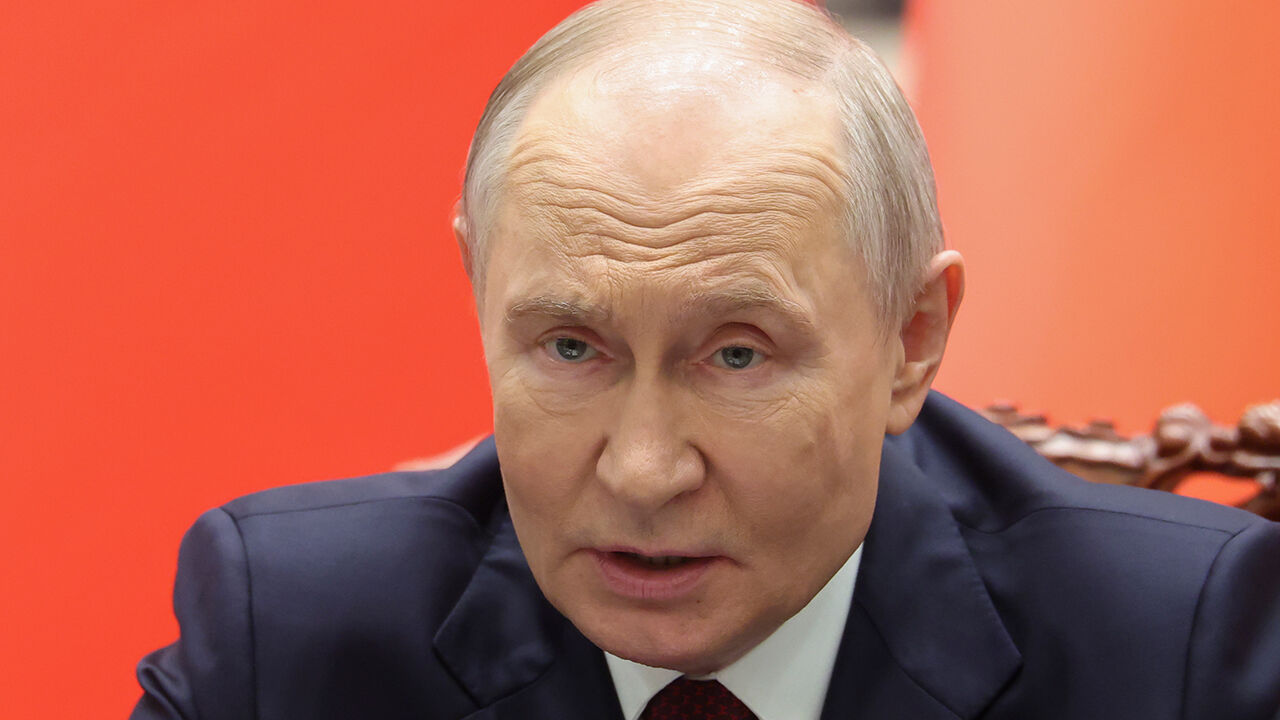
▲ Russian President Vladimir Putin
Voter turnout exceeded 50 percent in Russia's first general election since the country launched its so-called special military operation in Ukraine.
With projections showing that the ruling United Russia party achieved a landslide victory with a majority of votes, Russian President Vladimir Putin's grip on political power is expected to become even more solidified.
According to the Russian Central Election Commission (CEC) on the 21st (local time), the three-day general election voting concluded around 9 p.m. the previous day, with a preliminary voter turnout of 56.66%, Tass news agency and other outlets reported.
This figure surpasses the final voter turnout rates of the previous three elections, which were 54.81% in 1993, 47.88% in 2016, and 51.72% in 2021.
The CEC announced that with over 95% of the votes counted, United Russia was in the lead with 57.83% of the vote.
Ella Pamfilova, Chairperson of the CEC, stated, "United Russia is expected to secure 355 out of the total 450 seats," adding, "This is the highest number of seats United Russia has ever secured in the State Duma since participating in parliamentary elections."
Meanwhile, the Communist Party of the Russian Federation is expected to enter parliament through proportional representation with 13.81% of the support, followed by the Liberal Democratic Party of Russia and the New People party with 8.98% and 7.96%, respectively.
The CEC explained that final results will be released after the 25th.
Dmitry Medvedev, leader of United Russia and a close confidant of President Putin who serves as the Deputy Chairman of Russia's Security Council, evaluated that the party achieved good results, stating, "The Russian people still maintain their trust in United Russia."
This general election is the first to be held since Russia began its military action in Ukraine in February 2022.
It drew particular international attention as it marked the first instance of residents in territories occupied and annexed by Russia participating in a general election, including the Donbas region in eastern Ukraine and Novorossiya, which refers to the Black Sea coastal areas in southeastern Ukraine.
Voter turnout rates in the four occupied regions were 81.62% in Donetsk, 79.33% in Luhansk, 74.61% in Kherson, and 79.39% in Zaporizhzhia.
If the ruling United Russia and other pro-government forces maintain an overwhelming majority of seats as a result of the vote count, President Putin's grip on political power is expected to be further consolidated.
Galina Katyushchenko, head of the election commission in the Zaporizhzhia region, claimed that the relatively high voter turnout was due to "the great interest shown by local residents in the historic State Duma election held for the first time in our region."
The previous day at dawn, Ukraine launched about 1,600 unmanned aerial vehicles (UAVs/drones) targeting Russia as it held the general election.
CEC Chairperson Pamfilova claimed that a total of over 100 million malicious cyber access attempts against the election system were blocked, and noted that there was an unauthorized access attempt to the communication network using artificial intelligence (AI) technology on the afternoon of the 18th, which she suspected was the work of Ukraine.
At the same time, she emphasized, "There were powerful attacks, but none were successful."
The Associated Press reported, "The Kremlin aims to demonstrate public support for the war and secure legitimacy for its actions through this parliamentary election, the first held since the full-scale invasion of Ukraine," forecasting that the Kremlin's grip would become even stronger.
Analysts suggest this is due to tight control by the ruling powers, such as the Yabloko party, Russia's only official anti-war party, being disqualified from fielding candidates for party-list proportional representation following a Supreme Court decision last month, making its entry into parliament virtually impossible.
It was reported that not only the Yabloko party but even election observers belonging to the Communist Party, which has raised cautious criticisms of Kremlin policies, were denied entry to multiple polling stations.
Leonid Volkov, a close associate of the late Russian opposition figure Alexei Navalny, raised questions after hearing news that paper ballot issuance systems malfunctioned at some polling stations that day, leading to demands for electronic voting via machines, and urged voters on X (formerly Twitter) to "demand paper ballots."
Nikolai Rybakov, leader of the Yabloko party, visited a polling station in St. Petersburg and performed a protest against the election authorities' guidelines by displaying a ballot paper with the words "For Freedom" written in large letters to reporters.
(Photo: Getty Images)
※ Please note: This article was translated by AI and may contain errors.


 Video News
 Video News
 Video News
 Video News
 Video News