
 KOR
KOR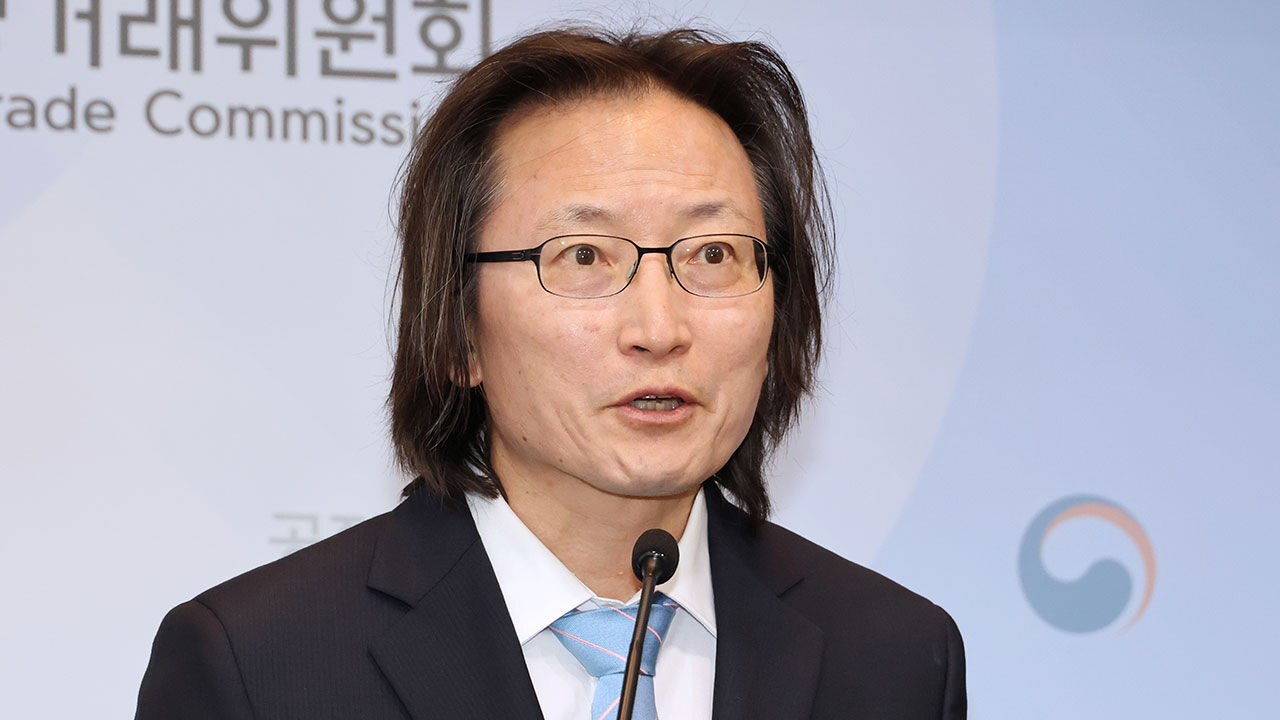
▲ Fair Trade Commission Chairperson Joo Byung-ki answers questions regarding pending issues during a press conference with beat reporters held at the Government Complex-Sejong in Sejong City on the 21st. (Photo: Yonhap News)
Fair Trade Commission Chairperson Joo Byung-ki stated today (the 21st) that the commission is discussing measures with relevant ministries to facilitate the entry of new companies into the defense materials market.
Chairperson Joo made the remarks during a press conference marking his first anniversary in office held at the Government Complex-Sejong this morning, saying, "In the second half of the year, we are pursuing regulatory improvements in the defense industry sector, which has been structurally restricted from competition due to the unique nature of national security."
He added, "We will improve the current situation where a small number of designated companies monopolize the supply of specific defense materials through the defense materials and defense contractor designation systems," and noted that the commission will strengthen review procedures regarding whether specific items need to be maintained as defense materials.
Regarding a question on whether the commission is promoting the entry of new operators due to concerns over a monopoly after Hanwha Group became the second-largest shareholder of Korea Aerospace Industries (KAI), Chairperson Joo replied, "In the case of the Hanwha-KAI case, the public sector is the major shareholder."
At the same time, he said, "We will monitor other domestic defense companies to ensure they do not abuse their monopolistic positions."
He also added, "While it is desirable for major defense conglomerates to secure global competitiveness and stand shoulder to shoulder with foreign companies for the sake of the national economy, it is correct to continuously monitor, check, and sternly sanction unfair trade practices with partner companies within the domestic supply chain."
In addition, the Fair Trade Commission's investigative bureau, once dubbed the "grim reaper of the business circles," will be revived next month as the "Focused Investigation Planning Team" 21 years after its abolition.
Chairperson Joo stated, "We will actively utilize the investigative capabilities of the newly launched 'Focused Investigation Planning Team' starting on the 1st of next month (October) to swiftly and intensively inspect unfair practices in livelihood-sensitive sectors tied to the daily lives of the public."
He noted, "However, strictly cracking down on unfair practices in the field is not enough," adding, "Fundamental institutional improvements that change the 'rules of the game' itself must be backed so that the disadvantages resulting from violating the law outweigh the gains made by breaking the rules."
Regarding the first cases and main missions to be handled by the Focused Investigation Planning Team, he answered, "Collusion cases targeting livelihood prices in monopolized sectors are critical issues that the Focused Investigation Planning Team must focus on."
He added, "Collusion on raw materials utilized across the overall economy, such as flour and sugar, is an area that deserves sufficient attention," and noted that the team will also look into complex cases such as the abuse of market-dominant positions and the utilization of artificial intelligence (AI).
Furthermore, Chairperson Joo explained that in the case of the Treasury bond interest rate collusion case, deliberations across three full commission plenary sessions have been completed, and the commission plans to reach a consensus shortly.
He said, "We will carefully review the complex characteristics of Treasury bond bidding-related systems and the significant impact that Treasury bond interest rates, as benchmark rates, have on the financial market and the overall national economy."
Additionally, regarding the corporate combination between Naver and Dunamu, he noted that concerns over complex restrictions on competition have been raised across 10 related markets as a business combination between dominant platforms in both search, simple payment, and virtual assets sectors, and added that the review will be wrapped up swiftly so that deliberations can take place within the year.
He stated, "We are accelerating the investigation into petroleum price collusion by refiners, which is directly linked to the public's livelihood and prices, to wrap it up by October and decide whether to initiate deliberation procedures."
Starting October 1st, an Economic Analysis Bureau will also be launched with a scale of 37 personnel in accordance with an organizational restructuring.
Chairperson Joo said, "For the first time in the FTC's history, a bureau-level Economic Analysis Bureau on par with advanced competition authorities such as the United States, the United Kingdom, and the European Union is being born," adding, "Econometric analysis will go beyond proving illegality to play a core role in enhancing the precision of recovering unjust enrichment and calculating fines to guarantee the effectiveness of sanctions, and further empirically analyzing the practical effects that corrective measures have on the market."
Mentioning the FTC's sanctions and issuance of price redetermination orders in the first half of this year amounting to 20 trillion won in food collusion cases such as flour and starch sweeteners, he said, "Once the Economic Analysis Bureau is launched, we will be able to utilize higher economic analysis capabilities to post-verify and monitor whether such sanctions actually lead to the recovery of competitive price levels prior to collusion in the actual market."
He emphasized, "We will grow the Economic Analysis Bureau into a think tank equipped with the highest level of expertise both internally and externally."
(Photo: Yonhap News)
※ Please note: This article was translated by AI and may contain errors.




