
 KOR
KOR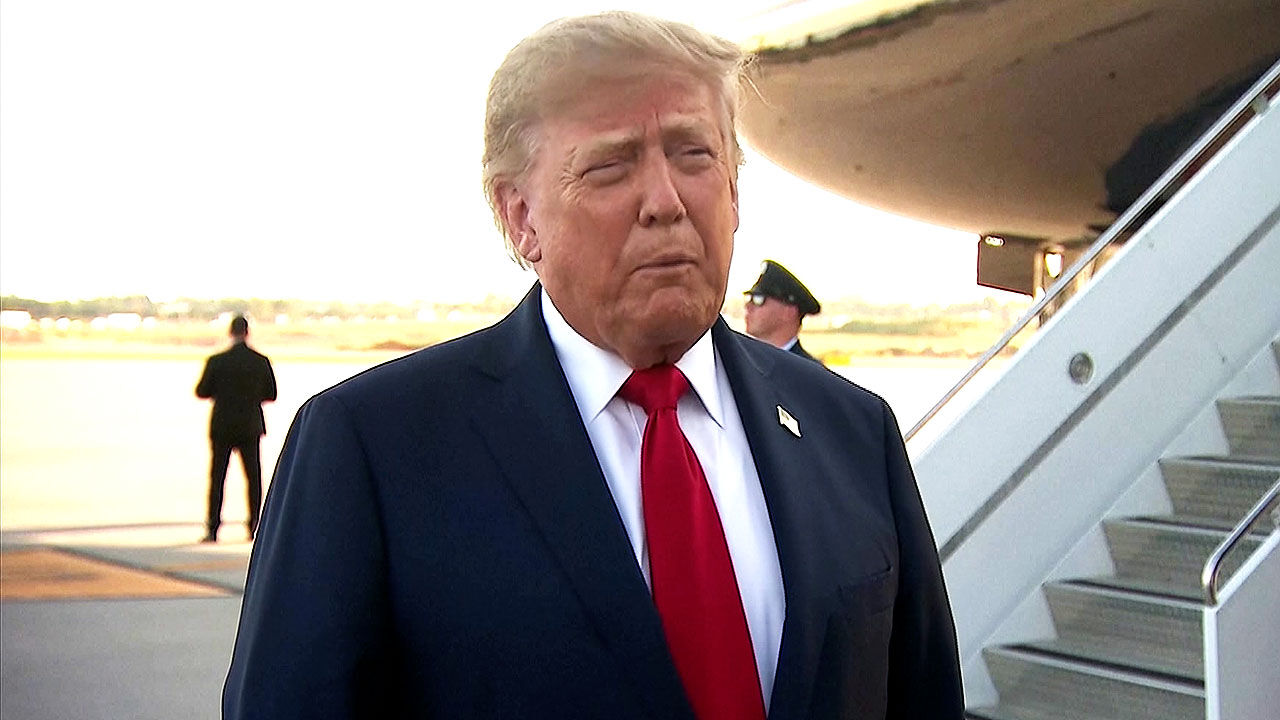
▲ U.S. President Donald Trump
Concerns over a renewed armed conflict in the Middle East are growing as U.S. President Donald Trump has raised the possibility of a massive strike against Iran.
President Trump reportedly said in a phone call with a Fox News reporter on the 20th local time, "The question is when to blow the whole country away," adding, "They had better behave."
President Trump also stated that he is in the stage of making decisions regarding Iran, noting, "Something very big will happen in the not-too-distant future."
However, he reportedly also put forward economically choking Iran and reaching a deal as viable options.
As the U.S. weighs its options, ranging up to a war of annihilation, Iran has poured out hardline remarks declaring that it will not bow.
The Central Headquarters of the Iranian Armed Forces said in a statement, "The U.S. has decided to resume its actions against Iran once again," warning countries in the region not to side with the U.S.
The Islamic Revolutionary Guard Corps (IRGC) went a step further, warning that if the U.S. actually carries out an attack, all U.S. military bases in the Middle East will become targets of retaliatory strikes.
Iran emphasized that the scope of retaliation could expand even to U.S. naval forces in the Indian Ocean.
The U.S. Department of State issued a new security alert for U.S. citizens staying in the Middle East, urging extreme caution by stating, "There is a possibility of unexpected tension escalation."
President Trump cut short his weekend schedule visiting the presidential retreat, Camp David, and returned to the White House.
This places the region in a situation where the repeated patterns of attacks, retaliation, and counter-retaliation that have occurred several times since the outbreak of war on February 28 of this year are poised to re-emerge.
This escalation of tensions comes amid turmoil in which the Iran-backed Houthi rebels in Yemen attacked Saudi Arabia, setting fire to oil tanks in the capital city of Riyadh and causing a succession of flight cancellations.
The Houthis have recently taken control of strategic ports and areas along the Red Sea coast, expanding their leverage over the Bab el-Mandeb Strait, the gateway to the Red Sea.
With Iran effectively blockading the Strait of Hormuz and now the Bab el-Mandeb becoming unstable, concerns over the Middle East crude oil supply chain are mounting.
Saudi Crown Prince Mohammed bin Salman reportedly asked President Trump twice directly to launch strikes against the Houthis, but was refused.
With the U.S. already facing mounting burdens from the war with Iran ahead of the midterm elections in November, Washington remains cautious about deploying additional military forces to Yemen.
While forecasting an expanded war with the U.S., Iran is keeping the door open for a diplomatic solution on one hand.
Mohsen Rezaee, Secretary of Iran's Supreme National Security Council (SNSC), said in an interview with Al Jazeera that conditions to resume negotiations aimed at ending the war with the U.S.—including ending the war on all fronts, unfreezing Iranian funds, and lifting maritime blockades—have been conveyed to the U.S. through a mediator.
This is interpreted as an intention to revive the embers of a ceasefire memorandum of understanding (MOU) that was signed by the U.S. and Iran last June but has since become defunct.
As Saudi Arabia came under Houthi attack, the Mecca Joint Defense Pact concluded last month between Saudi Arabia, Turkey, and Pakistan has also been put to the test.
The pact contains provisions stipulating that if any of the three nations suffers an armed attack, it will be regarded as an attack on all three.
While Turkey and Pakistan have drawn the line against actual military intervention for now and are placing weight on a diplomatic solution, the possibility of the two nations joining the war is being discussed if the conflict between Saudi Arabia and the Houthis intensifies, which could drive regional tensions to a peak.
With a dual shock hitting the global energy supply chain—first the Hormuz and now the Bab el-Mandeb Strait—international oil prices are fluctuating.
However, as of the morning of the 21st, Korean time, Brent crude fell 2.4% to trade at 101.4 dollars per barrel and West Texas Intermediate (WTI) fell 1.3% to 94.83 dollars per barrel as investors focused on the possibility of a recovery in Saudi crude oil exports.
Amid escalating tensions, all eyes are on the 81st United Nations General Assembly opening in New York, U.S., starting on the 22nd.
This is because both President Trump and Iranian President Masoud Pezeshkian are scheduled to attend the UN General Assembly.
President Trump has left open the possibility of a meeting with President Pezeshkian.
However, Iran has reportedly contacted the U.S. mainly through mediators and remains cautious about direct negotiations with the U.S. this time as well.
During the UN General Assembly, President Trump also plans to meet with leaders of Gulf nations, including Saudi Arabia, the United Arab Emirates (UAE), Qatar, Bahrain, Kuwait, and Oman.
Ultimately, this UN General Assembly is expected to serve as a diplomatic stage to gauge the trajectory of the Middle East crisis, ranging from the military tensions between the U.S. and Iran and Iran's revived conditions for ending the war, to the Houthi attacks on Saudi Arabia and the potential support for Saudi Arabia by Turkey and Pakistan.
※ Please note: This article was translated by AI and may contain errors.




 Video News