
 KOR
KOR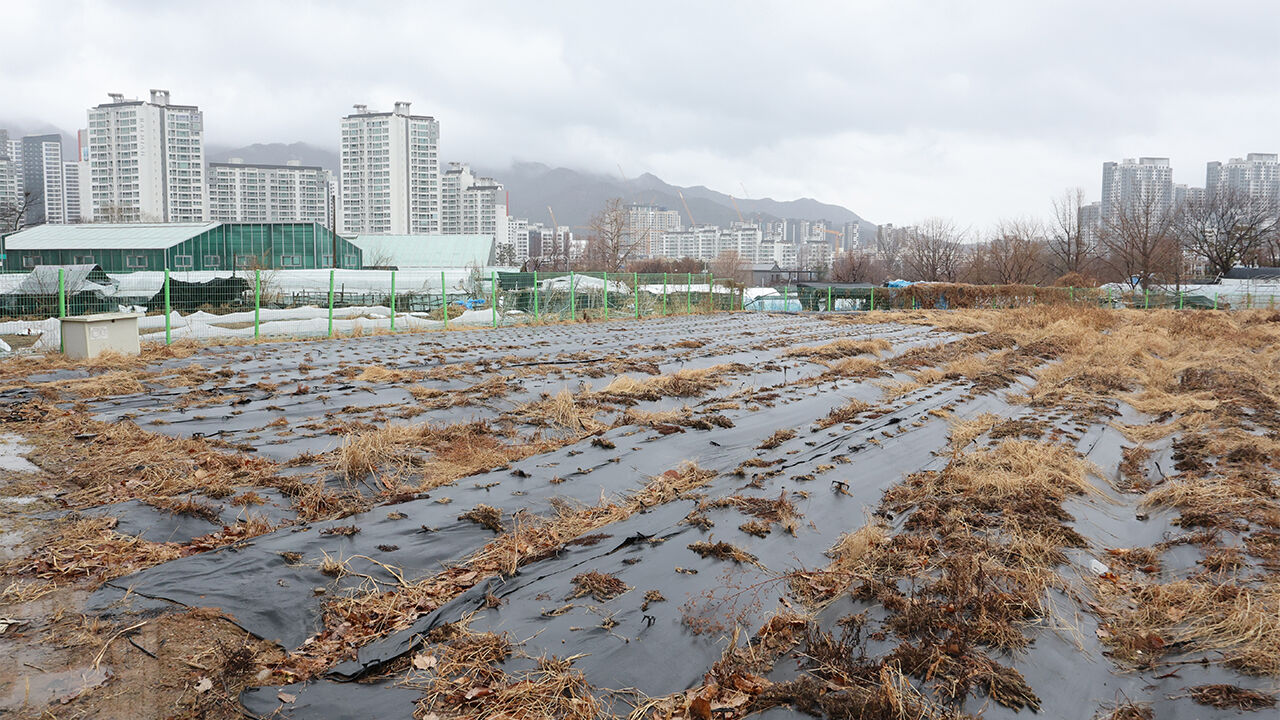
▲ Apartment complexes are visible beyond a patch of farmland in the greater Seoul area.
The government and the ruling party announced today (September 21) that farmland violations not involving speculative purposes will not be subject to blanket mandatory disposal under the ongoing nationwide farmland inspection.
Detailed relief and guidance procedures for the nationwide farmland investigation have been established to allow farmland that is difficult to cultivate directly due to inheritance or aging, as well as conventional lease practices in rural areas, to be regularized through voluntary rectification and consignment to the Korea Rural Community Corporation's farmland bank.
The Ministry of Agriculture, Food and Rural Affairs (MAFRA) explained that this measure does not change the government's existing stance, but rather clarifies the principle it has consistently maintained of distinguishing between speculation and general violations.
Since the early stages of the nationwide inspection, the government has stated that while it will respond strictly to speculation aimed at reaping market margins or development gains without any actual intent to farm, it would formulate alternative measures considering on-site realities for minor violations customarily occurring in rural areas.
However, as the investigation gained momentum, concerns were raised that elderly farmers unable to farm due to age or inheritance, tenant farmers cultivating rented land, and owners who left farmland idle because they could not find buyers could all become subject to mandatory disposal.
Criticism emerged that instead of reflecting rural realities, the nationwide farmland inspection could become a means to uniformly enforce the principle that farmland should be owned and cultivated only by farmers.
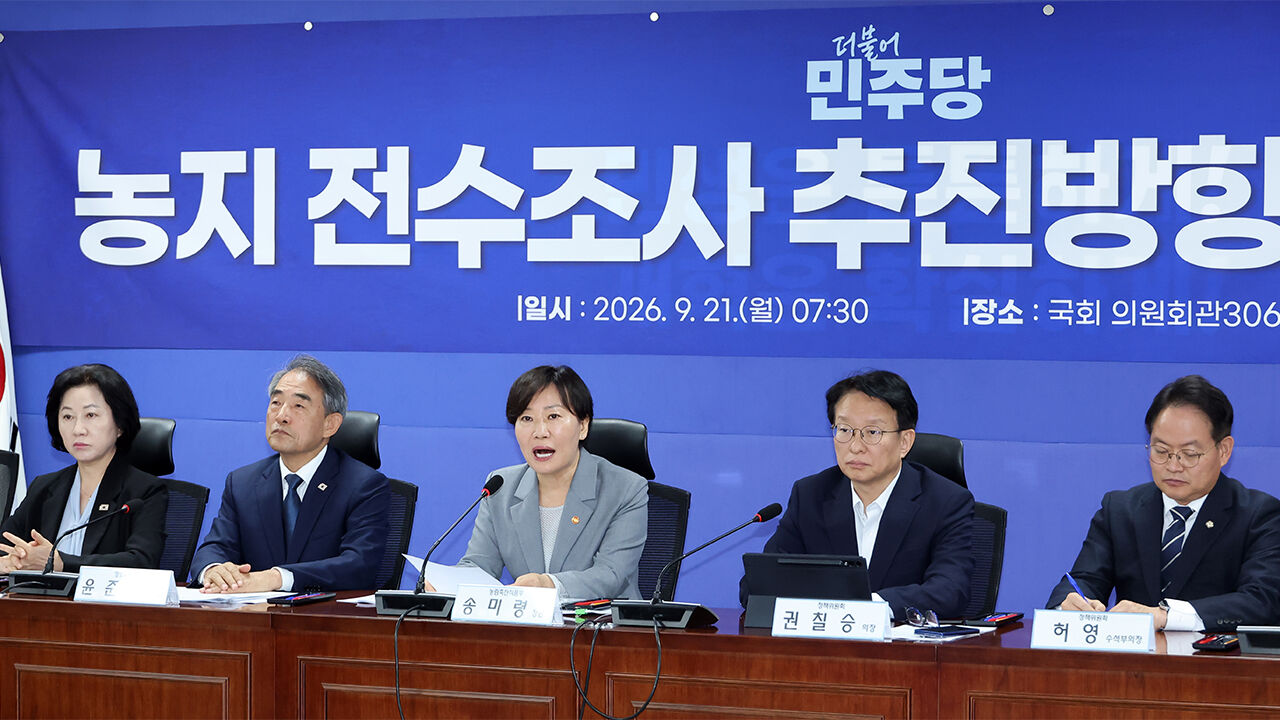
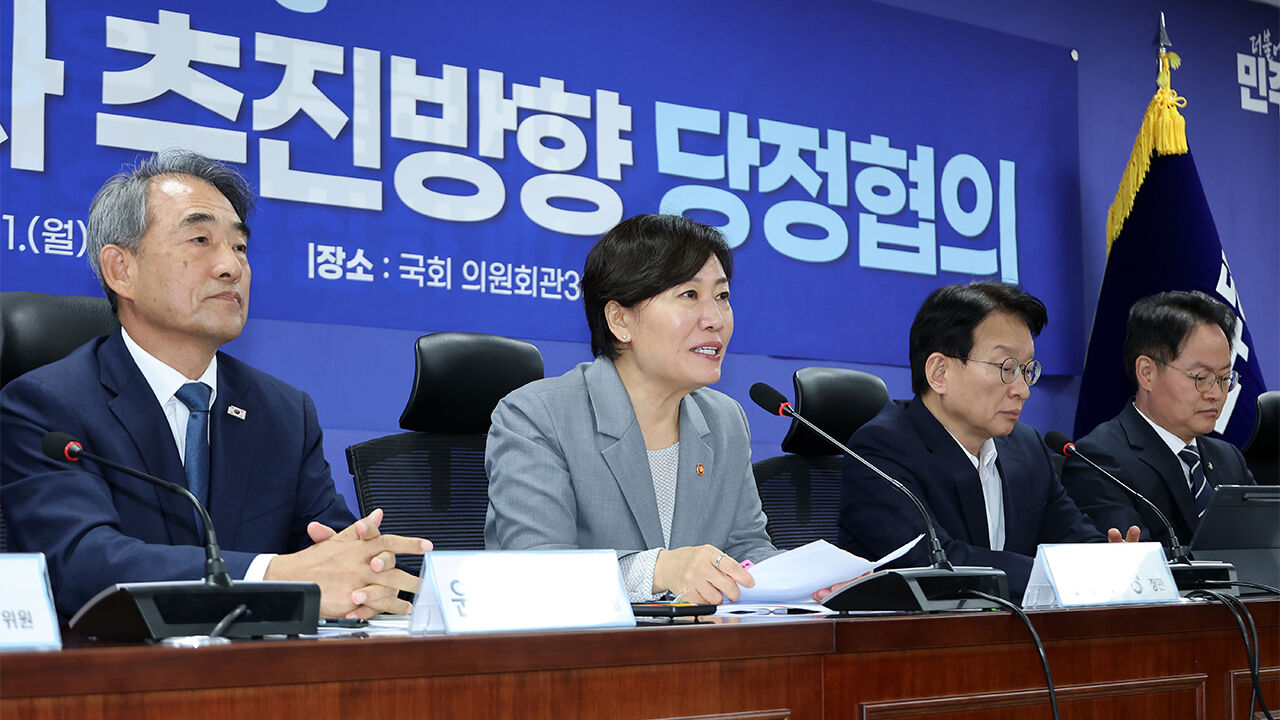
Amid growing controversy and misunderstandings, the Ministry of Agriculture, Food and Rural Affairs and the Democratic Party of Korea held a consultative meeting this morning between the government and the ruling party to unveil follow-up measures. These measures aim to dispose of farmland with clear speculative intent according to law and principles, while regularizing and legalizing farmland ownership and use in consideration of rural realities for conventional violations.
Cases explicitly designated by the government and ruling party for mandatory disposal include acquiring farmland by submitting false farming plans within land transaction permit zones followed by unauthorized fallow periods or illegal leases, acquiring farmland through agricultural corporations and engaging in the real estate business, and jointly acquiring only fractional shares of farmland through auctions followed by unauthorized abandonment or illegal leases.
Serious illegal conversions—such as changing farmland in agricultural promotion zones into non-agricultural facilities like storage yards or campsites—will also face legal actions such as restoration orders.
Since agricultural promotion zones are areas where the state has invested resources in consolidated arable land and infrastructure installation for food security, actions damaging farmland in these zones will be dealt with strictly, unlike general rural practices.
Yoon Won-sub, Director General for Agricultural Policy at MAFRA, pointed out, "Although institutional improvements to strengthen farmland acquisition and management were implemented following the 2021 public official farmland speculation scandal, speculative practices of acquiring fractional farmland shares through false farming plans targeting development opportunities persist. Such speculation undermines farmers' access to farmland and stable farming while distorting prices."
On the other hand, inherited farmland, land farmed by elderly farmers, and farmland difficult to cultivate directly due to migration away from rural areas will be excluded from blanket disposal targets provided there is no speculative intent.
First, even if fallow periods or lease violations are confirmed through this nationwide inspection, a voluntary rectification period will be granted to resolve violations through direct cultivation or leasing permitted under the Farmland Act.
Owners who find voluntary rectification difficult can have the imposition of disposal obligations suspended by entrusting the lease or management of their farmland to the farmland bank.
The intention is to manage farmland within the institutional framework without leaving it neglected while enabling existing actual cultivators to continue farming.
Conventional lease practices—such as farmers exchanging farmland with each other for convenience or a single tenant cultivating clustered village farmland—are also included in the targets for disposal suspension.
Plans will also be reviewed to permit administrative agencies to designate proxy cultivators for unregistered inherited farmland, or to allow property tax payers and others to act as representatives in entrusting the land to the farmland bank.
For shared farmland, provided there is no speculative intent, entrustment will be permitted with the consent of co-owners holding a majority of shares.
The special rectification period for protecting tenant farmers will be extended until November 15.
Farmland owned for more than three years will be excluded from supplementary inspection targets and exempt from being deemed a lease violation under the Farmland Act if entrusted for lease to the farmland bank during the inspection period.
Even in cases where illegal farmland conversion is confirmed through this nationwide inspection, retroactive legalization opportunities will be granted unless it involves serious matters such as damage to farmland within agricultural promotion zones.
Specifically, if facilities that could have been installed had prior conversion reports or permits been processed remain in an illegal state without having undergone those procedures, an opportunity to apply for retroactive conversion will be provided.
Once an application is filed, requirements will be reviewed, farmland preservation charges will be levied, and a retroactive approval method will be applied to transition the land into a legal status.
The legalization of illegal farmland conversions is being pursued for the first time in 38 years since 1988.
However, cases where the intent to violate the law is clear—such as operating a restaurant or using land exclusively for solar power generation after disguising it as a vinyl greenhouse or mushroom cultivation house—will be excluded from the targets, and a voluntary rectification period will be granted to restore those facilities to their original purposes.
For land registered as paddies or fields that has transformed into forest land over a long period so that actual conditions and land categories do not match, and where the economic utility of restoring it to farmland is low, plans will also be reviewed to change the land category to match actual conditions and exclude it from the application of the Farmland Act.
In particular, the government and the ruling party decided to enact a special act to establish legal grounds for disposal suspensions and retroactive approvals of illegal conversions.
The bill is expected to include targets and procedures for normalization and legalization, as well as requirements for disposal suspension.
Policy Director Yoon emphasized, "The current Farmland Act lacks grounds to mitigate dispositions for violations identified during investigation processes. Therefore, enacting a special act is essential. We will finalize the National Assembly resolution within this year."
In addition, the government and the ruling party plan to concurrently pursue revisions to the Farmland Act to bridge the gap between agricultural and rural realities identified in the nationwide inspection and the farmland system.
They also agreed to review budget increases at the National Assembly stage for farmland acquisition and pension projects aimed at agricultural structural reform and farmland market stabilization.
The intent is to increase support so that elderly farmers' land can be connected to young and returning farmers, and so the farmland bank can manage farmland left neglected because buyers could not be found.
Minister of Agriculture, Food and Rural Affairs Song Mi-ryung stressed, "The nationwide farmland inspection is the starting point to accurately grasp the reality of our farmland, reform the farmland system to fit reality, and revitalize agriculture and rural communities. Measures will be implemented to ensure there are no disadvantages or inconveniences for well-intentioned farmers and citizens."
(Photo: Yonhap News)
※ Please note: This article was translated by AI and may contain errors.


 Video News


 Video News
