
 KOR
KOR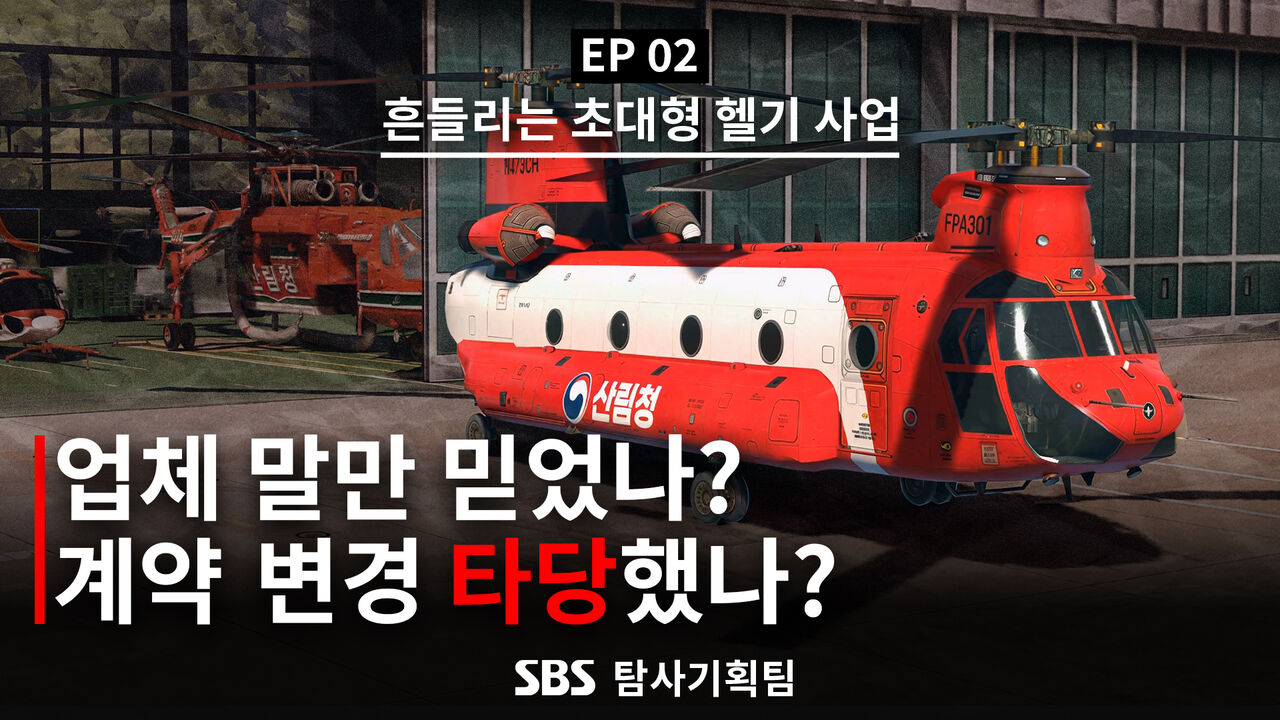
In short, the contract modification replaced "brand-new helicopters with 100% new airframes and major components" with "a plan for remanufactured helicopters, disassembled and reassembled from former military aircraft tailored for firefighting." The US contractor formalized its request for a contract change in an email sent to the Forest Aviation Headquarters on March 28, 2025—nine months before the original December 2025 delivery deadline stipulated in the December 2022 initial contract. In that email, the company acknowledged its own liability for the modification as follows:
"(The initial contract) was based on unrealistic proposals. Our decision-making process has evolved significantly since then, and those responsible for the initial decisions are no longer with the company. In addition, the initial proposal was led by an inexperienced Korean agent, which further contributed to the difficulties we encountered. (Omitted) As the project progressed, we came to realize how challenging it is to manufacture an aircraft from scratch that had been out of production for decades."
- Excerpt from an email sent by the US contractor to the Forest Aviation Headquarters on March 28, 2025
In other words, the "100% brand-new helicopter" originally contracted was also an out-of-production model, and the contractor explained that resuming new production proved too difficult. Yet this was communicated only two years and three months after the initial contract was signed. With the switch from a newly built aircraft to a remanufactured military helicopter, the crucial question was whether the original delivery deadline of late December 2025 could be met. Regarding schedule changes, the company merely stated in a single line that "items for schedule change (inspection, shipping, reassembly, training, modification) require further discussion," projecting that "if delivered within the contract period, the Korea Forest Service will be able to effectively deploy it during the upcoming spring 2026 wildfire season." No concrete evidence or further explanation was provided.
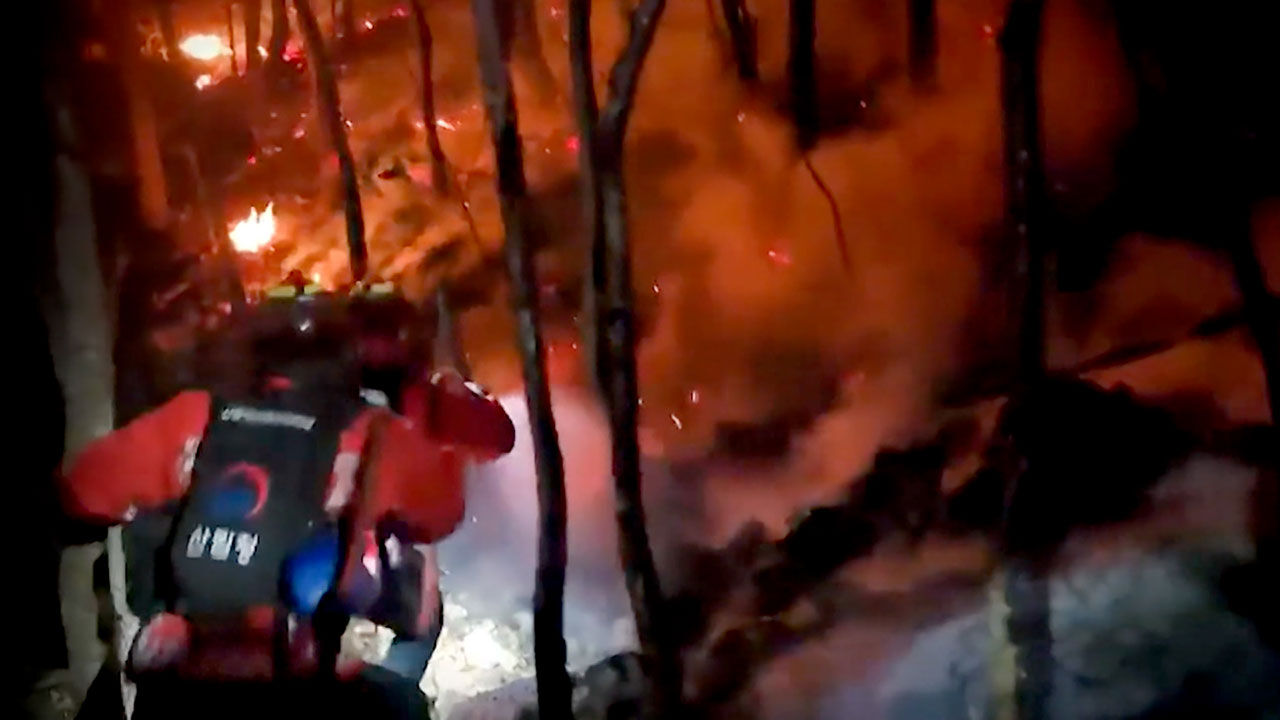
Furthermore, there was not a single mention of the "certification issue," which inevitably follows any change in aircraft type. Rebuilding a military helicopter into a civilian firefighting aircraft requires separate certification procedures from both the US Federal Aviation Administration (FAA) and South Korea's Ministry of Land, Infrastructure and Transport. Yet the contractor's formal request omitted key plans and current progress regarding this vital certification process. Aviation experts point out that aircraft certification typically takes several years. They emphasize that recertifying an aging, former military aircraft for civilian use demands significantly more time than standard cases due to rigorous safety verifications and security concerns.
Put simply, while certification had become far more complicated, making it difficult to guarantee delivery within the remaining nine months, the Forest Aviation Headquarters focused on assessing the "legal validity of modifying the contract" rather than inspecting or verifying these technical hurdles. The agency believed super-large helicopters were essential for battling major wildfires and concluded that canceling the contract was unfeasible due to a lack of alternatives. Under such circumstances, the agency should have scrutinized the validity of the contract modification far more rigorously, but it failed to do so.
First, between April and June 2025, the Forest Aviation Headquarters spent two months seeking preliminary legal reviews from the Board of Audit and Inspection (BAI) and the Ministry of Economy and Finance to determine whether switching aircraft models at the contractor's request was permissible under the Act on Contracts to Which the State Is a Party. It omitted the critical certification issue from these consultations. While consulting the BAI, the agency asked, "Should contract termination be pursued if contract modification due to contractor liability is impermissible, thereby making performance impossible?" Yet, to the finance ministry, it presented the situation differently: "The manufacturer proposed modifying specifications and delivering a remanufactured helicopter meeting or exceeding the original performance specifications, as new production was impossible due to force majeure." The agency thus rebranded the contractor's admitted fault as force majeure during its preliminary legal review.
Without knowing the progress, timeline, or outlook of the certification procedures, both the BAI and the finance ministry replied that modifying the contract was legally possible. However, they attached caveats. The BAI noted, "While inspecting and accepting remanufactured helicopters is reasonable when comprehensively weighing economic and public interest aspects, logical justification centered on public interest must be reinforced, as criticism from the National Assembly and media may arise." The finance ministry warned, "Adjustments to the contract amount resulting from changes in contractual terms should be separately reviewed, and this response carries no legal binding effect."
Relying on the response that it was "legally possible," the Forest Aviation Headquarters held internal meetings and convened a review committee on July 1, 2025, which included outside experts (seven internal members, five external members). The agency cited the rationale: "Although internal reviews were conducted regarding the state contract act, economic feasibility, and public interest value, we ultimately wish to consult aviation experts to gather valuable opinions and decide the policy direction" (remarks by the Head of the Forest Aviation Headquarters at the committee meeting). During this meeting, outside committee members raised persistent questions regarding whether the delivery deadline could be met, whether safety could be guaranteed, and whether the necessary certification processes could be successfully completed. Officials from the Forest Aviation Headquarters essentially responded that "because it is safe and can meet the delivery timeline according to the plan, it can be deployed during the spring 2026 wildfire season." When pressed on the certification outlook, officials offered no concrete evidence or documentation, merely relaying the contractor's claim: "We are in continuous communication with the manufacturer regarding the certification schedule, and the current plan is to obtain FAA certification in November, followed by domestic Type Certificate Validation (TCV) in December."
An external member who attended the review committee recalled the situation to SBS:
"My understanding is that the Korea Forest Service reviewed the contract modification on the condition that the contractor obtains the certification. While we advisory committee members were concerned about that aspect (the certification issue), both the Forest Service and the contractor stated they had experience and that there would be no problem obtaining certification, so we had no choice but to take their word for it."
- SBS interview with an external member who attended the review committee on July 1, 2025
Two days after the review committee convened, the Forest Aviation Headquarters drafted a report titled "Review Report on Contract Modification for the 2022 Large-Scale Forest Helicopter Acquisition Project." The report concluded that "the introduction of a large firefighting helicopter is urgent for swift wildfire response; legal reviews confirmed that a contract switch from new to remanufactured aircraft is permissible; the 10% discounted price proposed by the contractor is reasonable; and its performance fully satisfies the originally proposed specifications." However, regarding the critical certification issue, the report offered only a vague projection: "FAA certification expected within 2025," without providing any concrete details. Regarding the deployment timeline, the report stated, "If the contract is modified, the early introduction of a large wildfire firefighting helicopter (deployable for missions during the spring 2026 wildfire prevention period) will protect citizens' lives and property, which is judged to offer sufficient public interest value."
Subsequently, on October 10, 2025, the Forest Aviation Headquarters signed an amended contract for remanufactured military helicopters as requested by the contractor, at a price discounted by 10% from the original contract value (USD 25.3M). The delivery deadline was also extended at the contractor's request to late June 2027—a postponement of one and a half years compared to the initial contract. Even though the contracted product changed and the delivery was delayed due to the contractor's own liability, no liquidated damages for delay were assessed. The Forest Aviation Headquarters maintains that "because the aircraft specifications and delivery timeline were altered before the original delivery date arrived, no liquidated damages had accrued at the time of modification." However, critics disagree. "It is exceedingly rare not to impose liquidated damages when delivery is delayed by a full year and a half due to contractor liability. It raises questions as to what criteria justified granting an 18-month extension, and it could provoke controversy over preferential treatment," said attorney Kang Doo-won in an interview with SBS.
Having waived delay penalties, the Forest Aviation Headquarters entered into a separate contract with the company to temporarily lease one large helicopter exclusively during the spring wildfire vigilance periods of 2026 and 2027 to prevent operational gaps during the past spring wildfire season. Under the lease terms, the contractor provides pilots and maintenance personnel, while the agency covers only fuel costs. Whether the helicopter will be deployed during this fall's wildfire season remains uncertain, requiring further negotiations with the contractor.
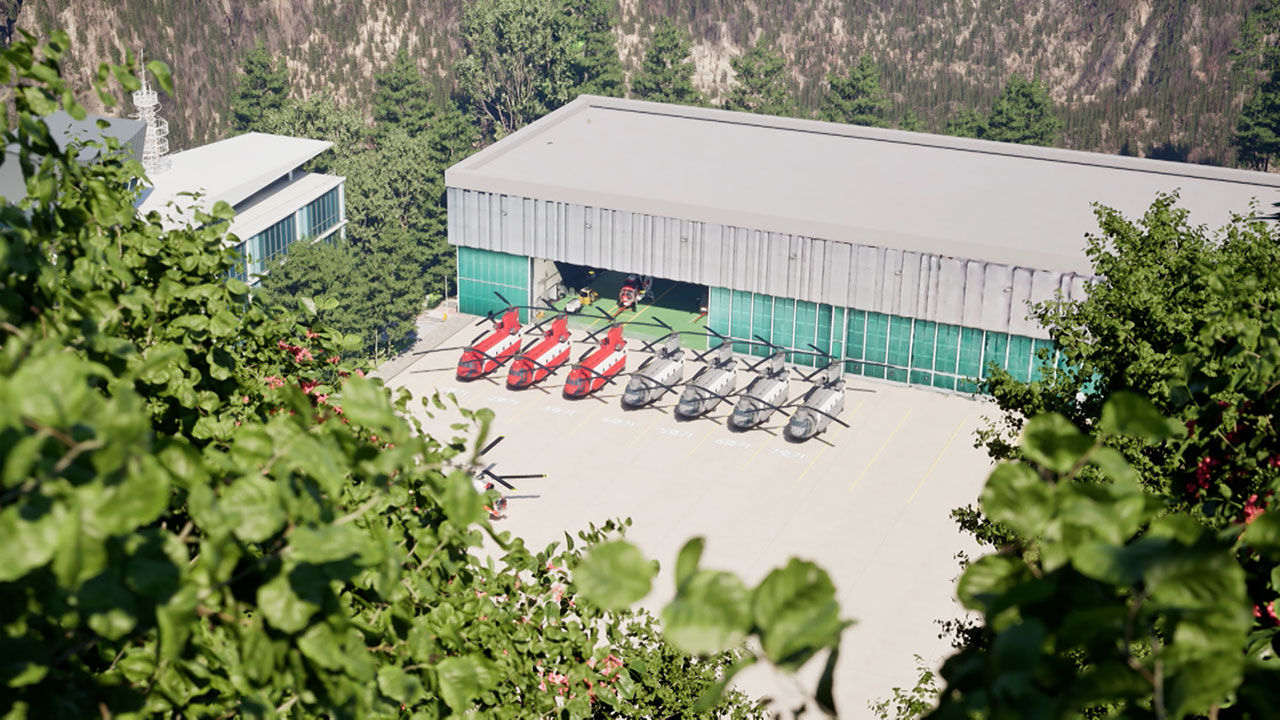
Other public agencies that pursued super-large helicopter procurement with Columbia Helicopters reached different conclusions. The Gyeongsangbuk-do Fire Service Headquarters and the Korea National Park Service were each seeking to introduce one newly built super-large helicopter, but after receiving requests from the contractor to change the aircraft model, both canceled their projects following internal reviews. Their rationale was that unresolved certification challenges would inevitably delay deliveries. In particular, the Gyeongsangbuk-do Fire Service Headquarters explicitly stated in an internal report that "flight operations are impossible without certification," adding, "While military helicopters in the United States can be operated as emergency helicopters under a restricted type certificate, there has been no precedent in South Korea for granting an airworthiness certificate to a foreign helicopter holding a restricted type certificate."
In contrast, following the contractor's request to modify the contract, the Forest Aviation Headquarters conducted all subsequent steps—the preliminary legal reviews with the BAI and the finance ministry, the review committee with outside members, and internal review reports—under the premise that the contract would indeed be amended. In other words, every procedural step was steered toward pushing the project forward, even if it meant switching to remanufactured military helicopters. Following this aggressively pursued contract amendment, the formal delivery deadline for the first unit was pushed back to late June 2027. Less than a year remains until that deadline, yet FAA certification procedures are not properly underway. According to an official response received by SBS in August after filing a freedom of information request in June, the FAA stated that it "has received no certification application related to the aircraft model the Korea Forest Aviation Headquarters intends to introduce."
Finally, below is the official position provided by the Forest Aviation Headquarters.
"From the contracting stage, we have clearly recognized that an airworthiness certificate from the Ministry of Land, Infrastructure and Transport must be obtained for large helicopters to operate domestically. The contractual terms stipulate that the manufacturer must obtain all relevant certifications required for domestic flight operations prior to delivery, such as a standard airworthiness certificate or special airworthiness certificate from the Ministry of Land, Infrastructure and Transport. Currently, the manufacturer is pursuing domestic airworthiness certification procedures based on US FAA certification data, and the Korea Forest Service continues to consult on necessary technical data and certification processes with relevant agencies and the company, including the Ministry of Land, Infrastructure and Transport, the FAA, and the manufacturer. If the manufacturer fails to fulfill the contractual terms going forward, we plan to take necessary measures in accordance with relevant laws and contract provisions." - Forest Aviation Headquarters
※ Please note: This article was translated by AI and may contain errors.


 Video News
 Video News
 Video News
 Video News
