
 KOR
KOR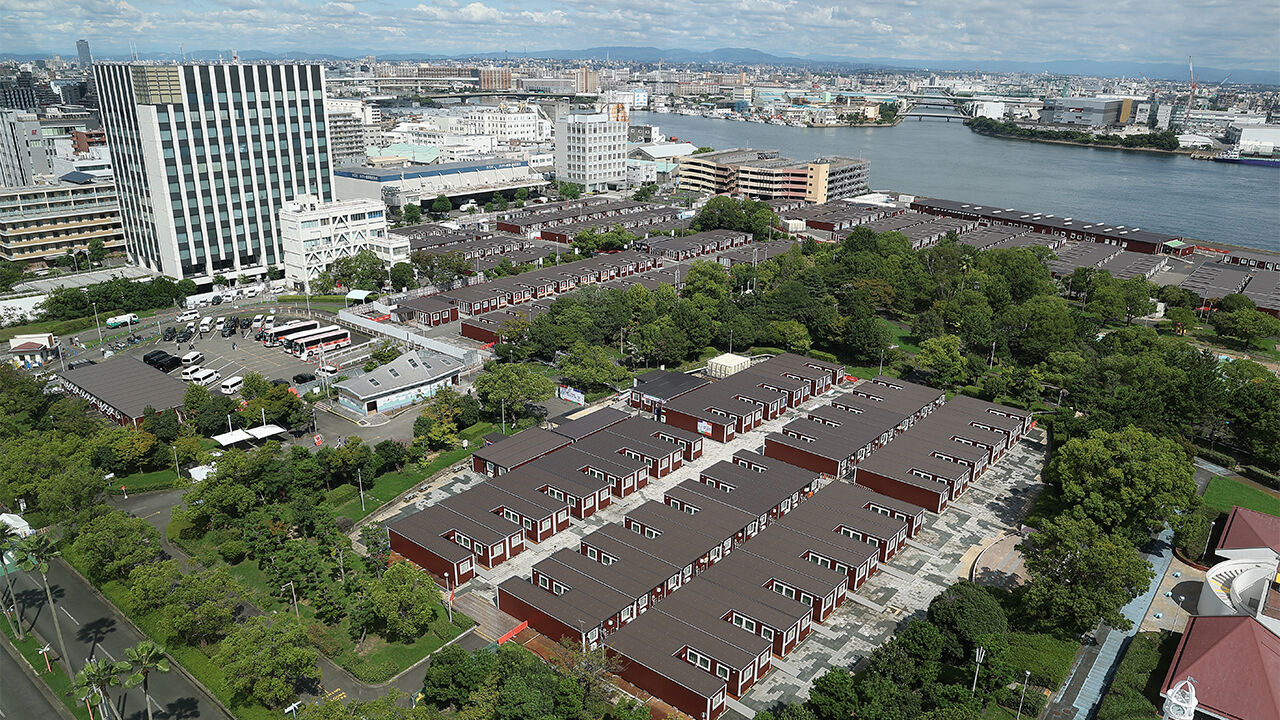
▲ The modular housing complex set up at the Port of Nagoya
The leadership of the Olympic Council of Asia (OCA) has defended the organizing committee's decision regarding the container and cruise ship athlete village controversy for the 2026 Aichi-Nagoya Asian Games, calling it a "pragmatic and flexible measure to avoid leaving behind white elephants after the event."
During a press conference held at the Main Media Center (MMC) in Nagoya, Japan, today (September 18), OCA Director General Husain Al-Musallam stated, "While having a traditional athlete village would be nice, we also need to be flexible. We must think about the future of the host city and how the venues will be utilized after the games conclude."
Al-Musallam pointed out, "Building an athlete village with a massive budget is easy, but we have to think about what happens to it after the competition. Nagoya is already an advanced city with well-established residential infrastructure."
He added, "The most important things for athletes are comfortable rooms, healthy meals, and a safe environment. Currently, accommodations have been properly assigned to all athletes, coaches, and officials, and not a single participant has been left stranded."

▲ Cruise Accommodation
Mohammad Tayyab Ikram, chairman of the coordination committee who attended the press conference, also placed emphasis on "sustainability."
Ikram remarked, "We did not want to leave behind a massive white elephant after the games. Opting not to build a traditional athlete village was not a compromise, but the result of finding an original alternative."
Addressing concerns surrounding the container housing and other facilities, he added, "If you visit the site, you will be able to see firsthand how wonderful the facilities are for the athletes."
He also expressed confidence in thorough preparations for potential severe weather, such as typhoons, expected around September 21 in the early stages of the competition.
Ikram explained, "Through 43 in-person meetings over the past 3 to 4 years, we have reviewed disaster prevention measures. We have sufficiently secured professional large-scale shelters capable of accommodating 3,000 to 4,000 people near the Garden Pier, where the container accommodations are located, and the cruise ships."
(Photo: Yonhap News)
※ Please note: This article was translated by AI and may contain errors.



 Video News
![North Korean Coach Smiles After Tense Start... A Reporter's Question Changes the Mood [Sports Mug]](http://img.sbs.co.kr/newimg/news/20260918/202223818_300.jpg) Video News
Video News
 Video News
