
 KOR
KOR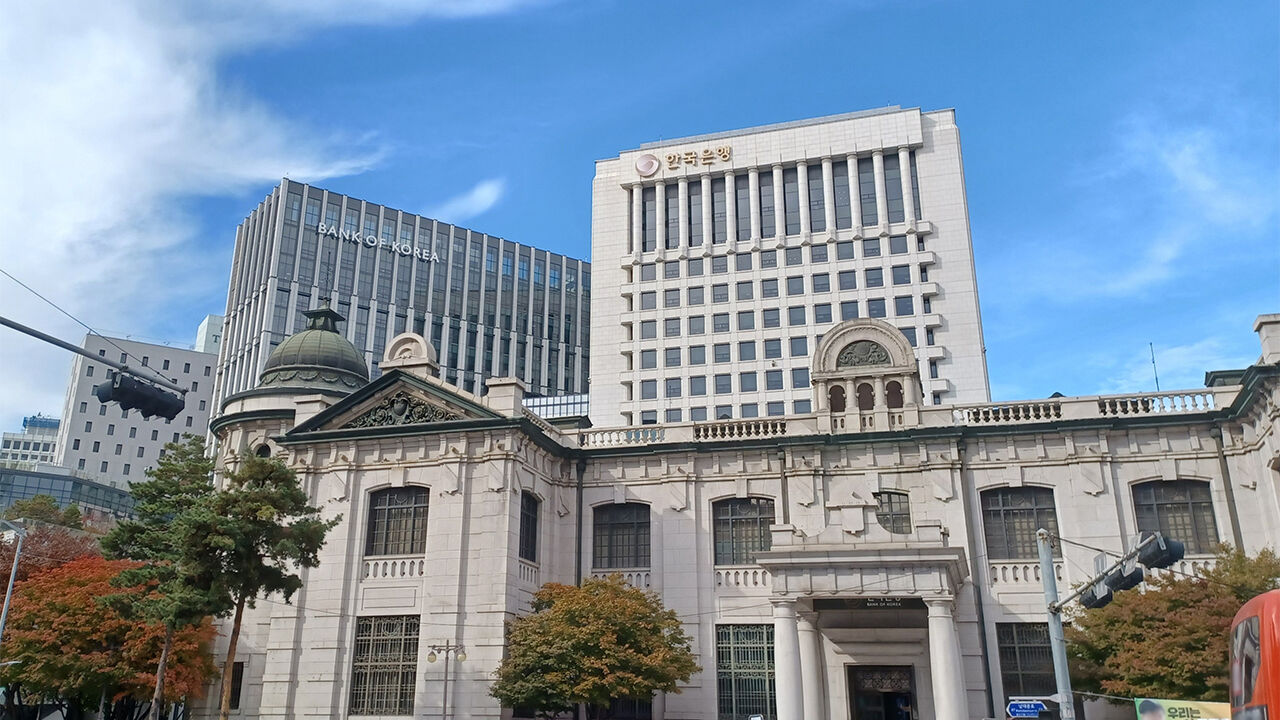
▲ Bank of Korea
The deficit in the public sector, which includes the central and local governments as well as public enterprises, exceeded 83 trillion won last year, marking a record high.
This resulted from a significant increase in private transfer expenditures driven by the implementation of two supplementary budgets for people's livelihoods, along with higher government consumption fueled by an increase in health insurance benefit payouts.
However, projections suggest that the deficit will narrow this year and potentially shift to a surplus next year, supported by a semiconductor boom.
According to the "2025 Public Sector Accounts (Provisional)" released by the Bank of Korea today (September 18), the public sector balance (total revenue minus total expenditure) recorded a deficit of 83.1 trillion won last year.
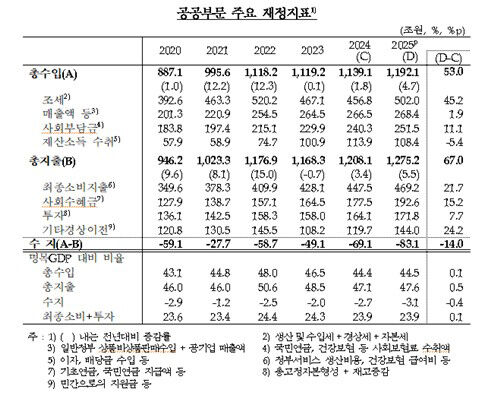
This is the largest deficit since the compilation of relevant statistics began in 2007.
In these statistics, the public sector encompasses the general government (central government + local government + social security funds) combined with public enterprises (non-financial and financial public enterprises).
Specifically, total public sector revenue rose 4.7% from 2024 to 1,192.1 trillion won.
Although interest income declined due to falling market interest rates following two base rate cuts last year, tax revenues and social contributions increased.
Total public sector expenditure increased by 5.5% compared to 2024 to reach 1,275.2 trillion won.
The growth was driven primarily by other current transfers, which are transfer expenditures to the private sector, and final consumption expenditures, which represent government consumption.
Lee Hyun-young, head of the National Accounts Expenditure Team at the BOK, explained, "Last year, transfer expenditures to the private sector surged as two supplementary budgets were formulated to stabilize public livelihoods, including 13.5 trillion won in livelihood recovery consumer coupons. Government consumption also rose due to active fiscal execution stances since the new administration took office, preparations for hosting the APEC Summit, and an increase in health insurance benefit payments resulting from the normalization of medical services."
Because the increase in total expenditure outpaced the growth in total revenue, the deficit expanded from 69.1 trillion won to 83.1 trillion won over the span of a year.
The public sector balance recorded surpluses for six consecutive years from 2014 to 2019, but has logged deficits for six straight years starting in 2020, when the COVID-19 pandemic began.
Deficits persisted from 2020 to 2022 due to COVID-related spending and rising energy prices stemming from the war in Ukraine, while sluggish corporate earnings drove down corporate tax revenues and served as the main factor behind deficits in 2023 and 2024.
Team leader Lee explained, "In 2025, private transfer expenditures for the government and housing-related investments for public enterprises were the primary factors behind the deficit."
By sector, the central government balance registered a deficit of 90.1 trillion won last year, widening its deficit scale compared to 2024.
The size of the deficit is the largest since statistics began.
Although tax revenues increased, the deficit widened due to rising private transfer expenditures aimed at stabilizing livelihoods.
For local governments, the deficit shrank from 15.5 trillion won in 2024 to 2 trillion won last year.
The analysis indicated that a substantial increase in local allocation grants received from the central government helped narrow the deficit.
The social security fund saw its surplus contract from 41.8 trillion won to 32 trillion won.
This occurred because social benefits paid by the government to citizens increased at a faster pace than social contributions paid by citizens amid an aging population.
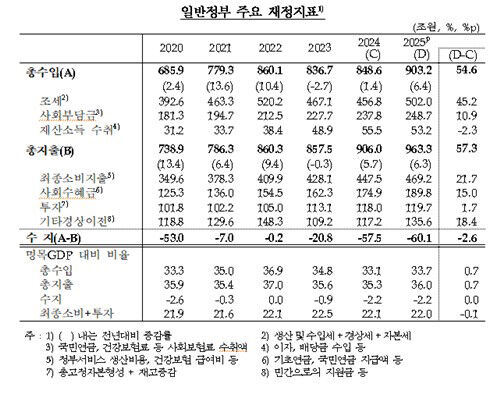
Consequently, the general government balance—combining the central government, local governments, and social security funds—recorded a deficit of 60.1 trillion won last year by subtracting total expenditures from total revenues.
The deficit scale widened compared to 2024, reaching a record high since statistics were first compiled.
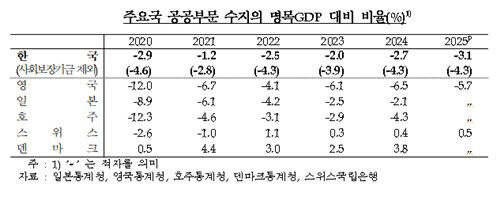
The BOK explained that last year's ratio of the general government balance to nominal GDP stood at -2.2%, a favorable level compared to the OECD member average of -4.4%.
The ratio of the public sector balance to nominal GDP was -3.1%, which is higher than that of the United Kingdom (-5.7%) and lower than that of Switzerland (+0.5%).
Total revenue and total expenditure for non-financial public enterprises, such as Korea Electric Power Corporation and Korea Land and Housing Corporation, stood at 231.9 trillion won and 254.1 trillion won last year, increasing by 0.5% and 2.7% respectively over the year.
As a result, the non-financial public enterprise balance recorded a deficit of 22.1 trillion won, marking a wider deficit than the previous year.
The widened deficit in non-financial public enterprises was driven by a sharp increase in investments by housing-related public corporations, such as public housing construction and the acquisition of rental housing.
Total revenue (66.3 trillion won) and total expenditure (67.1 trillion won) for financial public enterprises, including the Korea Development Bank and Korea Housing Finance Corporation, decreased by 4.8% and increased by 4.1% respectively.
Consequently, the financial public enterprise balance shifted from a surplus of 5.1 trillion won in 2024 to a deficit of 900 billion won last year.
Although property income payments decreased due to rising interest income, current transfer expenditures—amounts paid by financial public enterprises to the state—increased significantly.
Regarding the public sector balance for this year, Team leader Lee stated, "Starting this year, corporate and income tax revenues are expected to surge significantly due to the semiconductor boom. Accordingly, centering around the general government, we anticipate that the deficit scale will narrow in 2026 and potentially shift to a surplus in 2027."
He also added, "The upward adjustments in contribution rates for the National Pension and health insurance are expected to slow down the contraction of the social security fund surplus, which will have a positive impact on improving the balance."
(Photo: Provided by Bank of Korea, Yonhap News)
※ Please note: This article was translated by AI and may contain errors.



 Video News
![North Korean Coach Smiles After Tense Start... A Reporter's Question Changes the Mood [Sports Mug]](http://img.sbs.co.kr/newimg/news/20260918/202223818_300.jpg) Video News
Video News
 Video News
