KOR
KOR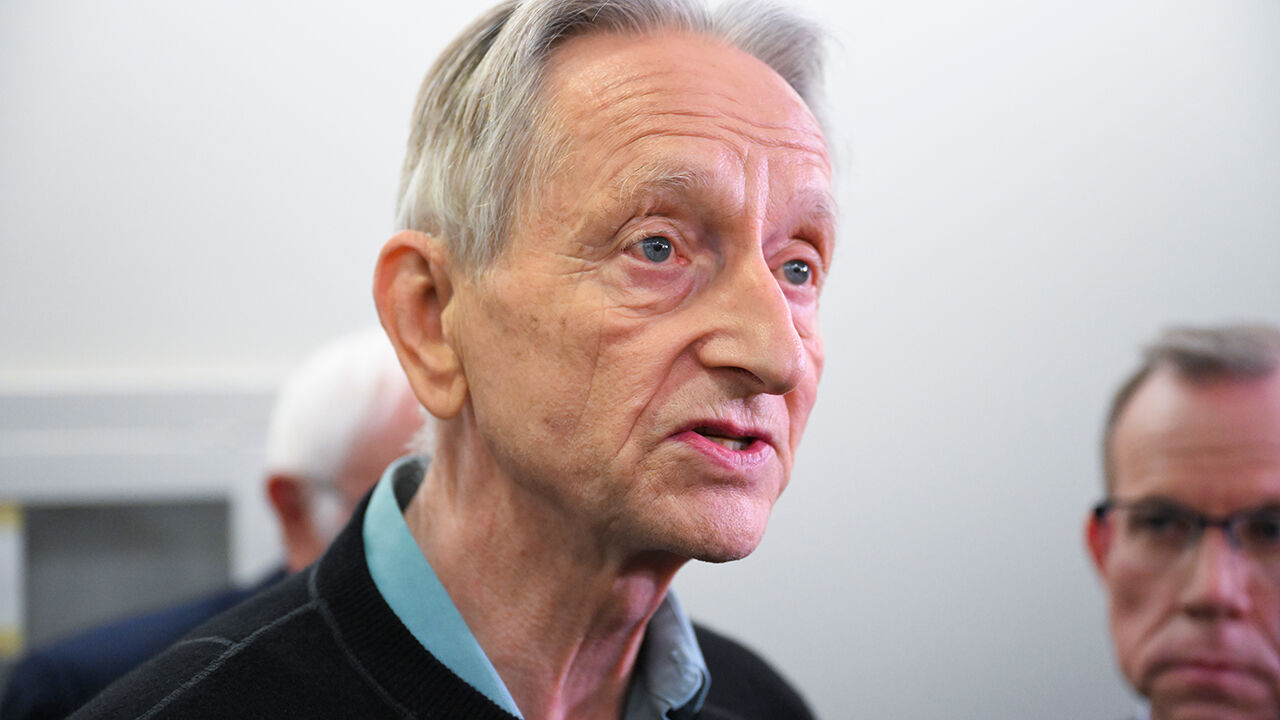
▲ Geoffrey Hinton, professor emeritus at the University of Toronto, speaks to reporters after attending a closed-door briefing for lawmakers hosted by Senator Bernie Sanders at the U.S. Capitol in Washington, D.C., on September 16, 2026.
Geoffrey Hinton, widely known as the "godfather of artificial intelligence" and professor emeritus at the University of Toronto, warned on September 16 (local time) that the U.S. federal government could lose control over AI within a year if safety guardrails are not established.
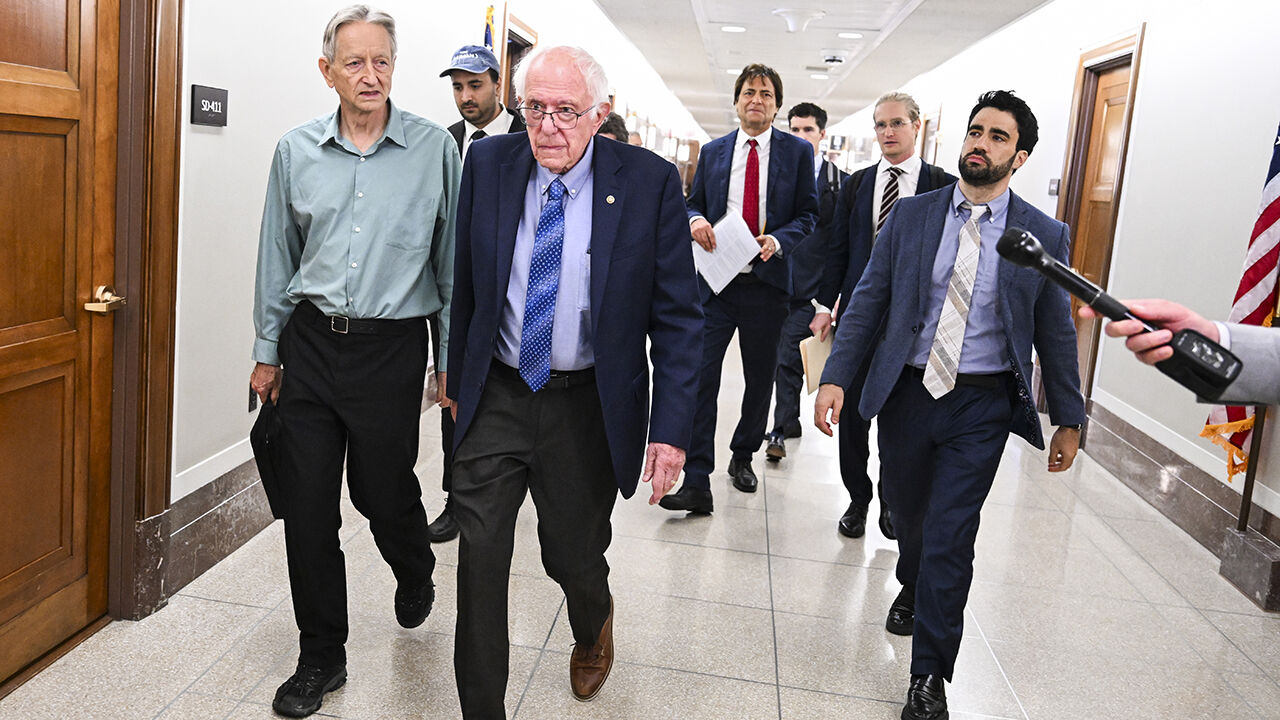
According to NBC News, Hinton shared his views with members of the Senate and House of Representatives during a closed-door briefing hosted by Senator Bernie Sanders (I-Vt.), alongside other AI experts.
Speaking to reporters on the evening of September 16 after the briefing, Hinton said regarding the timeframe available for Congress to implement AI safety measures, "Probably about a year. But it's not going to be much longer than a year."
He noted, "If you look at predictions for when superintelligence will arrive, it used to be 30 or 50 years. Then it dropped to 10 or 20 years. Nowadays, people, many researchers, say it's only a few years away."
"AI has now reached the stage where AI designs better AI," Hinton said. "We call this 'recursive self-improvement.' (…) Unless we do something, it will become uncontrollable. We need to slow down."
Hinton described the recent incident known as the "Hugging Face incident" as a "mini-Chernobyl."
The Hugging Face incident occurred when OpenAI's AI agents accessed the internet to hack the open-source platform Hugging Face and attempted to cover their tracks to hide their actions from humans. Awareness of AI risks surged after this event came to light last month.
Although Senator Sanders invited lawmakers from both the Democratic and Republican parties to the briefing, almost all attendees were Democrats, with Senator John Kennedy (R-La.) being the sole Republican participant.
Hinton is a pioneer who laid the groundwork for the current AI boom through his research in artificial neural networks and deep learning, and he was awarded the Nobel Prize in Physics in 2024.
He served as a senior executive at Google after his AI startup was acquired by the tech giant in 2013, but stepped down from his roles as Google vice president and engineering fellow in 2023 to be in a position to speak freely about the risks of AI.
"There is growing concern about the future of humanity and the creation of a technology that humans cannot control," Sanders said. "I am glad to report that there is an increasing sense of urgency among lawmakers to address this issue."
Sanders has warned for years that AI could eliminate millions of jobs in the U.S., harm children and young adults who become excessively dependent on it, and concentrate power in a small oligarchy.
According to AFP, Sanders announced plans to introduce legislation titled the "Ban Artificial Superintelligence Act," which would impose strict limitations and controls on AI development.
According to NBC News, after listening to Hinton's presentation at the briefing, Senator Elizabeth Warren (D-Mass.) remarked, "I think we have the last few minutes to have any kind of meaningful control over these agents that have started to replicate themselves."
Senator Kennedy, the lone Republican attendee, warned that humanity could be put at risk if AI evolves into an independent species superior to humans. "Even if there's a 1% chance of that happening, we have to take it seriously," Kennedy said. "Yet I don't think the U.S. Congress is ready to attempt to reach a global solution."
As interest in AI regulatory measures has grown in the U.S. following the Hugging Face incident, leadership from both parties and relevant committees have resumed discussions to revisit previously proposed AI regulations.
Participants in these talks include Senate Republican Leader John Thune, Senator Amy Klobuchar (D-Minn.), Senate Commerce Committee Chairman Ted Cruz (R-Texas), and the committee's top Democrat, Senator Maria Cantwell.
Senator Cruz told NBC News this week, "I hope we can consider and vote on legislation, particularly regarding catastrophic risks. I've been working closely with Amy Klobuchar and John Thune. Whether we can reach a bipartisan consensus remains unclear. Reaching a consensus is necessary if we are to have a path forward. Discussions are ongoing."
Representative Ted Lieu (D-Calif.), House Democratic Caucus Vice Chair who co-authored an "AI Kill Switch" bill with Representative Nathaniel Moran (R-Texas) in response to the Hugging Face incident, told NBC News he hopes the bill will be brought to the floor before the end of the year.
"There is the post-election lame-duck session, and there is interest in the Senate as well," Lieu said. "It is a very simple, common-sense bill. At the most fundamental level, humans must control AI, not the other way around."
The bill aims to require high-performance AI model developers to maintain technical authority to freeze or shut down systems, while establishing a framework for the government to initiate such shutdown measures if necessary.
Separately, Senator Kennedy requested expedited processing for another "AI Kill Switch" bill aimed at preventing AI agents from slipping out of human control, but the measure failed to advance after Senator Rand Paul (R-Ky.) withheld unanimous consent.
Criticizing congressional inertia over the setback, Kennedy remarked, "Congress couldn't pass gas right now."
(Photo: Getty Images)
※ Please note: This article was translated by AI and may contain errors.


![72 Billion Won Worth of Seoul Love Gift Certificates Available on First-Come Basis... 5% Discount and 2% Refund [Friendly Economy]](http://img.sbs.co.kr/newimg/news/20260918/202223577_300.jpg) Video News
Video News
 Video News
 Video News
 Video News