
 KOR
KOR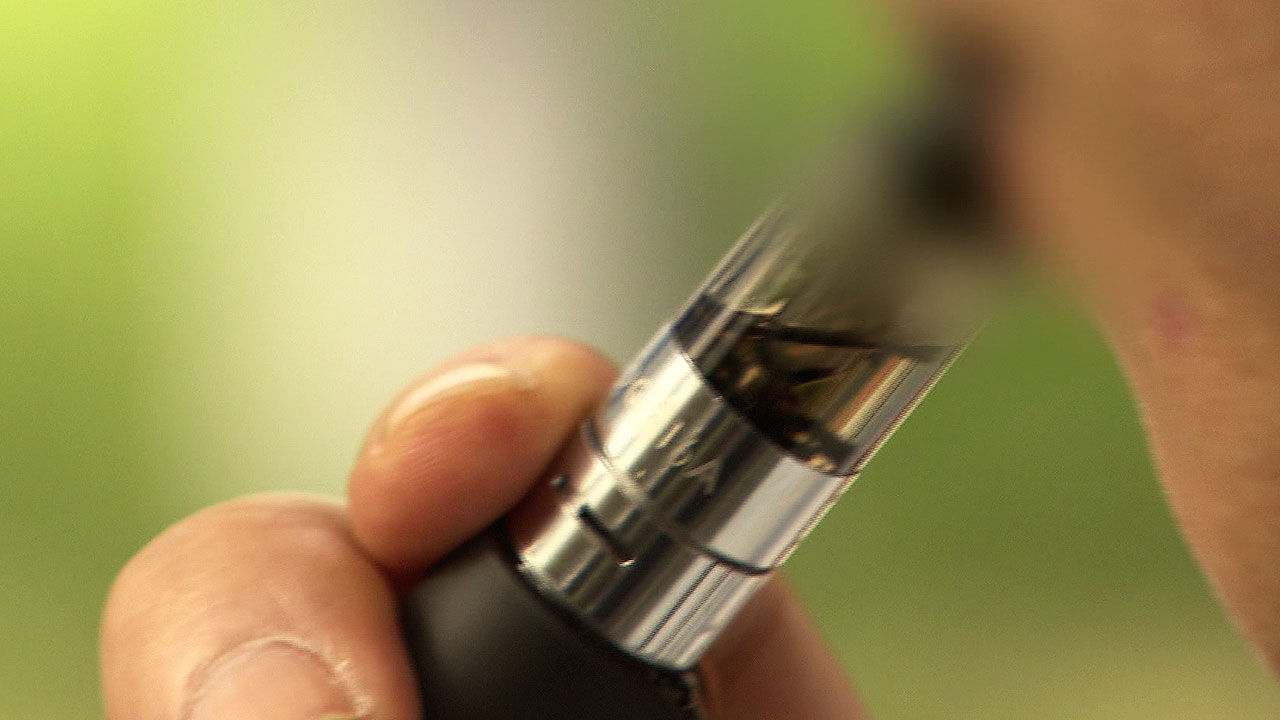
▲ Liquid e-cigarettes (File photo)
The Constitutional Court has ruled that the taxation system applying a fixed tax rate based on the volume of liquid e-cigarettes, regardless of their nicotine content, is not unconstitutional.
The Constitutional Court announced on September 17 that it reached a unanimous decision upholding the constitutionality of relevant provisions in the Individual Consumption Tax Act and the Local Tax Act, which were challenged in a constitutional complaint filed by five liquid e-cigarette import and sales companies, including Haka Korea, and two business operators.
The court reached the same conclusion in a request for a constitutional review of a statute filed by the Seoul Administrative Court during a tax-related litigation brought by one of the companies.
The companies had imported e-cigarette liquid manufactured using raw nicotine from countries such as China without paying taxes, claiming that the nicotine was extracted from tobacco stems rather than tobacco leaves and therefore did not qualify as tobacco under the Tobacco Business Act.
Before its revision last year, the Tobacco Business Act defined tobacco as products manufactured using "tobacco leaves" as raw materials.
However, tax authorities imposed individual consumption taxes or tobacco consumption taxes, maintaining that the imported items contained "nicotine solutions extracted from tobacco leaves" and thus constituted tobacco.
As the companies filed lawsuits in protest, the constitutionality of the tax laws regarding nicotine solutions became an issue during the proceedings.
In trials involving individual companies, one court filed a constitutional review with the Constitutional Court ex officio, while another company directly filed a constitutional complaint after its request for a constitutional review was dismissed by the court.
The core issue raised by the companies was the method of taxation.
The tobacco consumption tax (local tax) is set at 628 won per 1 milliliter of nicotine solution, while the individual consumption tax is 370 won per 1 milliliter.
This method levies a fixed tax based solely on the volume of the nicotine solution, regardless of the actual nicotine content or the selling price of the solution.
The companies argued that taxing based on the volume of the nicotine solution is unreasonable and infringes upon their property rights, as it places an excessive burden on them since the taxes cannot always be passed on to consumers.

▲ Constitutional Court
However, the Constitutional Court dismissed these arguments, stating that there are no problems with the current taxation system.
The court explained, "The volume of a nicotine solution can be objectively verified and easily measured," adding, "It can be seen as a rational choice to simultaneously secure efficiency in tax administration and legal stability."
Furthermore, noting that nicotine solutions are distributed and sold to consumers, the court stated that "this aligns with the legislature's consistent taxation principle of applying taxation standards corresponding to the final distribution and sales format of each tobacco type."
The Constitutional Court also pointed out that using subjective and uncertain circumstances—such as whether the tax was successfully passed on to consumers—as a basis for taxation standards or tax reductions could undermine the uniformity and predictability of tax imposition.
Meanwhile, the Constitutional Court dismissed the request for a constitutional review regarding the "tobacco leaves" provision under the former Tobacco Business Act.
The referring court had argued that the former Tobacco Business Act was unconstitutional for failing to include products made from "stem-extracted nicotine" or "synthetic nicotine" in the definition of tobacco.
However, the Constitutional Court determined that because the tax authorities taxed the products in question on the grounds that they used nicotine solutions extracted from "tobacco leaves," the constitutionality of the specific provision would not affect the outcome of the trial, thereby lacking the prerequisite for a trial.
(Photo: Yonhap News)
※ Please note: This article was translated by AI and may contain errors.


 Video News
 Video News
 Video News
 Video News
 Video News