
 KOR
KOR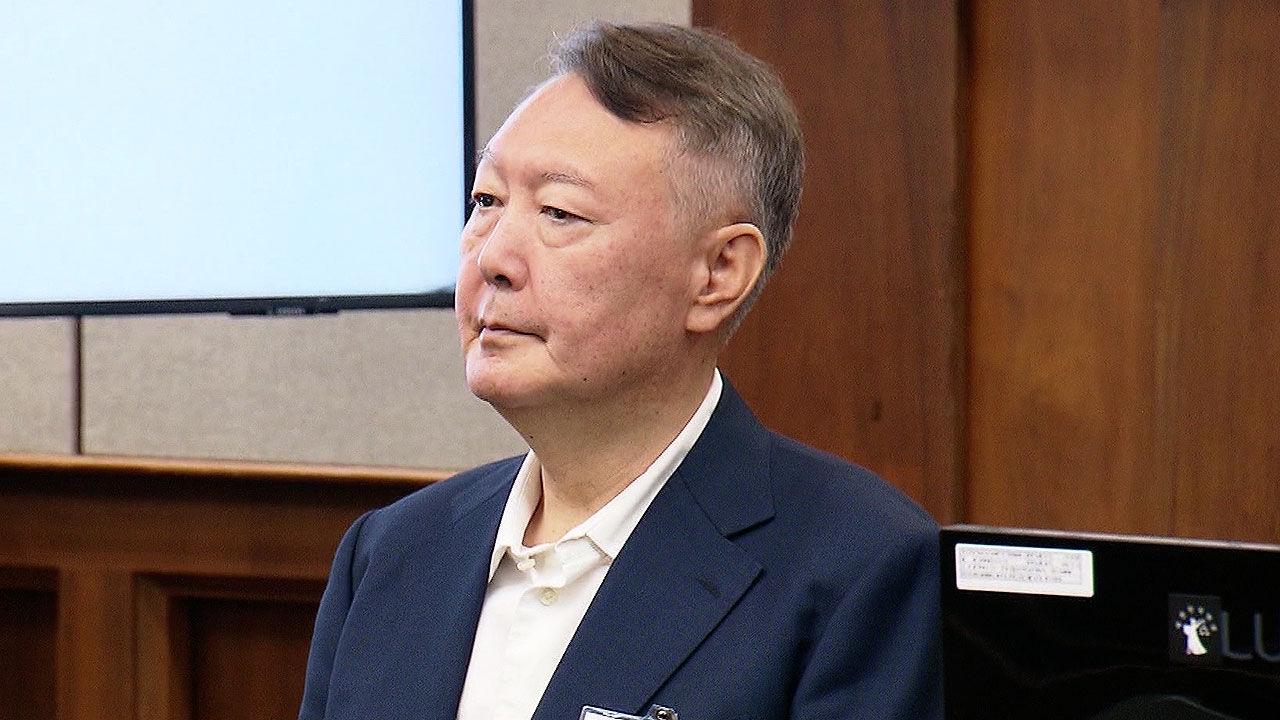
▲ Former President Yoon Suk Yeol
A court has ruled that the decision to refuse the disclosure of the real names and titles of defendants appearing in the first-instance verdict of former President Yoon Suk Yeol on charges of masterminding an insurrection is unlawful.
On September 17, Administrative Division 7 of the Seoul Administrative Court (Presiding Senior Judge Kang Woo-chan) ruled in favor of the plaintiff in a lawsuit filed by People's Solidarity for Participatory Democracy (PSPD) against the President of the Seoul Central District Court to cancel the refusal of information disclosure.
In March, the 1,206-page first-instance verdict published by the court on its website had personal names, official titles, and other key information anonymized.
Former President Yoon was designated as "Defendant E."
PSPD requested the Seoul Central District Court to disclose the verdict with real names, but the court refused, citing concerns over the invasion of privacy and stating that it did not fall under the targets of disclosure pursuant to the Information Disclosure Act.
In response, PSPD filed a lawsuit in April demanding the disclosure of real names in the first-instance verdict, arguing that given the gravity of the insurrection case and the perspective of safeguarding the Constitution, there is a strong public interest in disclosing the real names and titles in the ruling.
On this day, the Seoul Administrative Court bench deemed unlawful the Seoul Central District Court's decision to uniformly ban general citizens from viewing and copying verdicts of unfinalized criminal cases, stating that the extent of information disclosure must be reassessed.
The Seoul Central District Court had argued that since there is no provision under the Criminal Procedure Act allowing general citizens to view and copy verdicts of unfinalized cases, it should be interpreted as prohibited.
However, the court did not accept this argument.
The bench stated, "The provisions of the Criminal Procedure Act itself do not prohibit general citizens from viewing and copying verdicts of unfinalized criminal cases," adding, "They merely leave the relevant regulations in a vacuum."
The court further pointed out, "To interpret that the viewing and copying of verdicts in unfinalized cases by general citizens is absolutely prohibited under any circumstances, it must not violate the constitutional principle against excessive restriction," noting, "The interpretation taken by the defendant is highly likely to violate this principle."
The bench also added, "If the court were to adopt the same interpretive approach as the defendant through its ruling, it could escalate into the issue of a constitutional complaint against judicial decisions."
※ Please note: This article was translated by AI and may contain errors.


 Video News
 Video News
 Video News

 Video News