
 KOR
KOR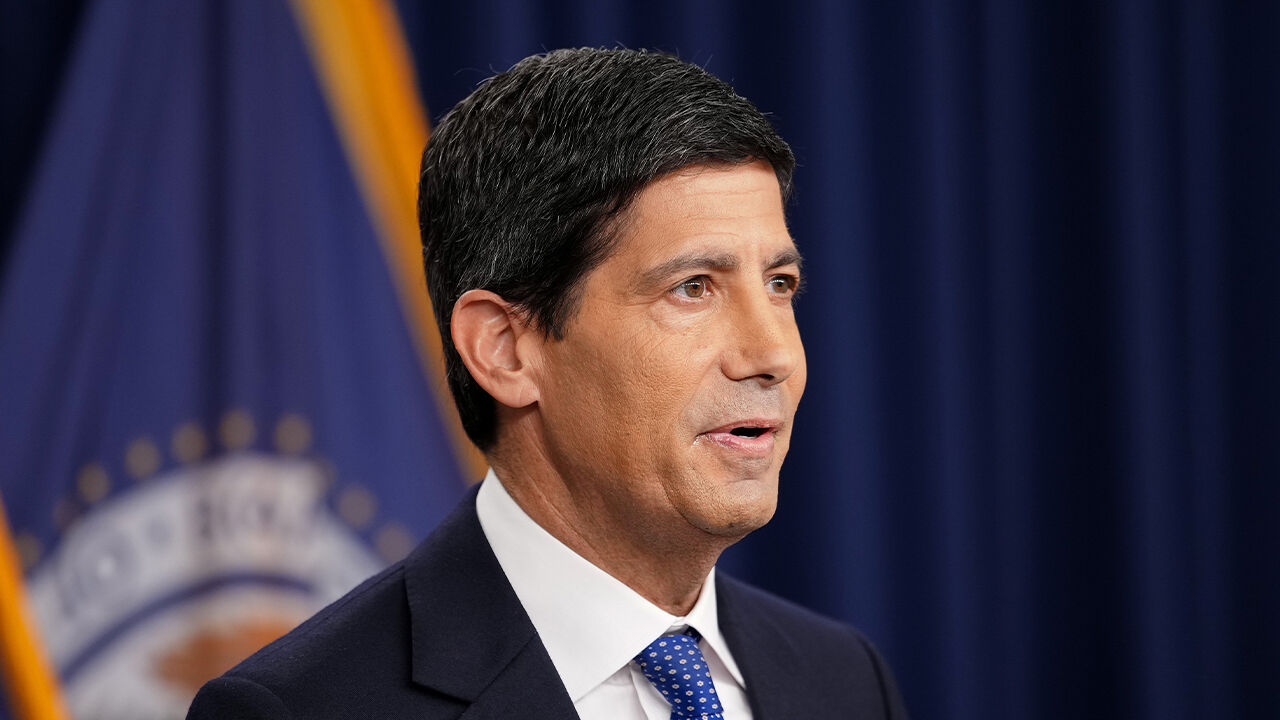
▲ Fed Chair Kevin Warsh
The U.S. central bank, the Federal Reserve (Fed), has raised its benchmark interest rate by 0.25 percentage points to a range of 3.75% to 4.00%.
It also hinted at the possibility of further rate hikes within the year.
The Fed announced the decision on the 16th local time following a two-day Federal Open Market Committee (FOMC) meeting held in Washington, D.C.
This marks the first monetary tightening measure in 3 years and 2 months, since July 2023.
All 12 FOMC members with voting rights, consisting of Fed governors and regional Federal Reserve Bank presidents, voted unanimously in favor of the rate hike.
In particular, economic projection materials showed that the median expectation for year-end interest rates among 18 of the 19 FOMC members averaged 4.1%.
This is 0.3 percentage points higher than the projection in June, serving as an indicator that the Fed may raise rates further before the end of the year.
The Fed previously cut rates three consecutive times in September, November, and December of 2024, and again in September, October, and December of last year.
Earlier this year, it kept interest rates frozen for five consecutive times.
The Fed's rate hike is interpreted as a measure responding to inflation instability.
It can also be seen as reflecting room to raise rates, as economic growth and employment remain relatively solid.
The Fed projected that this year's personal consumption expenditures (PCE) inflation rate will record 3.7%.
This is 0.1 percentage points higher than the June projection, indicating a view that surging oil prices driven by the war in Iran are fueling inflation.
Additionally, the Fed forecasted that this year's real gross domestic product (GDP) growth rate will reach 2.3%, and next year's will be 2.4%.
Both figures were revised up by 0.1 percentage points compared to June, signaling that economic growth is more robust than previously anticipated.
Attention is drawn to the fact that the Fed's first rate adjustment since the inauguration of Chair Warsh, who was appointed by President Donald Trump, is a hike rather than a cut.
President Trump has continuously called for rate cuts ahead of the November midterm elections.
The market had widely anticipated a high likelihood of the Fed's rate hike on this day.
U.S. Treasury yields had already surged recently, reflecting these expectations.
(Photo: Getty Images)
※ Please note: This article was translated by AI and may contain errors.


 Video News
 Video News
 Video News
 Video News
 Video News