
 KOR
KOR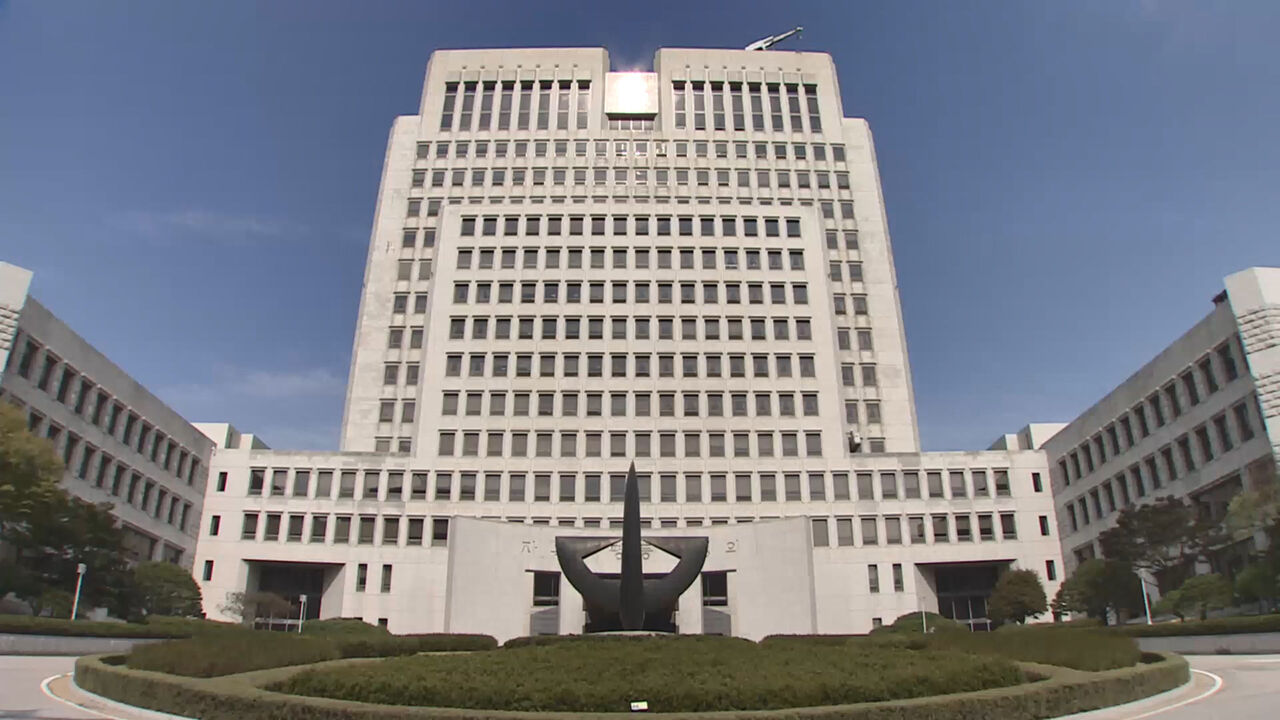
▲ View of the Supreme Court
The Supreme Court has ruled that if an accomplice concealed someone else's mobile phone out of concern for their own punishment upon suspecting an arrest, the person who ordered the concealment cannot be punished for instigating the destruction of evidence.
Under the Criminal Act, only the act of concealing evidence related to another person's criminal case, rather than one's own, is subject to punishment.
The Supreme Court's Second Division (Presiding Justice Oh Kyung-mi) recently finalized the lower court's ruling, which sentenced a defendant identified as A to one year in prison for fraud while acquitting him of the charge of instigating the concealment of evidence.
A was accused of operating as a recruiter for a side-job part-time fraud ring last year, gathering accounts to be used in the crimes and defrauding a victim of 7.5 million won.
A was also charged with instigating the destruction of evidence (instigating evidence concealment) after hearing a flight attendant announce on a plane returning from Laos that "law enforcement authorities intend to take custody of the suspect." Anticipating an arrest, A handed his mobile phone to an accomplice, B, who was sitting next to him, and instructed, "Organize this and deliver it to my mother."
Immediately after A was arrested, B contacted A's mother and delivered the mobile phone to A's uncle.
B was indicted alongside A on charges of violating the Electronic Financial Transactions Act and concealing evidence.
The core issue was whether B could be punished for concealing evidence and A for instigating the concealment of evidence.
Article 155 of the Criminal Act stipulates punishment for individuals who destroy, conceal, forge, or alter evidence related to another person's criminal or disciplinary case.
Acts where an individual destroys or conceals evidence for their own benefit, facing the prospect of direct criminal or disciplinary punishment themselves, are not subject to punishment.
The first instance court found A guilty of both fraud and instigating the concealment of evidence, sentencing him to one year in prison.
The second instance court upheld the one-year prison sentence for fraud but acquitted A of the charge of instigating the concealment of evidence.
The appellate court reasoned that since A had no way to hide the evidence without B's help, A's act of ordering B to do so should ultimately be regarded as "an act of evidence concealment performed by A himself."
B was found guilty in both the first and second trials of concealing evidence and violating the Electronic Financial Transactions Act, receiving a sentence of six months in prison suspended for two years. B did not appeal, finalizing the sentence.
In A's final appeal, the Supreme Court dismissed the prosecutor's appeal, stating that while some parts of the lower court's reasoning were inappropriate, the ultimate conclusion that A could not be punished for instigating evidence concealment was valid.
First, the Supreme Court determined that even if B was asked to do so, A could not be viewed as having directly concealed evidence by using B, given that B stored and delivered the mobile phone based on B's own judgment.
Instead, the Supreme Court stated the legal principle that "if a person concealed evidence for their own benefit out of fear of facing direct criminal or disciplinary punishment, such an act cannot be punished as the crime of evidence concealment, even if it simultaneously results in concealing the evidence of another accomplice."
In other words, if B also had circumstances that could subject B to criminal punishment, B's act of hiding A's mobile phone constituted "self-concealment of evidence" and could not be deemed punishable.
Accordingly, the court stated, "It is difficult to rule out the possibility that B's act falls under a case where it cannot be punished as the crime of evidence concealment, even if it resulted in concealing evidence related to A's criminal case," adding, "In that case, the charge of instigating evidence concealment against A, who directed it, cannot be established either."
(Photo: Yonhap NewsTV, Yonhap News)
※ Please note: This article was translated by AI and may contain errors.


 Video News
 Video News
 Video News

 Video News