
 KOR
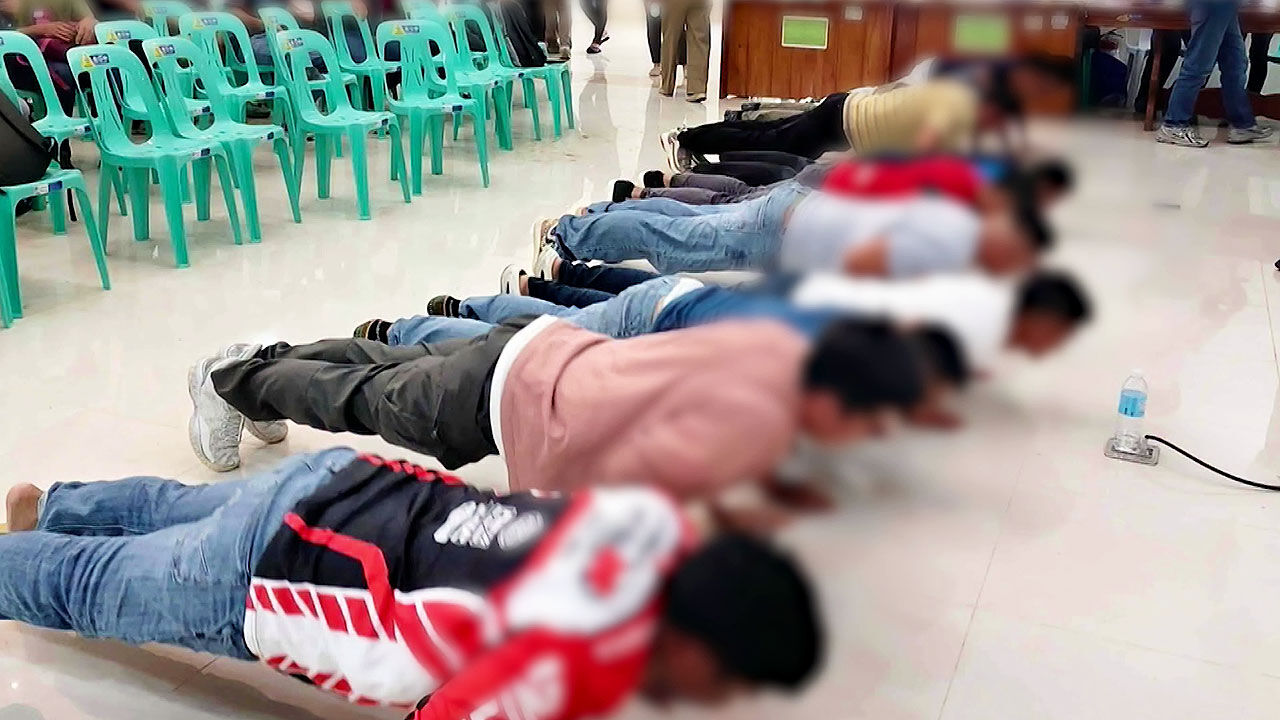
KORFrom Duck Walks to Human Trafficking

[Paju City official: We just told them, "Try doing the duck walk," just like that. Spontaneously. There are no criteria for a physical fitness test. We just did it to show that we came here, showed interest, and looked at them.]
[Mr. Hong / Recruitment agency head: I only do one thing. I interpret.]
Among the seasonal workers brought in through Mr. Hong, eight were officially recognized as victims of human trafficking by the Ministry of Gender Equality and Family in November last year. While Mr. Hong emphasized that he was cleared of human trafficking charges under the Criminal Act, the Mokpo Branch of the Ministry of Employment and Labor recently referred him to the prosecution on charges of intermediary exploitation under the Labor Standards Act.
Brokers Approaching Local Governments, Ministry of Justice Staying Silent
[Paju City official: Because we had worked together before. Previously.]
However, the official claimed it was the first time hearing that there were human trafficking victims among the workers who came through Mr. Hong.
[Paju City official: We had no idea about that. People are even talking about human trafficking?]
Yet, the reason for continuing to work with Mr. Hong was clear.
[Paju City official: In our case, the thing we consider most is actually the runaway rate. But there is no runaway rate. So we receive excellence incentives from the Ministry of Justice and get allocated more workers.]
Paju City regarded Mr. Hong's company as a vetted agency. Officials said it was also Mr. Hong who arranged the agreement with the municipality of Conner.
[Paju City official: He told us that Conner also really wanted to participate and that the mayor wanted to sign an MOU. That is how the MOU came about. It is not just this agency; many people from agencies come to us asking to do programs with Vietnam, Bangladesh, and elsewhere.]
Local governments are not the ones discovering foreign municipalities. Private agencies approach them, claiming they know foreign local governments well. Local authorities merely enjoy the convenience offered by recruitment agencies while turning a blind eye to why agencies offer such convenience in the first place. The Ministry of Justice tells local governments to directly contact overseas municipalities and recruit seasonal workers themselves, but local governments say they cannot handle direct recruitment. Paju City said it had no choice but to use private agencies because the Ministry of Justice, the supervising ministry, does not take action.
[Paju City official: Right now, signing an MOU for foreign seasonal workers and dealing directly with foreign local governments is not easy. An intermediary organization has to get involved. It would be great if the Ministry of Justice provided support, but because they do not take action, local governments are struggling.]
Aiming to block illegal brokers, the Ministry of Justice enacted an amendment early this year punishing intermediaries who intervene in the seasonal worker recruitment process—which should be handled directly by the central or local governments—with up to three years in prison. SBS inquired with the Ministry of Justice about the number of punishments since the revised law took effect, the criteria for physical fitness tests, and measures to protect victims. After repeated requests, a response arrived after three days stating, "2 punished, 6 under investigation." Answers to the remaining four questions have yet to be provided.
Local Governments Dependent on Agencies... Even Accompanying Them on Inspections
[Haenam County official: Looking through news articles, I saw Buyeo had zero runaway cases. We also wanted to establish an MOU with the Philippines and asked for a connection, which was how we received contact info through them. The agency that people call brokers takes care of a lot of things in between. Back then, it was just me and one other employee. While the number has decreased now, back then there were about 800 seasonal workers.]
Because two officials could not manage 800 people, they received an introduction to Mr. Hong from Buyeo County to keep the runaway rate down. However, Maria testified that she suffered wage exploitation in Buyeo County in her first year and in Haenam the following year, leading to her official recognition as a human trafficking victim by the government. As local governments sought out well-known recruitment agencies, human trafficking damage spread nationwide. Regarding Maria's testimony that she had to change her answer from "YES" to "NO" on whether her passport or bankbook had been seized because her employer's side was watching during the fact-finding survey, Haenam County maintained that such a thing could never have happened.
[Maria (pseudonym) / Human trafficking victim: Because they were watching, I had no choice but to check NO for everything.]
[Haenam County official: The employer was absolutely never present. Nor was any family member of the employer.]
However, the NHRCK's 2024 decision document confirmed two facts regarding Haenam County. First, Haenam County conducted farm inspections at least 11 times in 2023, and Mr. Hong accompanied them on at least seven of those occasions. While going out to inspect, they took along the very person who should have been under inspection. Second, during a special inspection in January 2024, 49 cases of wage exploitation and seven cases of bankbook confiscation were confirmed among 142 workers. The decision document stated, "Haenam County partially confirmed transfers from workers' accounts to Mr. Hong, but took no separate measures to compensate for the damage." They knew about it, yet did nothing. This was likely because the agency lowered runaway rates by helping with MOUs, interpretation, and workforce management. The price was a deluge of human trafficking victim certificates issued to workers who could not speak Korean. Among the 92 victims of human trafficking identified by the Ministry of Gender Equality and Family, 37 were seasonal workers. Migrant advocacy groups state that at least 13 of them entered South Korea through Mr. Hong.
Human Trafficking: Victims Exist, but No Perpetrators?

[Ko Gi-bok / Representative of Migrant Human Rights and Cultural Center for All: What is the problem? There are no penal provisions in the Anti-Trafficking Act. Therefore, when police investigate such cases, they do not investigate them under human trafficking standards. If there is a contract, they conclude, 'This person signed a loan agreement, so what is the issue?' and dismiss the case without forwarding it for prosecution on grounds of innocence.]
The supervising Ministry of Gender Equality and Family points out the same issue.
[Ministry of Gender Equality and Family official: Loan agreements, refusal to return passports or bankbooks, and wage deductions are indicators used to identify human trafficking victims. However, the current Anti-Trafficking Act only includes systems for identifying and supporting victims, lacking provisions to punish perpetrators. Because this also conflicts with the UN Trafficking in Persons Protocol, the Ministry of Gender Equality and Family is pursuing research to introduce penal provisions.]
The charge on which the Mokpo Employment and Labor Office referred Mr. Hong to prosecutors is also intermediary exploitation under the Labor Standards Act, not human trafficking. Because the Criminal Act's trafficking provisions could not be applied, they took a detour.
[Ko Gi-bok / Representative of Migrant Human Rights and Cultural Center for All: The government should establish a system that properly matches migrant workers with farms in need. It must not pass the buck to basic local governments that lack international cooperation capabilities by telling them to do it themselves. The government must establish a public agency to intervene and handle matching directly.]
In 2024, the NHRCK recommended that the Prime Minister coordinate the supervising ministry and elevate the authority for signing MOUs to the central government or metropolitan local government level. However, the structure of entrusting everything to under-resourced basic local governments remains unchanged. Recruitment agencies still stand at selection sites, and human trafficking victims continue to emerge.
[Maria (pseudonym) / Human trafficking victim: Please help us and listen to our voices, so that no one else has to experience what I went through.]
※ Please note: This article was translated by AI and may contain errors.


 Video News

 Video News

 Video News