
 KOR
KOR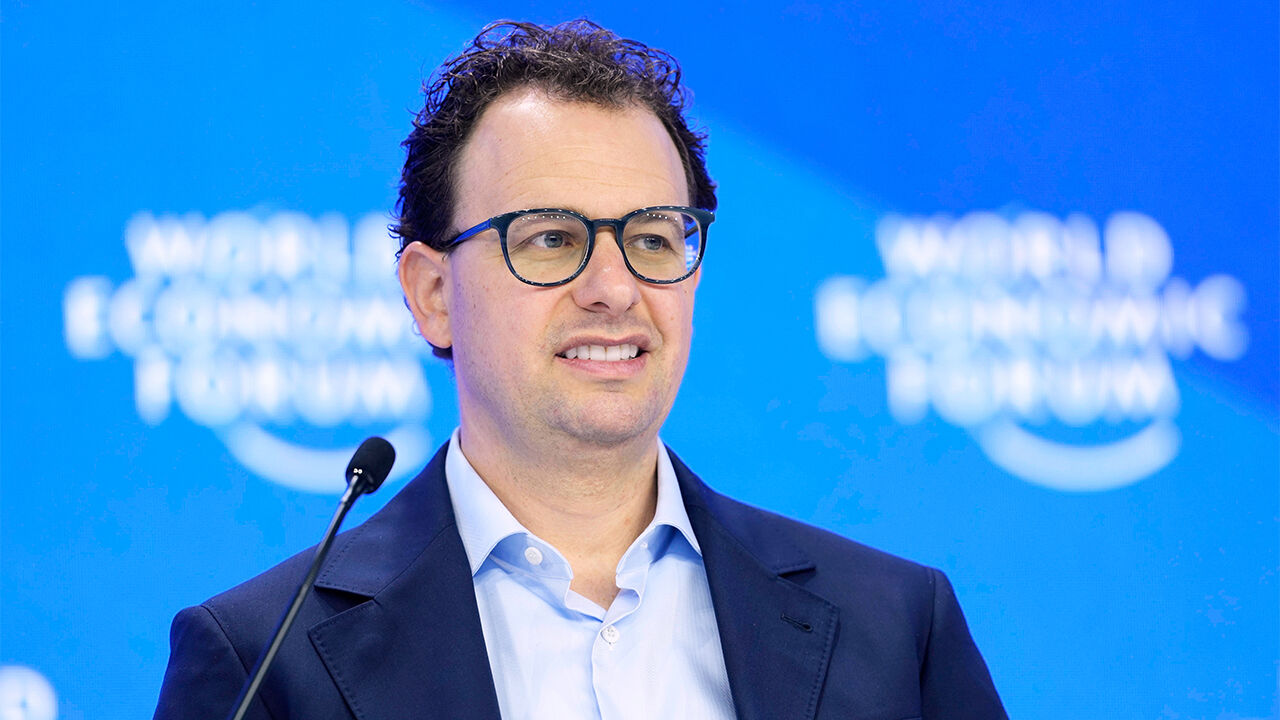
▲ Dario Amodei, CEO of Anthropic
As Western AI industry figures, including the CEO of U.S.-based Anthropic, argued for the need to regulate China under the rationale of "adjusting AI development speeds," the Chinese Foreign Ministry criticized the remarks, stating they "only hinder the progress of global AI governance."
During a regular press briefing on the 14th, Chinese Foreign Ministry spokesperson Guo Jiakun responded to a request for comment on Western business leaders' claims that China gaining an upper hand in the AI sector would pose risks to U.S. national security, saying, "Spreading threat narratives and engaging in malicious competition serves the interests of neither side."
Guo went on to emphasize that "AI development is an issue concerning the common welfare of all humanity," adding, "All parties should work together to promote the development of AI in a direction that is open, inclusive, beneficial to all, and guided toward good."
Earlier, in a blog post published on the 12th (local time), CEO Amodei stated, "For China to take the lead in AI would pose significant risks to the U.S. and the world," urging the U.S. government and corporations to cooperate in effectively implementing restrictive measures targeting China.
He particularly emphasized that implementing such measures could slow China's development over the next 3 to 5 years and expand U.S. dominance, a period he highlighted as the most geopolitically critical time for AI.
In response, OpenAI CEO Sam Altman posted on X (formerly Twitter) that he "agrees with Dario's views" and expressed OpenAI's intention to follow Amodei's policy of deploying external safety evaluators, while xAI's Elon Musk also chimed in, saying, "Dario is right."
Chinese state media pushed back, calling the remarks "hostile and baseless claims driven by commercial interests."
The Global Times, an English-language newspaper affiliated with the People's Daily, the official organ of the Chinese Communist Party, pointed out that CEO Amodei mentioned China 12 times in his blog post, noting that it "risks reducing the issue of AI security into a geopolitical zero-sum game rather than a cooperative task among major powers."
In connection with this, Xiang Ligang, a Chinese telecom and technology policy expert, told the Global Times that the claims are "inappropriate, baseless, and hostile," adding, "While arguing that they must cooperate with China to regulate the speed of global AI development, they are simultaneously claiming that semiconductors, computing power, and models must be restricted to slow down China's AI development."
Experts unanimously noted that his assertions reflect commercial interests aimed at boosting Anthropic's corporate valuation.
Liu Xiaoshan, head of embodied AI at the Shenzhen Institute of Artificial Intelligence and Robotics who stated he previously worked with CEO Amodei, noted that the more AI is perceived as a technology determining national competition and security, the more AI companies are evaluated not as ordinary tech firms but as "strategic infrastructure," stating that "this raises the policy importance of such companies and drives up industry entry barriers and corporate valuations."
Xiao Qian, deputy dean of Tsinghua University's Institute for AI International Governance, also mentioned that Anthropic is facing competition from rapidly developing open-source AI models in China.
The Global Times also highlighted reports from Western media questioning CEO Amodei's arguments.
The BBC reported that some experts raised questions over whether his claims were intended to concentrate technological control rather than focus on AI safety, while the U.S. magazine The Atlantic reported that some view it as an attempt by existing AI companies to raise entry barriers for technology.
The Global Times further added that, unlike the United States, China is expanding its open-source AI ecosystem, with the cumulative number of downloads for Chinese open-source large language models (LLMs) surpassing 10 billion.
(Photo: AP, Yonhap News)
※ Please note: This article was translated by AI and may contain errors.



 Video News

![[자막뉴스] "피 토하고 폐 비대" 충격 결과…숨기고 승인해 93명 '생체 실험'](http://img.sbs.co.kr/newimg/news/20260914/202222078_300.jpg) Video News
Video News
 Video News
 Video News