
 KOR
KOR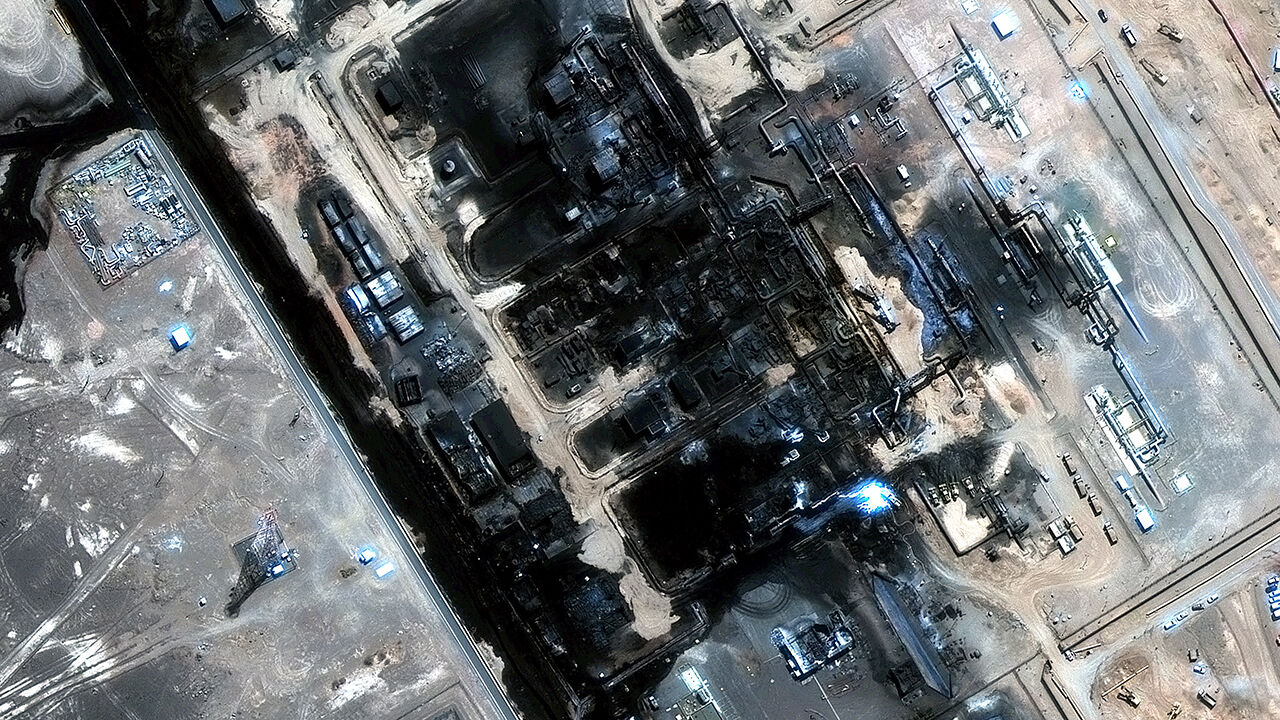
▲ Satellite image of the targeted East-West pipeline in Saudi Arabia
Reuters reported on the 13th (local time) that Saudi Arabia's core pipeline faces the risk of a 4 percent reduction in global oil supply if operations are not resumed within days.
Saudi Arabia's East-West pipeline was temporarily shut down after being hit by a drone launched from Iraq on the 10th.
The approximately 1,200-kilometer-long pipeline runs from Saudi Arabia's eastern oil fields, across the Arabian Peninsula, to the Red Sea port of Yanbu.
It has served as an alternative route since Iran blockaded the Strait of Hormuz, with a daily oil transportation volume of around 5 million barrels.
This accounts for 4 to 5 percent of the global oil supply.
Citing industry sources, Reuters reported that some projections suggest it could take up to 5 to 6 weeks to repair the East-West pipeline.
The Saudi government has not released an official statement regarding the matter.
Following the attack on the East-West pipeline, Brent crude futures surpassed 100 dollars per barrel.
Industry sources familiar with Saudi oil exports told Reuters that crude oil inventories at the port of Yanbu currently have only 5 to 7 days left.
The industry estimates that while Yanbu's storage capacity is about 35 million barrels, the storage tanks are not completely full, meaning inventories will eventually run out if the East-West pipeline is not restarted.
According to marine intelligence firm Kpler, Saudi Arabia's maritime oil exports plummeted to 320,000 barrels per day last month due to the war with Iran, hitting a 13-year low.
This fell short of even half of the pre-war daily export volume of approximately 7 million barrels.
The Saudi Ministry of Energy reported to the Organization of the Petroleum Exporting Countries (OPEC) that its oil production plummeted from 10.9 million barrels per day in February, before the war, to 6.2 million barrels last month.
The International Energy Agency (IEA) announced on the 11th that Saudi oil supply last month dropped by 2.3 million barrels from the previous month to 6 million barrels per day, marking a 30-year low.
To make matters worse, the Red Sea route that had replaced the Strait of Hormuz has also seen worsening conditions as Yemeni rebels intensified their offensive against the Bab el-Mandeb Strait, making Saudi oil exports even more difficult.
The IEA forecasted on the 11th that global oil supply this year will decrease by 5.7 million barrels per day, down about 6 percent compared to last year.
(Photo: Vantor, AP, Yonhap News)
※ Please note: This article was translated by AI and may contain errors.



 Video News
 Video News

 Video News
![[자막뉴스] "피 토하고 폐 비대" 충격 결과…숨기고 승인해 93명 '생체 실험'](http://img.sbs.co.kr/newimg/news/20260914/202222078_300.jpg) Video News
Video News