
 KOR
KOR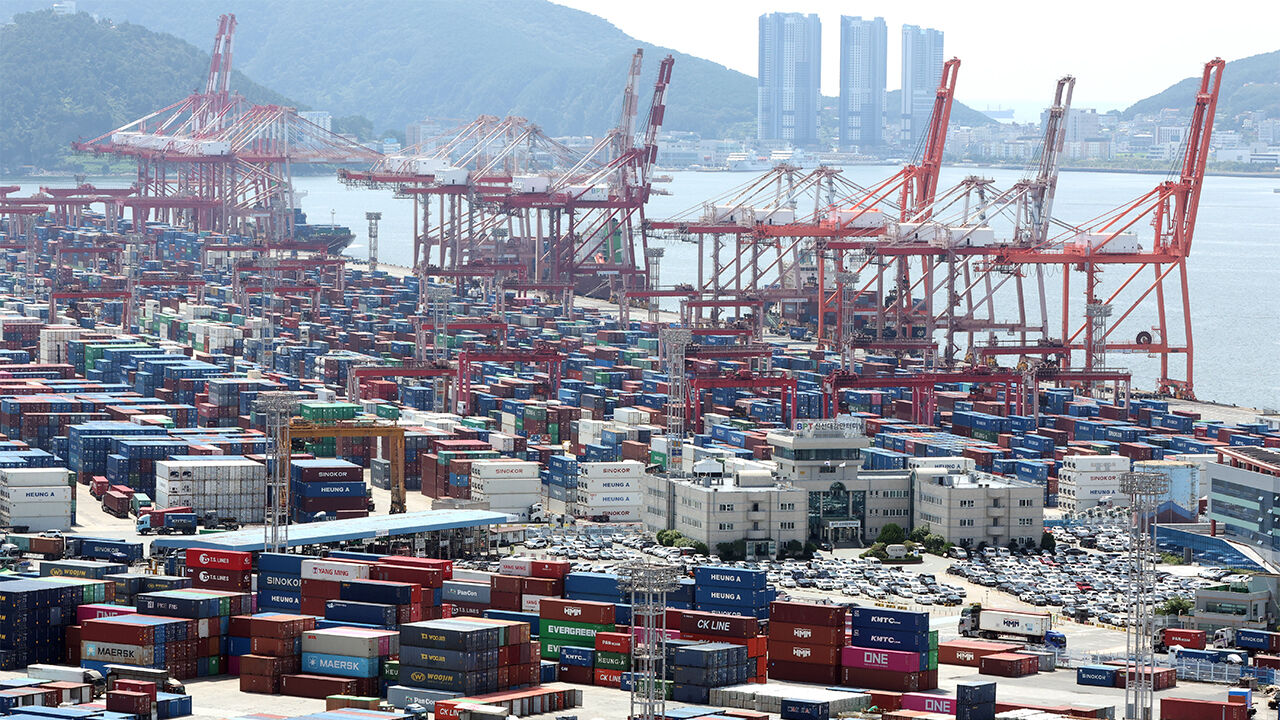
▲ Containers fill the Busan Port.
The Bank of Korea (BOK) analyzed on the 13th that South Korea has maintained its economic ties with both the United States and China amidst geopolitical fragmentation by utilizing production networks in third countries such as ASEAN.
In a report released on the same day, the BOK stated, "(Economic linkages between countries) are persisting as existing global supply chain routes are being reconfigured."
Amid declining direct trade between the U.S. and China, the BOK highlighted the role of so-called "connector countries" linked to both sides, such as Vietnam, India, and Mexico.
The data showed that South Korea's supply chain has maintained and strengthened its connection with the U.S. and China through the production networks of these connector countries.
For instance, the proportion of value-added generated by South Korea's exports to Vietnam that was linked to U.S. consumption and investment increased from 11.1% in 2016 to 18.5% in 2022.
The proportion linked to China also expanded from 7.3% to 13.9% over the same period.
In particular, during the same period, the computer, electronics, and optical equipment sectors, including semiconductors, saw significant increases in their connections to both the U.S. (from 12.8% to 21.0%) and China (from 11.2% to 19.4%).
The BOK also analyzed that while the proportion of value-added created in South Korea directly linked to U.S. final demand remained largely stable, the role of the ASEAN production network expanded in indirect connections through third countries.
Specifically, when South Korean intermediate goods were routed to the U.S. via third-country production bases, the share via China decreased (from 10.7% to 6.8%), while the share via five ASEAN nations including Vietnam increased (from 4.9% to 8.3%).
The BOK advised, "We need to jointly manage the possibility that policy shifts in major economies, changes in local production conditions, and supply chain shocks could ripple into the domestic economy through third-country production networks, while diversifying supply chains to lower dependence on specific production hubs or routes."
(Photo: Yonhap News)
※ Please note: This article was translated by AI and may contain errors.





 Video News

