
 KOR
KOR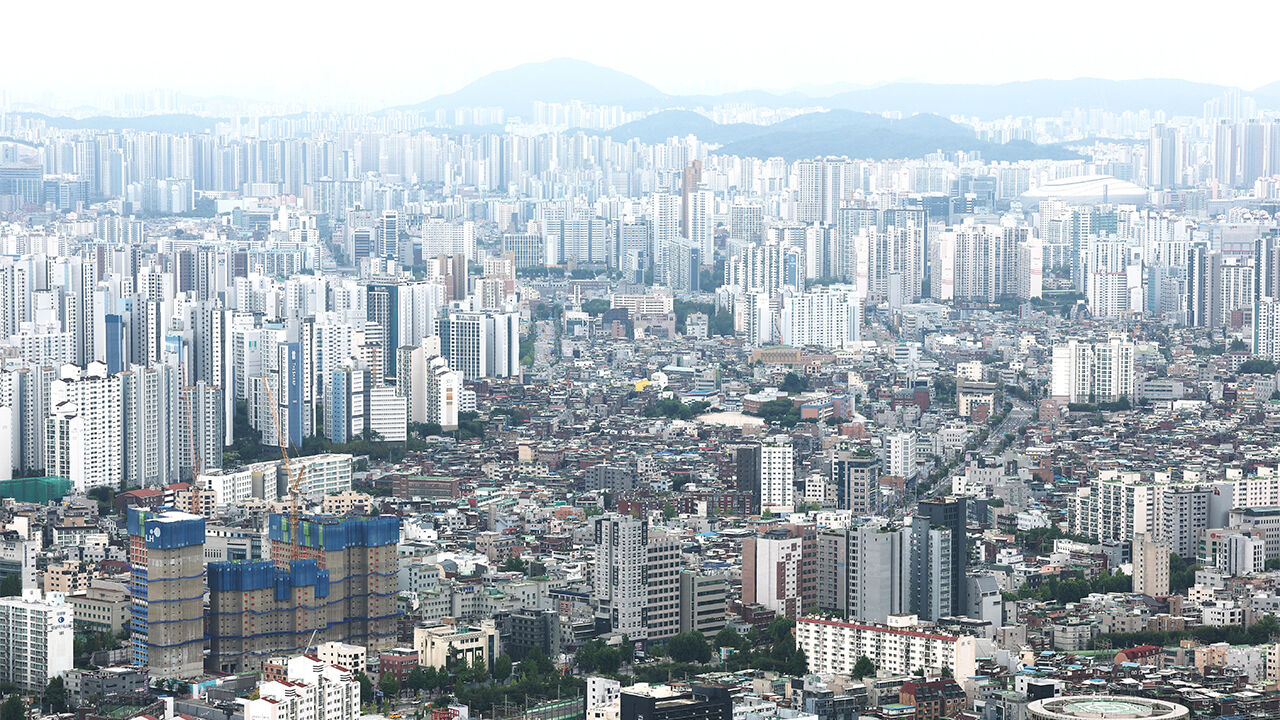
(Photo: Yonhap News) ▲ A panoramic view of apartment complexes across Seoul, seen from the 63 Building observatory in Yeouido.
As Seoul apartment purchase prices approach an all-time record for the longest continuous upward streak, experts predict the uptrend will be sustained even longer, as the variables supporting the current momentum are more powerful than before.
According to the Korea Real Estate Board on September 13, weekly apartment purchase prices in Seoul have maintained an upward trend for 83 consecutive weeks, from the first week of February last year to the first week of September.
The previous longest consecutive increase was 85 weeks, recorded from the second week of June 2020 to the third week of January 2022 during the Moon Jae-in administration.
The lowest weekly fluctuation rate for Seoul apartments this year was 0.05% in the third week of March, affected by the emergence of quick-sale properties ahead of the expiration of the suspension of heavy capital gains taxes for multiple homeowners.
The increase rate for the first week of September, the most recent survey reference period, stood at 0.20%, maintaining a 0.20% range trend for a month since August.
Policy uncertainties, such as tax revisions that increase the tax burden on high-priced homes and non-resident single-home owners, led to a continuing downward trend in the Gangnam 2 districts (Gangnam and Seocho), acting as a factor limiting the overall upward amplitude.
However, there is a prevailing view that the Gangnam area's weakness is likely a short-term trend, and the possibility of Seoul's overall average temporarily turning downward over the next two weeks is slim.
The economic environment surrounding the real estate market shares both similarities and differences with the past.
During past periods when Seoul housing prices rose for extended periods, low interest rates and abundant liquidity played a major role.
To cope with the economic downturn triggered by the COVID-19 pandemic, the Bank of Korea implemented a "big cut" in March 2020, slashing the base rate by 0.50 percentage points at once from 1.25% to 0.75%.
This was followed by an additional rate cut to 0.50% in May of the same year, lowering the rate by 0.75 percentage points within a span of two months.
Subsequently, the Bank of Korea began raising the base rate again in August 2021, and the upward trend in Seoul apartment prices halted around January 2022 when the rate was returned to the pre-pandemic level of 1.25%.
Recently, the Bank of Korea has also raised the base rate twice consecutively, pushing it up to 3.00% per annum.
This move also carried the significance of responding to the rise in capital region housing prices and household debt growth, alongside price stability.
However, the prevailing analysis is that the impact of the rate hike will be more limited than before, as abundant liquidity—such as massive performance bonuses from major corporations driven by the semiconductor industry boom and funds realized from stock profits—is flowing into real estate.
Nam Hyuk-woo, a real estate researcher at Woori Bank, said, "In terms of asset market liquidity, the current situation appears far more favorable than past upward cycles," adding, "Even if absolute interest rate levels differ, underlying environmental differences such as the semiconductor boom and gross domestic product (GDP) growth mean market purchasing power is at a higher level now than before."
Given that major measures—ranging from loan regulations and the expanded designation of regulated zones to tax revisions—have already been rolled out over the past year to stabilize housing prices, it remains uncertain whether additional regulations will emerge.
To cope with the overheating Seoul apartment market in June of last year, early in the current administration's term, mortgage loans were tightened through the June 27 loan regulations. In the second half of the year, the October 15 measures bundled all of Seoul and 12 areas in Gyeonggi Province into regulated zones (adjustment target areas and speculative overheated districts) as well as land transaction permit zones, while differentiating loan limits by housing price bracket.
Tax revisions increasing the tax burden for holders of ultra-high-priced homes and non-resident single-home owners also surfaced this year, but as public sentiment worsened, a relaxed government proposal emerged, and it is possible that further adjustments will be made during National Assembly deliberations.
A phase where both purchase and jeonse (lump-sum housing deposit lease) prices face upward pressure is a point of similarity with previous upward cycles.
In 2021-2022, when the impact of the implementation of the lease laws—such as the right to request contract renewal and the jeonse/wolse price ceilings—became apparent, a shrinking supply of jeonse properties and soaring jeonse prices led many tenants and homebuyers without homes to pivot toward purchasing.
As a result, demand flocked to mid-to-low-priced areas such as the outer districts of Seoul, where the burden of raising funds was relatively lighter, causing prices in these areas to surge significantly—a similar situation that has been re-emerging since earlier this year.
As the shortage of jeonse properties driven by a decrease in new move-in supply in Seoul is expected to be difficult to resolve for the time being, the trend of tenants shifting to purchases and driving up mid-to-lower-tier housing prices is projected to continue going forward.
The top cumulative increase rates by district in Seoul this year are led by areas previously classified as mid-to-lower tiers, such as Seongbuk District (13.52%), Guro District (11.06%), Gangseo District (11.01%), Seodaemun District (10.93%), and Gwanak District (10.40%).
Considering these conditions, the prevailing outlook is that the upward trend in Seoul apartment prices will persist longer than in the past.
(Photo: Yonhap News)
※ Please note: This article was translated by AI and may contain errors.



 Video News


 Video News
