
 KOR
KOR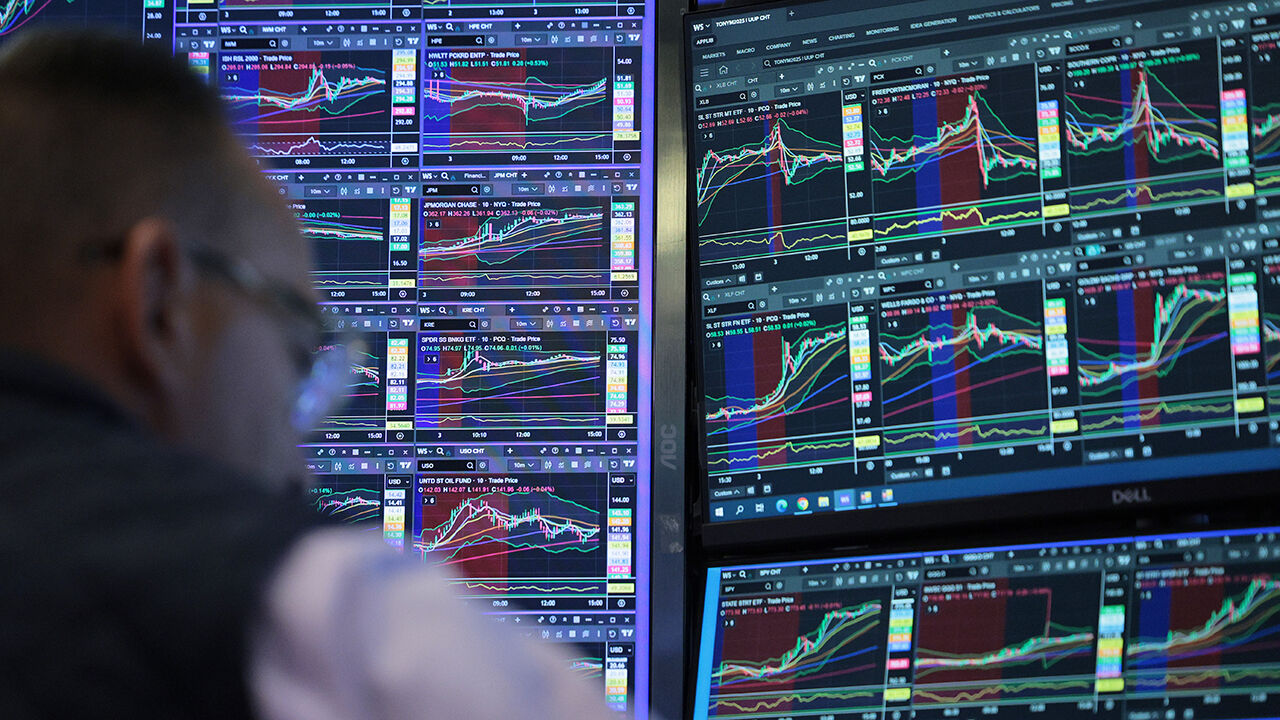
▲ New York Stock Exchange in the United States
US Treasury yields surged significantly again on the 10th (local time) as expectations for a Federal Reserve (Fed) rate hike next week were fueled by inflation indicators, compounded by a sharp spike in oil prices.
On this day, the yield on the 30-year US Treasury bond spiked by about 6.8 bps (1 bp = 0.01 percentage points) during the session to 5.354%, recording its highest level since June 2007.
This broke the 5.33% range recorded last month once again.
The 10-year Treasury yield, a benchmark for global rates, also rose to 4.927% during the session, reaching its highest level since October 2023.
In the market, there are also projections that the 10-year yield could test a breakthrough of the 5% threshold.
Tom Di Galoma, managing director at Mischler Financial Group, said, "If the 10-year surpasses the 4.95% level, we expect it to head toward 5%."
The 2-year yield, which is sensitive to monetary policy outlooks, rose by 9.12 bps to 4.518%, marking its highest level since July 2024.
Concerns over inflation and vigilance regarding a Fed rate hike grew further as a sharp surge in international oil prices overlapped with an expanded increase in producer prices.
The US Department of Labor announced that the Producer Price Index (PPI) for August rose 0.4% from the previous month.
While it met market expectations, the pace of increase expanded compared to July (a 0.1% rise).
Compared to the same month last year, it rose 5.4%, slightly exceeding the market expectation of 5.3%.
In particular, energy prices jumped 4.2% from the previous month, leading the increase in producer prices.
In the market, vigilance is growing that inflationary pressures may not subside as easily as expected.
According to the Chicago Mercantile Exchange (CME) FedWatch on this day, the federal funds rate (FFR) futures market is reflecting an increased probability—from 62% to around 70%—that the benchmark interest rate, currently at 3.50–3.75%, will be raised by 0.25 percentage points to 3.75–4.00% at the September FOMC.
Molly Brooks, US rates strategist at TD Securities, said, "Before the PPI release, oil prices that surged overnight were primarily driving the market," adding, "While the headline PPI figure met expectations, some items reflected in the Fed's preferred core personal consumption expenditures (PCE) indicator came in somewhat stronger than market expectations."
International oil prices surged by more than 4% on this day as well, escalating inflation concerns.
Amid forecasts that tensions in the Middle East will be prolonged, Brent crude futures prices are fluctuating around $105 per barrel.
West Texas Intermediate (WTI) crude futures prices also surpassed $100.
Reports also emerged that the Houthi movement, an Iran-backed rebel group in Yemen, has taken over Mocha, a major city on the Red Sea coast, putting it on the verge of seizing control of the Bab el-Mandeb Strait, a strategic chokepoint at the entrance of the Red Sea.
As tensions between the US and Iran surrounding the Strait of Hormuz persist, key crude oil transport routes in the Red Sea are being threatened, making additional shocks to global maritime logistics and energy transport inevitable.
Amidst this, President Donald Trump's massive cash handout pledge also placed a burden on long-term yields.
President Trump stated at the Republican midterm convention the previous day that if he wins the November election, he will distribute $5,000 (approx. 6.7 million won) per person to all adult citizens.
Evaluations emerged that concerns over fiscal deficits and expanded government bond issuance have grown, with US national debt already surpassing $40 trillion.
(Photo: Getty Images)
※ Please note: This article was translated by AI and may contain errors.



 Video News
 Video News
 Video News
 Video News
 Video News