
 KOR
KOR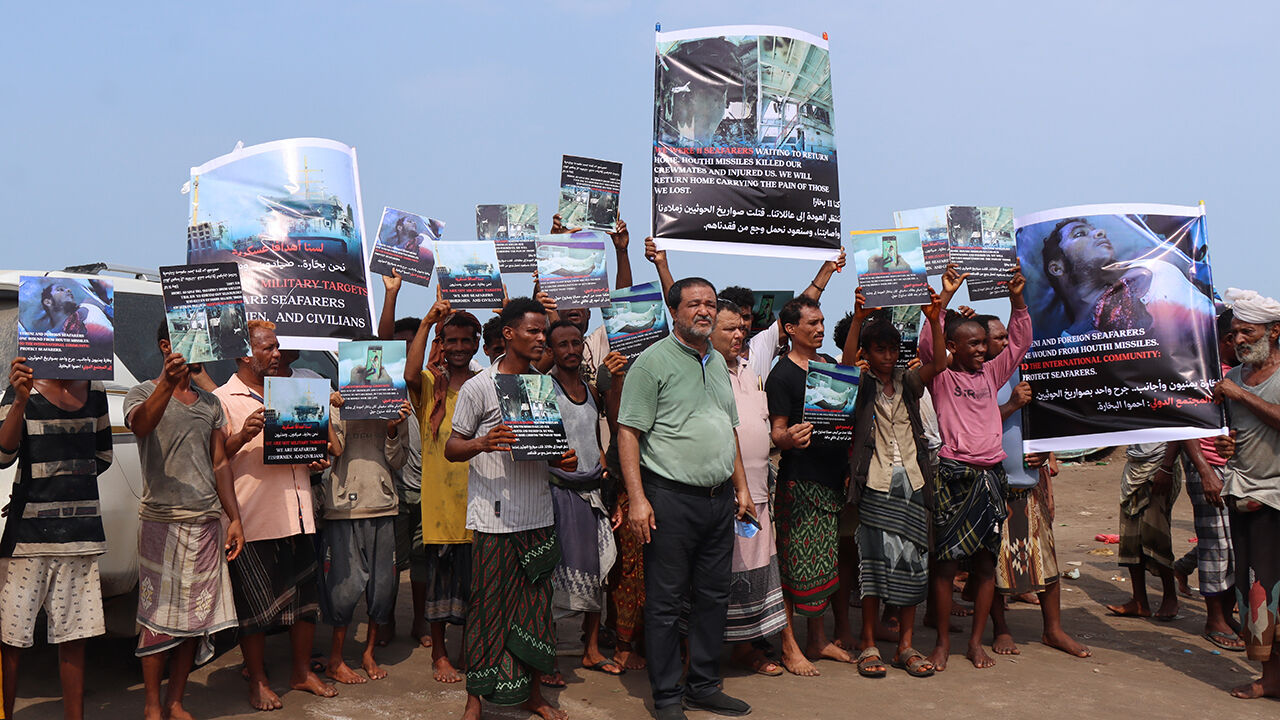
▲ Sailors hold a rally against the Houthi rebels' attacks at the port of Mocha in Yemen on the 17th.
Yemen's Iran-backed Houthi rebels, who have been engaged in fierce battles with the Saudi-led coalition, have taken control of the major Red Sea coastal city of Mocha, bringing them to the threshold of seizing the Bab el-Mandeb Strait, a strategic chokepoint at the entrance of the Red Sea.
While Iran has blocked the Strait of Hormuz, if the Houthis, considered one of Iran's proxy forces, take control of the Bab el-Mandeb Strait and regulate vessel traffic, it could have a major impact not only on global maritime logistics but also on the dynamics of the Middle East conflict.
Reuters reported on the 10th (local time), citing four Yemeni government sources, that the Houthis had captured Mocha and were on the verge of securing control over the strategic Bab el-Mandeb Strait.
The sources stated that after taking Mocha, the Houthi rebels launched attacks targeting the Hanish Islands, a strategic archipelago in the Red Sea.
In response, government forces and their allies, recognized by the international community, are redeploying troops to the Dubab area adjacent to the strait opposite Mayun Island.
AFP also reported the same news, citing Yemeni military sources.
"The Houthi rebels have taken control of Mocha and are currently advancing toward the Bab el-Mandeb Strait," a source said.
According to the sources, the Houthi rebels also seized Zuqar Island in the southern Red Sea following a ground assault utilizing rocket attacks and boats carrying fighters.
Local witnesses reported seeing rebel fighters enter the city chanting slogans such as "Death to America, death to Israel."
Videos circulated on social media showed pickup trucks carrying rebel fighters racing through downtown Mocha.
Mocha is a strategic port city located about 70 to 80 kilometers north of the Bab el-Mandeb Strait.
The Houthi rebels' capture of the area means they have secured a foothold leading toward the strait.
Moving south from Mocha along the coastline leads to Dubab and Cape Bab al-Mandeb (the southwestern tip of the Arabian Peninsula), which directly border the Bab el-Mandeb Strait.
Controlling this coastline allows for visual monitoring of vessels passing through the Bab el-Mandeb Strait and the direct deployment of ground troops and short-range weapons.
Furthermore, seizing Mayun Island, located in the middle of the Bab el-Mandeb Strait and dividing it into two channels, would enable them to dictate maritime traffic through the strait.
However, the island is currently controlled by anti-Houthi factions, including southern Yemeni separatists backed by the United Arab Emirates (the Southern Transitional Council), who have established a runway and military base there.
Even if they do not achieve complete physical occupation of Dubab or Mayun Island, the Houthi rebels can pose a threat to strait navigation by capturing Mocha.
Mocha is close enough for anti-ship missiles, suicide drones, and high-speed boats operated by the Houthi rebels to launch and directly strike merchant ships or warships passing through the Bab el-Mandeb Strait.
The Houthi rebels have been engaging in fierce clashes with Saudi-backed government forces as they attempt to advance into the Red Sea coastal region bordering the Bab el-Mandeb Strait, a vital shipping lane.
The Bab el-Mandeb Strait, which connects Asia and Europe via the Red Sea and the Suez Canal, has rapidly grown in importance as a major export route for energy resources like oil after Iran blocked the Strait of Hormuz amid attacks by the United States and Israel.
(Photo: AP, Yonhap News)
※ Please note: This article was translated by AI and may contain errors.



 Video News
 Video News
 Video News
 Video News
 Video News