
 KOR
KORAt this juncture, we sought the views of Professor Lee Moon-young from the Institute for Peace and Unification Studies at Seoul National University. Professor Lee argued that troops should not be deployed precisely because it is Trump. Below is a summary of the parts concerning troop deployment from an interview conducted on September 8 on SBS's "Discovery of Knowledge."
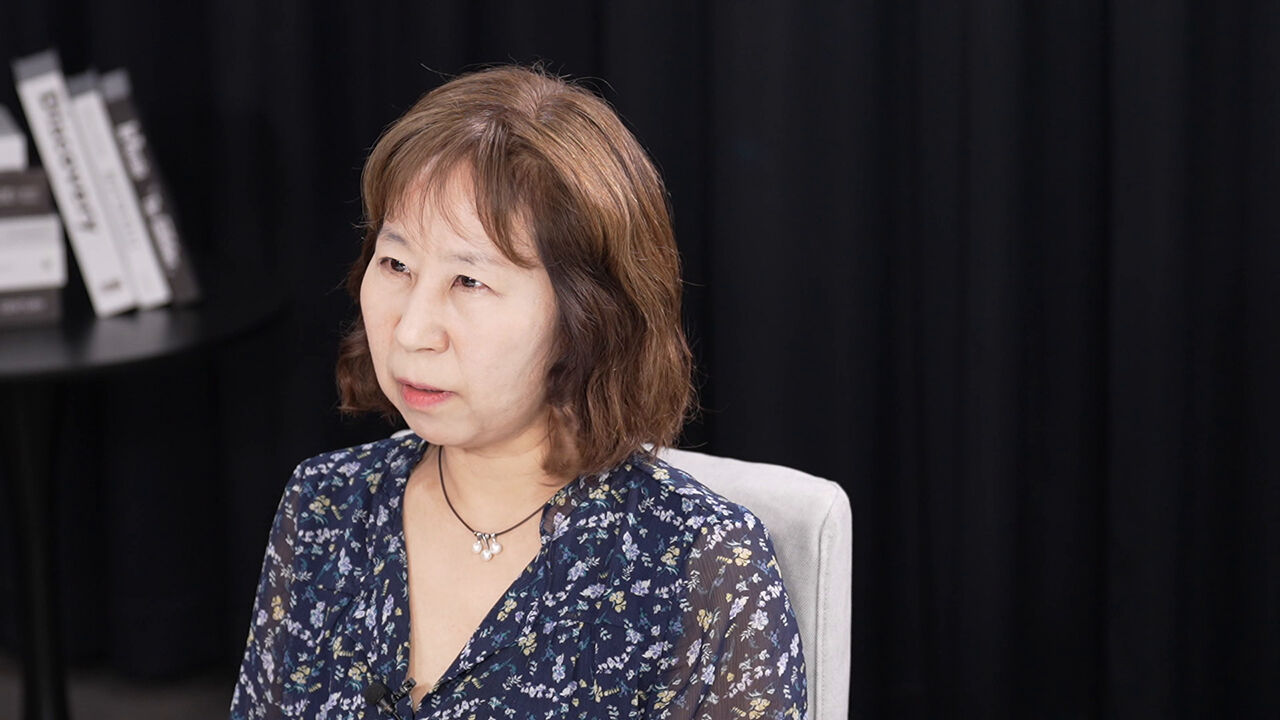
Q. The government is reviewing a troop deployment to the Strait of Hormuz. First, let me ask: Should we deploy troops or not?
Professor Lee Moon-young: The current administration's diplomatic orientation is pragmatism, isn't it? Even from a pragmatic standpoint, I do not see what there is to gain.
Reporter Jeong Yu-mi: The government also seems to be reviewing this not so much to gain something, but rather to minimize losses.
Professor Lee Moon-young: That itself is considered a gain—trying not to lose anything further.
Q. What is your prediction? Do you think the government will deploy troops to the Strait of Hormuz?
Professor Lee Moon-young: Many people say that because talks have reached this stage, some progress must have been made. But taking into account public opinion and expert consensus, it would be better not to do it.
Q. The 2003 troop deployment to Iraq is constantly being brought up. How would you compare that to the present situation?
Professor Lee Moon-young: People compare the two because in both cases, progressive administrations faced troop deployments that ran counter to their principles, but the circumstances are completely different.
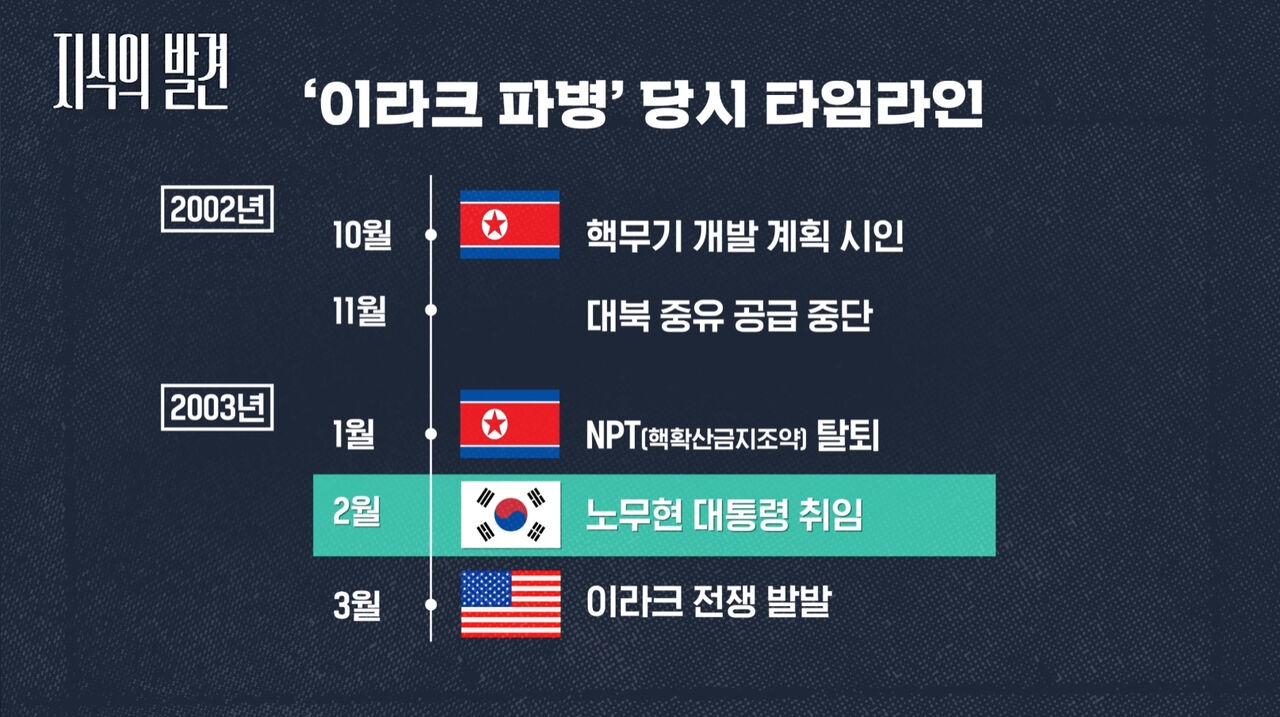
The situation was unfolding with immense gravity, and President George W. Bush at the time particularly despised North Korea, labeling it part of the "axis of evil." On top of that, the Bush administration viewed the Roh Moo-hyun administration with deep suspicion, wondering if it was a leftist or anti-American government. In any case, former President Roh needed diplomatic maneuvering room to defuse these tensions and allow South Korea to play a meaningful role, and that was why he agreed to deploy troops to Iraq. Indeed, we made the first deployment in April that year, and the Six-Party Talks began right afterward.
While we cannot draw a direct cause-and-effect line saying, "The Six-Party Talks happened because former President Roh deployed troops," I personally can acknowledge the urgency of the situation that led former President Roh to consider deploying troops to Iraq at that time—the compelling nature of that necessity and its sincerity.
Q. Are you saying that such urgency cannot be recognized today?
Professor Lee Moon-young: Exactly. The situation now is vastly different from back then. First of all, the Iraq War was condemned worldwide back then as well, and the UN did not authorize it either. However, at least 70% of the American public supported the Iraq War, especially coming right after the September 11 terrorist attacks. But the current war with Iran is a war that 70% of the American people oppose. It is a war from which even Trump is wondering how he can pull out. In a way, it feels like they are making us do their "clean-up."
Look at what other countries are doing right now. France, for instance, is actively leading preparations for a multinational force, but they have not entered Hormuz. They are merely standing by outside. Most countries are taking the stance of "let's go in to clean up once a ceasefire is reached." Moreover, Japanese Prime Minister Takaichi declined right to Trump's face when asked directly. Why should we go out of our way to do something that everyone else is avoiding?
Q. So you are saying there is no need for us to step forward first. What other reasons are there?
Professor Lee Moon-young: Even if officials claim "it's not for combat purposes" or "we're sending non-combat units," there is now talk of sending maritime patrol aircraft. While "patrol aircraft" sounds technical, its core purpose is surveillance—keeping watch from above and gathering intelligence. Furthermore, a logistics support ship does not engage in combat directly, but it supplies fuel, food, and at times ammunition to combat zones.
We may label this non-combat, but it is Iran that decides whether it is non-combat or combat. Iran would naturally view it this way: "Logistics support? Who are you supporting? You're supporting the United States. That means you are indirectly participating in combat." If Iran decides to attack our commercial vessels or our various assets in the Middle East, the gravest danger in such a scenario is accidental entanglement. Regardless of our intentions, we could become entangled in the war.
It is not just military entanglement; civilian casualties are also a foreseeable risk. Do you remember the kidnapping and murder of Kim Sun-il? He was an employee of a trading company. They kidnapped him, and the reason was South Korea's "troop deployment." When it comes to terrorism and similar threats, Iran poses a danger that is equal to, if not greater than, Iraq back then. There is a real risk of civilian casualties and unexpected threats to the lives and safety of our citizens.
In terms of energy security as well, the U.S. is essentially saying, "China, India, South Korea, and Japan pass through Hormuz the most, so you should take responsibility." But while Trump will eventually leave, Iran is forever. Seventy percent of the crude oil we import comes from the Middle East, and over 90% of that passes through Hormuz. If we deploy troops and strain relations with Iran like this, how will we handle the consequences later?
Professor Lee Moon-young: World War III is no longer fiction; we have reached a point where it would not be surprising if it broke out tomorrow. The four prime flashpoints for World War III are Ukraine, the Middle East, and moving further east, Taiwan and the Korean Peninsula. If we deploy troops to the war in Iran as well, two of these four flashpoints will overlap for us. Can we realistically handle that? The worst thing in war is "accidental entanglement." Regardless of our wishes or good intentions, we get dragged into it.
Q. Some suggest that if we explain our intentions and position clearly through diplomatic channels with Iran, Iran won't go so far as to attack us. Would that approach not work?
Professor Lee Moon-young: If that were possible, would the Iranian Foreign Ministry have warned in Korean that "dangerous choices carry consequences," even before our government stated an official position?
Reporter Jeong Yu-mi: So you believe that channel is currently not functioning well.
Professor Lee Moon-young: From Iran's perspective, it seems unacceptable.
Q. It seems unlikely that President Lee Jae-myung and our government are unaware of what you are saying. Still, the reason they are reviewing and agonizing over this seems to be because of President Trump. The problem is that President Trump is linking this troop deployment issue to various other issues.
Professor Lee Moon-young: Shouldn't we refuse precisely because it's President Trump? Under President George W. Bush, our alliance was one where deploying troops earned due recognition. But with Trump today, if you give him one, he'll ask for two; if you give him two, he'll ask for ten.
Reporter Jeong Yu-mi: For instance, even if we send patrol aircraft, he might just respond with "Not enough."
Professor Lee Moon-young: Exactly. He'll think, "Threatening them works after all." Trump is fundamentally someone who "bows to the strong and bullies the weak."
Reporter Jeong Yu-mi: Meaning he will ramp up the pressure even further?
Professor Lee Moon-young: Yes. So the question is: Under Trump, is this a rational alliance where deploying troops will be met with fair recognition?
Q. Then what should be done? You are saying we shouldn't deploy troops precisely because it is Trump.
Professor Lee Moon-young: The current fear is that Trump might hold a grudge and retaliate, saying, "South Korea didn't send troops?"
Reporter Jeong Yu-mi: Slapping on more tariffs, abruptly demanding more defense cost-sharing... Nobody knows what erratic move he might make.
Professor Lee Moon-young: Trump may indeed harbor intense spite. But if we comply, will Trump refrain from doing that? First of all, that seems unlikely.
Q. In an interview with the French daily Le Monde, President Lee Jae-myung remarked regarding President Trump that "he has demonstrated a willingness to redefine the alliance in line with the changing realities of the era."
Professor Lee Moon-young: What else could he say? It is diplomatic rhetoric.
Reporter Jeong Yu-mi: When I read President Lee's remarks, I also felt he went to great lengths to sugarcoat it. It seems you got a similar impression.
Professor Lee Moon-young: Wouldn't he have been seething on the inside?
Professor Lee Moon-young: Trump targets everyone in every direction. Is there any country right now that hasn't been targeted by Trump? Just look at Canada.
Reporter Jeong Yu-mi: It makes one wonder how the U.S. and Canada could treat each other like that.
Professor Lee Moon-young: Precisely.
Q. Early in Trump's second term, his strong warnings seemed to carry weight, but would you say his influence has weakened somewhat now?
Professor Lee Moon-young: Many countries are pushing back against Trump. Canada goes without saying, and regarding the Iran war, countries like Italy won't even allow the use of their bases. During the Iraq War, Britain moved in lockstep with the United States. But now, even Britain is hesitating over whether to send forces or not, merely making token gestures. Since we are not the only ones Trump has targeted, I don't think we need to worry so much.
On a more fundamental note, the global chessboard is being upended right now. An upended board is a crisis, but it can also be an opportunity. When that happens, I think South Korea could create a new model of hegemony.
Q. We could become a new model of hegemony?
Professor Lee Moon-young: Yes. The original figure who popularized the term "hegemony" was Antonio Gramsci. When he first conceptualized hegemony, he defined it not as obedience through coercion, but as the power to elicit voluntary consent and voluntary choice. In simpler terms, rather than following orders out of fear—thinking, "That guy is terrifying; if I don't listen, he'll hit me"—it is following someone because you think, "That guy is impressive; can we look up to him as our leader?"
Q. That seems a bit different from what "hegemony" means today.
Professor Lee Moon-young: That is precisely my point. Proposing to build a new model of hegemony is not about creating something entirely novel, but about returning to the original concept of hegemony. When we speak of hegemony, we talk about three elements. First, you need money—economic power. Then you need military power—hard power. And then comes soft power.
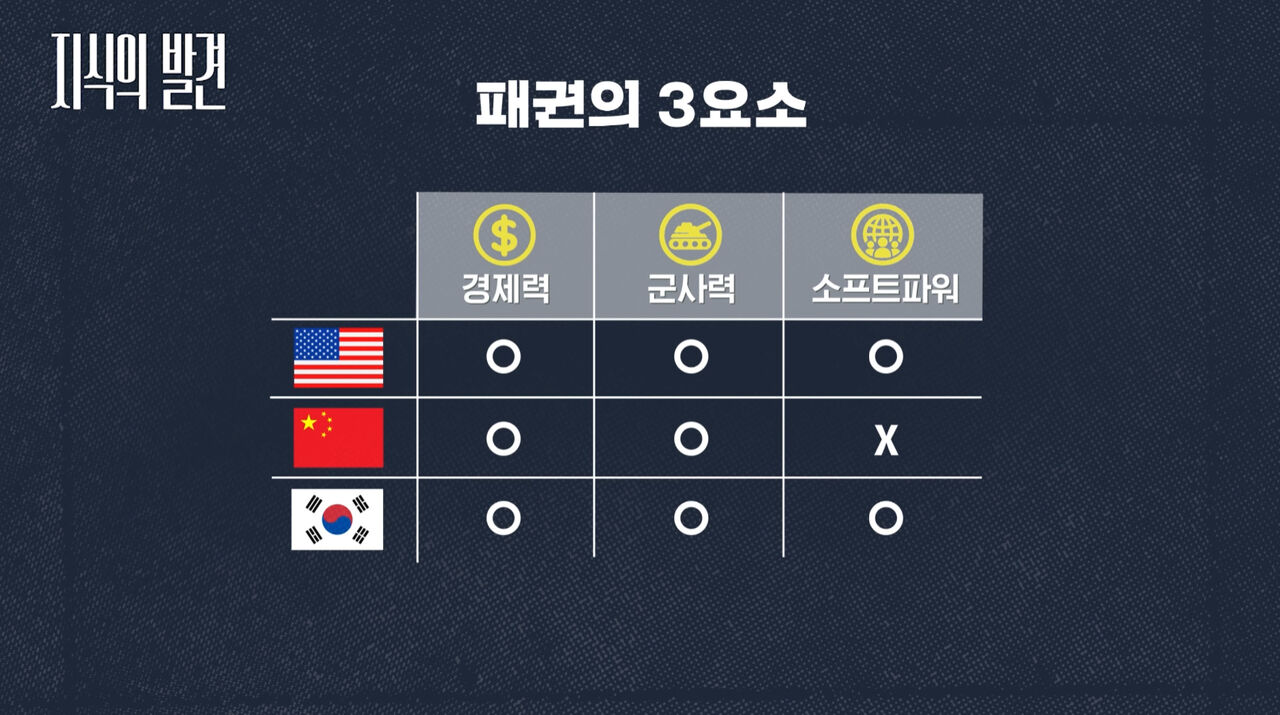
We possess the world's fifth-strongest military, roughly the tenth-largest economy, and right now, "K-power" and the Korean Wave are tremendous. The most vital component of hegemony is soft power. Hegemony centers on moral or intellectual authority that makes others choose you out of genuine admiration. The reason we were able to acquire this is that we are the sole success story of a nation that transformed from an aid recipient into an advanced donor nation. Moreover, throughout that grueling journey, we never once invaded or bullied another country. The appeal of such a narrative is immense.
Instead of turning this troop deployment issue into a crisis that completely divides national opinion, why can't we turn it into our first step toward building that new model of hegemony? The South Korea of the Roh Moo-hyun administration and the Republic of Korea today are different. We are now in a position where we can confidently say no to troop deployment. I believe we have the economic and military power to do so. And even though South Korea and the U.S. are allies, shouldn't our relationship evolve now? How long must we continue being dragged around by Trump?
Q. You said it wasn't chauvinism, but hearing you say that certainly stirs up a sense of pride.
Professor Lee Moon-young: When this issue flared up, I re-read former President Roh Moo-hyun's autobiography. He wrote: "History will record the dispatch of troops to Iraq as the wrong decision. Will a day ever come when we no longer have to do this? An end will come." It ends with that faith and hope. But that was 23 years ago. The Korea then and the Korea now are different. Hasn't that time truly arrived?
Reporter Jeong Yu-mi: Is now that moment former President Roh spoke of?
Professor Lee Moon-young: Yes. We now have the economic and military power to say no when something is wrong and to bear the consequences. It seems we aren't thinking in accordance with our own size.
Reporter Jeong Yu-mi: And we haven't even tried speaking up.
Professor Lee Moon-young: Let's give it a try. Besides, Trump is frankly unpredictable, so let's test it at a time like this. People usually think principles and pragmatic interests clash. But in some cases, upholding principles brings greater pragmatic gains. Doing so genuinely requires conviction and courage. I believe our current situation is one where "we have the capability, but lack the courage."
Q. In any case, the war with Iran hasn't unfolded as easily as Trump initially anticipated, which brought things to this stage... Recently, the U.S. launched an "economic ostracization operation." An expert who appeared on our broadcast predicted that Iran won't be able to hold out under this operation and that the war will inevitably end. What are your thoughts, Professor?
Professor Lee Moon-young: They imposed economic sanctions, and when that didn't work, they struck militarily. And when the military strike didn't work, they are going back to economic sanctions.
Reporter Jeong Yu-mi: Even harsher economic sanctions.
Professor Lee Moon-young: That makes one wonder why they even went to war in the first place. For sanctions to genuinely work, everyone must participate simultaneously. There cannot be loopholes. When Bessent said, "Do not do business with Iran, we will impose tough secondary sanctions," China immediately issued an official stance, saying, "What China and Iran are doing right now is entirely within a legal framework, so we have no intention of complying; you who unilaterally impose sanctions as you please are the ones acting unlawfully." And it isn't just China; the same goes for Russia.
The Shanghai Cooperation Organisation includes China, Russia, India, and Iran as members, along with four Central Asian nations except Turkmenistan. At their summit, although they didn't specifically name Iran, they released a statement declaring, "We oppose unilateral sanctions." That means several loopholes have already opened up. As long as China is cutting Iran slack, U.S. sanctions cannot be effective. For sanctions to truly starve Iran, the entire world would have to cut off everything with Iran, but that is not happening at all. Therefore, I believe this warning from Bessent regarding secondary sanctions simply demonstrates how cornered the United States is in this war with Iran.
※ Please note: This article was translated by AI and may contain errors.




 Video News
 Video News

 Video News