
 KOR
KOR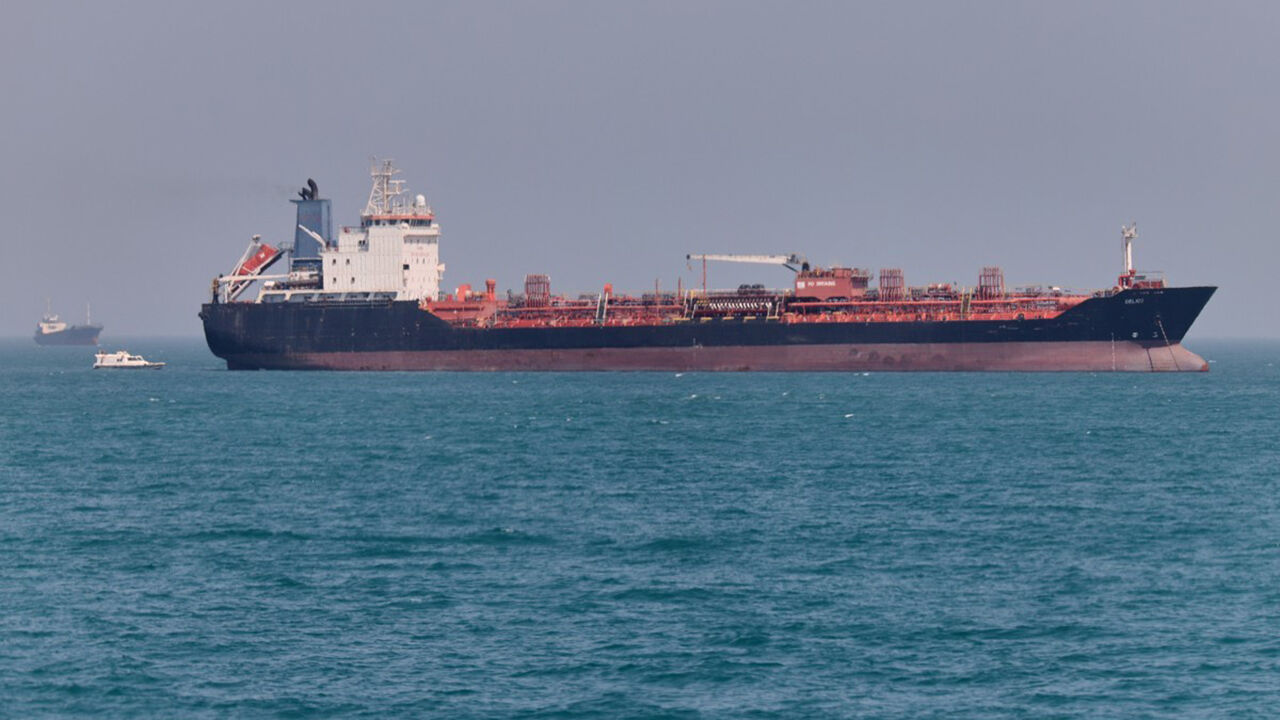
▲ Oil tanker in the Strait of Hormuz
Following the U.S.-Iran war, Saudi Arabia has repeatedly activated "Plan B" in a desperate effort to maintain crude oil exports.
However, compounded by escalating clashes with the Houthi movement, an Iran-backed rebel group in Yemen, maritime routes have been blocked not only in the eastern Strait of Hormuz but also in the western Bab el-Mandeb Strait.
Consequently, crude oil exports from Saudi Arabia, the world's largest oil exporter, have plunged to their lowest level in over a decade, the New York Times (NYT) reported on the 9th, local time.
According to maritime intelligence firm Kpler, Saudi Arabia's crude oil exports in August stood at 3.2 million barrels per day, the lowest level in 13 years.
Before the outbreak of the U.S.-Iran war, Saudi Arabia's daily crude oil exports hovered around 7 million barrels.
Given that Saudi Arabia has long been the world's largest oil exporter, its crude supply plays a crucial role in maintaining stability in global energy prices.
Saudi Arabia has traditionally exported most of its crude oil through the Strait of Hormuz.
However, after Iran—currently at war with the United States—blocked the Strait of Hormuz, Saudi Arabia activated another "Plan B" by increasing the operational rate of its east-west pipeline to ship crude through ports along the Red Sea coast.
Yet, the Iran-backed Houthis have even blocked Saudi Arabia's Red Sea oil export route.
As a result, to sell crude to the Asian market, the kingdom has been left with no choice but to take a route heading out to the Suez Canal and rounding South Africa's Cape of Good Hope, which incurs higher shipping costs and takes a longer time.
This is because all of Saudi Arabia's major clients are located in Asia.
South Korea also relies heavily on crude oil imported from Saudi Arabia.
According to the Korea International Trade Association, South Korea imported $25.7 billion worth of crude oil from Saudi Arabia last year.
This accounts for well over one-third of its total crude oil import value.
The Houthis declared the blockade of Saudi vessels on July 20.
According to Allison Minor, a former U.S. special envoy to Yemen, at least seven Saudi vessels have been attacked by the Houthis since then.
While the conflict between Saudi Arabia and the Houthis escalates to a full-scale war level, safety along the detour route through the Suez Canal north of the Red Sea has not been completely secured either.
At the end of last month, a Saudi oil tanker was attacked in the central Red Sea.
This demonstrated that the Houthis can strike using long-range attack weapons not only near the Bab el-Mandeb Strait right off Yemen, but also deep into the Red Sea region.
Commenting on this situation, the NYT pointed out, "Saudi Arabia, long the world's largest oil exporter, is now facing another test regarding its ability to supply oil."
Many views closely link the Houthis' disruption of Saudi Arabia's oil exports with Iran's strategy for waging war against the United States.
The NYT noted, "While the Houthi rebels have their own political objectives, their attacks against Saudi Arabia are ultimately part of Iran's strategy to exert pressure on global supply chains."
Fawaz Gerges, a Middle East expert at the London School of Economics, said, "Iran is benefiting directly or indirectly from the Houthis' actions," adding that "a full-scale war [between Saudi Arabia and the Houthis] could have a severe impact on global energy supplies."
(Photo: AP, Yonhap News)
※ Please note: This article was translated by AI and may contain errors.





 Video News
 Video News
 Video News