
 KOR
KOR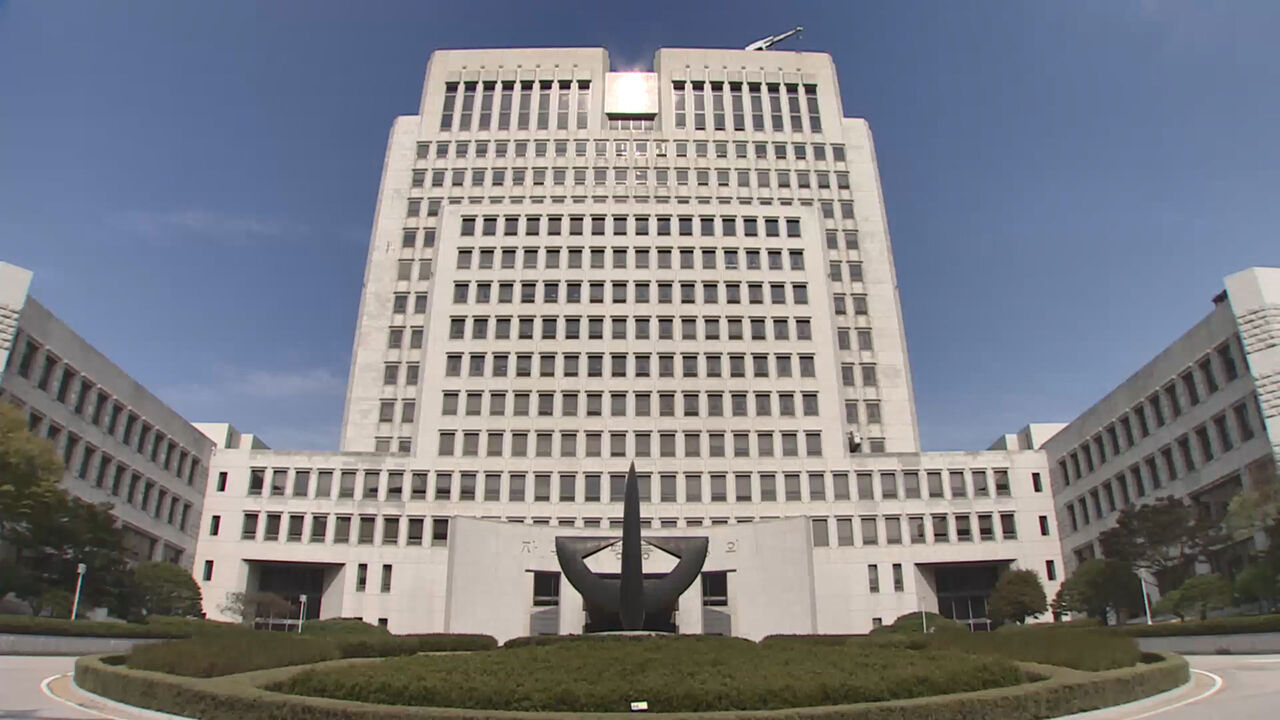
▲ View of the Supreme Court
The Supreme Court has reaffirmed the legal principle that when a prosecution investigator initiates an investigation under a prosecutor's direction, the directing prosecutor should be considered to have initiated the investigation at that point.
The Supreme Court's First Division (presiding Justice Ma Yong-joo) overturned a lower court ruling that had dismissed the indictment against a person in their 60s, surnamed A, who was indicted for violating the Improper Solicitation and Graft Act, and sent the case back to the Seoul Central District Court last month.
A, who served as the head of a domestic art graduate school, was put on trial along with B, a person in their 50s, on charges of receiving 30 million won in cash from B, a graduate student and disciple, in 2019.
B also faced charges of violating the Board of Audit and Inspection Act for failing to comply with three requests to appear before the Board of Audit and Inspection without justifiable reasons between May and July 2022.
An investigator at the Seoul Central District Prosecutors' Office initiated an investigation under the direction of Prosecutor C and drafted reference statements and suspect interrogation protocols.
The investigator subsequently received investigative direction from Prosecutors D and E, and after going through a crime recognition report in February 2024, forwarded the case to Prosecutor E.
Prosecutor E conducted additional investigations and brought formal charges in August of that year.
The core issue was whether this process violated the principle of separating investigation and indictment under the Prosecutors' Office Act.
Unlike the first trial, which found the defendants guilty, the appellate court dismissed the indictment.
The appellate court ruled that Prosecutor E, who received the case transferred from the investigator and conducted further investigations, acted as both the investigation-initiating prosecutor and the indicting prosecutor, thereby violating the principle of separating investigation and indictment.
However, the Supreme Court determined that the prosecutor who initiated the investigation was Prosecutor C, not Prosecutor E.
The Supreme Court reaffirmed the legal principle that the "initiation of investigation" under Article 4, Paragraph 2 of the Prosecutors' Office Act refers to instances where a prosecutor initiates the initial investigation into a crime and handles the primary investigation.
It further stated, "Even if a prosecution investigator undertakes an investigation into a certain crime, this should not be regarded as the initiation of an investigation by the prosecution investigator, but rather as 'the initiation of an investigation by the prosecutor himself or herself' under the main text of Article 4, Paragraph 2 of the Prosecutors' Office Act."
This is because prosecution investigators merely conduct investigations under a prosecutor's direction and lack provisions granting them the general investigative authority recognized for judicial police officers.
Previously in July, the Supreme Court delivered its first ruling clarifying that an investigation initiated by a prosecution investigator under a prosecutor's direction also falls under crimes for which a prosecutor has initiated an investigation.
(Photo: Yonhap News)
※ Please note: This article was translated by AI and may contain errors.



 Video News

 Video News
 Video News
 Video News