
 KOR
KOR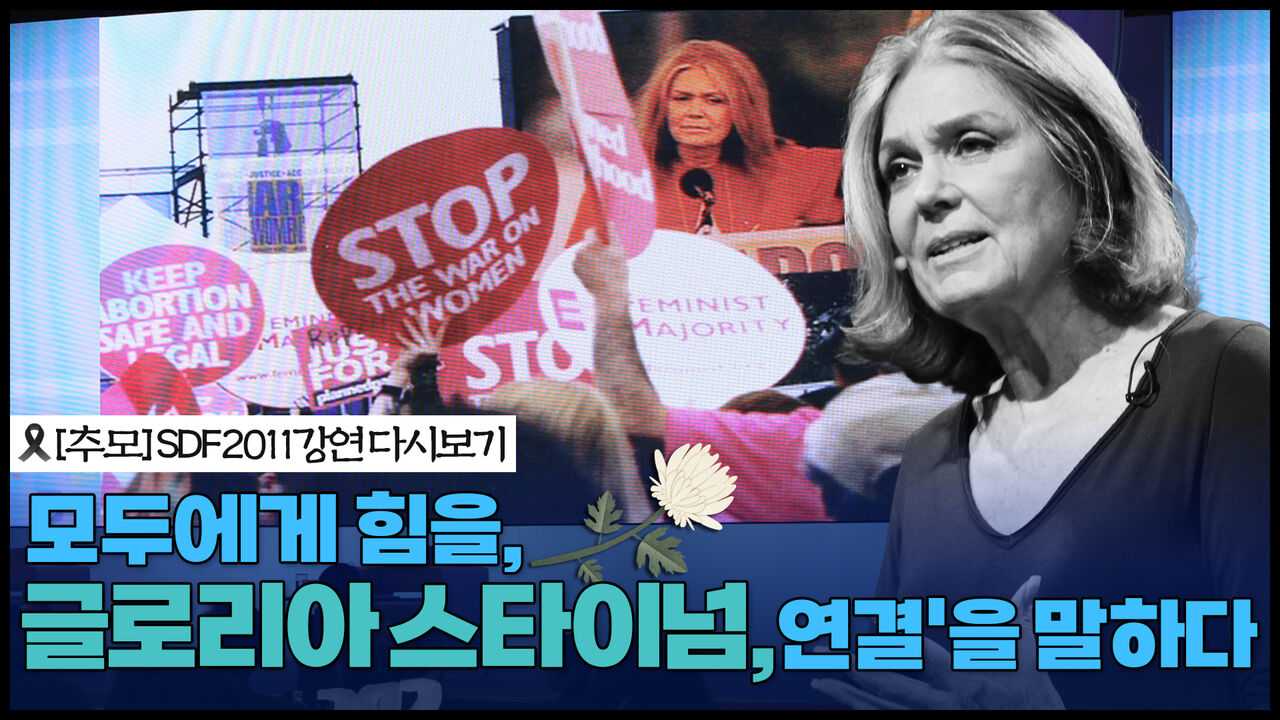
News has arrived that journalist and women's rights activist Gloria Steinem passed away on September 2. Gloria Steinem was the keynote speaker on the third day of SDF 2011, SBS's global knowledge-sharing forum for public good held under the theme "The Hyper-Connected Era: For a Shared Future." As she was the forum's first female keynote speaker, the memory remains particularly special to me.
I also remember that when I contacted her for the invitation, she found it fascinating that a news organization had a department called the "Future Department" and expressed her desire to attend a forum hosted by such an organization. Having been a journalist herself, she knew very well that most media outlets lacked a department dedicated to the future, and noted how unique and special it was to have a team thinking ahead and preparing for possible future scenarios rather than merely chasing breaking news.
I also remember that when I contacted her for the invitation, she found it fascinating that a news organization had a department called the "Future Department" and expressed her desire to attend a forum hosted by such an organization. Having been a journalist herself, she knew very well that most media outlets lacked a department dedicated to the future, and noted how unique and special it was to have a team thinking ahead and preparing for possible future scenarios rather than merely chasing breaking news.
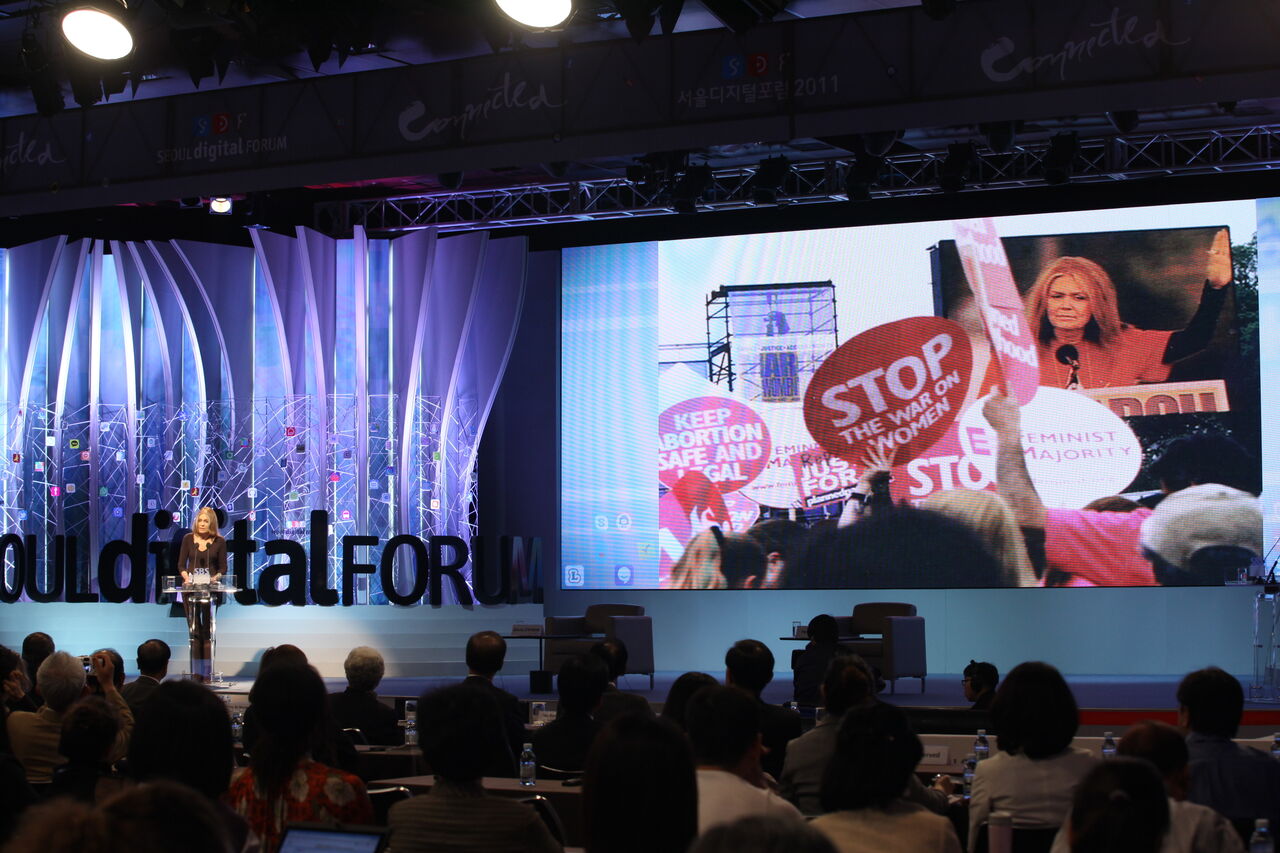
Gloria Steinem delivering her keynote address at SDF 2011 (©
SBS)
The year 2011 was an era when SNS, or social media, was beginning to flourish. It was a time when technology allowed people around the world to simultaneously become aware of events and connect with those they previously could not, giving rise to movements like the "Arab Spring." [1] While today's conversations often center around the harms of social media, such as addiction and polarization, it was a period when the merits were emphasized far more than the drawbacks.
In her address titled "Power to All: Gloria Steinem on 'Connection,'" Steinem emphasized that technology shows how people who once thought they belonged to separate spheres can connect and gather across gender, race, and class, noting that venues like SDF are prime examples of making that possible—in that people who once considered themselves disparate could now listen to each other's stories.
*The Arab Spring refers to the wave of anti-government and pro-democracy uprisings that began in Tunisia in late 2010 and spread across several countries in the Middle East and North Africa in 2011.
Women Historically Assigned the Role of 'Networkers'

Computer programming pioneer Grace Hopper (left) and Cisco co-founder Sandy Lerner (right)
(©Grace Hopper and UNIVAC / via Wikimedia Commons / CC BY 2.0, © Cisco Systems Inc. / Courtesy of the Cisco Archive)
(©Grace Hopper and UNIVAC / via Wikimedia Commons / CC BY 2.0, © Cisco Systems Inc. / Courtesy of the Cisco Archive)
With the premise that "it is not necessarily because of gender differences, but because women have historically been assigned such roles," Gloria Steinem highlighted that in the tech industry, computer scientist Grace Hopper—who paved the way for programming computers in ways closer to human language and developed one of the earliest compilers—was a woman, and that Sandy Lerner, who co-founded Cisco by developing the multiprotocol router connecting different communication networks, was also a woman. Her point was that the strengths women have demonstrated in networks and connections could also serve as valuable assets in technology.
In contrast to today's debates surrounding the impact and harms of AI, she also warned at the time that 20% of young people were spending more time with the internet than with people, cautioning that this could lead to issues such as cyberbullying and online pornography.
"Technology Must Restore the Egalitarian Human Archetype of 'Complements'"
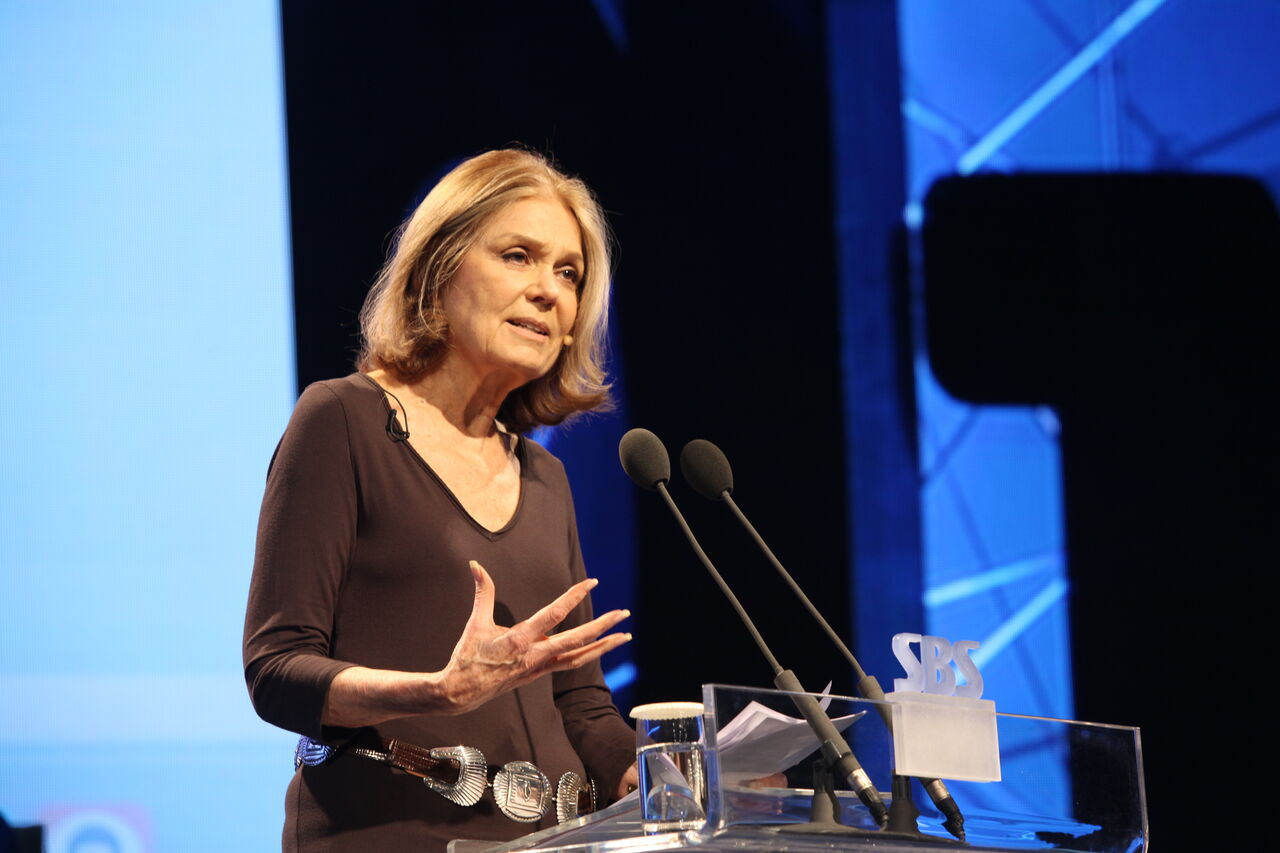
Gloria Steinem delivering her keynote address at SDF 2011 (©SBS)
Gloria Steinem noted that throughout history, the longest-preferred arrangement in civilization was sitting in a circle and talking together. She argued that humans are fundamentally communal creatures, and just as we recognize ourselves as mutual complements when looking down at the spherical Earth from space, humanity had long sustained each other through egalitarian, circular structures.
She added that humans are genetically very similar, with our commonalities far outweighing the differences defined by race, gender, and class, expressing her hope that if technologies like the internet could reconnect all of us as a community, we might restore that original, ideal archetype.
In particular, she emphasized that if men took on more caregiving roles, it would also help in understanding the limitations of technology. While public awareness has significantly improved regarding the fact that women can do anything men can do, she stressed that in reality, women face another workplace waiting for them at home after returning from the office, making it essential to improve work-life balance for both men and women.
Certainly, compared to 15 years ago, more men now take parental leave in the workplace, and within SBS alone, the number of female department heads and bureau chiefs—of which there were none at the time—has grown. Yet the insights Gloria Steinem shared back then still resonate with deep relevance today.
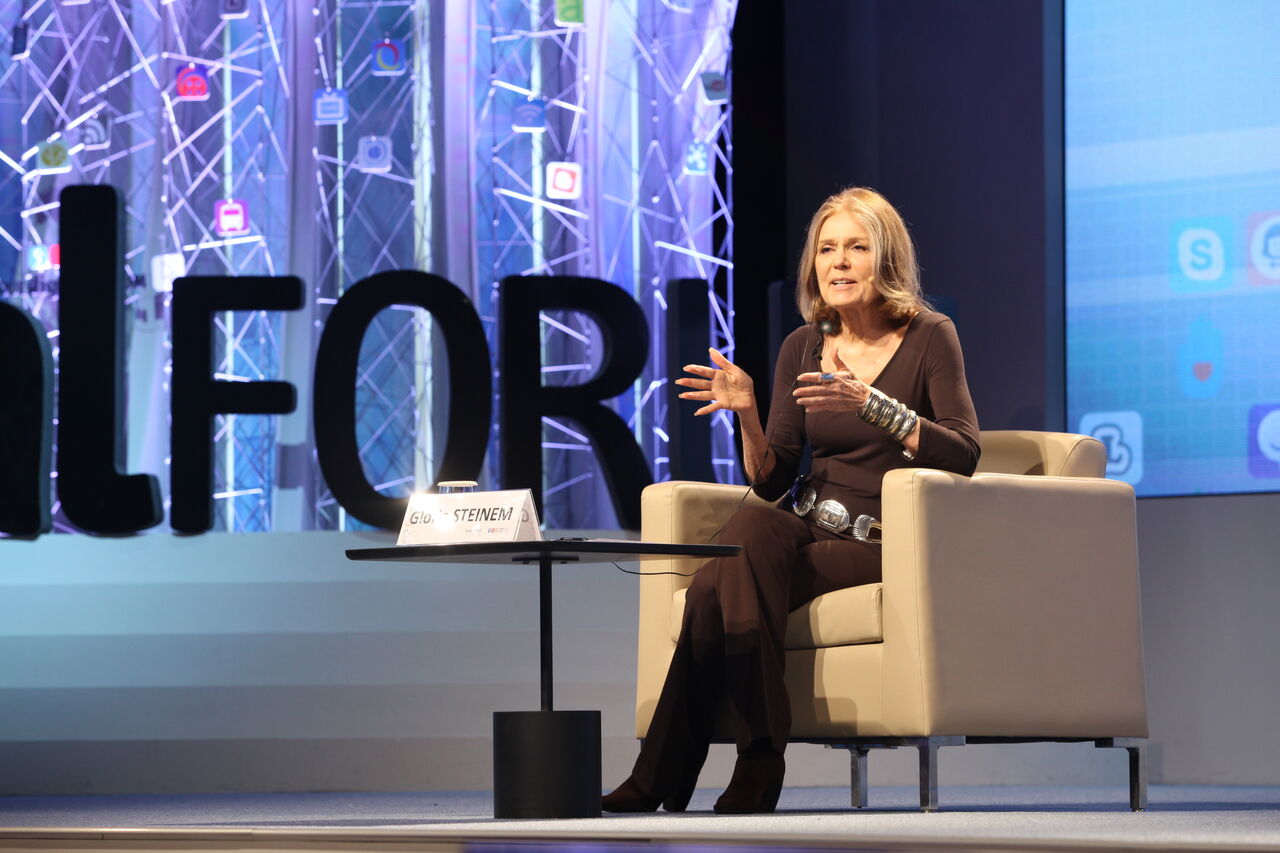
"Women's Participation Must Also Increase in Peace Negotiations"
Gloria Steinem emphasized that the 21st century is an era of interdependence where both men and women are indispensable. She noted that looking at cases such as Northern Ireland and Liberia, there are increasing instances where women have played crucial roles in political or religious conflicts. Just as UN Security Council Resolution 1325 urges expanded participation of women in peace and security processes, she suggested that women could serve as a bridge in peace discussions between South and North Korea as well.
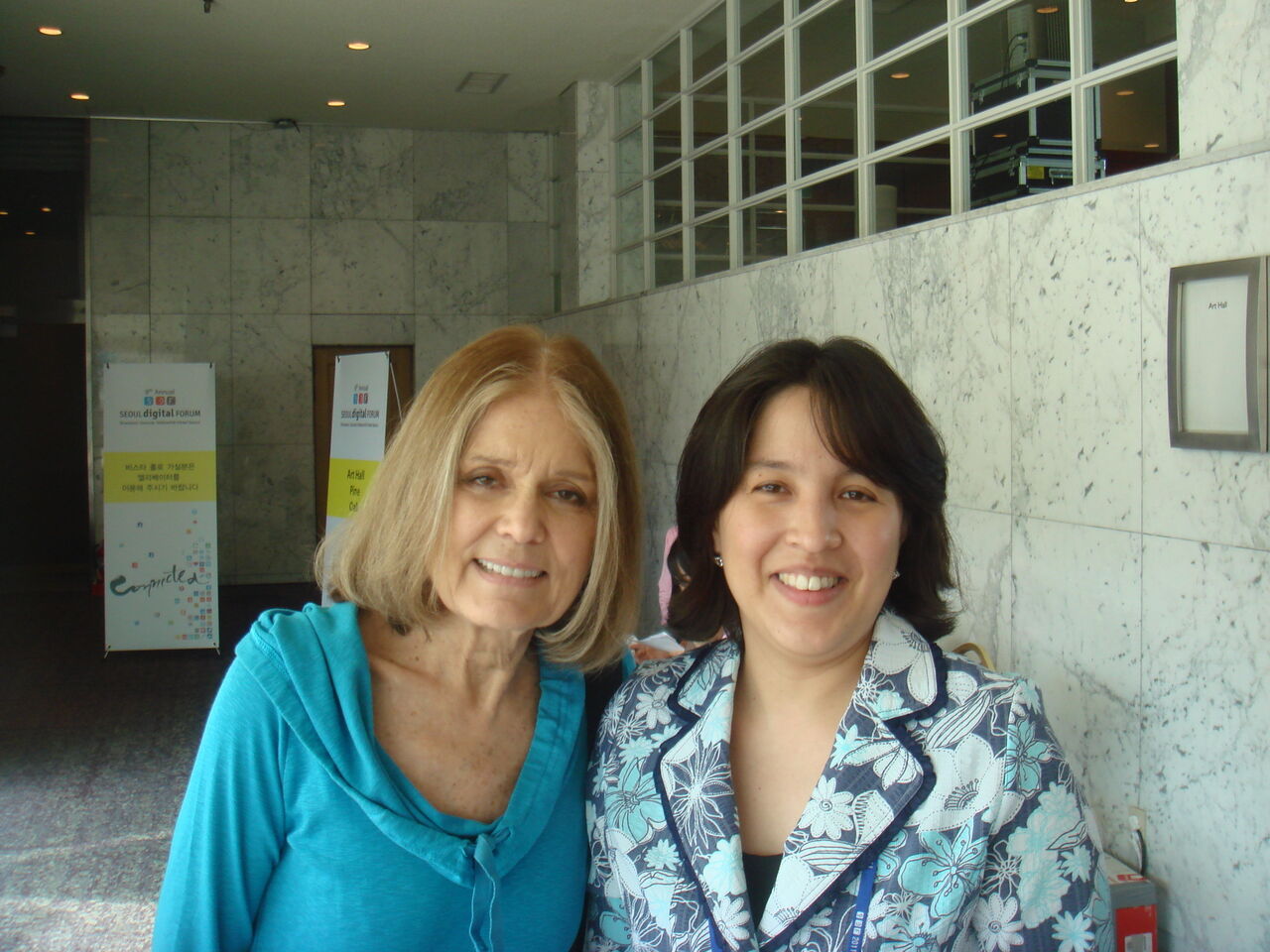
Photo taken with keynote speaker Gloria Steinem at the SDF 2011 forum
Gloria Steinem reminded us that while technology is a blessing and can bring miracles, we must remember that we created technology—technology did not create us. She underscored that human beings are creatures formed by "connection" and "learning."
We have now entered an era where people worry whether even human cognitive functions might be surrendered to AI. As we mourn the passing of Gloria Steinem, we are reminded once again of why the mutual "connection" she emphasized 15 years ago has become all the more crucial today. May she rest in peace.
(Written by Reporter Lee Jeong-ae, calee@sbs.co.kr)
*Gloria Steinem's keynote address from SDF 2011 can be viewed here. As it is a broadcast version, simultaneous interpretation is dubbed over the audio.
▶ https://www.youtube.com/watch?v=qCpwc-Nz3Qo&t=7s
※ Please note: This article was translated by AI and may contain errors.



 Video News
 Video News
 Video News
 Video News
 Video News