
 KOR
KOR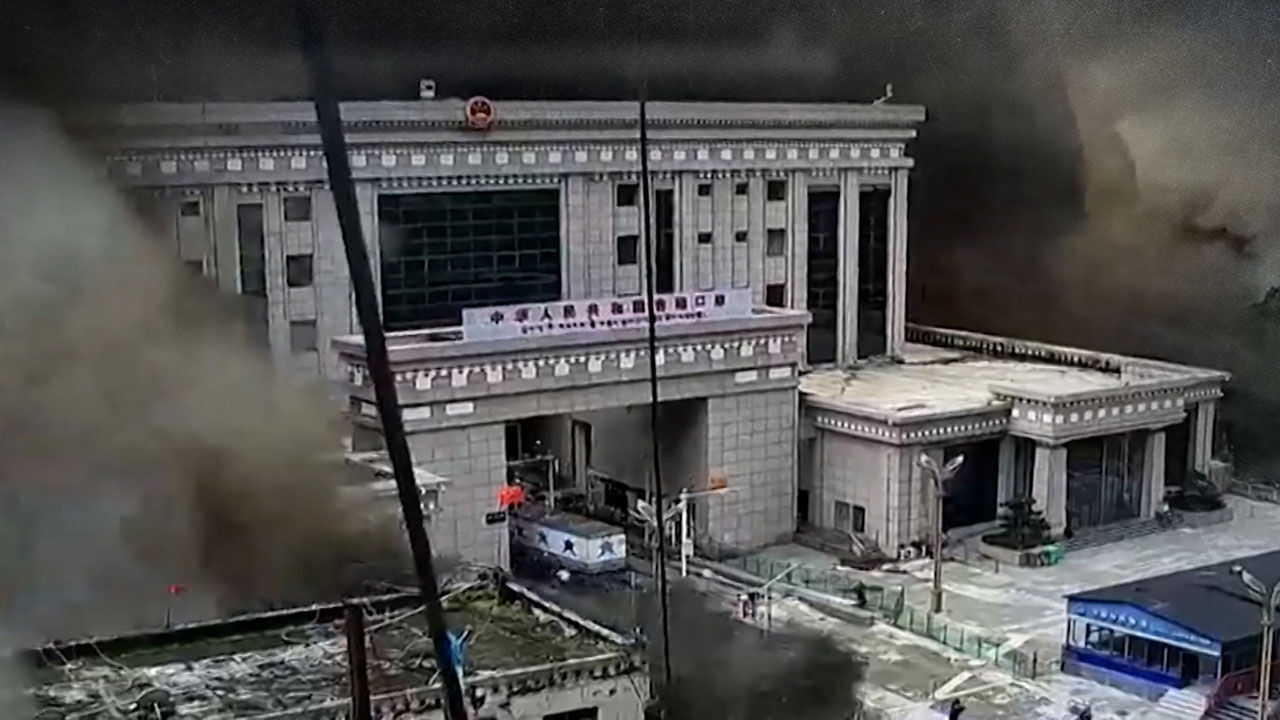
However, the atmosphere shifted in just two days. The following day, foreign media reported that Nepali Foreign Minister Shisir Khanal met with the Chinese ambassador to Nepal and stated that Nepal has "no intention to demand climate compensation from specific countries, including China." This was reported by China's state-run Global Times.

On the same day, Minister Khanal also conducted an interview with the Indian news agency ANI. ANI ran a headline quoting Minister Khanal as saying, "We have not demanded compensation from the US, China, or India."
Minister Khanal had previously been the very official who explicitly singled out the United States, China, and India to demand compensation.

Given that these were reports from media outlets in China and India—countries that were directly named—some underlying intent might exist. Nevertheless, the fact that Minister Khanal met with the Chinese ambassador and held an interview with Indian media right after the controversy erupted strongly suggests these actions served as clarifications.
How, then, does Nepal plan to receive compensation? To state the conclusion first: it will not be easy.
The SBS Fact Check "Fact Is" team analyzed the compensation issue surrounding this disaster in detail.

First, to discuss the compensation issue, it must be demonstrated whether Nepal, home to the Himalayas, is truly vulnerable to climate change.
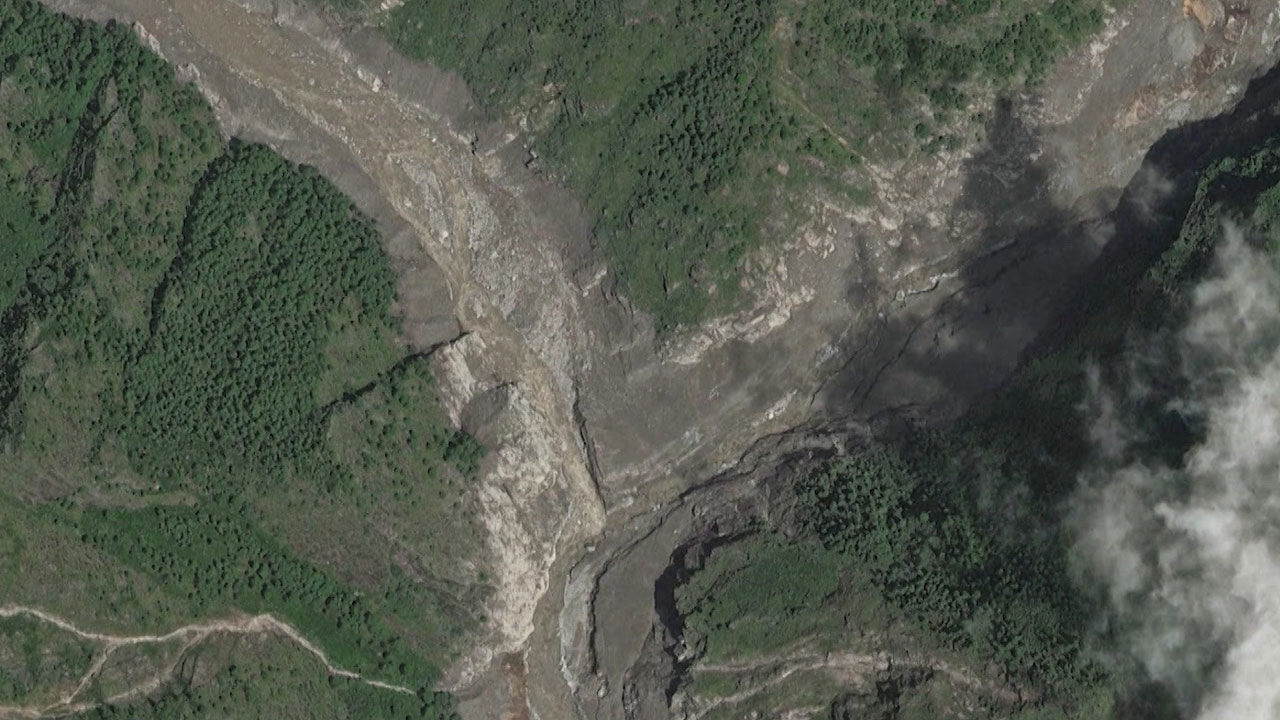
Although the direct trigger of this disaster was a massive debris and glacial flood caused by the collapse of glaciers and rocks, experts universally agree that climate change is escalating instability in glaciers and high-altitude mountain regions. In particular, a phenomenon known as "Elevation-Dependent Warming (EDW)"—where warming accelerates at higher altitudes—has been observed in the Himalayas.
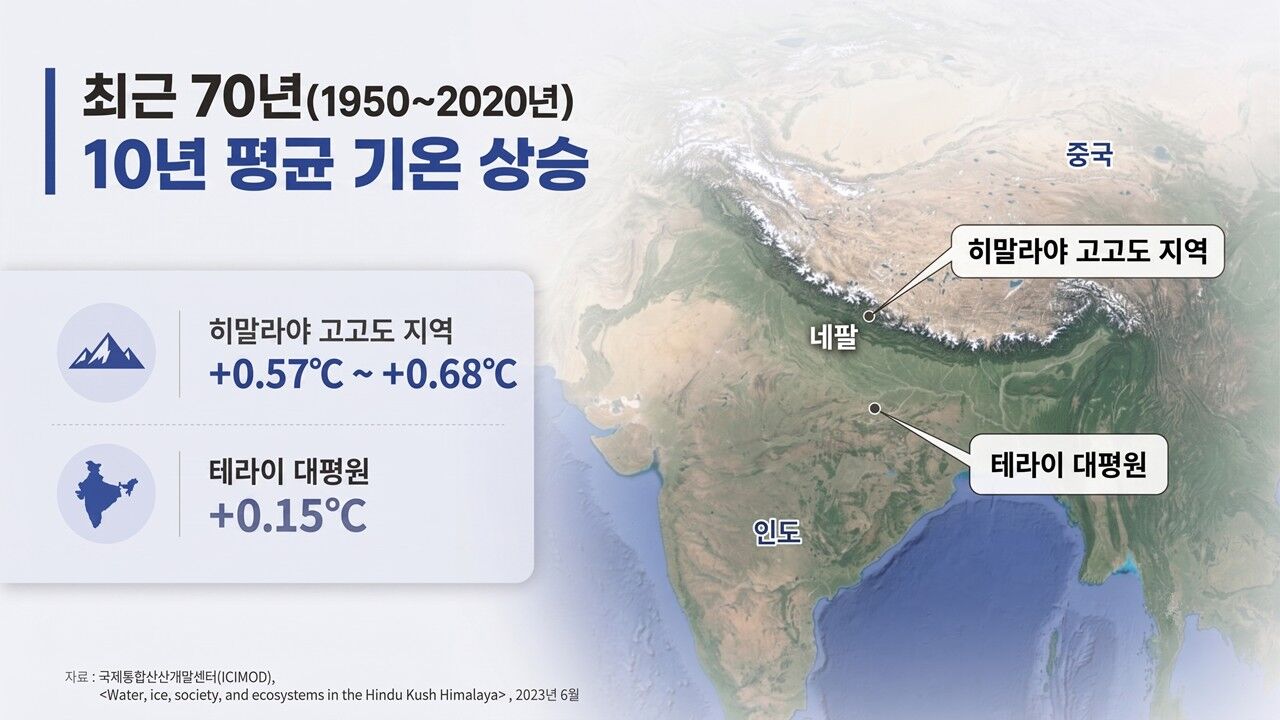
This means the rate of temperature increase in high-altitude areas is significantly greater than in lowlands. According to a June 2023 report by the International Centre for Integrated Mountain Development (ICIMOD), temperatures in India's Terai plains south of the Himalayas rose by a decadal average of 0.15°C (0.27°F), whereas high-altitude Himalayan regions experienced a decadal increase of 0.68°C (1.22°F).
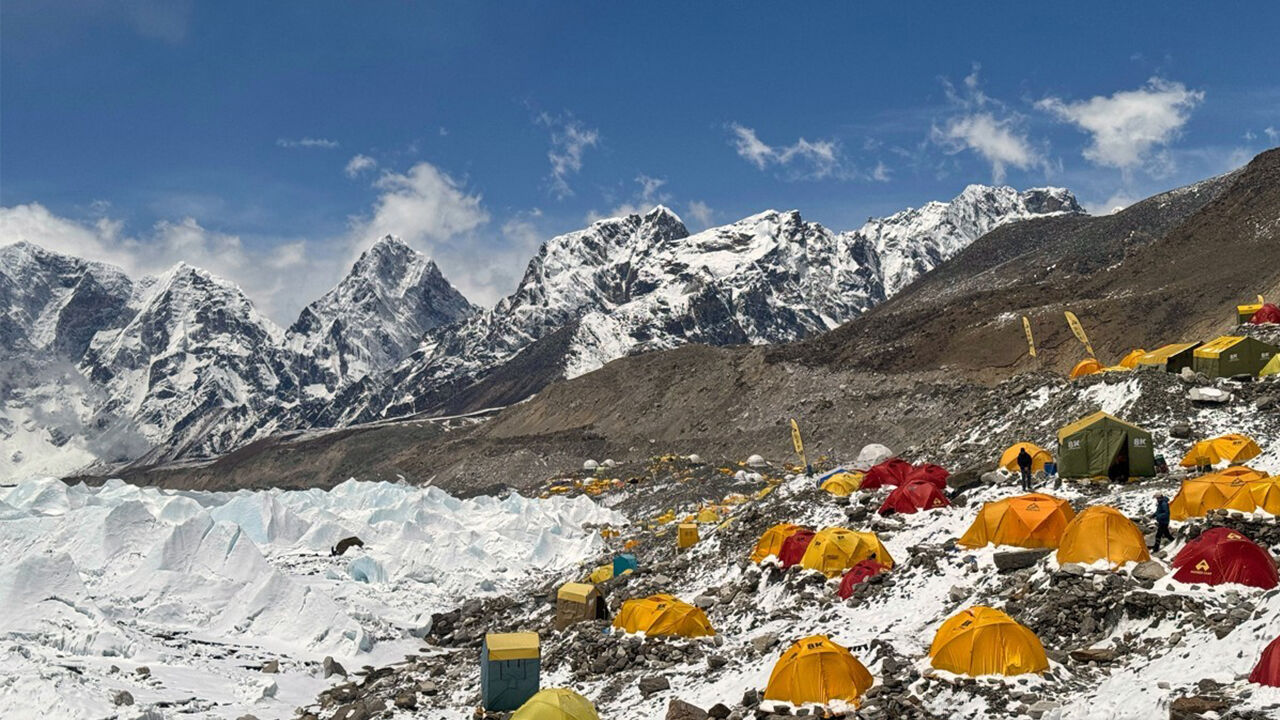
Glaciers are also directly exposed to global warming. Approximately 78% of Himalayan glacial surface area is concentrated at elevations between 4,500 and 6,000 meters, making them inevitably susceptible to the impacts of warming. As substantial amounts of snow and ice melt, the risk of disasters escalates accordingly.
While climate change is neither a new phenomenon nor confined to one area, scientific evidence shows that the Nepalese Himalayas are bearing a disproportionate brunt compared to virtually anywhere else.
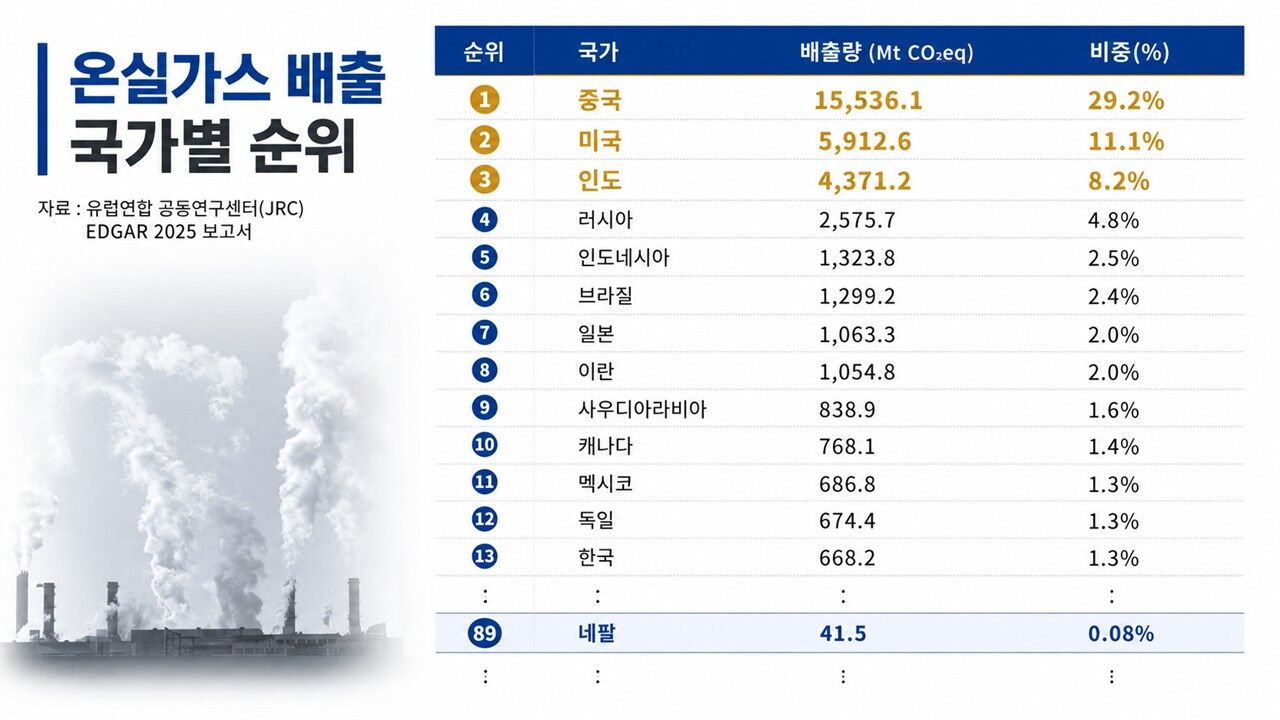
Meanwhile, as of 2024, China, the United States, and India accounted for approximately 48.5% of global greenhouse gas emissions. Nepal's emissions account for less than 0.1% of the global total, ranking around 89th worldwide.
There appears to be ample ground to discuss the responsibilities of the top three emitters: China, the United States, and India.
However, calculating exact figures such as "how much is owed by the US, how much by China, and how much by India" is an entirely different matter. To establish a direct one-to-one link between a specific nation's historical emissions and disaster damage in a specific region, it is scientifically necessary to prove precisely how much that country's emissions contributed to the likelihood and magnitude of that disaster. Breaking this down by country to establish legal liabilities involves substantial difficulties. Greenhouse gases carry no nationality.
This is similar to how, although strong scientific evidence indicates Chinese influence on fine particulate matter in the Korean Peninsula, it remains difficult to definitively quantify the exact share of China's responsibility in numerical terms.
How, then, has the international community approached this complex problem?
One approach is the "Fund for Responding to Loss and Damage (FRLD)." Because billing individual nations for climate damage is practically impossible, the international community created a mechanism to pool financial resources collectively to support disaster response and recovery in developing countries vulnerable to climate change. In essence, major emitters contribute more to a fund, and those resources are used to compensate for losses and damages caused by climate change.
A key distinction here is the deliberate choice of the word "compensation" rather than "reparation." While reparation strongly implies that a responsible party is remedying harm caused by an unlawful act, compensation does not necessarily presuppose illegality and simply refers to making up for incurred losses financially. This carries the political implication that individual nations are not being held legally liable.
Even during his interview with CNN on September 2, when Minister Khanal made strong remarks directed at the United States, China, and India, he used terms like "compensation" and "justice" rather than "reparation."
Thus, the fact that Nepal emphasized "compensation" and "climate justice" rather than "reparation" from the outset is significant within this context.
Minister Khanal's statement during his meeting with the Chinese ambassador that Nepal would "seek compensation within the framework of the Paris Agreement" appears to refer to this fund. Although the fund was not established directly by the 2015 Paris Agreement itself, the treaty served as the theoretical groundwork for creating it.
Paris Agreement, Article 8, Paragraph 3
3. Parties should enhance understanding, action and support, including through the Warsaw International Mechanism, as appropriate, on a cooperative and facilitative basis with respect to loss and damage associated with the adverse effects of climate change.
The real challenge begins here.
International pledges toward the Fund for Responding to Loss and Damage currently stand at $820 million. However, a gap exists between pledged amounts and actual paid-in capital. As of May, the actual contributions deposited by 21 nations, including South Korea, stood at approximately $460 million—only slightly more than half of the pledged total.

Furthermore, China and India are not currently participating as major donors to this fund. In the United States, climate policy directions fluctuate significantly depending on the administration, making stable financing uncertain. Former President Trump remarked during a UN address in September last year that "climate change is one of the greatest scams in human history."
Another critical problem is that the fund is vastly insufficient compared to the actual scale of global losses and damages caused by climate change.
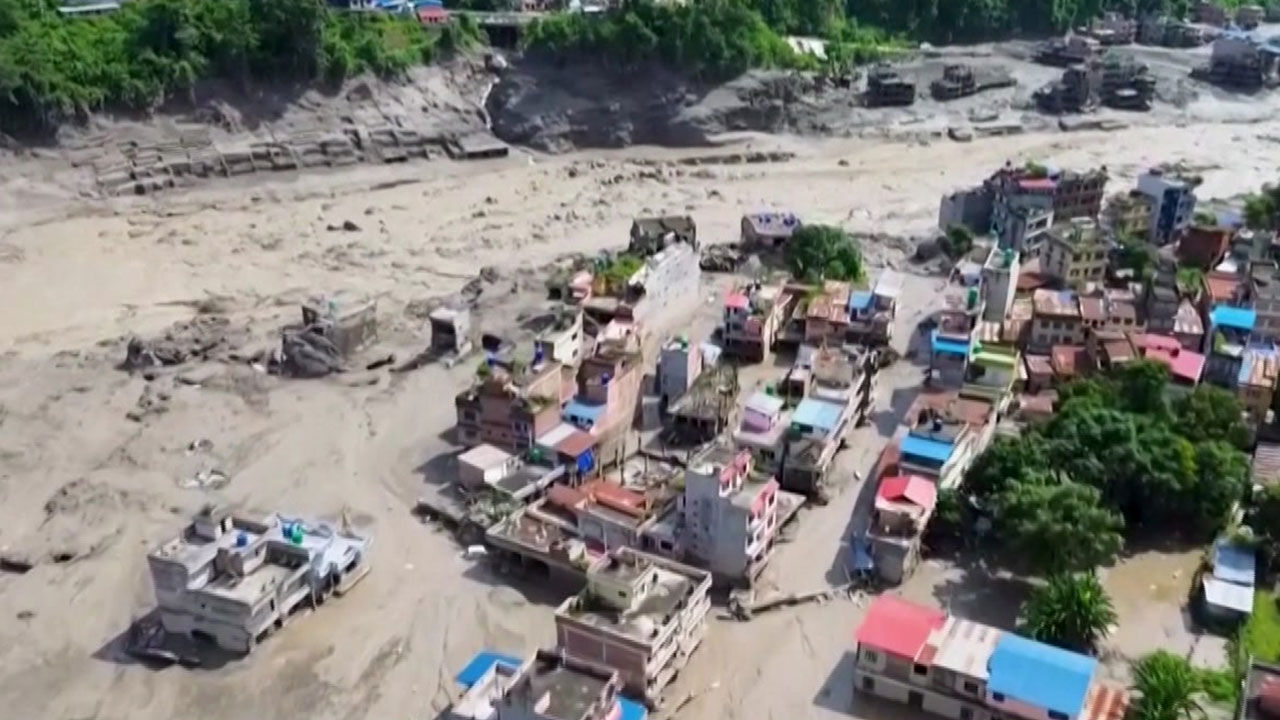
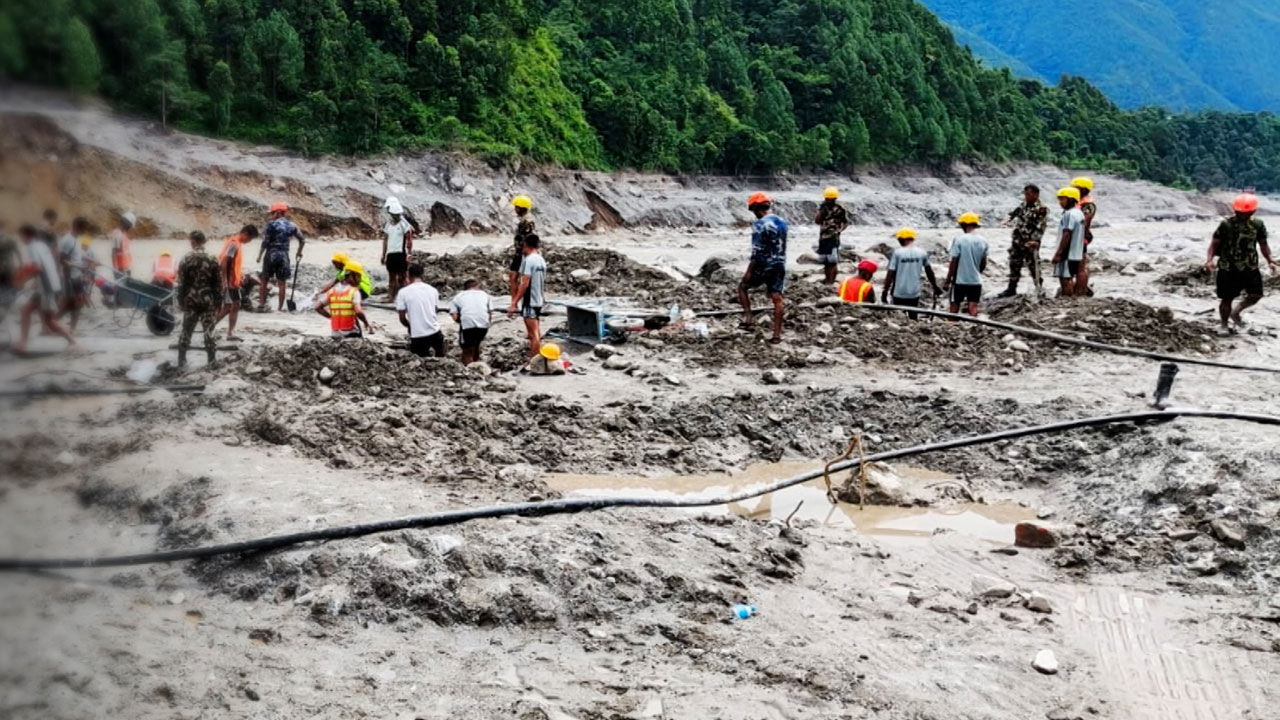
For instance, the damage to property, housing, and infrastructure from this disaster announced yesterday (September 4) by Nepalese disaster management authorities was estimated at 387.5 billion Nepalese rupees, or $2.56 billion. The assessment found that 20,000 homes need reconstruction, with 7,500 of them completely destroyed. Initial recovery alone is expected to require $52.6 million. The scale of devastation suffered by Nepal is virtually beyond comparison with the fund's available support.
In contrast, under the current initial support framework of the Fund for Responding to Loss and Damage, a single project can receive a maximum of $20 million. Even at $20 million, that represents only about 0.8% of Nepal's estimated total damage of $2.56 billion. Emergency relief funding for this disaster has not yet been approved.
The issue of compensation remains an uphill battle.
China and India are Nepal's most critical neighbors and key partners across the economy, security, and infrastructure. Openly designating them as perpetrators while demanding compensation carries immense diplomatic burdens. Some might see this as reflecting the harsh reality of an international order centered on major powers.
Yet, the fundamental moral question remains unshakeable. While Nepal may have pulled back its direct invoices toward the United States, China, and India, it has by no means dropped its fundamental question to the international community:
"Why must a country that contributed almost nothing to climate change bear the escalating costs of climate disasters entirely on its own?"
Perhaps this is the core question raised by Nepal's recent "climate bill" controversy. Demanding specific payments from individual countries is practically difficult. International funds are still far from matching the scale of destruction. Yet if nothing is done, the imbalance between climate responsibility and climate damage will only persist.
Ultimately, even if Nepal has set aside its specific billing to the US, China, and India, the question remains: who has profited from climate change, who is paying the price, and who will bear these costs going forward? The catastrophe in Nepal has taken that longstanding question beyond the peaks of the Himalayas and laid it squarely before the global community.
(Writer: Kim Hyo-jin, Intern: Kim Jeong-won)
※ Please note: This article was translated by AI and may contain errors.





 Video News
