
 KOR
KORLately, university students, office workers, and even foreigners are reportedly flocking to gosiwons (budget studio-type lodgings). There are several reasons why the 2030 generation is turning to gosiwons these days—let's hear about it directly.
[Reporter]
[Ryu Da-eun / 1-year resident of a gosiwon in Seodaemun-gu, Seoul: The gosiwon I currently live in is about a 15-minute walk from my school. (Don't you think the monthly rent is a bit high...?) That's right. It is expensive. Instead of paying 500,000 won every month, I looked into staying in a similar one-room studio, but if I did that, the security deposit would easily exceed 10 million won, and maintenance fees would be included as well, which felt a bit burdensome. I think that's why I chose a gosiwon.]
[Kim Eun-seo / 3-month resident of a gosiwon in Seongdong-gu, Seoul: I originally lived in Incheon, but since my academy starts very early in the morning, I felt burdened by the commuting distance, so I moved up to Seoul. I chose a gosiwon closest to the academy for job hunting.]
In the past, shared gosiwons—where each room only had a bed and a desk while bathrooms, shower rooms, and kitchens were shared—were common, but nowadays, there are quite a few studio-type gosiwons that include private bathrooms and shower rooms inside the room.
However, gosiwons used as residential facilities are not legally classified as housing under the Building Act, but rather as "multiple-dwelling facilities." Therefore, the required installations and safety regulations differ from those of ordinary housing.
Yet, on August 12th of last month, the government stepped forward to overhaul some of the building standards.
According to the revised draft, under the rationale of "rationally improving certain building standards unrelated to safety," the mandatory requirement to place a desk in every room was removed, and bathtubs—which could not be installed previously—were permitted.
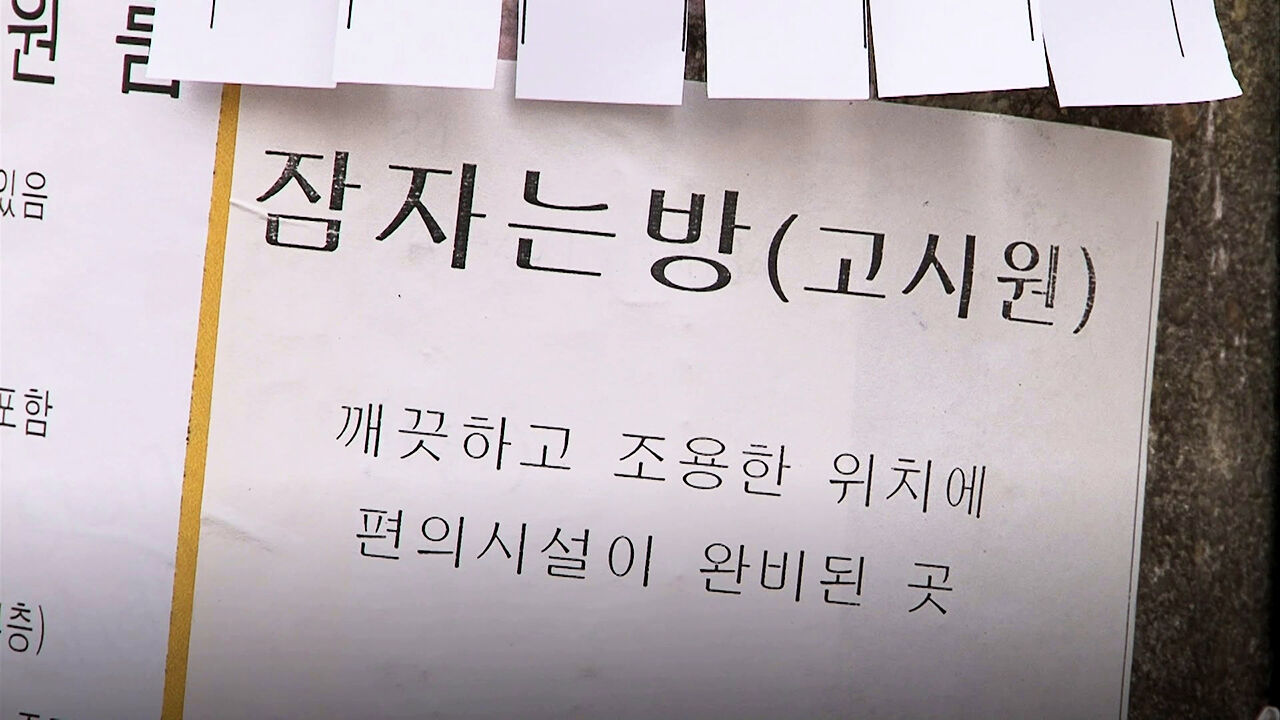
The biggest reason is that gosiwons can no longer be viewed solely as spaces for studying for exams.
[Kim Eun-seo / 3-month resident of a gosiwon in Seongdong-gu, Seoul: What surprised me so much when I first came here was that, while I thought gosiwons were mostly places where people studying hard for state exams or job preparations stayed, there were actually a lot of students in their early 20s who looked very young. And I heard that foreign exchange students, international students, or civil servants stay here temporarily for work when regular students leave during vacation periods.]
In a recently conducted housing survey, cost-effectiveness, convenience, and independent space, along with proximity, were cited as reasons for living in a gosiwon.
This means that gosiwons are transforming from mere spaces for studying into affordable residential spaces close to workplaces and schools.
Reflecting this reality, the Ministry of Land, Infrastructure and Transport decided that desks no longer need to be provided on a mandatory basis.
Furthermore, as an increasing number of people choose gosiwons equipped with shower booths per room even if they pay a little more, the ministry concluded that there is actual demand for hygiene facilities like bathtubs.
It has been two years since single-person households in South Korea surpassed 10 million.
As the proportion of youth households living in non-housing quarters is also on an upward trend, this revision of gosiwon building standards aims to ease regulations originally made for study spaces and redefine gosiwons as living quarters.
However, some voices are expressing concern that if gosiwons become high-end starting with the allowance of bathtubs, prices might become even more expensive.
[Kim Eun-seo / 3-month resident of a gosiwon in Seongdong-gu, Seoul: Let me briefly show you my room. This small window above the bed is all there is. So no sunlight comes in, and since it just connects to the hallway, ventilation and things like that don't work. There is a bigger price difference than expected between rooms with internal windows and those with external windows. Since there is a price difference of around 50,000 to 100,000 won and many students without much money live here, I think a lot of them end up choosing rooms with internal windows.]
Ultimately, the core issue is the living environment.
While the number of people living in non-housing quarters such as gosiwons—falling short of the minimum housing standards—continues to increase, critical voices have pointed out that without fundamental improvements to the living environment, it will only result in an increase of spaces that look like homes but are not actually homes.
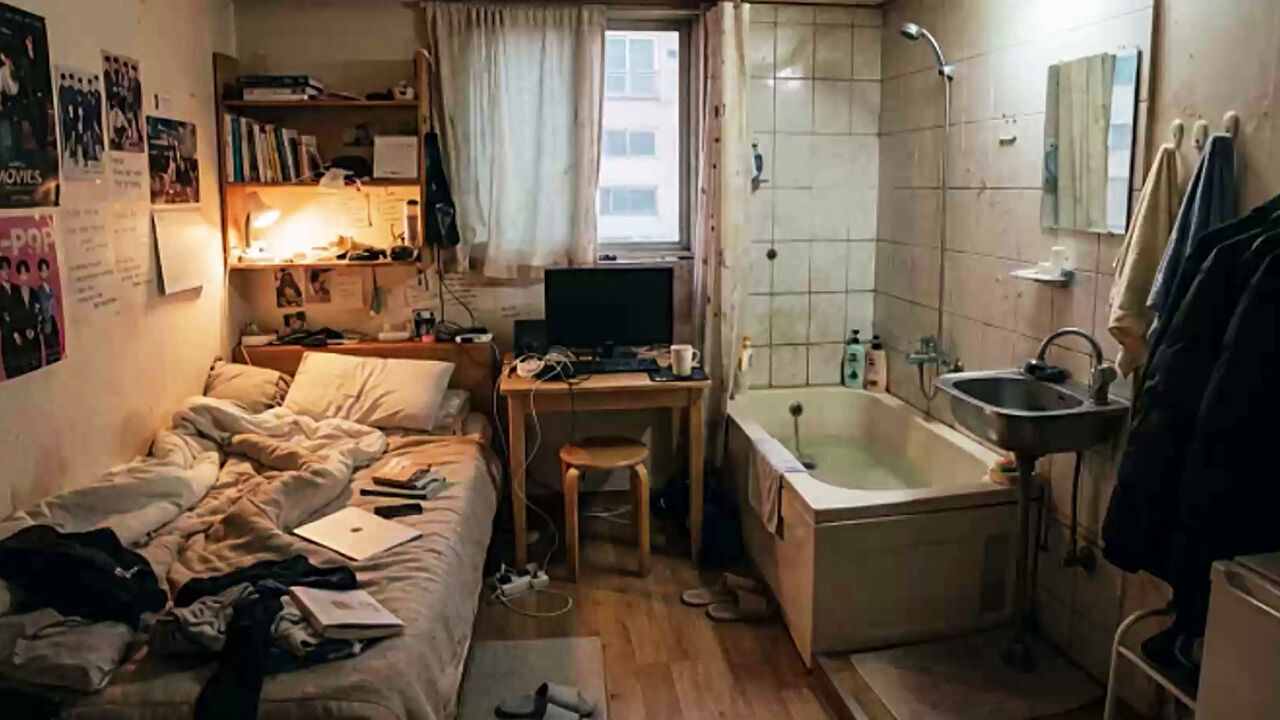
Even AI-generated images showing bathtubs crammed into narrow gosiwon rooms flooded social media, sparking major controversy, and the government announced just nine days after issuing the administrative notice that it would reexamine the stance.
While it is true that the quality of space is gradually improving as people flock to gosiwons, can this change truly resolve the housing problems faced by young people?
※ Please note: This article was translated by AI and may contain errors.




 Video News

 Video News
 Video News