
 KOR
KOR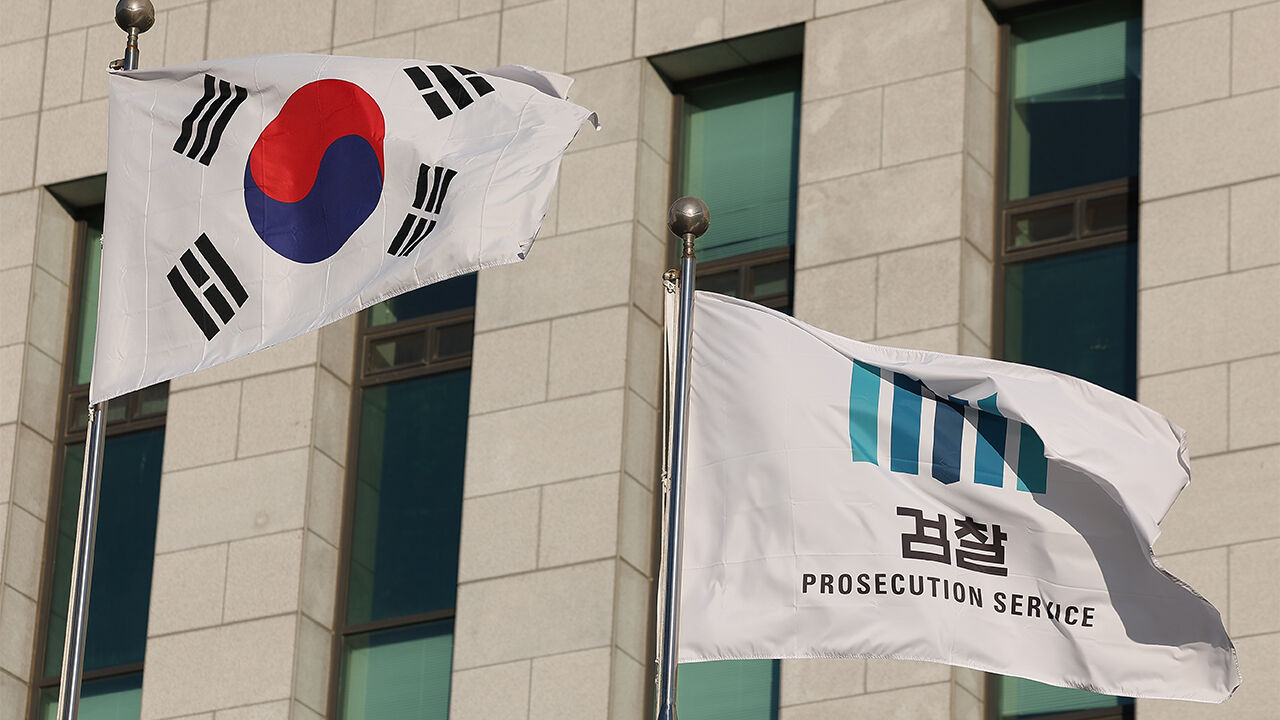
▲ The Supreme Prosecutors' Office flag fluttering in the wind
In line with the launch of the Prosecution Service in October, investigative and joint investigation units primarily in charge of direct investigations at front-line prosecutors' offices will be completely abolished and reorganized into major crime-dedicated units responsible for cooperation and support with investigative agencies.
The Crime Information Planning Department and the Forensic Department at the Supreme Prosecutors' Office will be abolished, and the Seoul Central District Prosecutors' Office will return to a "three deputy chief prosecutor system."
The Ministry of Justice announced today (September 4) that it will pre-announce legislation for the enactment of the "Prosecution Service and Its Affiliated Organizations Decree" and the revision of the "Enforcement Decree of the Prosecutors' Act" containing these measures until September 9.
The reorganization plan focuses on abolishing and integrating existing investigative organizations in accordance with the separation of investigation and indictment and the abolition of prosecutors' authority to initiate investigations, while strengthening cooperation with investigative agencies and judicial control functions.
First, the Supreme Prosecutors' Office's Crime Information Planning Department and its two subordinate divisions, which have analyzed, verified, and evaluated information related to crimes subject to prosecutors' initiation of investigations, will all be abolished.
The Anti-Corruption Department and the Narcotics and Organized Crime Department, which have directed and supported major crime investigations, will be integrated into the Major Crime Department.
Instead of conducting direct investigations, the Major Crime Department will focus on practical cooperation and support with investigative agencies such as the Major Crime Investigation Agency, as well as handling cases in specialized fields.
The Supreme Prosecutors' Office's Forensic Department will also be abolished as forensic investigation functions at major crime scenes are transferred to the Major Crime Investigation Agency.
However, the Ministry decided to retain a deputy chief prosecutor-level Forensic Planning Department and its three subordinate divisions, which will be responsible for cross-appraisal necessary for determining whether to institute a prosecution and maintaining indictments, as well as operating evidence preservation and analysis systems.
Accordingly, the headquarters of the Prosecution Service will consist of the Prosecutor General, a deputy chief, 6 departments, 6 bureaus, and 30 divisions/officers.
The number of departments at the Supreme Prosecutors' Office will be reduced from 8 to 6.
The 43 divisions responsible for independent and joint investigations will be abolished and reorganized into 29 major crime-dedicated units tasked with cooperating with and supporting major crime investigations by investigative agencies and handling cases in specialized fields.
The major crime-dedicated units will not conduct independent investigations, but will instead cooperate with and support major crime investigations by the Major Crime Investigation Agency, as well as handle the indictment and maintenance of public prosecutions for related cases.
Among them, five departments will operate as dedicated units corresponding respectively to the five joint investigation divisions established within the Major Crime Investigation Agency.
They will provide opinions on legal judgments and evidence collection at the stages of initiating investigations and applying for warrants, and will cooperate with investigative agencies from the transfer of cases to the filing and maintenance of indictments.
When major national or social incidents occur, related departments such as the major crime-dedicated units of each level of the Prosecution Service will be designated as dedicated units for joint investigation teams, allowing prosecutors and joint investigation teams to cooperate.
A total of 67 investigation and inquiry divisions that have handled investigation and inquiry tasks at front-line offices will also be completely abolished.
The positions of the 4th Deputy Chief Prosecutor of the Seoul Central District Prosecutors' Office and the 2nd Deputy Chief Prosecutors of the Daegu and Busan District Prosecutors' Offices will also be abolished. Consequently, the Seoul Central District Prosecutors' Office will return to a three deputy chief system, while the Daegu and Busan District Prosecutors' Offices will each have only one deputy chief prosecutor.
Organizations responding to general criminal cases and crimes against vulnerable social groups will be strengthened.
A deputy chief prosecutor-level Criminal Planning Department will be newly established within the Criminal Department of the Prosecution Service headquarters to oversee the response system against multi-victim offenses affecting ordinary citizens and crimes targeting vulnerable social groups.
Considering that general criminal cases account for 94% of all cases, the comprehensive response function of the Criminal Department will be strengthened, and a Special Judicial Police Cooperation Department will be established to handle guidance, advice, and training for special judicial police officers.
A Judicial Control Division to review cases where investigative agencies such as the police decide not to transfer cases will also be newly established in each regional prosecution office.
Utilizing the fact-finding system introduced under the revised Criminal Procedure Act, the Judicial Control Division will review non-transferred cases at the same level as transferred cases, and when shoddy or illegal investigations are identified, it will take charge of demanding reinvestigation or holding parties accountable.
Cases in which judicial police officers fail to implement prosecutors' requests for supplementary investigation or corrective measures without justifiable reasons, prompting the need to demand job exclusion or disciplinary action, will also be reassigned to the Judicial Control Division.
Non-indictment cases for which reinvestigation decisions are made by appellate prosecution offices will also be assigned to the Judicial Control Division, which will demand supplementary investigations from investigative agencies, receive and process implementation results responsibly, and check compliance with the obligation to record and register in the Criminal Justice Information System (KICS).
Public trial, sentence enforcement, and litigation functions will also be strengthened.
The Proceeds of Crime Recovery Department under the Narcotics and Organized Crime Department of the Supreme Prosecutors' Office will be transferred to the Public Trial and Litigation Department of the Prosecution Service headquarters, and 11 prosecution affairs offices will be established at front-line offices to handle the apprehension of individuals with unexecuted imprisonment sentences and litigation support.
Proceeds of Crime Recovery Departments and divisions will be established at the Seoul Central, Seoul Southern, and Busan District Prosecution Offices to reinforce the tracking and freezing of criminal proceeds and the restitution of property to victims.
The organization of the Prosecution Service will consist of the headquarters, 6 regional prosecution offices, 18 district prosecution offices, and 42 branch offices.
The total quota is 8,412 personnel, including 2,292 prosecutors and 6,120 general staff members.
The Ministry of Justice plans to set an evaluation period of up to three years for newly established or reorganized units such as the Judicial Control Division and major crime-dedicated units to review their workload, performance, and achievements.
(Photo: Yonhap News)
※ Please note: This article was translated by AI and may contain errors.



 Video News

 Video News
 Video News
