
 KOR
KOR
▲ Participants examine promotional materials at a special briefing session on the introduction of the regional doctor system and changes to middle, high, and university admissions, held at the Sungkyunkwan University 600th Anniversary Memorial Hall in Jongno-gu, Seoul, on April 12.
The first early admissions process to select "regional doctors," who will be legally obligated to work for 10 years in their designated regions after obtaining their medical licenses, is set to begin on the 7th.
For the 2027 academic year, a total of 490 students will be recruited across 32 medical schools and graduate medical schools outside of Seoul.
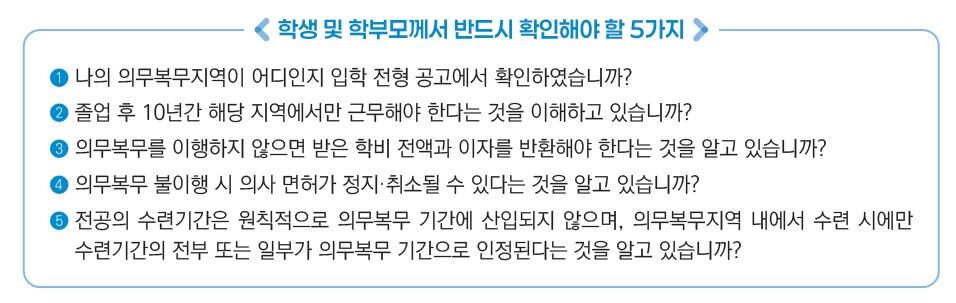
The government has urged applicants to thoroughly check the eligibility criteria based on school locations, mandatory service regions, and disadvantages for failing to fulfill service obligations.
Ahead of the first early admissions for the 2027 regional doctor selection process, the Ministry of Health and Welfare and the Ministry of Education released an application guide (FAQ) today (the 3rd).
For the 2027 academic year, a total of 490 students will be selected across 32 medical schools and graduate medical schools outside Seoul—including 359 on a medical district level (groups of cities, counties, and districts) and 131 on a wider regional level (groups of metropolitan cities and provinces).
Depending on the location of the medical school they wish to apply to, applicants must complete their entire education from admission to graduation at middle schools within the corresponding wider region, and at high schools within the corresponding medical or wider region.
The Graduate School of Medicine at CHA University accepted applications from the 4th to the 6th of last month, while the remaining 31 institutions will begin early admissions on the 7th.
Students selected through this process will receive financial support for tuition and textbook costs, along with additional educational and practical training opportunities.
After obtaining their medical licenses, they must work for 10 years in the mandatory service region announced at the time of their selection.
The government emphasized key details that students and parents must verify: ▲ the exact location of the mandatory service region, and ▲ disadvantages for failing to fulfill service obligations, such as the full repayment of tuition and statutory interest, as well as the suspension or revocation of medical licenses.
Simply paying back the full amount of supported tuition and statutory interest at any time does not grant a standard, unrestricted medical license.
Furthermore, if a candidate passes the national medical licensing examination later after paying the refund, the refund will be returned, and a conditional license will be issued on the condition of 10 years of service in the mandatory service region designated at the time of selection.
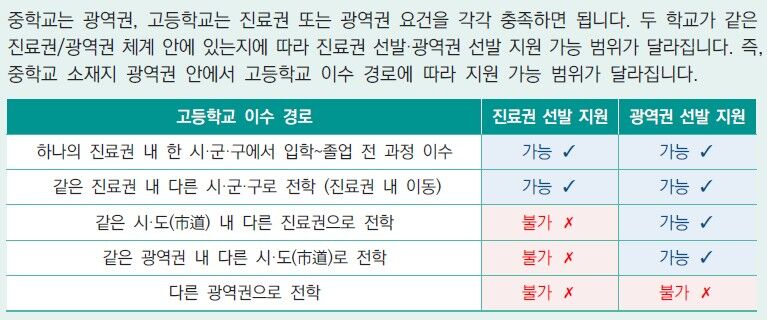
While transferring schools or moving does not restrict eligibility in itself, transferring to a school in a different wider region disqualifies applicants from applying to either medical districts or wider regions.
The government plans to continue providing admission information including these details in cooperation with relevant institutions such as universities and metropolitan/provincial offices of education.
Going forward, the government plans to support regional doctors throughout their tenure to help them grow into competent medical professionals during their service period.
In the second half of this year, a "Regional Doctor Support Center" will be selected through a public contest to provide career counseling, information services, and job training.
Regional doctors who complete their mandatory service will receive preferential treatment, such as priority hiring at the medical institutions where they served or at public health and medical institutions within their regions.
In particular, those who open and operate medical institutions in medically vulnerable areas will also receive administrative and financial support from local governments in accordance with the law.
Minister of Health and Welfare Cho Joo-hyun said, "Through extensive discussion and preparation, a meaningful first step is being taken to select regional doctors in our country for the first time," adding, "The principled choices of students who love their regions and wish to take charge of the health of local residents will shape the future of regional healthcare."
(Photo: Yonhap News)
※ Please note: This article was translated by AI and may contain errors.




 Video News
 Video News
 Video News
 Video News