KOR
KOR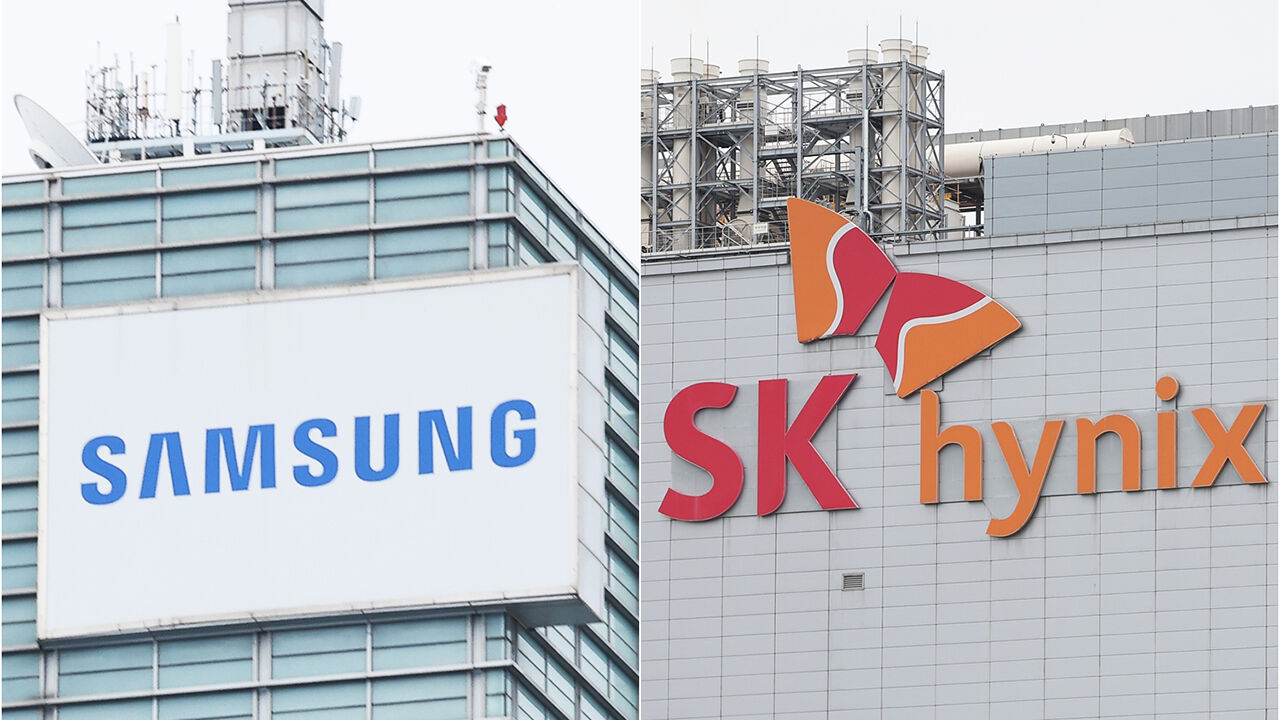
▲ Samsung Electronics and SK Hynix
Samsung Electronics and SK Hynix paid a combined corporate tax of over 11 trillion won in the first half of this year, marking the second-highest half-year figure on record.
This is based on last year's performance, and considering the recent surge in earnings, projections suggest that this year's annual total could not only break the previous record in the 15 trillion won range but even reach up to 100 trillion won.
According to semi-annual and business reports submitted to the Financial Supervisory Service's electronic disclosure system on the 30th, the corporate tax payments for Samsung Electronics and SK Hynix in the first half of the year reached 3.9876 trillion won and 7.2207 trillion won, respectively, totaling 11.2083 trillion won.
On a combined basis, this represents a sharp increase of 7.0177 trillion won, or 167%, compared to 4.1906 trillion won in the first half of last year. It is the second-largest semi-annual figure on record, following 12.6614 trillion won in the first half of 2019.
Individual tax payments by Samsung Electronics and SK Hynix for the first half rose by 256% and 135%, respectively, compared to 1.1187 trillion won and 3.0719 trillion won in the same period last year.
SK Hynix also set a record for its largest-ever half-year corporate tax payment, surpassing the 4.5264 trillion won recorded in the first half of 2019.
The combined record-high corporate tax payment for both companies in the first half of 2019 reflects the performance of 2018, which followed a previous semiconductor super-boom.
Generally, corporations with a December fiscal year-end pay corporate taxes twice a year: reporting and paying the previous year's corporate tax in March, and making an interim prepayment for the current year's tax in August.
In fact, driven by a surge in demand for server and mobile semiconductors in 2018, Samsung Electronics' annual operating profit reached a record high of 58.9 trillion won, while SK Hynix's operating profit stood at 20.8 trillion won, which was the highest prior to 2024 when the high-bandwidth memory (HBM) effect fully materialized.
Considering the time lag in performance recognition, the corporate tax payments of Samsung Electronics and SK Hynix are expected to increase in earnest going forward compared to the first half of this year.
For about 2,600 corporations belonging to business groups subject to disclosure (excluding small and medium-sized enterprises), the corporate tax paid as an interim prepayment in August is calculated based on provisional financial results for the first half of the year.
Based on this standard, the operating profits of Samsung Electronics and SK Hynix for the first half of the year were 146.7 trillion won and 98.2 trillion won, respectively, surging roughly 6 to 13 times compared to 11.4 trillion won and 16.7 trillion won in the first half of last year.
Furthermore, according to market consensus compiled by Yonhap Infomax over the past month, Samsung Electronics' operating profit consensus for this year stands at 385 trillion won, and SK Hynix's at 266 trillion won.
This is expected to increase by about 6 to 9 times compared to last year's operating profits of 43.5 trillion won and 47.2 trillion won, respectively.
Consequently, it is virtually certain that both the interim prepayment paid in August this year and this year's corporate tax due in March next year will continuously break all-time highs.
Until now, the highest combined annual corporate tax payment for Samsung Electronics and SK Hynix was 15.6387 trillion won in 2019, but the combined total for the first half of this year alone has exceeded 11.2 trillion won, with even better performance anticipated for the second half.
Specifically, estimates suggest that if the combined operating profit of both companies on an individual basis—which serves as the benchmark for corporate tax payments—reaches 500 trillion to 600 trillion won, and an effective corporate tax rate of 20% is applied, the annual payment could exceed 100 trillion won.
Since the final corporate tax payment is a simple calculation that does not account for tax credits for research and development and domestic investments, or the interim prepayment calculation method, actual payments may vary depending on detailed calculation methods and tax deduction benefits.
In fact, both Samsung Electronics and SK Hynix are significantly increasing facility investments and R&D expenditures, breaking historical records.
Because the August interim prepayment is based on first-half performance, the payment amount could turn out to be smaller compared to this year's operating profit forecast, where the second-half weighting is heavier.
An industry insider said, "The growth of the semiconductor industry is making a significant contribution to the national economy, extending beyond exports, investment, and employment to the expansion of tax revenues," adding, "As industry performance improves sharply, unprecedented corporate tax payments will follow, further enhancing the positive effects on public finance."
(Photo: Yonhap News)
※ Please note: This article was translated by AI and may contain errors.



 Video News
 Video News
 Video News