
 KOR
KOR
Jang Dong-hyeok on Defense
Calls for his resignation also began to emerge early this year. Even now, quite a few lawmakers publicly demand that he step down. The so-called "anti-Jang" faction criticizes Representative Jang for relying on hardline supporters, arguing that it stands as an obstacle to expanding the party's reach toward moderate voters. Whenever public criticism reached a peak, Representative Jang attempted to quell calls for his resignation through a 24-hour filibuster and hunger strikes.
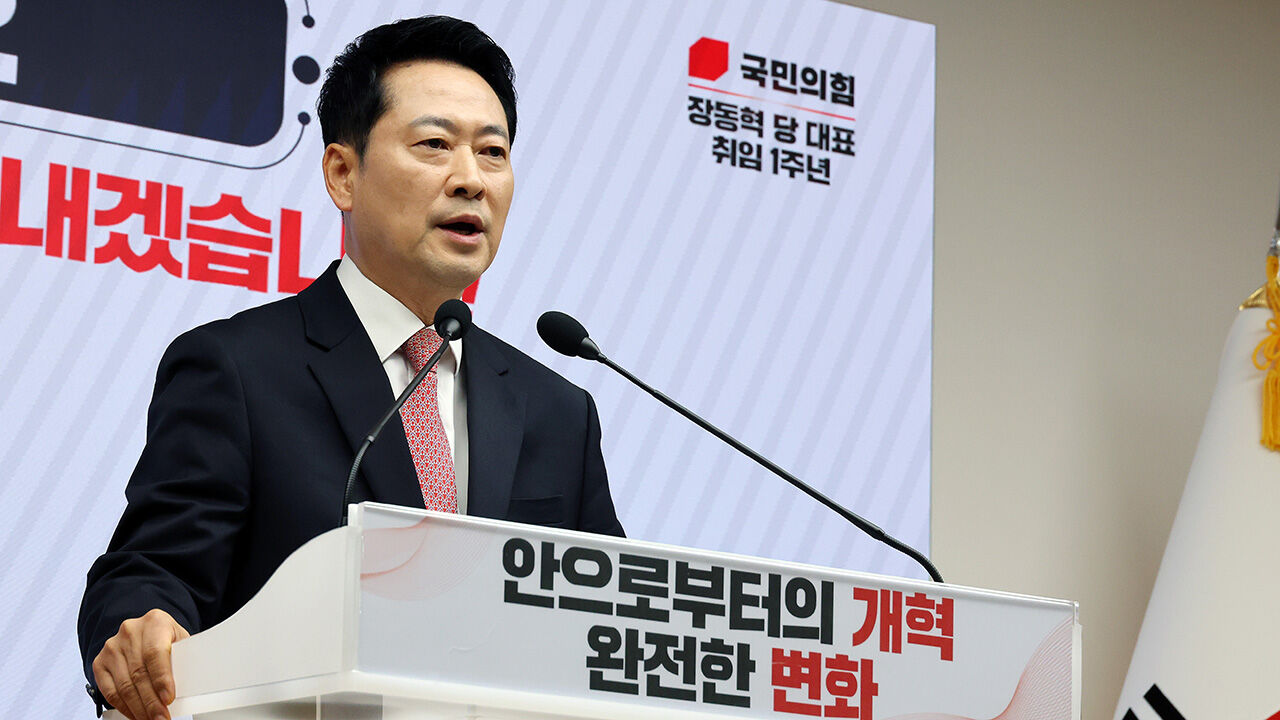
Under the pressure of resignation calls, Representative Jang completed the first year of his two-year term. He also reached a turning point: the National Election Commission (NEC) ballot paper shortage incident. Representative Jang focused on protests outside the National Assembly, visiting Olympic Park every day. Many criticized this as an evasive tactic to dodge responsibility for the June 3 local election results. However, from Representative Jang's perspective, he appears to believe that he worked hard to shift the narrative from a factional "election fraud theory" to a broader agenda of "infringement on voting rights," thereby solidifying his fandom. In terms of results, he also seems to take credit for the establishment of a special counsel probe into the NEC agreed upon by both ruling and opposition parties. In fact, his aides evaluate this as the first successful joint achievement between grassroots conservative activists on the streets and the institutional conservative political establishment.
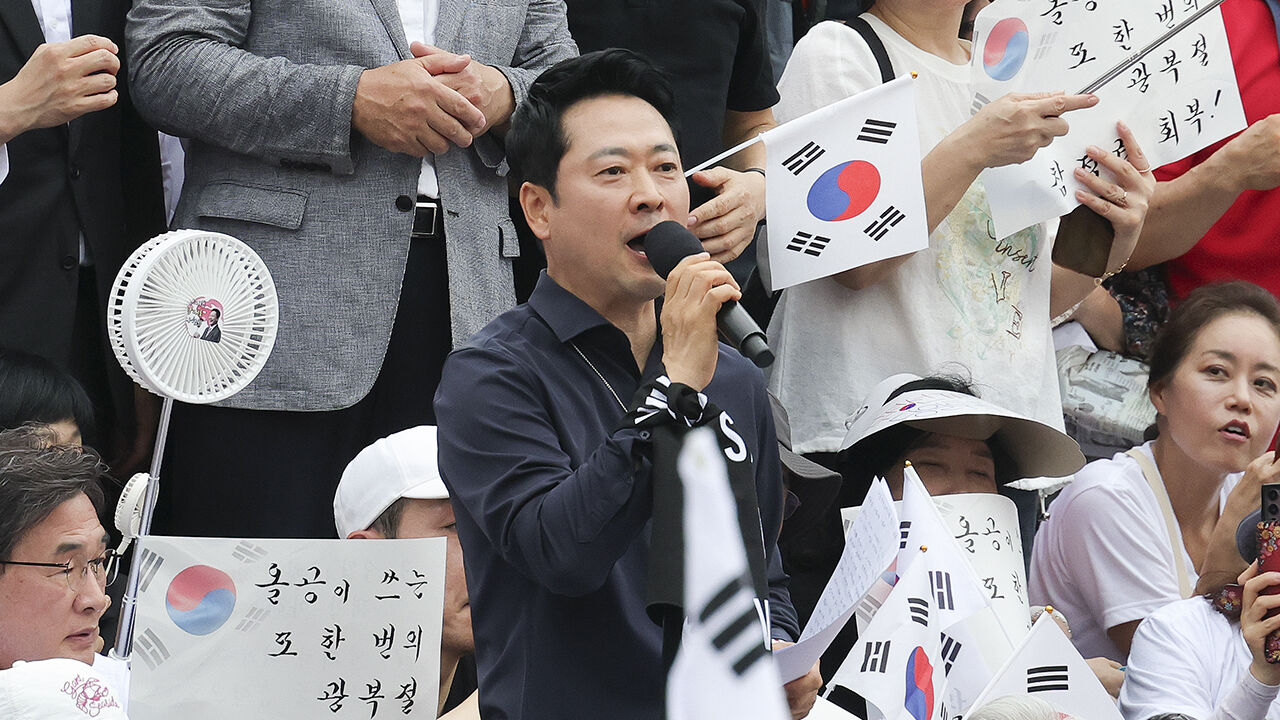
Jang Dong-hyeok on Offense
Nearly a year has passed before that resolve was brought out into the open. It seems reasonable to say that Representative Jang is now looking to go on offense. His justification is to build a member-centered party by electing chapter heads through methods such as party member voting, in accordance with party rules on regional operational organizations. Until now, the People Power Party has automatically extended the terms of chapter heads in two-year increments unless major issues arose. The party regulations only state that "they shall be elected by the end of August in every even-numbered year, with the timing of election to be determined by the Supreme Council." There is no explicit clause stating "how many years a term lasts." Therefore, Representative Jang proposed not reappointing the current chapter heads this time, but rather electing new ones through member voting as outlined in the regulations. He put forward the argument that whoever wins the choice of party members—whether sitting lawmakers or non-lawmakers—should serve as chapter heads.
Representative Jang's camp argues that re-electing chapter heads is a form of party reform. They maintain that granting more authority to party members is undeniably a reform rather than a regression. Secretary-General Jeong Hee-yong is also backing this argument. There is also a palpable desire from Representative Jang's side to seize the reform image and frame the clash with opposing factions as "reform versus anti-reform."
Re-election of Chapter Heads: A Smokescreen Rather Than All-Out War
A clear mood to avoid an all-out clash can be detected from Representative Jang's camp. Pushing ahead forcefully with a complete re-election of chapter heads could lead to a situation where the majority of lawmakers turn their backs. In the worst-case scenario, it could raise concerns over the collapse of the party leadership triggered by the resignations of Supreme Council members. However, Representative Jang's camp maintains that this is not a return to the drawing board. Instead of an all-out confrontation, the strategy is to deploy a smokescreen for the time being while monitoring the atmosphere.
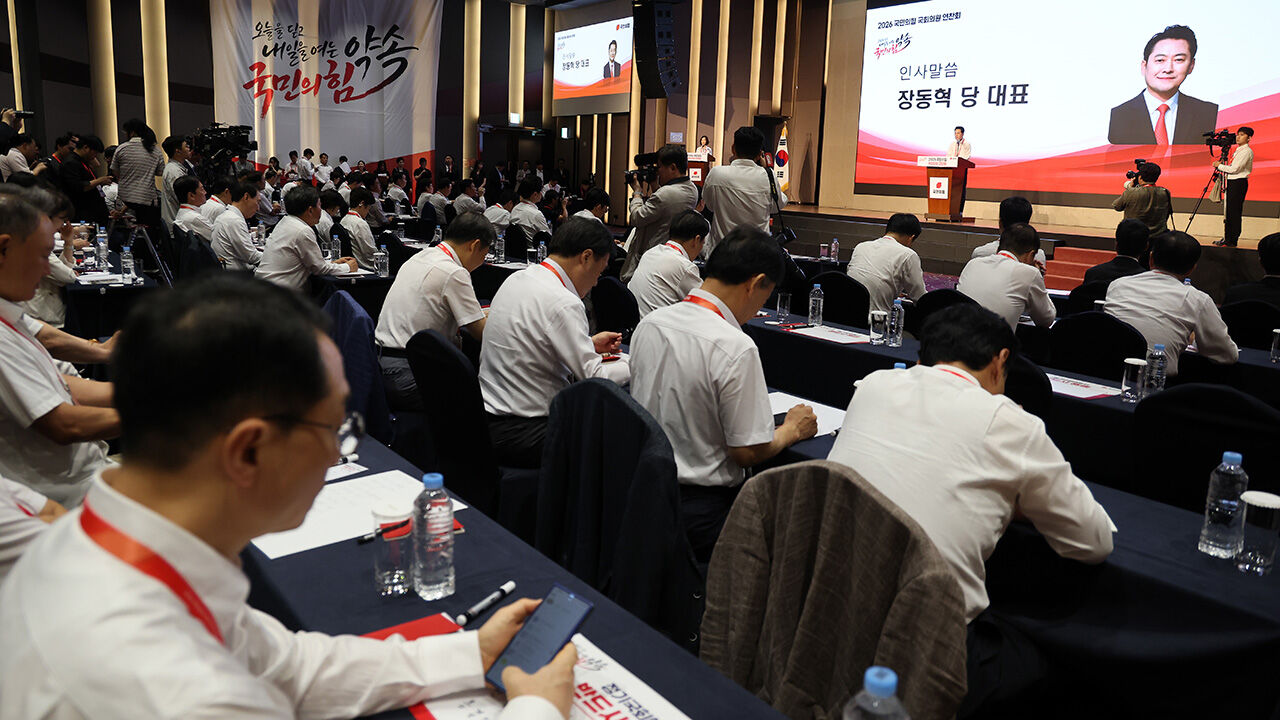
Representative Jang is reportedly weighing various scenarios. His camp is initially reviewing a plan to elect new chapter heads through member voting only in "troubled chapter committees" where the position is currently vacant. For chapters led by incumbent lawmakers, they plan to revisit discussions after taking ample time. This could be described as "strategic ambiguity."
Representative Jang argues that filling vacant chapter head posts through member voting alone represents a concession of the party leader's authority. Previously, new chapter heads were appointed by the party leader through the Special Committee for Party Organization Reinforcement. As a result, the party leader's intentions were inevitably heavily reflected. However, Representative Jang's side reasons that if elections are held via member voting, figures from the anti-Jang faction could just as easily be elected.
PPP Power Struggle: A Clash of Ambitions
Because each side harbors different dreams and pursues different goals, this power struggle is expected to grow fiercer. Representative Jang has never officially spoken of presidential ambitions. However, during the last presidential race, he weighed running in the PPP presidential primary until the final moment. He is, in essence, someone harboring presidential aspirations. Even now, he appears as one of the contenders in opinion polls measuring suitability for the next presidency. Some within the party view Representative Jang's agenda-setting—proposing member votes for chapter heads—as ultimately rooted in presidential ambitions. From Representative Jang's perspective, he will likely seek to build a narrative over his remaining term that he reformed and reorganized the People Power Party into a member-centered party and laid the groundwork for victory in the general election. If securing the special counsel probe into the NEC was a visible accomplishment during his first year in office, he is expected to focus on building an image of having reformed the party during his remaining year. Representative Jang's plan can be seen as aligning with the external justification of "direct member elections." Had Representative Jang's goal simply been to serve another four-year term as a lawmaker, he would not have raised the issue of direct member elections; he would have merely focused on "dining politics," fraternizing closely with fellow lawmakers.
The vast majority of incumbent lawmakers oppose Representative Jang's re-election of chapter heads. While they may agree with the premise, they worry it will cause internal division. With plenty of issues to attack the Democratic Party on, such as real estate policy, they question the need to divide and clash along pro-Jang and anti-Jang lines over chapter head posts. Even one leadership figure lamented, "I honestly do not see what practical benefit there is." On the other hand, anxiety that the blade of chapter head re-elections might be aimed at their own necks may also be at play. For most lawmakers, whether their nomination in the next general election is secured is paramount. This is not necessarily bad, but rather a natural instinct for politicians. However, without knowing what Representative Jang is planning, voluntarily relinquishing the chapter head post reserved for them is not an easy choice. They could become political sacrificial lambs. Consequently, lawmakers who doubt Representative Jang's sincerity are left with little choice but to add momentum to calls for his resignation. In the end, Representative Jang and incumbent lawmakers find themselves at complete cross-purposes, and the chapter head re-election issue will undoubtedly serve as the trigger for an internal power struggle.
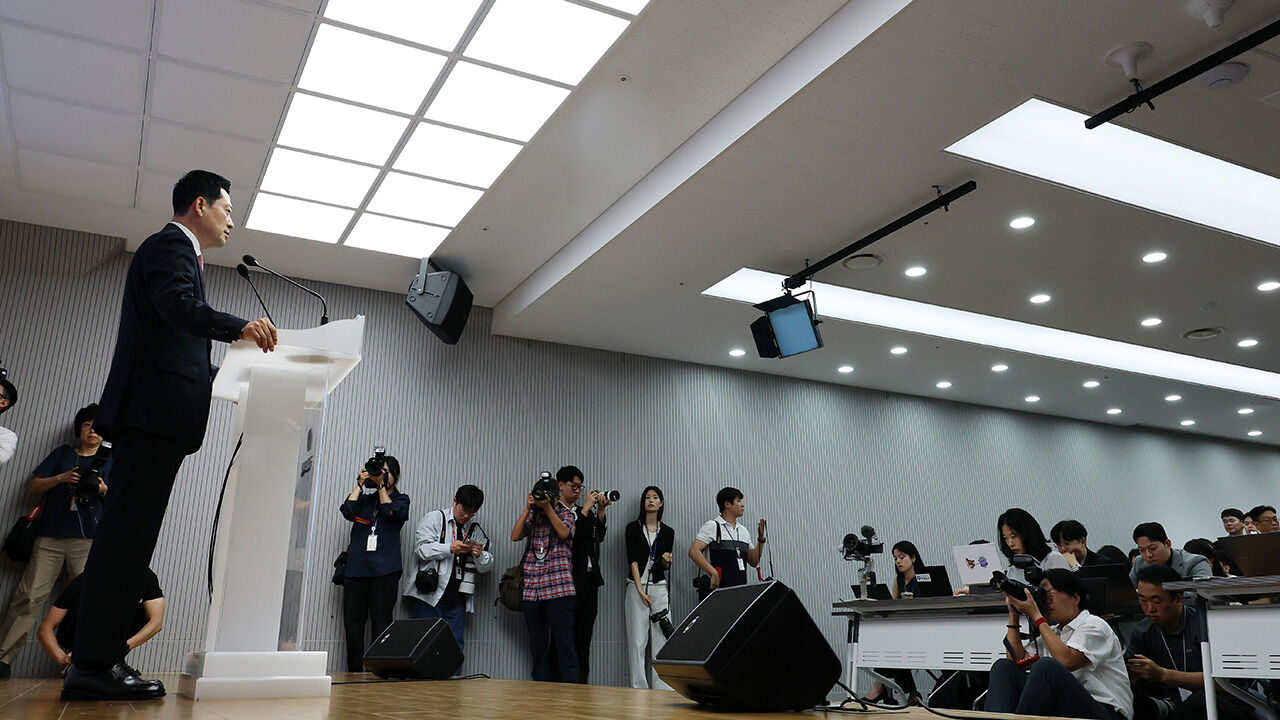
(Photo: Yonhap News)
※ Please note: This article was translated by AI and may contain errors.



 Video News
 Video News
 Video News
 Video News
 Video News