KOR
KOR
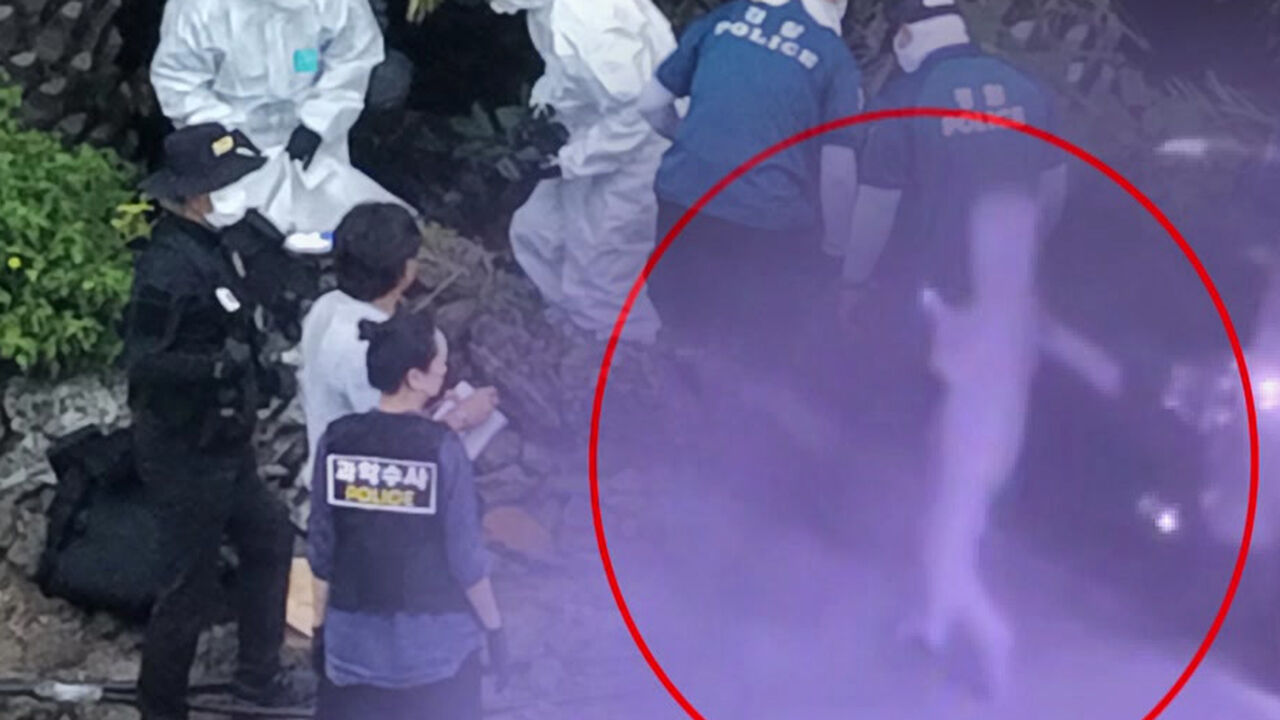
In connection with the case in Jeju where the disappearance of Jang Mi-ran was falsely closed, the word "amjang" (secret burial) is being widely discussed. "Amjang" literally means to secretly bury something underground. In this context, it refers to closing a case without further investigation despite clear suspicions or evidence of a crime. While it was previously a term used mainly among criminal justice professionals, it has now become familiar to the general public following the Jang Mi-ran case.
Why the Jang Mi-ran Case Is Being Linked to the 'Abolition of Supplementary Investigations'
Nevertheless, many people link the Jang Mi-ran case to the "abolition of supplementary investigations" or the "abolition of investigative direction." This is due to distrust. People worry about what might happen if a police organization that handles a case directly tied to a person's life in this manner is freed from the oversight mechanism of supplementary investigations. Concerns are also growing that cases are particularly likely to be "buried" when victims belong to vulnerable social groups.
The Possibility of 'Burying' Cases Where the State Is the Victim Is a Bigger Issue
Let us first examine why the likelihood of cases being buried increases when the victim is socially vulnerable. Until now, prosecutors—legal professionals employed by the state—performed tasks requiring legal expertise during investigations on behalf of victims. Starting this coming October, prosecutors will be "separated" from investigations. However, this does not mean the victims' need for legal expertise will disappear. Victims will have to hire their own legal representatives to somewhat fill the void left by prosecutors. (Of course, even doing so cannot completely fill that void.)
This means the outcome of an investigation is increasingly likely to depend on a victim's "ability to respond." The socially vulnerable are precisely those with a weak "ability to respond." They are less likely to be able to hire competent attorneys, and in some cases, such as children or individuals with developmental disabilities, they lack the ability to articulate their views during the investigative process. As their ability to respond decreases, the likelihood that cases will be "buried" increases.
From the perspective of response capacity, however, an even bigger problem lies in cases that have no individual victim at all. To be precise, these are cases where the victim cannot be specifically identified because the victim is the state or society. In cases involving socially vulnerable victims, a victim with at least some capacity to respond still exists. The victim's side can at least bring the matter to the press. But in cases involving Political Funds Act violations or bribery, such actions are impossible because the victim is the state or society. Prosecutors are the very legal professionals who represent the state and society, yet they will no longer be able to directly participate in the investigative process. Without a victim to respond and push forward, the likelihood of these cases being buried becomes even greater.
Those Who Will Gladly Welcome 'Burials'
What is even more alarming is that it takes a long time for the resulting damage to become apparent. It is similar to environmental pollution. Suppose a law punishing the discharge of wastewater into rivers were abolished. Factories would dump wastewater into the river, but the problem would not be immediately obvious. The water might turn dark or emit a foul odor, but no individual's personal interest is immediately infringed.
However, after about 5 to 10 years of continuous discharge, the situation changes. People begin falling ill, and some may even lose their lives. Even at that stage, more time will be needed before reaching the conclusion that the root cause was the "abolition of the ban on wastewater discharge." Even when cracking down on wastewater discharge resumes at last, it will take far longer for the river to become clean again. It may never fully recover.
Much Time Needed for Damage to Surface... Can It Be Restored?
However, as time passes and corruption becomes rampant—reaching a point where public business cannot be conducted without informal influence or bribes—people will finally begin to realize that something has gone wrong. Even then, more time will be required to conclude that the cause of the problem stems from flawed "prosecution reform." Restoring or improving the system will take even longer, assuming restoration or improvement is even possible at that stage.
Concerns about cases involving the socially vulnerable being buried are valid. However, what is truly likely to be buried without anyone noticing are crimes committed by those with public power against the state and society. Such "burials" will not even catch the public eye for the time being. Only after considerable time has passed and a critical threshold is crossed will the gravity of the situation be felt. One can only hope that things can be turned around before it is too late.
※ Please note: This article was translated by AI and may contain errors.




 Video News