KOR
KORMother Rescued by Digging Through Mud, but "Landslide Advisory" Came Too Late
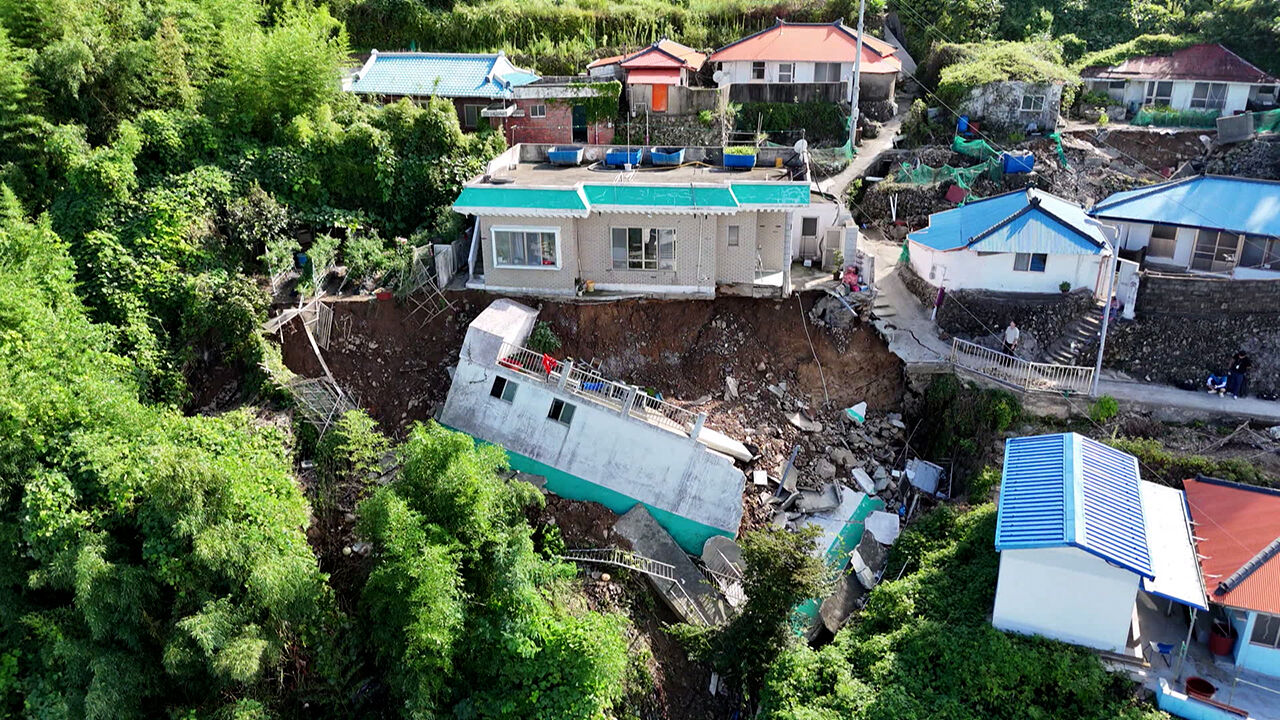
Let us look at Tongyeong first. In the case of Tongyeong, where one person was injured, the evacuation text message was sent far too late. There is an island called Gonrido in Tongyeong, where a woman in her 60s was swept away by landslide debris. That occurred around 4:30 a.m. on August 17 during heavy downpours. The rescue call was reported to the Coast Guard at 5:03 a.m. on the same day.
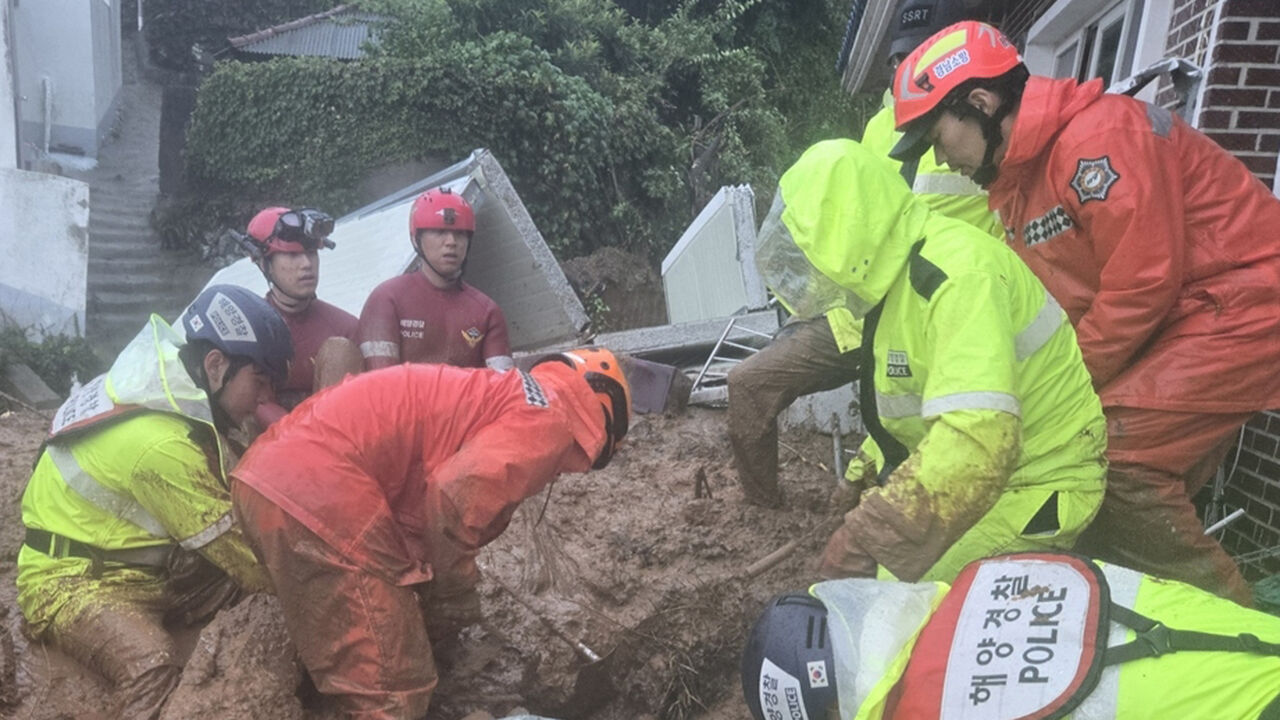
However, the text message advising residents to evacuate following a landslide advisory was sent at 7:00 a.m., two hours later. The rescue operation at the time was said to have been desperate. Our reporting team met with the victim's son. He said his mother was found covered with a blanket, and the Coast Guard and the son carried out the rescue by cutting away the mud piles and debris surrounding her. Fortunately, although she suffered a leg fracture, her life was not in danger, and we understand she is currently receiving treatment at a nearby hospital. This rescue operation was completed in about an hour and a half, finishing around 6:30 a.m., meaning the evacuation text message was sent 30 minutes after the victim had already been rescued.
Some skeptics might ask, "What significant difference does sending individual text messages make?" But that is not true. Evacuation text messages are crucial. Many people are unaware that a landslide has occurred until they see a message and realize they need to evacuate. That is why we repeatedly send disaster text messages during natural hazards. When we asked Tongyeong City Hall why the transmission was delayed, officials admitted to our reporting team that making an on-site judgment at the time was difficult.
Tongyeong City Hall Official
We did not expect that much rain to fall at dawn at all. It was just too difficult for us to make a judgment call.
The Korea Forest Service provides landslide information to each local government at one-hour intervals. It sends information on which areas are particularly at risk and in what manner, allowing each municipality to make decisions based on its own circumstances. Tongyeong City has acknowledged that its own decision-making process was delayed.
Looking closer, the explanation was that they did not expect so much rain at dawn, not all duty officials on night shifts are experts on landslides, and above all, holding a situation assessment meeting and going through administrative procedures to decide whether to issue a disaster alert or landslide advisory was neither easy nor swift at 4:00 a.m. or 5:00 a.m. While one can understand what the public official meant, the explanation of a delayed decision was difficult for our reporting team to accept readily given that a casualty had already occurred.
"Not a Landslide?"... Residents Enraged
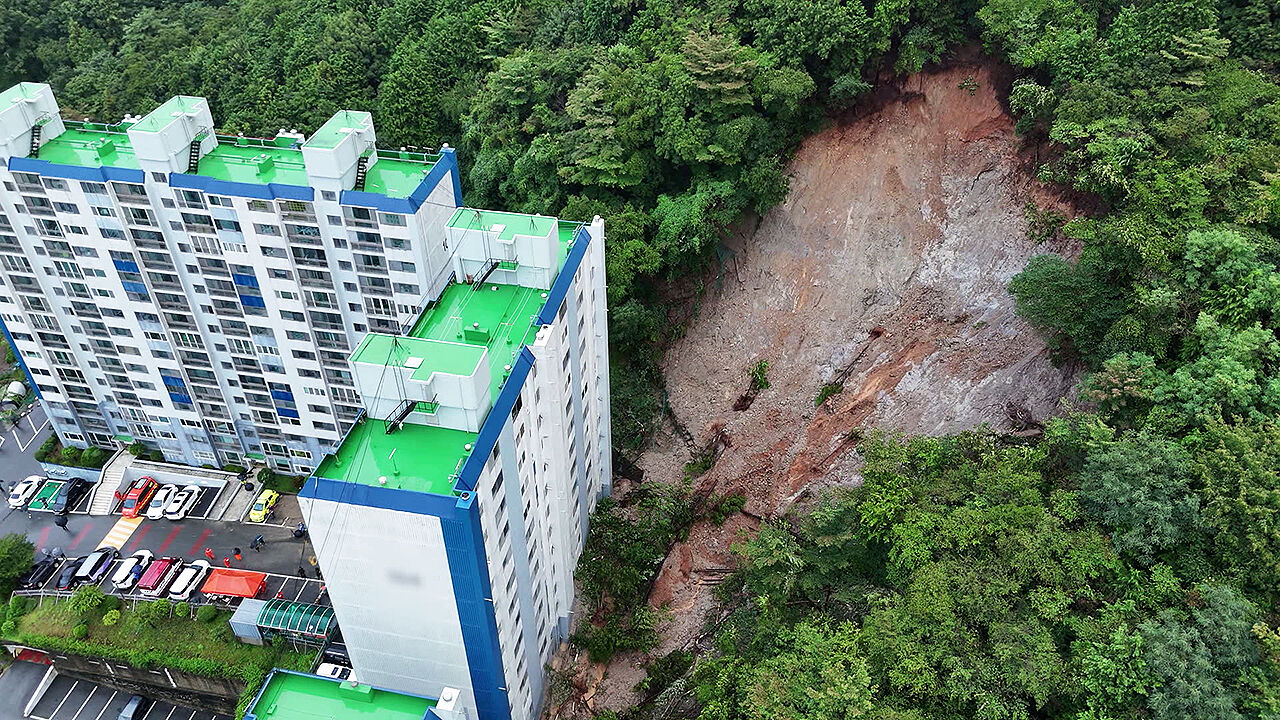
Within Geoje City Hall, one department referred to the soil collapse as a "landslide," while another described it as a "slope failure." "Slope failure" refers to the collapse and loss of soil from an inclined surface. In truth, whether called a landslide or a slope failure, both involve soil and rocks tumbling down as a slope collapses.
So what is the difference? A landslide is a phenomenon that occurs in natural areas such as mountainous terrain or forest land. Because it occurs in a natural area, it is classified as a natural disaster, and the responsibility for restoration and compensation lies with the state or local government. Therefore, the Korea Forest Service and individual local governments undertake restoration. On the other hand, slope failure refers to an artificial area. Land where someone has excavated a hillside and laid groundwork to erect buildings is commonly called a building site; when slope failure occurs in such artificial areas, the responsibility typically lies with the property owner. Thus, it is considered a man-made disaster rather than a natural one. As a result, the responsibility for restoration falls on the private sector rather than the state or municipality. The division managing forests claimed it was a slope failure and a man-made incident, while the division managing buildings argued it was a landslide and a natural disaster.
Geoje City Hall Official A
All causal acts and related factors are not related to a landslide at present; while it looks like a mountain to our eyes, we are stating that this was a collapse of a residential retaining wall within a building site.
Geoje City Hall Official B
The way I see it, the adjacent forest land naturally collapsed together. To say that only the building site portion collapsed separately makes no sense.
In the end, it was concluded as a slope failure. This was because it was viewed as artificial land that a construction company had previously purchased and leveled to build apartments. It is understandable that this is a sensitive issue, as it directly ties to the question of liability. However, from the residents' perspective, why should it matter so much whether it is termed a landslide or a slope failure? As many have seen in footage, because the retaining wall collapsed and soil from the mountain behind rushed down, residents naturally could not help but consider it a landslide, and some residents have been unable to return to their homes for weeks. Yet, what resident could accept being told to share the burden of that responsibility in the form of paying maintenance fees after suffering such damage?
Local Resident
That is not right. That really is not right. Anyone looking at this would call it a landslide.
Local Resident
It makes no sense. Absolutely no sense. Why should the people here be held responsible for handling it like this?
Landslide or Man-Made Disaster? Precedents in the Past
Tongyeong and Geoje were also declared special disaster zones last week. Geoje City also stated to our reporting team that although the responsibility for compensation and restoration strictly lies with the private sector, it is reviewing and exploring ways the city might assist due to safety issues and the extreme risk involved. However, whether that will materialize remains to be seen until the end.
Heavy rain will fall every year. And such landslides can happen again at any time. In provincial regions especially, many of our apartment complexes are situated near mountains. We cannot tell residents to take responsibility every time that happens. We must carefully examine whether there are any loopholes in our disaster alert and recovery systems.
※ Please note: This article was translated by AI and may contain errors.




 Video News