KOR
KOR- Not individual misconduct... lack of supervisor inspection and sign-off must be overhauled
- Unrelated to 'abolishing supplementary investigation rights'; Han Dong-hoon's claim is far-fetched
- Distorting the issue into a political funnel for self-interest is an unsavory, ill-intentioned tactic
- Expansion of police authority requires heavy accountability... local autonomous policing must accelerate
- External audit system, including an independent internal inspection body, will also be introduced
- SADD halts morning subway boarding protests... social compromise achieved
- Tancheon Water Recycling Center instead of Yongsan development? Not a proper alternative
- An ungrounded claim lacking any plan on when and where to relocate the 130,000-pyeong center
- Plan uses only 10% of Yongsan Park... significantly faster execution
- Rhyu Si-min criticizing President Lee? Understandable concern about the party's direction, but
- Publicly attacking the president does not help... self-destructive remarks must stop
■ Broadcast: SBS Kim Tae-hyun's Political Show (FM 103.5MHz 7:00 – 9:00)
■ Date: Wednesday, August 26, 2026
■ Host: Attorney Kim Tae-hyun
■ Guest: Kim Young-bae, Democratic Party of Korea lawmaker (Head of Seoul Chapter)
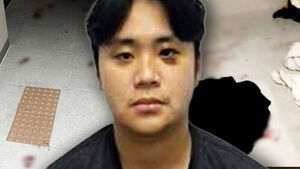
[Kim Tae-hyun] A police officer who falsely closed missing persons cases in Jeju was arrested yesterday. It sparked public outrage when it was revealed that he falsely logged cases into the network as traffic accident fatalities simply to close them. We are joined by Democratic Party lawmaker Kim Young-bae, a member of the National Assembly Public Administration and Security Committee, to examine this issue. Representative, welcome.
[Kim Young-bae] Hello. This is Kim Young-bae.
[Kim Tae-hyun] As a member of the Public Administration and Security Committee overseeing the National Police Agency, you must be well acquainted with this. Representative, regarding the case of Ms. Jang Mi-ran and the missing man in his 60s, what do you see as the core of this incident?
[Kim Young-bae] In a word, it is a failure of the system. When a person goes missing and a report is filed with the police, it is registered in the profiling system to track the person. However, what was uncovered this time is absurdly that supervisors—meaning senior officers above the officer in charge—have no system in place to check, receive reports, or approve the cases.
[Kim Tae-hyun] A single frontline officer had unchecked discretion.
[Kim Young-bae] That is correct. Senior Constable Boo was assigned there for 1 year and 5 months and reportedly handled 298 missing persons cases alone. Yet, among those cases, bodies have already been discovered in two cases he unilaterally closed. Moreover, four bodies were discovered in Jeju over just the past three days alone. Shockingly, two of them were from cases Senior Constable Boo arbitrarily closed as traffic accident fatalities or located persons. This clearly confirms that the entire police system needs a complete overhaul, especially at a time when the police fully exercise investigative authority and public concern is high.
[Kim Tae-hyun] Some in the ruling party have suggested that this was an individual deviation. You are saying this cannot be viewed merely as individual misconduct?
[Kim Young-bae] It cannot be viewed simply as an individual deviation when missing persons cases are left unresolved or unilaterally closed without any review or sign-off from supervisors; that is unacceptable. When human lives are at stake, the inability of police leadership to systematically check cases is a critical problem. Leaving public authority to personal discretion is extremely dangerous. Therefore, this must be seen as a systemic failure. In that sense, the president ordered the formation of a reform promotion committee to overhaul police power overall, and yesterday Floor Leader Kim Min-seok launched the Police Reform Task Force headed by Representative Kim Nam-hee.
[Kim Tae-hyun] Representative, do you or the Public Administration and Security Committee know why Senior Constable Boo did such a thing?
[Kim Young-bae] I do not know whether he had personal motives.
[Kim Tae-hyun] The investigation is still ongoing?
[Kim Young-bae] Yes. To be honest, it feels eerie and chilling. Human lives must not hang in the balance due to individual misconduct or personal disposition. Taking this opportunity, we must establish a police system that can truly earn public trust, especially since police authority sits at the cutting edge of state administration.
[Kim Tae-hyun] As you mentioned, the Democratic Party launched the Police Reform Task Force, and the president noted that the police will wield the greatest power going forward, yet there are many issues and public concerns that need addressing.
[Kim Young-bae] Yes.
[Kim Tae-hyun] The problem is that the People Power Party argues, "We warned you that abolishing the prosecution's supplementary investigation rights would lead to buried cases. It is already happening; what are you going to do?" What is your response?
[Kim Young-bae] That is far-fetched logic. They seem to funnel every issue into supplementary investigation rights and the prosecution. First, I would like to say that Representative Han Dong-hoon is not qualified to make such claims. Second, it is absurd because this is a missing persons case, not an active criminal investigation case. It was a missing person report made before it turned into a criminal investigation. When a missing person report is filed, authorities determine whether it is an accident or whether there is suspicion of a crime; if a crime is suspected, they launch an investigation based on evidence. Since this occurs prior to an investigation, before any suspicion of crime is identified, it has nothing to do with investigative rights. As I said earlier, it stems from deficient administrative procedures and systems within the police.
[Kim Tae-hyun] I see.
[Kim Young-bae] Therefore, trying to divert this into a debate over supplementary investigation rights for personal political gain—using the controversy to build one's own platform—is an unsavory and ill-intentioned tactic.
[Kim Tae-hyun] Yes.
[Kim Young-bae] Rather, Representative Han Dong-hoon, who served in a prosecution-led administration where abuse of power was rampant and even orchestrated a coup, never said a single word about the prosecution. Yet he keeps framing and pushing an incident that has nothing to do with investigative powers as a problem of supplementary investigation rights. That behavior is very malicious and bad-natured.
[Kim Tae-hyun] You are saying it is problematic for Representative Han or the People Power Party to steer this toward the abolition of supplementary investigative authority. Even when supplementary investigation rights were in place, such issues likely occurred.
[Kim Young-bae] Supplementary investigative authority currently exists. But since this was not a criminal investigation case, supplementary investigation was not even applicable.
[Kim Tae-hyun] However, with the expansion of police powers, both the president and the public have significant concerns. If issues continue to arise one after another in this environment, public anxiety will grow. People may naturally ask, "Why did you make police power so bloated? Isn't the Democratic Party responsible?" Isn't this situation quite burdensome?
[Kim Young-bae] A very heavy responsibility lies before us. Back in 2020 and 2021 during the Moon Jae-in administration, when the first round of prosecution-police investigative power adjustments was discussed, police reform had three main directions. One was dividing the police into the national police, investigative police, and autonomous local police. With around 130,000 officers, the police is a massive behemoth. So the plan was to introduce autonomous policing and an investigative police system. The investigative police have been implemented through bodies like the National Investigation Headquarters, and with the planned introduction of the Serious Crime Investigation Agency, significant progress has been made. However, autonomous local policing has progressed more slowly than expected and still has a long way to go. If the head of the Jeju Provincial Police Agency had held final accountability for the missing persons case at Jeju Seobu Police Station, oversight on the ground would have been far more thorough. But because the National Police Agency chief has to oversee everything at the national level, severe bottlenecking occurs, drawing criticism that administrative power fails to reach the capillary level of frontline operations. That is why autonomous policing must be accelerated significantly.
[Kim Tae-hyun] Yes.
[Kim Young-bae] Another issue is that external audit systems to actively uncover, address, and rectify internal corruption and flaws within the police remain somewhat lacking. Therefore, we plan to make the National Police Commission substantive and legally establish an independent inspection agency under it. We will pick up the pace so this police reform roadmap can promptly gain the public's trust.
[Kim Tae-hyun] In any case, you are saying this incident will not lead to fundamentally revoking the police's exclusive investigative authority or easing the abolition of the prosecution's supplementary investigation rights?
[Kim Young-bae] No. Regarding supplementary investigation rights, there are seven critical areas where victims genuinely need supplementary investigations—such as women's issues and disability issues. We plan to introduce supplementary legislation for these seven areas soon, followed by follow-up legislation accompanying the final abolition of supplementary investigation rights.
[Kim Tae-hyun] I see.
[Kim Young-bae] Additionally, when the autonomous police system is introduced as I mentioned, healthy competition over investigative authority will emerge within the police force. By dividing livelihood-related crimes and major crimes through autonomous policing, we expect to clearly achieve the effect of dispersing monopolized police power.
[Kim Tae-hyun] Understood. Let us move to another topic: the Solidarity Against Disability Discrimination (SADD) issue. There was significant controversy and clashes, but they halted their subway boarding protests after 4 years and 9 months. I understand you played a mediator role. How was this coordinated?
[Kim Young-bae] SADD members continued their protests advocating for mobility and labor rights for people with disabilities, despite causing considerable commute inconvenience to citizens. I previously reached a compromise with SADD asking them to pause protests until the local elections, which they did. Unfortunately, our Democratic Party lost the Seoul mayoral election, and Mayor Oh Se-hoon obstructed progress, leaving the disability mobility issue unresolved.
[Kim Tae-hyun] Yes.
[Kim Young-bae] This time, the Seoul Metropolitan Council, where the Democratic Party holds over two-thirds with 80 seats, adopted an ordinance on disability mobility rights as its No. 1 party platform policy. In response, SADD made the major decision to halt morning rush-hour boarding protests, achieving a social compromise. Personally, although I did not become Seoul mayor, achieving such a grand compromise right after taking office as head of the Seoul Chapter makes me very proud. It is also meaningful that we put into practice the core duty of politics: focusing solely on citizens' lives.
[Kim Tae-hyun] So an agreement was reached with SADD. Now, the Democratic Party holds a majority in the Seoul Metropolitan Council and promised to convert all city buses in Seoul into low-floor buses and increase the operating rate of specialized mobility services like disability call taxis. This will benefit people with disabilities, but to execute this, cooperation with Mayor Oh Se-hoon will be necessary.
[Kim Young-bae] That is correct. Since the Democratic Party holds more than two-thirds of the Seoul Metropolitan Council, even if Mayor Oh exercises a veto on the ordinance, he cannot ultimately stop its passage. Therefore, I reiterate to Mayor Oh: isn't politics about taking responsibility for citizens' lives? I advise him not to place unnecessary obstacles, and we intend to resolve issues through sufficient dialogue and compromise with Mayor Oh.
[Kim Tae-hyun] Speaking of Mayor Oh Se-hoon, real estate is another unavoidable topic. Today, Minister of Land, Infrastructure and Transport Kim Yoon-duck and Seoul Mayor Oh Se-hoon are holding their second meeting regarding the Yongsan development rights.
[Kim Young-bae] So it seems.
[Kim Young-bae] Mayor Oh suggested the Tancheon Water Recycling Center site as an alternative. As head of the Democratic Party's Seoul Chapter, what are your thoughts?
[Kim Young-bae] Right after taking office as head of the Seoul Chapter, I had a one-on-one luncheon with Mayor Oh last Saturday, August 22. During our discussion, he mentioned he is not unconditionally opposed and suggested we debate alternatives, bringing up the Tancheon Water Recycling Center site to me as well.
[Kim Tae-hyun] Yes.
[Kim Young-bae] However, the Tancheon Water Recycling Center cannot be considered a viable alternative. The site becomes vacant only after the facility is relocated. That water recycling center spans a massive 130,000 pyeong, yet he offers no plan on where to move it. He proposes building after relocation. While repeatedly claiming Yongsan Park is unfeasible due to the long time required for soil decontamination, his proposed alternative also requires relocation before construction can even begin. When would that relocation happen? I would really like to ask: is he suggesting we move it to Gangnam, where apartment complexes are densely packed? Clearly not. Where in Seoul can you find a 130,000-pyeong site for a water recycling center? Insisting on building there without presenting a realistic relocation plan is simply irresponsible self-serving politics, equivalent to saying Yongsan Park is unacceptable no matter what.
[Kim Tae-hyun] Yes.
[Kim Young-bae] Personally, I believe moving the Tancheon site could take about 10 years. In the very long term, it could be relocated if Seoul citizens reach a consensus. However, right now, the Lee Jae-myung administration is looking for sites where construction can begin within a few years. Proposing a site where relocation—let alone ground-breaking—cannot be completed within the Lee administration's term and presenting it as an alternative makes no sense. Rather than engaging in such baseless self-serving politics, I urge him to sincerely cooperate with the government's efforts to build youth housing.
[Kim Tae-hyun] Do you personally agree with the government's direction to develop the Yongsan Park site?
[Kim Young-bae] The total park site is 900,000 pyeong, and the Children's Garden accounts for one-tenth, or 90,000 pyeong. The plan is not to use the entire area, but to develop the rest as a park. Building much-needed youth housing on about 10% of the designated park land is something worth considering. However, as mentioned earlier, developing more than 90% into a superb national park is beneficial in the long run and for future generations.
[Kim Tae-hyun] Yes.
[Kim Young-bae] And we are not only talking about that site. The government's firm commitment is to build youth housing across key locations throughout Seoul close to workplaces, and even pour 20 trillion won from excess tax revenues into resolving the youth housing issue.
[Kim Tae-hyun] Understood. Representative, let me ask a few political questions. Writer Rhyu Si-min criticized President Lee Jae-myung as showing the demeanor of an arrogant ruler.
[Kim Young-bae] He spoke quite harshly.
[Kim Tae-hyun] He made remarks bordering on ill-wishing, saying that continuing down this path would lead to a 30% approval rating, similar to former President Yoon Suk-yeol's failed path. How do you view this?
[Kim Young-bae] I understand what concerns writer Rhyu Si-min has in his remarks.
[Kim Tae-hyun] What concerns do you think they are?
[Kim Young-bae] He seems worried that President Lee Jae-myung's solo leadership might steer the party in an anti-reform direction or dismantle our winning coalition, ultimately harming our entire bloc down the road. While one could understand his loyalty and intentions, I want to state clearly that publicly attacking the sitting president in such a manner is itself an act of self-harm to our winning coalition. The rhetoric writer Rhyu Si-min uses does not help our bloc succeed at all. Therefore, I believe it would be better to cease such self-destructive remarks.
[Kim Tae-hyun] Yes.
[Kim Young-bae] Politics is carried out by political parties. Party Leader Kim Min-seok understands this situation well. There was fierce competition during the national convention, but after competition must come unity. As the Grand Unity Promotion Committee has been launched, the true test for the Democratic Party is whether it can practice an inclusive leadership that embraces even the worries and concerns raised by writer Rhyu Si-min.
[Kim Tae-hyun] Representative, one final question. Do you see writer Rhyu Si-min's remarks as well-intentioned advice out of concern for the president, or as malicious criticism, blame, or even a curse?
[Kim Young-bae] I do not believe it is a curse. I hope it stems from concern, and I believe it is out of concern.
[Kim Tae-hyun] Saying you hope it is concern implies that deep down you think it might not be?
[Kim Young-bae] Not at all. I believe a party with robust self-criticism is a healthy party, and I trust our political force possesses the capacity for self-correction.
[Kim Tae-hyun] Understood. We will wrap up here. That was Democratic Party lawmaker Kim Young-bae. Thank you.
[Kim Young-bae] Thank you.
The copyright of this interview material belongs to SBS Radio.
When publishing the full text or citing this interview in reports,
please state the channel name and the exact program title as follows.
[SBS Kim Tae-hyun's Political Show]

※ Please note: This article was translated by AI and may contain errors.



 Video News