
 KOR
KOR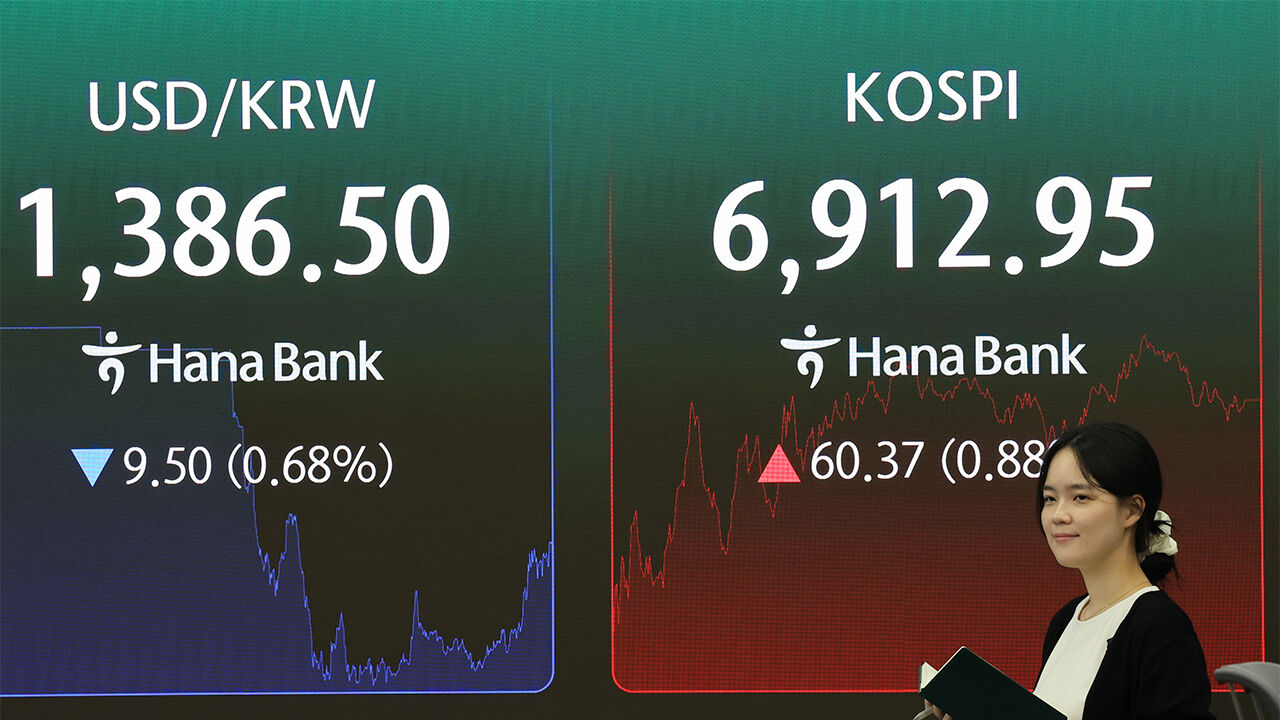
▲ The closing figures for the KOSPI and the won-dollar exchange rate are displayed on an electronic board at the dealing room of Hana Bank in Jung-gu, Seoul, on the 21st.
As the domestic stock market has recently shown a gradual upward trend, "bit-tu" (investing with borrowed money) is on the rise again.
According to the Korea Financial Investment Association today (the 24th), the balance of credit transactions stood at 32.4162 trillion won as of the 21st.
This is an increase of 522.3 billion won from the previous session, swelling back into the 32 trillion won range for the first time since June 30 (32.1531 trillion won).
This credit balance had dropped to 27.4038 trillion won on the 4th, but has been gradually increasing since then.
It has increased for four consecutive trading days recently.
Credit transactions involve individual investors borrowing funds from securities firms to purchase stocks, serving as a representative indicator of "bit-tu."
This balance typically increases during stock market rallies. As the KOSPI, which fell to the 6,200 range earlier this month, regained the 6,900 mark on the 21st and showed a strong bullish trend, the balance has been on the rise.
On the other hand, investor deposits, which represent standby funds for the stock market, decreased significantly again.
Investor deposits as of the 21st were tallied at 100.7456 trillion won, down 4.0686 trillion won from the previous session.
Investor deposits decrease when individual investors purchase stocks or withdraw funds, and on the 21st, individual investors net sold 1.1662 trillion won worth of shares on the main bourse.
While ultra-short-term "bit-tu" margin transactions were tallied at 1.0715 trillion won, the amount of forced liquidation (forced sales) due to failure to repay these margins swelled to 48.3 billion won.
This is more than five times the previous session's forced liquidation of 9.3 billion won.
While the scale of recent forced liquidations had stayed below 10 billion won for six trading days, it showed a sharp increase again on the 21st.
The ratio of forced liquidation to margin receivables also surged to 4.4%, up significantly from 1.0% in the previous session.
(Photo: Yonhap News)
※ Please note: This article was translated by AI and may contain errors.



 Video News

 Video News

