Reporting from Paris. Today, let's talk about hacking. Although it is a story from another country, it has gone so far beyond acceptable limits that I would like to introduce it to you.
France in Shock as Tax Authority Is 'Thoroughly Breached'
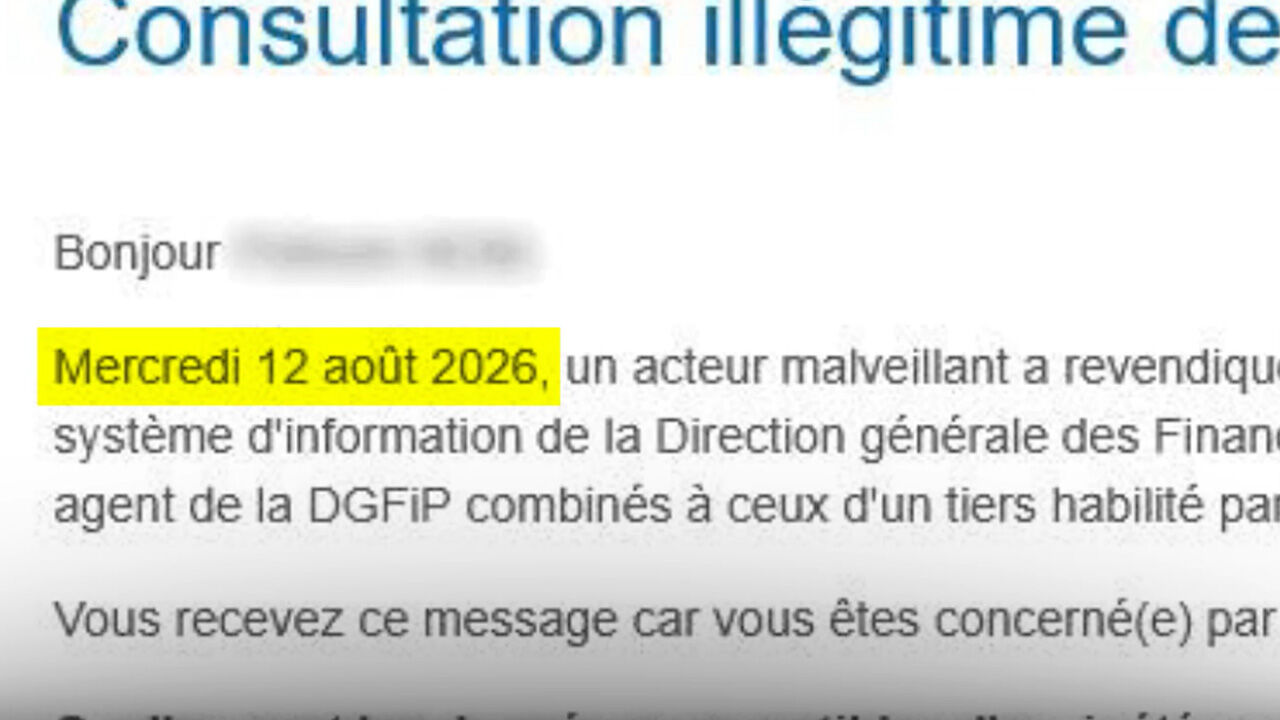
The French tax authority was breached. It was not a safe that was robbed, but its information security was penetrated, resulting in the theft of taxpayers' personal information. A total of 678,000 people were affected. It was not just names and phone numbers; specific tax-related information, including income, tax rates, and family composition, was stolen. What is absurd is that this was discovered in late June. Even though that was two months ago, the public was only notified last week. Moreover, it was not the tax authority that disclosed it voluntarily; they only realized it after the hacker announced last week, "I hacked the French tax authority, extracted the information of 678,000 people, and will sell it on the dark web." Only then did they confirm, "Wait, is that true? Our information was stolen." When they scrambled to investigate, they confirmed that there had indeed been traces of an external attack in late June. At that time, they blocked the external intrusion, but merely stopped at blocking it and moved on without verifying whether any data leak had occurred.
One of the tax authority's excuses was that they failed to detect the data leak because the perpetrator did not extract everything at once to avoid detection, but rather siphoned off data bit by bit. Now that an urgent crisis has erupted, the hacker publicly stated a few days ago that the data had already been sold to two buyers on the dark web. The price was several thousand euros, equivalent to a few million to more than 10 million Korean won. The hacker also mentioned that other interested buyers are continuously reaching out. The tax authority stated that it would contact all affected individuals to inform them of the fact and issue warnings. However, it remains to be seen how quickly France, known for its slow administration, will take action. The problem is that because highly detailed tax information was compromised, far more sophisticated scams than simple phishing can be orchestrated. For example, a scammer could say: "Your income tax was this much, and you paid this amount recently. However, you are now entitled to a refund of this amount. Please claim your refund." If they cite the exact amount of income tax you paid and the precise date, it is very easy to be tricked into thinking, "This really is the tax authority." Then, the moment you click the refund application link, your real bank account could be cleared out. The likelihood of such highly sophisticated scams has increased significantly, and in South Korea, this would have caused a massive uproar. In fact, if even a single such case of damage occurred, it would have been difficult for the commissioner of the National Tax Service to keep their position.
Breached, Breached, and Breached Again
Yet what is truly baffling is another matter: this was not a one-off incident. In France lately, public institutions and government information portals are breached at every turn. Let's review this year alone: In January, the French immigration agency was breached, leaking 2.1 million foreigner records. In March, the French Ministry of National Education was breached, leaking the data of 243,000 teachers. In April, the Ministry of Education was hit again, compromising the data of 3.5 million students, including 7.2 million report cards. Also in April, the National Agency for Secure Documents (ANTS), an agency issuing official state certificates, was hacked, resulting in the compromise of 11.7 million accounts. An institution issuing government-certified documents, including driver's licenses, passports, and foreigner residence permits, was breached. In June, an encrypted messaging application used by civil servants was hacked, leaking information of 73,467 public officials. Then in July, the Ministry of Education was breached once more—making it about the third time this year—and the full scale of damage has not even been determined yet. And then there was this tax authority hacking incident, which occurred in June but was only disclosed in August.
In fact, the ANTS hacking incident in April had a massive impact. People were furious over the situation where someone could potentially forge and carry around their ID cards. At that time, fixing the issue caused the website to be down for more than a month, which was also extremely inconvenient. I had also applied for a driver's license at the time, and the issuance process, which normally takes six months, was delayed even further because of it. Following the ANTS hacking incident, the French government announced that it would spend 200 million euros, approximately 320 billion Korean won, to enhance security. Yet the previously breached Ministry of Education was hit again, and this time, even the tax authority fell victim.
Surpassing the U.S. as No. 1 in Hacking Incidents?
As things stand, France has added another dishonorable record. In terms of hacking damage—more specifically, the number of compromised accounts—France ranked fourth in the world in 2024. That rose by two spots to second in the world in 2025. In the first quarter of this year, 23.45 million records were leaked, again ranking second in the world. Who is number one? It is the United States with 60 million records. The U.S. is not doing particularly well either. However, when adjusting for the distortion caused by the fact that the U.S. population is about five times larger than that of France, the picture changes. When calculated as the number of hacking incidents per 100,000 people, France stands at 35,164 cases, while the U.S. stands at 17,637 cases. The U.S. figure drops to less than half of France's, making France the overwhelming number one. Already, half of all hacking incidents occurring in Europe take place in France. Looking solely at hacking incidents, France has gone beyond being number one in Europe to becoming number one in the world. South Korea, until the historic Coupang hacking incident last year involving over 30 million compromised accounts, remained at less than one-third to one-half the level of France, and government and public agency breaches in particular were far more negligible.
How Did France Become Hackers' Prey?
So why has France become prey for hackers and turned into a porous vault that gets breached at every turn? Various analyses are emerging here, and among them, this was the most convincing: It is a well-known fact that Europe, including France, lags behind in digitalization. They are belatedly pushing forward with digitalization, and government portals are no exception. Some services even feel more convenient than those in Korea. However, the problem is that while they hurried to digitalize the front-end that provides services, management of the back-end that secures them was lacking. In addition, public servants using the systems reportedly lack proper security awareness, leading to leaks of login credentials and other sensitive access data. In the meantime, France has become an easy target, and hackers are looting here and there. France aims to establish a national digital agency next year. The purpose is to consolidate previously scattered security-related functions and manage them systematically. It remains to be seen whether France, currently the world's most hacked nation, will be able to clear this dishonorable reputation.
(Photo: Getty Images)
※ Please note: This article was translated by AI and may contain errors.

 KOR
KOR



 Video News
 Video News
 Video News

