
 KOR
KOR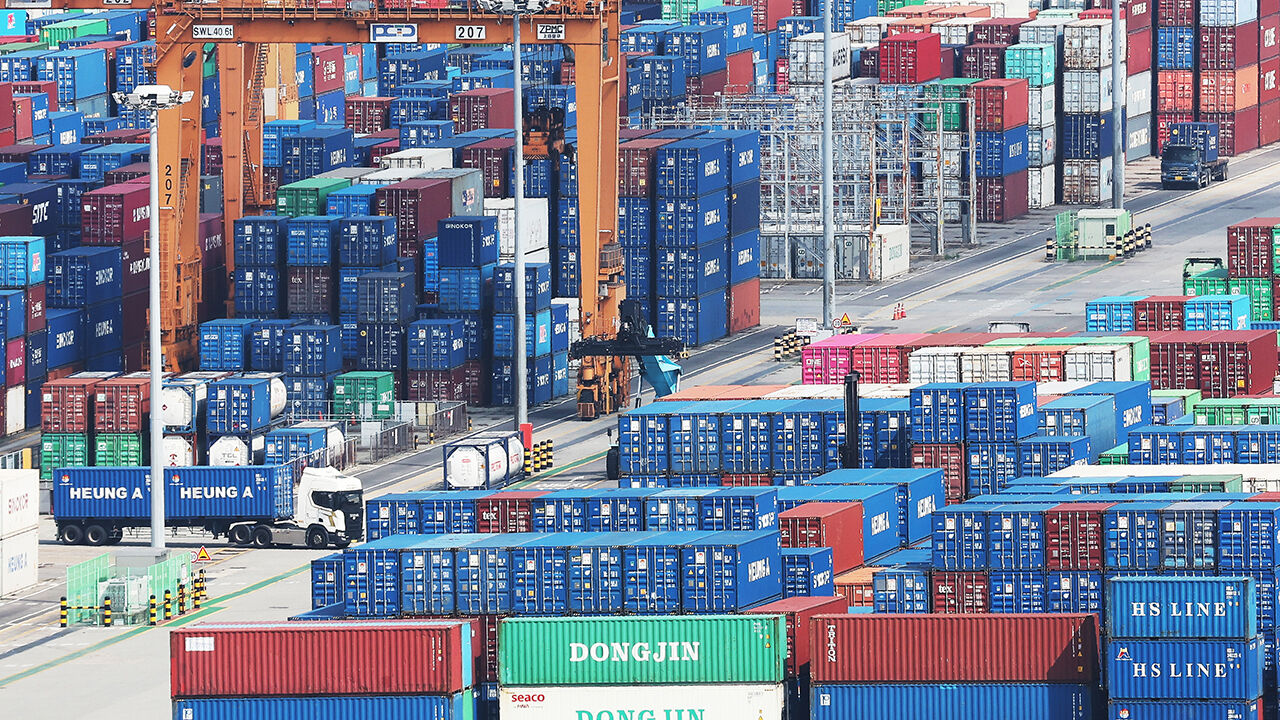
▲ Pyeongtaek Port stacked with containers
International credit rating agency Moody's has sharply raised South Korea's economic growth forecast for this year to 3.5%, citing that the semiconductor boom will continue at least until the middle of next year, it was confirmed today (August 18).
Following its regular review of South Korea's credit rating, Moody's projected in a recently released report that South Korea's Gross Domestic Product (GDP) will grow by 3.5% this year and 2.7% next year.
This is 0.3 percentage points higher than the average projection (3.2%) for this year compiled from eight major investment banks (IBs) as of the end of July, tracked by the Korea Center for International Finance.
In its national credit rating report for South Korea released in February this year, Moody's had projected this year's growth rate at 1.8%.
This represents roughly a twofold increase in half a year.
According to relevant authorities, Moody's raised its projection to 2.5% in its global economic outlook released in May, and added another 1.0 percentage point three months later.
It reached a more positive assessment based on the semiconductor supercycle and robust exports.
Moody's noted in particular that "demand for chips remains robust and the realistic alternatives to South Korea's advanced memory suppliers are limited," forecasting that the semiconductor cycle will remain strong at least until mid-2027.
In particular, merchandise exports from January to July this year surged by 51% compared to the same period last year, which it analyzed as being "supported by very strong semiconductor growth."
It also mentioned mega-projects being promoted by the government to focus on cultivating three core areas: semiconductors, artificial intelligence (AI) data centers, and physical AI.
Moody's evaluated that South Korea is trying to create new growth engines through mega-projects and pursue balanced development away from concentration in the capital area, noting that such strategies "demonstrate sustained and consistent policy efforts to keep pace with technological innovation."
It also highlighted the perspective that if these successive attempts succeed, they could boost productivity and lift potential growth rates.
Moody's projected that amid continued tax revenue overruns and higher growth forecasts, the South Korean government's fiscal health will improve more than initially expected, with this year's fiscal deficit relative to GDP projected at 3.8%, a 0.1 percentage point improvement from the original target.
However, it advised that without policy reforms, mandatory spending due to population aging, defense and security costs, and investment expenses to maintain export competitiveness could increase fiscal pressures.
Moody's previously evaluated South Korea's credit rating at Aa2.
Regarding this, Moody's explained that it is "supported by policy effectiveness and economic strengths."
As challenges, it cited rising government debt and long-term fiscal burdens stemming from an aging population.
Moody's drew a line by stating that this report is not for the purpose of rating South Korea's credit, nor does it imply whether or not a new credit rating will be announced in the near future.
(Photo: Yonhap News)
※ Please note: This article was translated by AI and may contain errors.



![[현장영상] 경찰에 붙잡혔는데 촉법 또 털었다…망치로 키오스크 쾅쾅 내리치더니](http://img.sbs.co.kr/newimg/news/20260818/202213493_300.jpg) Video News
Video News


