
 KOR
KOR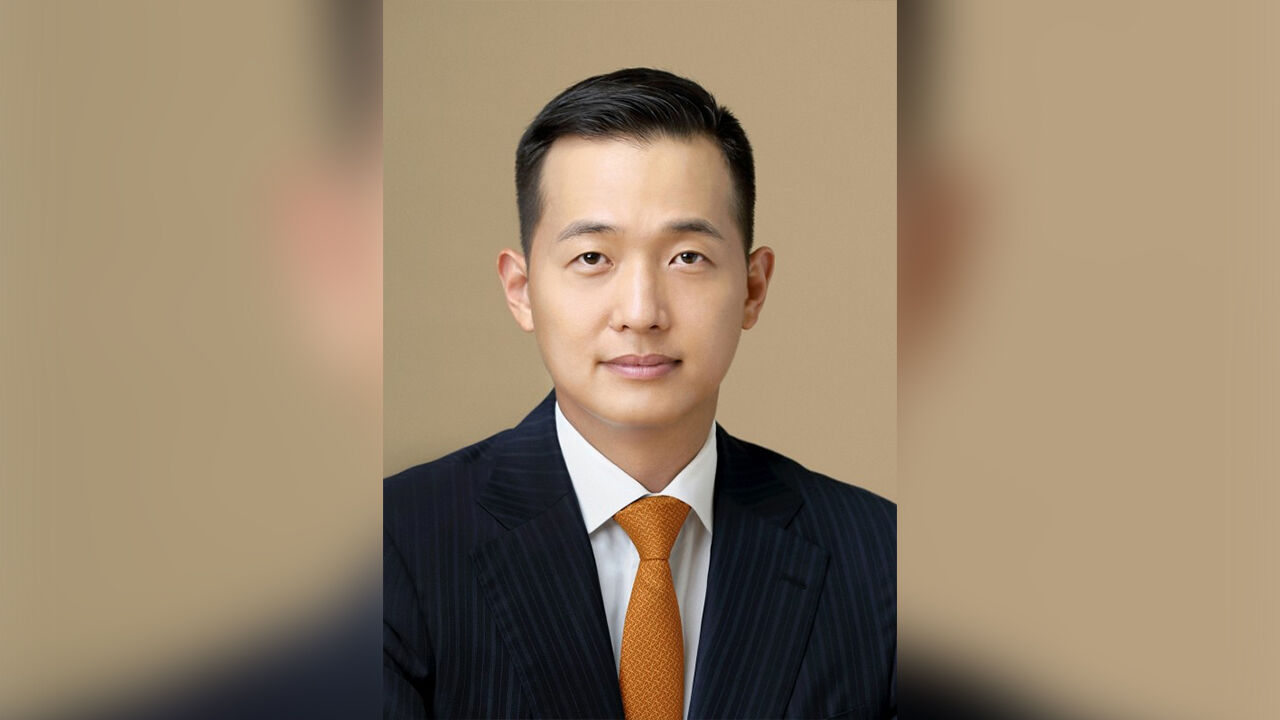
▲ Kim Dong-kwan, Vice Chairman of Hanwha
Hanwha Group Vice Chairman Kim Dong-kwan, who became the first among major South Korean conglomerates to adopt the Restricted Stock Unit (RSU) system, has been allocated RSU grants valued at close to 270 billion won.
While the value of RSUs (Restricted Stock Units) can fluctuate depending on the stock price at the time of payout after a specified period, he is expected to receive a substantial amount in stock compensation if current share prices are maintained or increase further.
According to the half-year reports released today (the 17th) by Hanwha Corp., Hanwha Aerospace, and Hanwha Solutions, the market value of the RSUs granted to Vice Chairman Kim across the three companies reached 268.2 billion won as of the end of 2025.
RSUs are a compensation system in which shares are provided free of charge once a certain period of time passes and predetermined conditions are met and sales are restricted during that period.
Vice Chairman Kim is the eldest son of Chairman Kim Seung-youn and is considered the successor to Hanwha Group.
Based on figures from the end of 2025, the RSU value granted to him is highest at Hanwha Aerospace with 165.1 billion won, followed by Hanwha Corp. at 77.1 billion won, and Hanwha Solutions at 26 billion won.
The unvested quantity of RSUs for Hanwha Aerospace (quantities that have not met vesting conditions) stood at a cumulative 175,410 shares as of the end of last year, and the market value is calculated by multiplying this by the closing price at the end of last year of 941,000 won (applying adjusted share prices).
Hanwha Aerospace shares hovered around 100,000 won until 2023, but surged steeply starting last year amid a defense stock rally.
For Hanwha Corp., the unvested quantity stood at 944,548 shares as of the end of last year, with a closing price of 81,600 won.
For Hanwha Solutions, the unvested quantity stood at 970,718 shares as of the end of last year, with a closing price of 26,800 won.
Regarding the RSU scheme, Hanwha officials explained, "It is a substitute that completely eliminates the cash bonuses paid out annually," adding, "The market value can fluctuate depending on the stock price at the time of payout, which occurs up to 10 years after the grant date."
Vice Chairman Kim has been granted RSUs annually since 2020 at Hanwha Corp. and Hanwha Solutions, and since 2021 at Hanwha Aerospace.
The stock payout condition (vesting condition) is contingent on "no intentional major losses or liabilities occurring for up to 10 years."
Under this condition, Vice Chairman Kim can receive his RSUs sequentially each year starting in 2030.
Last year, Vice Chairman Kim was granted 20,684 shares from Hanwha Aerospace, 233,178 shares from Hanwha Corp., and 398,964 shares from Hanwha Solutions, with the vesting periods set 5 to 10 years down the line.
In the United States, RSUs compensate for the shortcomings of stock options as a reward system designed to secure top-tier talent and drive long-term growth, and are widely utilized by big tech companies such as Apple and Microsoft.
In South Korea, after Hanwha Group first introduced the system in 2020, its adoption has spread to companies like Naver, Coupang, Doosan, Krafton, and Ecopro.
In the case of Doosan Group, Chairman Park Jeong-won ranked first in executive compensation among major group heads with 45.8 billion won in the first half of this year, driven by a surge in Doosan's share price that caused the value of RSUs he received three years ago to swell 13-fold to 37.6 billion won.
Doosan officials stated, "This is the result of aligning with the RSU objective of enhancing shareholder value through management motivation and the recent trend of expanding stock compensation," adding, "The distributed shares are intended to drive long-term growth and will continue to be held, while their valuation will continue to change depending on future share price trends."
While stock options lose all compensation value if option exercises are abandoned during a share price decline, RSUs retain a value equivalent to the market price even if stock prices drop.
They also have the advantage of encouraging long-term performance and prolonged tenure compared to stock options.
Although an increasing number of companies are adopting RSUs, opinions suggest that institutional improvements are necessary.
The National Assembly Research Service pointed out in a 2024 report that, unlike stock options, RSUs can be granted to controlling shareholders or owner families without limits on the quantity, noting that "they could be abused centered around major conglomerates as a means for managerial succession or strengthening control."
(Photo: Provided by Hanwha Group, Yonhap News)
※ Please note: This article was translated by AI and may contain errors.



 Video News


 Video News