
 KOR
KOR
The story of 'that day' we want to tell 'you' this time is the episode "The Villains - Hunters of Death," which aired on August 13. Actor Kim Dong-jun, singer Yoon Bo-mi, and actor Bae Hae-sun appeared as story guests. (In keeping with the nature of 'Kokomu,' this review is written in an informal conversational tone.)
▲ The Husband's Abduction
The time is Friday night, November 18, 2005. At a home in Cheonan, South Chungcheong Province, a wife is waiting for her husband, who said he was going out for a drink with colleagues. Just then, a phone call comes from her husband, saying he will sleep at a jjimjilbang (Korean sauna) and return the next day. Since he was usually a devoted family man and reliable, the wife simply agreed.
However, the next day, the husband, who was supposed to sleep at the sauna and return, does not come home even when lunchtime approaches. Moreover, he cannot be reached. As time passes, dusk begins to fall, and around 6:00 PM, the doorbell rings. The wife hastily opens the door, but a man is standing outside—a man she has never seen before.
"Oh, I'm a taxi driver. I was asked to deliver this to you."
The man claiming to be a taxi driver hands over a white envelope. While the wife is caught off guard holding the envelope, the driver simply leaves. The wife hastily opens the envelope. Inside is a wedding invitation. Why a wedding invitation all of a sudden? But after checking the contents of the invitation, the wife collapses to the ground. On this very day, there was another person who received an urgent call. Let's meet that person first.
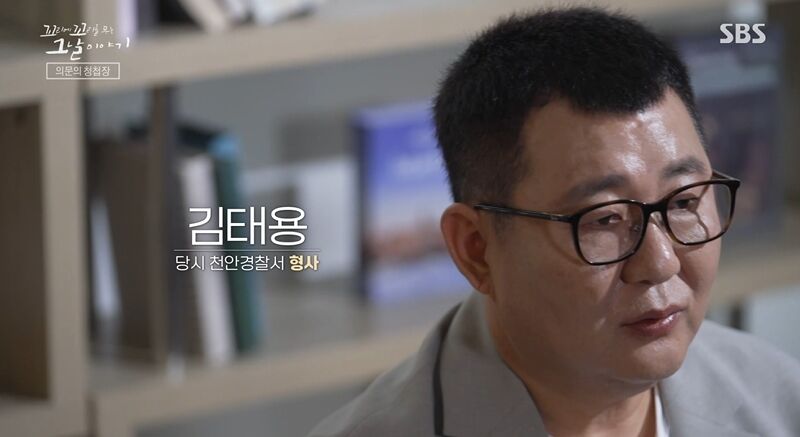
"It was my day off at home, but I was suddenly mobilized in the evening after the case was received. I went out because they asked detectives to come in, thinking I'd be back quickly."
- Kim Tae-yong, detective at the Cheonan Police Station at the time
An incident severe enough to mobilize off-duty detectives had occurred. What on earth was written on the wedding invitation? Although it looked like an ordinary invitation, a suspicious letter was written on the back.
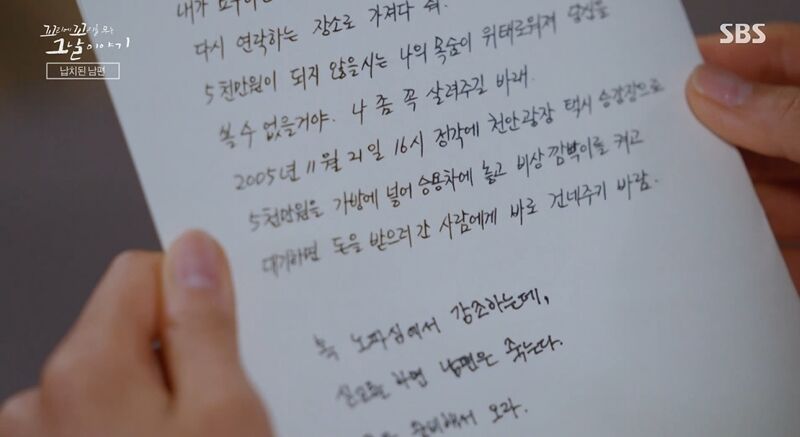
"Honey, it's me. I am currently in a difficult situation. My life is at stake. Please prepare the 50 million won in cash that I am demanding, and at exactly 16:00 on November 21, 2005, place the 50 million won in a bag inside the sedan at the Cheonan Plaza taxi stand, turn on the hazard lights, and wait to hand it over directly to the person who comes to collect the money. I emphasize this out of caution: if you report this to the police, your husband dies."
A blackmail letter had arrived at the home. It said her husband would be in danger if 50 million won was not paid. Reading the letter, the wife immediately called the police, saying, "I think my husband has been kidnapped."
However, something caught attention in the blackmail letter. First, there were two different handwritings. The upper portion looked like the husband's handwriting, but the details written below were in a different handwriting.
The last contact with the husband was on November 18. The husband, Mr. Jeong (pseudonym), an employee at a university in South Chungcheong Province, had dinner with colleagues, went to a pub for a second round, and parted ways around 9:00 PM. Asking colleagues who were with him revealed nothing unusual. However, around 10:30 PM, contact came from Mr. Jeong saying he would sleep at a sauna and return the next day. Then, on November 19, the blackmail letter arrived. Mr. Jeong's cellphone was turned off, and the whereabouts of the luxury sedan he had driven out were also unknown.
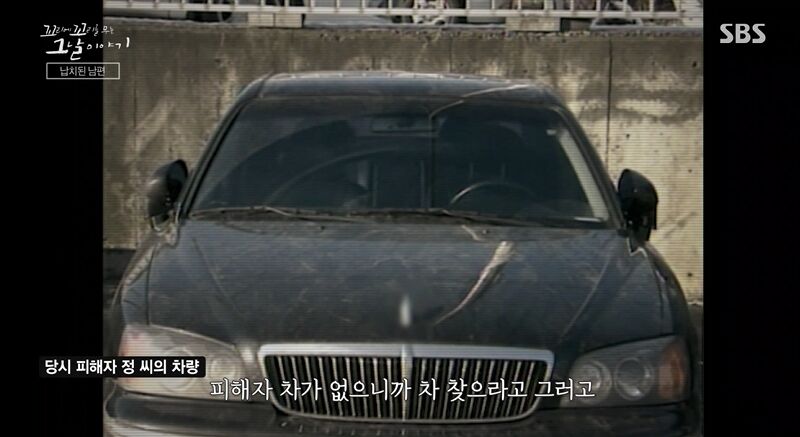
"The car was missing, so they told us to find the victim's car. We stayed out continuously until 4:00 AM or 5:00 AM."
- Kim Tae-yong, detective at the Cheonan Police Station at the time
And the next day was Sunday, November 20. As specified in the blackmail letter, the money was to be delivered on November 21, likely because preparing cash on a Sunday when banks are closed would be difficult. In the meantime, detectives tracked Mr. Jeong's movements, reviewed CCTV footage, searched the surrounding area, and questioned witnesses. However, no significant clues emerged. Meanwhile, the morning of November 21, the day designated for delivering the money, dawned. With still no clues about the perpetrator, the moment of handing over the money might be the only chance to catch the culprit. Now, let's head to that tense day of November 21.
▲ The Promised Day
This is the taxi stand mentioned in the blackmail letter. Numerous taxis come and go, and pedestrians walk by busily. It looks like an ordinary scene on any other day. However, this is merely how it appears on the surface; right now, the location is filled with extreme tension.
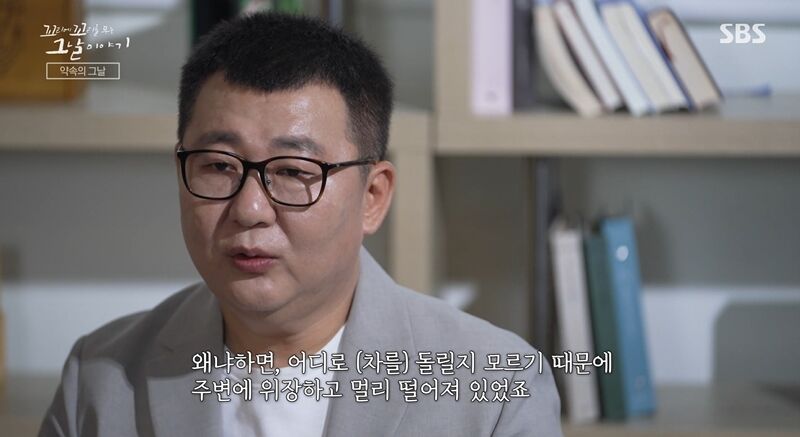
"If the agreed time was 4:00 PM, we were already deployed by 12:00 PM or 1:00 PM. Since there were 7 people in one team, 49 people? Even more were mobilized, including personnel from the provincial police agency. Everyone was positioned nearby. Because we didn't know which way the car would turn, we were disguised and spread out at a distance."
- Kim Tae-yong, detective at the Cheonan Police Station at the time
Dozens of police officers disguised as pedestrians, taxi drivers, and street vendors are keeping watch with hawkish eyes. Before long, it is the scheduled time of 4:00 PM. Mr. Jeong's family parks the car carrying the bag of money at the taxi stand. They wait with the hazard lights flashing, just as instructed in the blackmail letter. To prepare for any contingency, one detective is hiding in the trunk area. A tense, calm-before-the-storm situation. One minute, two minutes, three minutes... Just then, a man knocks on the car door. A courier rider has arrived.
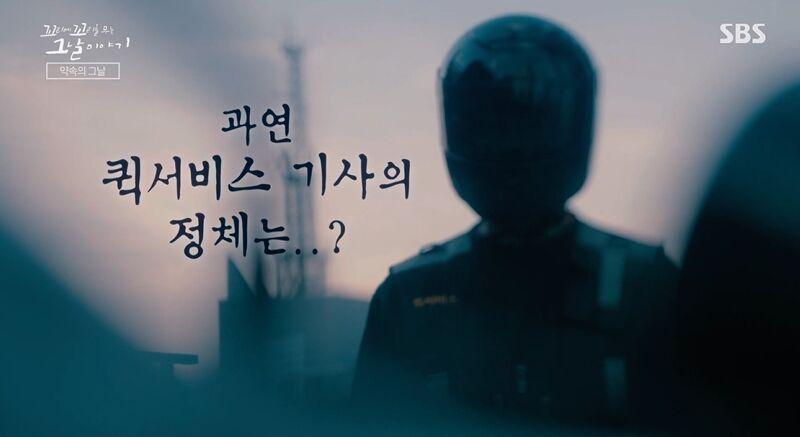
The family first hands over the money bag to the courier. Having received the bag, the man simply leaves. Is this man the culprit? Detectives quietly follow the courier and intercept him at a quiet spot.
"I was just hired to do this. I was told to pick up this package and deliver it to a restaurant."
He was indeed a real courier driver. The perpetrator was trying to receive the money bag using a courier service. Detectives explained the situation to the courier, disguised a detective as the courier driver, and decided to deliver the bag directly while observing the surroundings. The detective disguised as the courier driver headed to the restaurant as requested.
The restaurant was a seolleongtang (ox bone soup) eatery located 10 minutes away from the taxi stand. The undercover detective carries the bag of money into the restaurant. Looking around inside, there are no suspicious signs. He says to the restaurant owner, "I'm here to deliver a package." The owner then takes the money bag and places it in a corner of the restaurant. Several detectives trailing behind immediately enter the restaurant pretending to be customers, while watertight surveillance is set up outside as well.
"We kept watching, first and foremost. Since the bag of money was here, we wanted to see if the kidnapper would come to collect it."
- Kim Tae-yong, detective at the Cheonan Police Station at the time
Right at that moment, the restaurant door opens. A man walks in and heads straight to the counter.
"A package was left here, right? I came to pick it up."
The eyes of the waiting detectives sharpen instantly. However, the man who entered the restaurant appears to be a taxi driver. He had parked a taxi in front of the restaurant before walking in. Was the perpetrator trying to move the money bag using yet another person?
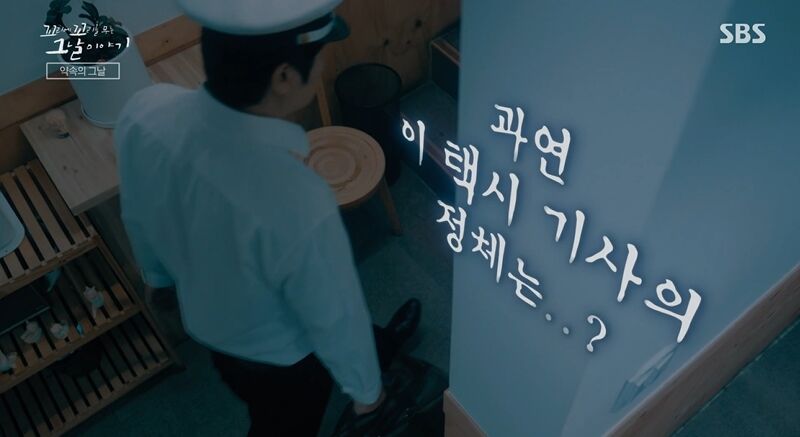
The man appearing to be a taxi driver receives the money bag and leaves in his taxi. Naturally, detectives follow him this time as well. The place where the taxi arrives is a location not far from the restaurant.
This time it is a pojangmacha (street food stall). Checking the taxi driver who moved the money bag reveals he is indeed a real taxi driver. The perpetrator is continuously using other people to shift the location of the money bag. Before long, the sun sets, and the surroundings darken. Will the culprit appear in person this time? Just then, a phone call comes into the street stall. The owner answers, and it is a male voice. The man says, "A package was left there, right? I'm coming to pick it up now." Will he actually show up this time?
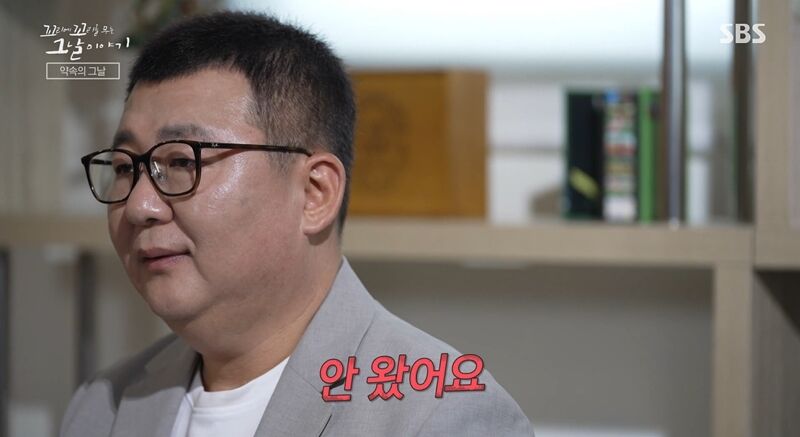
"He didn't show up. In my view, at that time, he caught wind of something at the seolleongtang restaurant and was testing the waters once more with the food stall. (After that,) I think he gave up."
- Kim Tae-yong, detective at the Cheonan Police Station at the time
Ultimately, the kidnapper gave up on the 50 million won and did not show up. Would they really lose the culprit like this? There was no guarantee that the kidnapper would contact them again in the future. Therefore, they had to find clues about the perpetrator by any means. How could they find a clue?
▲ Clues Left on a Soju Bottle
First, the phone number used by the culprit to contact the courier was a burner phone. While searching for the seller of the burner phone, detectives investigated everyone—the courier driver, taxi drivers, restaurant owner, and food stall owner. During this, they heard a crucial story from the restaurant owner.
"I heard that the day before, two men came to have lunch, drank a bottle of soju, and said, 'A parcel will arrive tomorrow afternoon, so please hold onto it,' leaving an extra 20,000 to 30,000 won."
- Kim Tae-yong, detective at the Cheonan Police Station at the time
Detectives had already suspected that this was not the work of a lone perpetrator. Given that an adult male was kidnapped and the victim's car was driven away, they believed it was committed by at least two people. So, what was known about the suspects so far? Two men, and composites of the suspects.
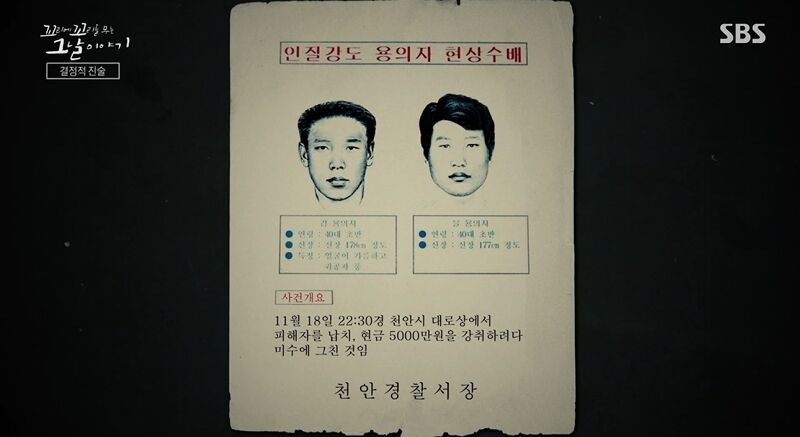
In reality, finding them through composite sketches alone would be difficult. Was there anything more that could be learned about the suspects? In fact, a truly vital clue had already been secured: fingerprints! While the table and tableware had been cleaned, what if the soju bottle they drank from remained? Could fingerprints be retrieved from it?
Fortunately, the soju bottle remained. Detectives collected all the soju bottles and requested an urgent forensic examination. Fingerprints were found—plenty of them. Then, one of them yielded a match. Among the fingerprints, a man with 5 prior convictions was identified: Mr. Noh, in his mid-40s. Having dropped out of high school, he fell in with delinquent friends and had previously committed injury resulting in death. Afterwards, he had been in and out of prison multiple times for charges including bodily injury and aggravated robbery.
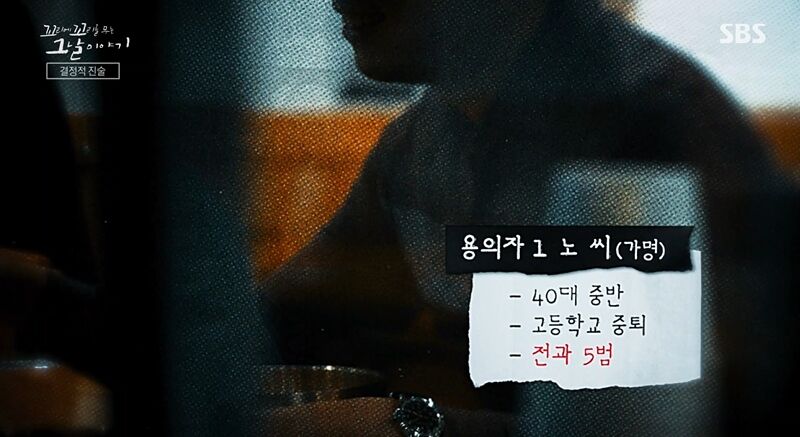
When Noh's photo was shown to people who had seen the men's faces, they confirmed he was indeed the man they saw. One suspect was identified. Naturally, they had to locate this Mr. Noh immediately, given that the life or death of the kidnapped Mr. Jeong was unknown.
However, visiting his registered address, tracking telecommunications, financial records, and vehicles, and conducting inquiries all yielded no trace of Noh's whereabouts. Detectives grew increasingly anxious. Amid this, a clue surfaced to track down the suspect, Noh.
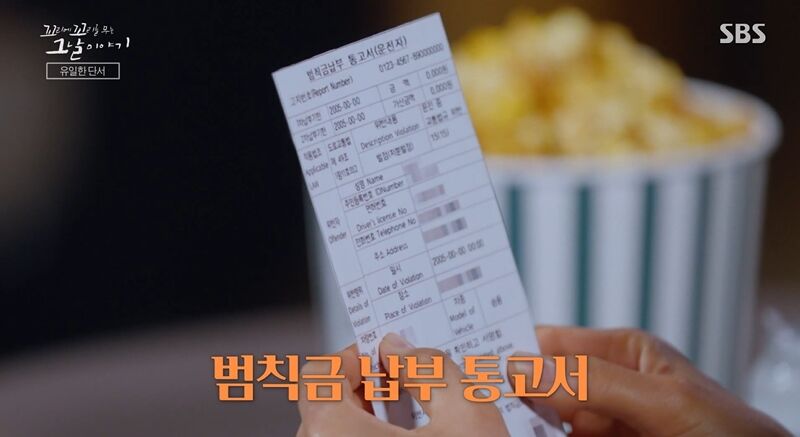
A traffic fine notification. Noh had previously been caught in a traffic enforcement check while driving someone else's car. The person who lent the car was likely someone close to Noh. Detectives immediately sought out the registered owner of the vehicle. The owner was a woman.
"I already broke up with him. That's why I don't know where he is either."
She was Noh's ex-girlfriend. Detectives persistently asked about Noh to obtain even a minor lead. They discovered the existence of a friend named Mr. Shim (pseudonym), who was close to Noh. Shim was an alumnus and hometown friend of Noh. Could this Mr. Shim be one of the duo of kidnappers?
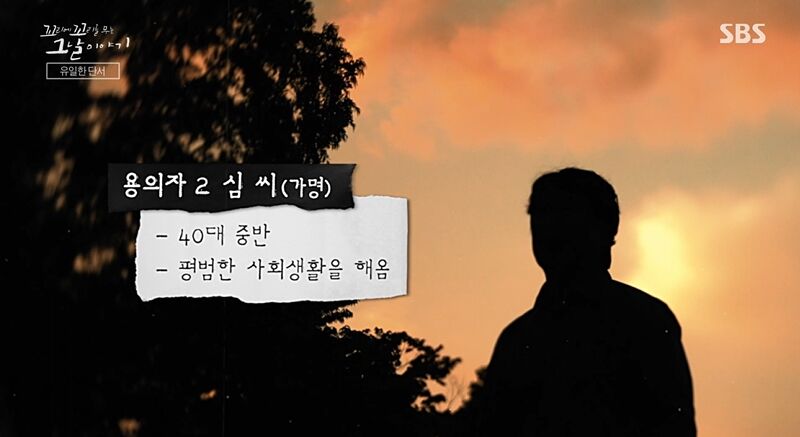
Shim had reportedly been leading an ordinary social life. Unlike Noh, who had been in and out of prison repeatedly, Shim had no record of convictions resulting in imprisonment or heavier penalties. Despite this, was he indeed the other suspect? Verification confirmed that Shim was indeed the other man who had visited the restaurant. The identity of the men who ate meal and drank soju at the restaurant and asked to hold the package was confirmed to be Noh and Shim.
However, the problem was that Shim could not be found either. Although both suspects were identified, both of their whereabouts remained completely unknown.
▲ "Drive a Foreign Car and Die"?
Meanwhile, unsettling rumors were circulating among the public: "If you drive a foreign car, you'll be killed." What did this mean?
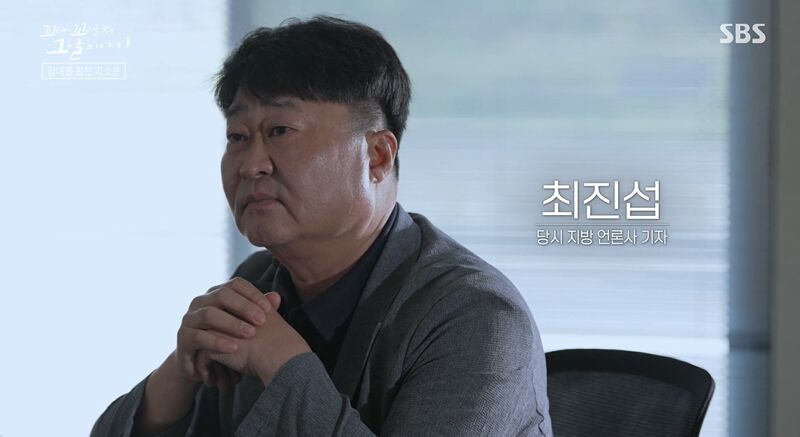
"My name is Choi Jin-seop. In 2005, I was working for a local media outlet. At the time, I was the reporter covering Cheonan. Most police beat reporters are rookies. As the youngest reporter, I went to the police station almost every day. There were many incidents back then. The local atmosphere was truly grim. Such rumors actually circulated widely: 'If you drive a foreign car, you'll be abducted,' and high-end cars as well. That was already 20 years ago. First, I recall the finance manager's (victim Mr. Jeong's) car was a Grandeur. When there were just one or two incidents at first, it wasn't quite like that. But as incidents kept occurring and the vehicles were somewhat expensive, sinister rumors spread that driving a nice car would get you killed."
- Choi Jin-seop, local media reporter at the time
It meant there were more similar cases—crimes targeting people driving luxury sedans. What kind of cases had occurred?
The case of Mr. Jeong, the university employee we first discussed, occurred on November 18, 2005, in Cheonan, South Chungcheong Province. Nine months prior to this case, on February 25, another murder case occurred in Cheonan. Let's listen to what kind of case it was.
"A person identified as Mr. O was found stabbed to death inside a sedan parked in an empty lot in front of a senior center in Baekseok-dong, Cheonan, by his brother-in-law Mr. A, who reported it to police. At the time of discovery, Mr. O was collapsed in the backseat with sharp weapon stab wounds to his neck and back."
- From a news report at the time
"I recall the car was an imported vehicle. Initially, it seems they thought it was an accidental murder rather than a revenge or planned homicide."
- Choi Jin-seop, local media reporter at the time
This case remained unsolved with no significant clues emerging. Ten days later, on March 5, another murder case broke out. This time it was in Cheongju, North Chungcheong Province. However, the victim was a clothing store owner in Cheonan. What happened to the clothing store owner? 'Kokomu' met an acquaintance of the victim.

"I knew him well because a person doing business here was killed on his way home. Since he drove a foreign car, criminals like that must have targeted him. His home was in Cheongju, along a dark national highway near Cheongju. That's probably why the criminal singled him out as a target."
- Acquaintance of the victim at the time
Another foreign car appears, right? Let's hear more details from the detective who was in charge of this case at the time.
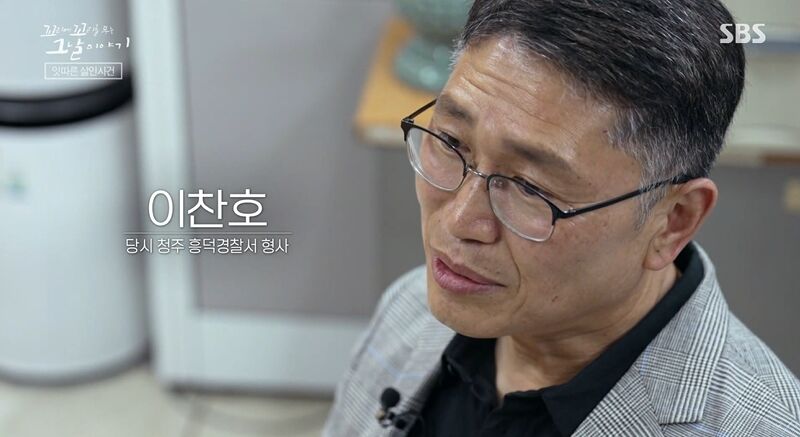
"A missing person report came in. He was a male in his early 30s who ran a sports clothing store. Unlike usual, he said he was leaving work, but could not be reached. He was also driving a foreign car. Under those circumstances, a report came in regarding an abandoned vehicle. There were collision marks on the rear bumper and damaged parts, so it was reported as suspicious. As soon as we received that report, thinking 'it must be the victim's vehicle,' we immediately went to the scene. The vehicle and the victim were separated. He was found face down about 3 km away from the vehicle, bound behind his back with large cable ties—the kind used for bundling electrical wires."
- Lee Chan-ho, detective at Cheongju Heungdeok Police Station at the time
You mentioned there were signs of a rear-end collision on the victim's vehicle, right? Did someone intentionally crash into the back of the car to commit the crime? Detective Lee Chan-ho said something came to mind as soon as he saw the crime scene and the body. He recalled a murder that had occurred ten days earlier in Cheonan. The two cases shared similarities.
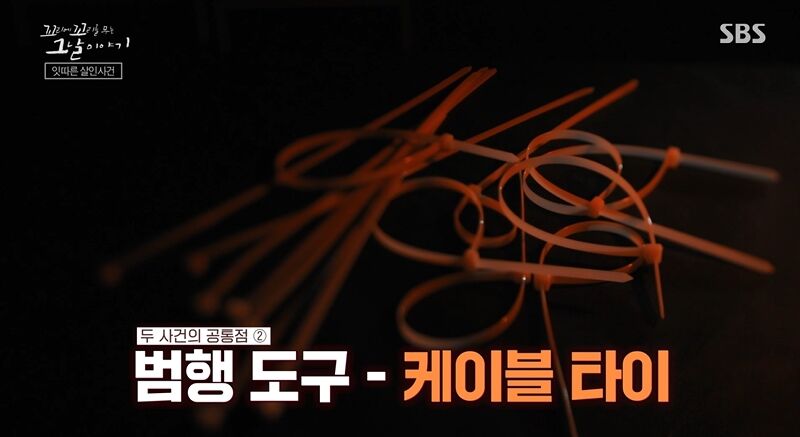
"Back in 2005, foreign cars were not common. Under those circumstances, foreign cars—specifically the drivers of foreign cars—were targeted. Among the methods used, the tool used to bind the victims was cable ties, the ones used to tie electric wires together. This was also identical. There were no signs of resistance on their entire bodies. What that means is that they were subdued instantly. That indicates it wasn't a single perpetrator, but two or more—this wasn't a solo crime. In that respect, it was remarkably similar to the case in Cheonan, South Chungcheong Province."
- Lee Chan-ho, detective at Cheongju Heungdeok Police Station at the time
As similar incidents broke out one after another, the possibility of a serial crime was naturally suspected. Many detectives, including Detective Lee Chan-ho, worked day and night, anxious that another similar case might occur.
"It felt like I was working continuously without set commuting hours. Still, with the thought that we had to catch them quickly, we stopped passing vehicles one by one to conduct inquiries. Despite our intense efforts over several days, it was truly exhausting because no leads came up."
- Lee Chan-ho, detective at Cheongju Heungdeok Police Station at the time
▲ Serial Murders by Schoolmates?
But just about ten days later, another incident occurred in Cheonan. Have you ever seen the movie 'The Gangster, the Cop, the Devil'? That very movie starring actors Ma Dong-seok and Kim Mu-yeol. This case served as the motif for that film.

The victim was driving home. Then, someone rear-ended the victim's car. Doesn't this sound familiar? The vehicle in the Cheongju case also had signs of a rear-end collision. Seems similar, doesn't it? The victim got out of the car, and a man also stepped out from the perpetrator's vehicle. But this man was wearing a police jumper.
The man offered a handshake and introduced himself as a police officer. He engaged in conversation for a while, checking on the victim's condition. Then, just as the victim turned to go back to his car, he was struck on the head. At that moment, another man joined in, beating the victim together and forcing him into their vehicle. Now, were these men police officers? Of course not. But notice how detailed this account is? That's because an attempted kidnapping had occurred.
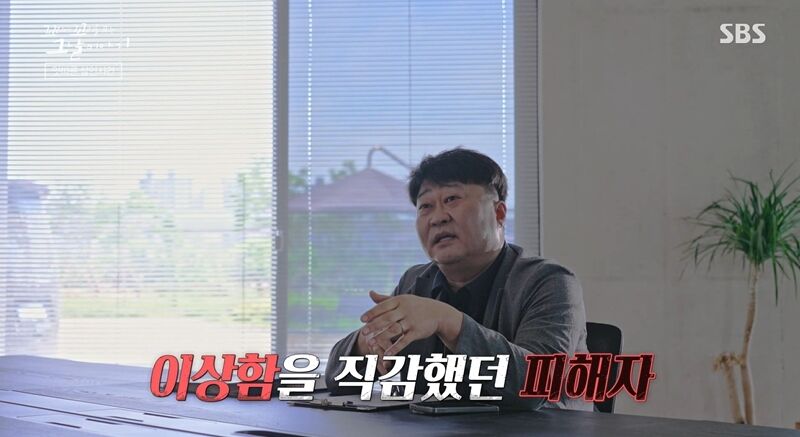
"According to what the victim stated at the time, they were wearing police uniforms, but it was very sloppy and strange. He had an intuition that they weren't police officers. So I remember he fought back while resisting."
- Choi Jin-seop, reporting journalist at the time
The victim remained safe. But remember how he immediately sensed that 'these guys aren't police'? How was that possible? There was a reason. The victim was a well-known local gangster. Naturally, he had interacted with police officers frequently, which allowed him to spot the suspicious signs right away.
Anyway, another robbery causing injury occurred in Cheonan. The victim accurately remembered the face of one of the two perpetrators because they had talked. After a suspect in the university employee kidnapping case was identified, photos of the suspect were shown to the robbery-injury victim as well. As expected, he confirmed that it was indeed the man who tried to kidnap and assault him. Could all these cases then be serial crimes committed by the same perpetrators? If so, it suggested that the suspects, Noh and Shim, might be serial killers.
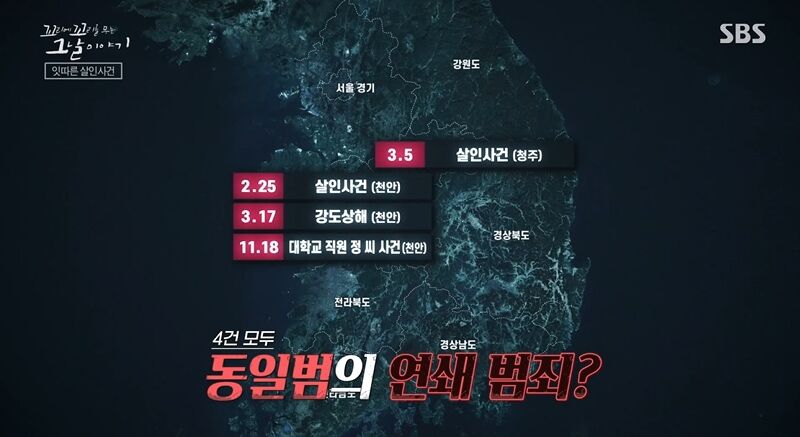
The two were hometown friends who were elementary and middle school classmates. Noh had lived in Seoul while Shim lived in Cheonan, but recently they had been working together at a quarry. While Noh had spent time in and out of prison, Shim had reportedly lived an ordinary life until his mid-40s. Could these two really be serial killers? Let's hear what an expert had to say.
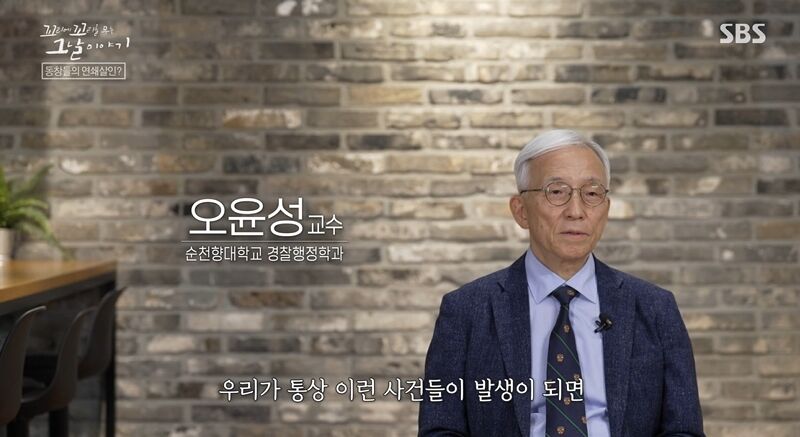
"When cases like these occur, we typically attempt comparative case analysis between them. First is the victim selection. The victim selection was strictly for financial gain, with a common pattern of choosing targets who appeared to be driving foreign or luxury vehicles. Another aspect is the method. When subduing victims, usually people use ropes or tape, but they used cable ties. That is another commonality. Furthermore, after committing the murders, they disposed of both the vehicles and the bodies. Multiple elements align like this. The possibility that these cases are serial murders can be considered extremely high."
- Professor Oh Yoon-sung, Department of Police Administration at Soonchunhyang University
The detectives also grew convinced that these incidents were serial crimes committed by serial killers.
▲ The Culprit Finally Caught
It was around a month after the kidnapping when a phone call came into the police station. It was a tip-off from someone claiming to know the location of the suspect Noh. The informant was the older brother of the other suspect, Shim. How did Shim's brother know Noh's location? While searching for Noh and Shim, detectives had asked the suspects' families for cooperation. Shim had called his brother, saying, "I can't do this anymore." He then gave Noh's location and told his brother to report it. Shim's brother said over the phone:
"My brother said Noh underwent leg surgery and is currently at a hospital in Seoul."
Upon receiving the call, detectives rushed to a hospital in Seoul. That day was the evening of Christmas, December 25. Upon arrival, Noh was not at the hospital. They were told he had gone out. Had he caught wind and fled? Or was it a false tip? On what should have been a festive Christmas night, detectives began an all-night stakeout.
Then the next morning, a man limping on crutches entered from ahead. It was Noh. On the 39th day since the crime occurred, Noh was finally arrested. He was returning from meeting his girlfriend for Christmas.
Detectives finally sat face-to-face with Noh in the interrogation room. It was a face they had scrutinized endlessly through composite sketches and photos. What was Noh like in person?
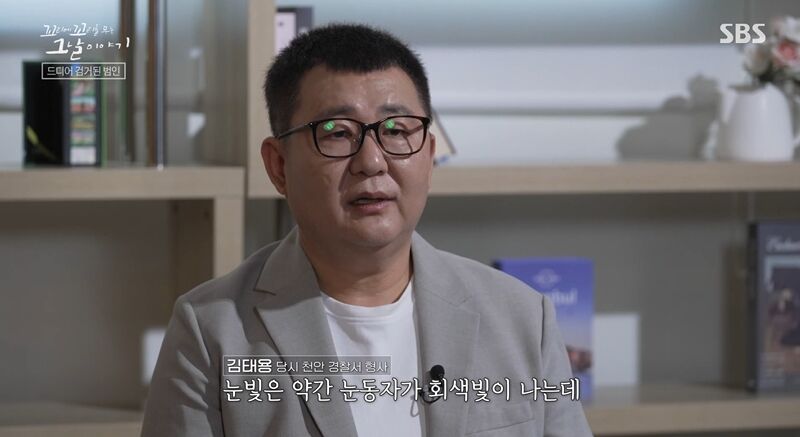
"His eyes had a slightly greyish tint, but they were filled with murderous intent. His gaze was so full of malice that female staff at the holding cell couldn't even make eye contact with him."
- Kim Tae-yong, detective at Cheonan Police Station at the time
A detective asked where the kidnapped Mr. Jeong was. He replied, "Mr. Jeong? I don't know who that is." The detectives pulled out a golf club and a watch, asking if he recognized them. These were belongings of the victim Mr. Jeong found at Noh's hideout. Noh said, "These? I saw an unlocked car and stole them." He admitted to theft, but maintained he had never kidnapped Mr. Jeong. He then said to the detective:
"Detective, order me some jajangmyeon. Once I go to prison, I can eat other things, but jajangmyeon is hard to get."
The detectives were driven to total frustration. They needed to find Mr. Jeong as soon as possible, but Noh played dumb regardless of what evidence was presented.
"During interrogation, Noh wasn't hot-tempered; he was cold and calculating. He drew a firm line, and if he felt he shouldn't cross it, he wouldn't answer beyond that point."
- Kim Tae-yong, detective at Cheonan Police Station at the time
To this man Noh, Detective Kim brought up his "son." Although Noh clammed up on other topics, he had talked a lot about his own son. Detective Kim said:
"Look here. Mr. Jeong, the victim, also has a son. He deserves to know whether his father is alive before the new year."
Then Noh finally spoke.
"Since you put it that way... Detective, I really have nothing to do with the kidnapping. But there is one thing I heard from Shim. Shim mentioned a location while saying he was the one who kidnapped Mr. Jeong."
Noh claimed he was unrelated to the crime, merely sharing what he heard from his friend Shim. In that way, the missing Mr. Jeong was finally found.
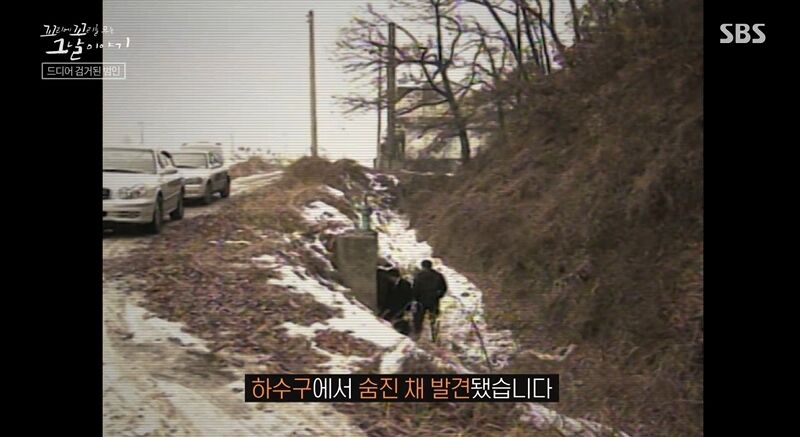
"Mr. Jeong, a 52-year-old finance manager at a university in Asan, South Chungcheong Province, who was kidnapped last November, has been found dead in a drain. After contact with Mr. Jeong was lost on the night of November 18 last year, a blackmail letter demanding 50 million won was delivered to his family the following day."
- From a news report at the time
Mr. Jeong was ultimately found dead. The day this news was broadcast was January 1. And shortly after, another news report was aired.
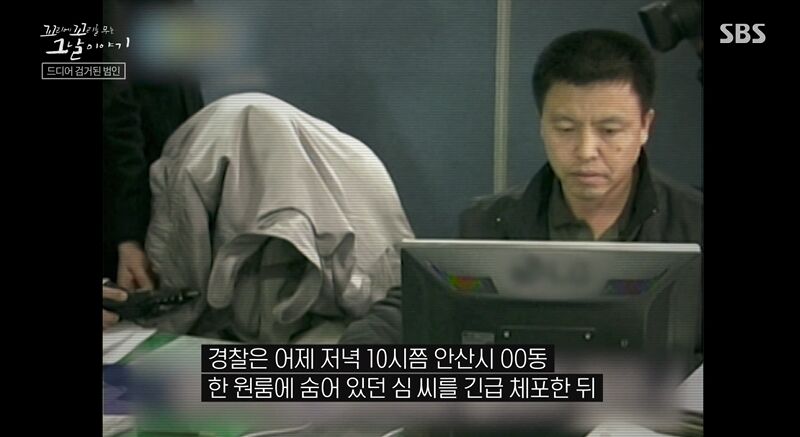
"Police investigating the murder of the university finance manager in Asan have apprehended 43-year-old Shim as a key suspect and are interrogating him. Police urgently arrested Shim, who was hiding in a studio apartment in OO-dong, Ansan around 10 p.m. yesterday, and transferred him to Cheonan Police Station, where investigations are ongoing."
- From a news report at the time
"After lying in wait outside the studio apartment for about three to four hours, someone stood out about 50 to 60 meters away because he was wearing a blue long padded coat—a very noticeable color. He was trudging along, stumbling while carrying a plastic bag. Spotting him, we gave chase and caught him immediately. Inside the plastic bag, there was a Chinese language textbook. We later found out he was preparing to stow away to China."
- Kim Tae-yong, detective at Cheonan Police Station at the time
The other suspect, Shim, was arrested. Ultimately, all suspects were now in custody. Did Shim confess to the crime? Shim admitted to it. He confessed to kidnapping and killing Mr. Jeong—together with Noh. Since Noh had denied the crime, and his friend Shim was arrested and even testified that they committed it together, surely Noh would confess now, right? But Noh said:
"Shim is lying. I neither kidnapped nor killed anyone."
But Shim's story was different.
"Why would I lie when I'm being punished as well? It's true that I did it together with Noh. In fact, Noh was the one leading it. To be honest, I was scared that if I stayed with him, Noh might kill me too."
Noh continued to deny the crime to the end.
"Shim did it with someone else and is framing me. It was absolutely not me."
▲ Suspicions of Murder
But that wasn't all. Weren't there more cases suspected to have been committed by Noh and Shim earlier? Here is what the Cheonan reporter mentioned earlier wrote:
<University Finance Manager Kidnapping Case Sparks Fears of a Second Yoo Young-chul>
"Opinions are cautiously being raised that the suspect in the kidnapping and murder of a university finance manager may have committed as many crimes as Yoo Young-chul, who shocked the nation in 2003. Beyond similar crime patterns, evidence pointing to the possibility of other offenses can be found among confiscated items. Out of a pack of 300 cable ties seized as evidence, around 40 were missing. If two or three cable ties were used per person, in the worst-case scenario, there could be at least 15 to 20 victims."
- From a news article at the time
During coverage, the reporter learned something. Among the items seized from Noh's hideout was a bag containing cable ties.

The quantity marked on the bag was 300. But about 40 of them were missing. Were those missing 40 used in crimes?
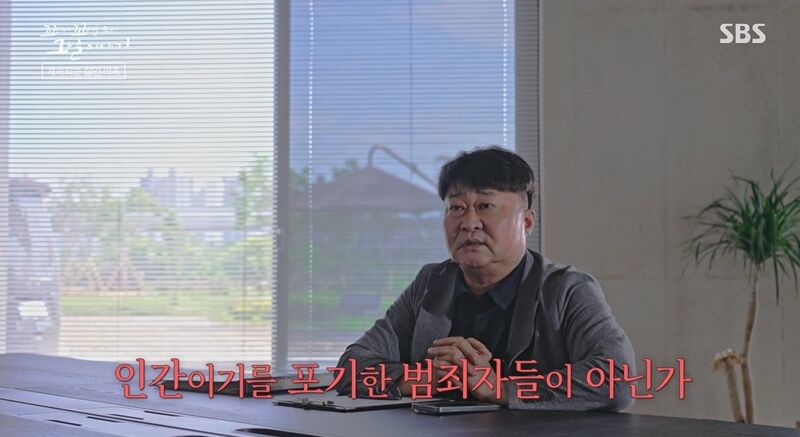
"I remember seeing photos back then—photos of the corpses. Looking at the pictures, cable ties were bound around arms and such, up to four per person, usually about two or three. When I asked police, I heard 'a certain number of cable ties are missing' or 'a few are missing from a pack,' and I think I made deductions based on that. Another thought I had was whether these criminals had relinquished being human. Something like hunting? That's what I felt—that they were enjoying the crime itself while committing it."
- Choi Jin-seop, reporting journalist at the time
Did they really commit over ten crimes as the reporter presumed?
Noh and Shim finally stood in court. How many murders were they tried for?
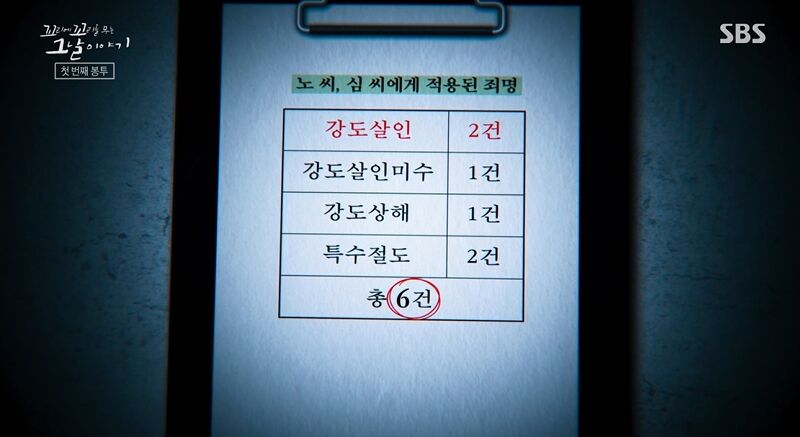
Two counts of robbery-murder. One count of attempted robbery-murder. One count of robbery causing injury. Two counts of special larceny. They were on trial for a total of six cases.
In the trial resulting from these charges, Noh was sentenced to death and Shim was sentenced to life imprisonment. Now, only the Supreme Court's final ruling remained. But were these really the only crimes they had committed?
▲ The Killer's Letter
After 2005 when the cases occurred, time passed and the new year of 2007 dawned. Detective Kim Tae-yong, who was out on field duty, received a phone call. The police station was urgently looking for him. Waiting for Detective Kim as he rushed back to the station was this single letter.
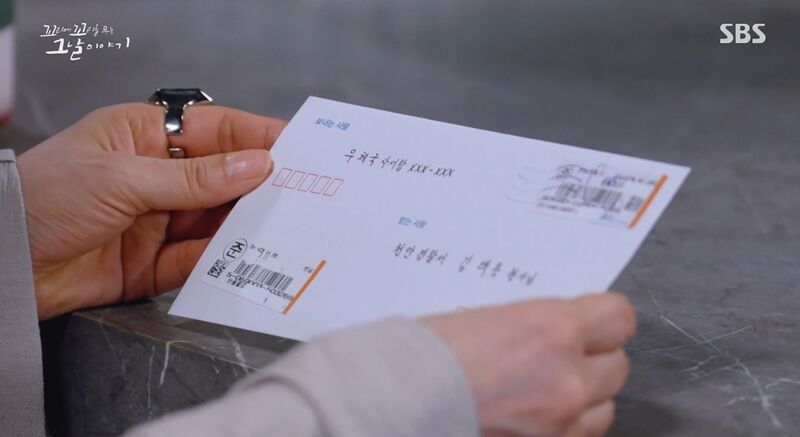
It was a letter from prison. The sender was Noh.
"I know the grace of the kindness you showed me. It wasn't because you gave me something when I was struggling, but because a single warm word stirred the conscience buried deep in my heart. Without long chatter, let's meet in a few days. I intend to confess all the truth I kept hidden in my heart, meant to take to the grave. With that, I put down my pen until we meet..."
- From Noh's letter
The letter was dated January 1, 2007. What went through Detective Kim's mind upon receiving this letter?
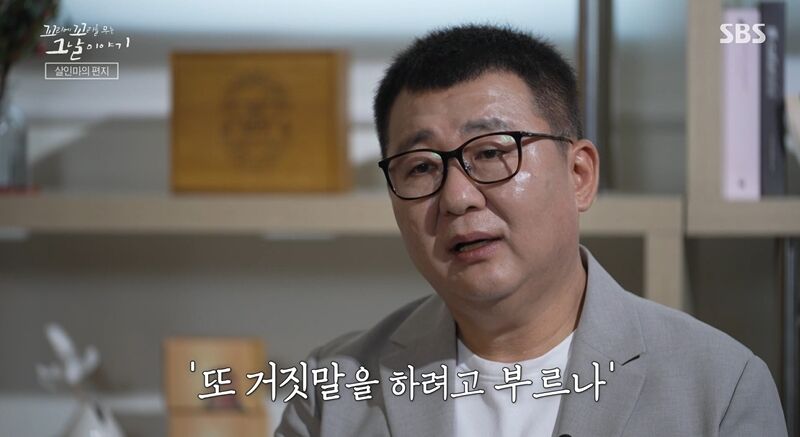
"I didn't feel glad or anything. I thought, 'Is he calling me to lie again?' Because his style left me feeling he wasn't human when speaking to him... I recalled that thought. During previous interrogations, he said, 'If claiming innocence doesn't go my way, I'll write a letter.' That flashed through my mind, and I thought, 'He really wrote a letter?'"
- Kim Tae-yong, detective at Cheonan Police Station at the time
At that point, Noh had been sentenced to death and was awaiting the Supreme Court's final decision. Was the trial outcome not going his way? And what on earth was the truth that Noh claimed he intended to take to his grave? Detective Kim visited the prison to meet Noh. As he sat waiting in the visitation room, the door opened a short while later and Noh walked in.
Detective Kim greeted him, "It's been a while," and Noh replied, "Yes, how have you been?" They shook hands conventionally and sat down. Detective Kim spoke first: "I came because you said you had something to tell me." At those words, Noh reached into his pocket and smoothly pulled something out.
It was instant coffee mix. He was suggesting they just have a cup of coffee together. As they sat across from each other drinking coffee, Noh reportedly didn't say much of substance. After exchanging trivial pleasantries and meaningless small talk, the visitation time ended. Detective Kim stood up and said, "I'll come again tomorrow." And the next day, Detective Kim visited Noh once more.
"So shall we talk today about that truth he intended to take to his grave?" Today was a dead end again. After talking about trivial things like his son, prison life, and just getting by, time ran out again. Detective Kim stood up and said, "I'll come again tomorrow." Why didn't he press or nag him? Detective Kim's strategy was 'playing it cool.' Pretending not to care, pretending not to be curious. The strategy was: "If you talk, I'll listen." It was a battle for control. After all, Noh was the one who sent a letter saying he would talk. He was waiting for Noh to open his mouth on his own.
And then the next day. After a suffocating game of wits, Noh finally opened his mouth.
"Detective. I... killed more people."
This meant the two robbery-murders he was already being tried for were not all. It meant he had committed seven more murders. The cases currently on trial totaled six, including those two robbery-murders. And here are the seven additional murders Noh revealed.
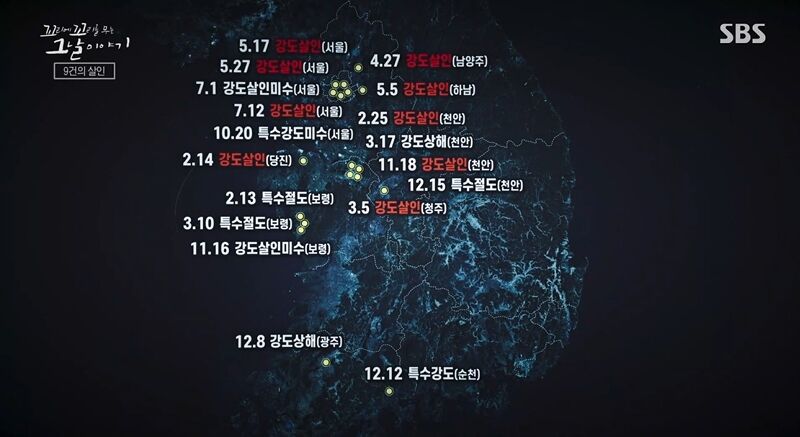
The crime locations were much broader than expected. Additionally, he confessed to three murders in Seoul, two in Gyeonggi-do, and two in Chungcheong-do. Moving from region to region, he had taken a total of nine precious lives.
It is a horrifying story, but the problem didn't end there. Including attempted robbery-murder, robbery causing injury, and special robbery, the total number of crimes they committed was 18.
In just 11 months from February to December 2005, they committed as many as 18 crimes. Was everything Noh said true? If all of this was true, what was his reason for confessing to the crimes? Let's hear an expert's opinion.
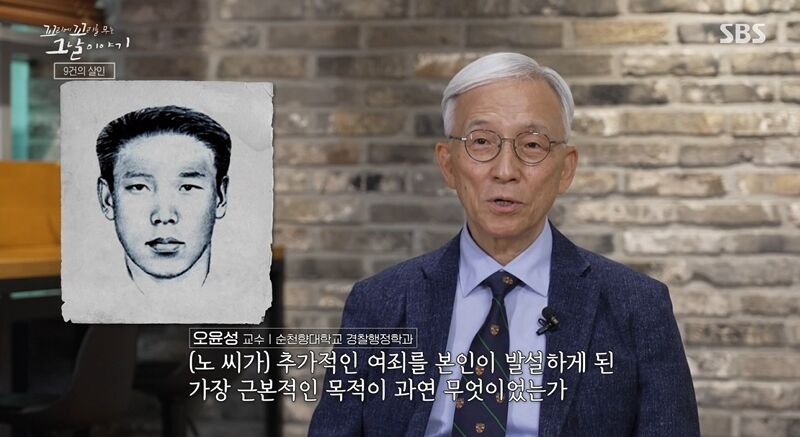
"What was the most fundamental purpose of him disclosing his additional crimes? I believe it was his accomplice. The reason is that the person who played the key role in getting him caught by the police and sentenced to death was Shim, whom he had trusted and committed crimes with until then. Shim provided various pieces of information to the police, which led to Noh's arrest. Since Noh was a death row inmate, there was no parole. The possibility of getting out was zero. However, Shim, who pushed him into this pit, was serving a life sentence, meaning there was a possibility he could eventually breathe fresh air outside through parole. If so, Noh likely thought, 'You won't get out either.' There is a very high probability he had such thoughts."
- Professor Oh Yoon-sung, Department of Police Administration, Soonchunhyang University
There was an additional statement Noh made while confessing.
"That's what he said at first: 'I'll make sure Shim gets double life sentences so he can't get out.'"
- Kim Tae-yong, detective at the Cheonan Police Station at the time
In other words, he wanted Shim to receive two life sentences so that he could never leave prison. Thus began Noh's statements about the additional crimes. But they couldn't just blindly believe everything he said. So Detective Kim gave Noh paper and a pen whenever he talked about each case.
"Draw the scene of the crime in as much detail as possible."
This was to confirm that he was not simply repeating already known information. What did Noh do after receiving the paper and pen?
"I killed them here in front of the senior center, drove again, and parked here because it was quiet near the community center. Then I kept going, and there was a forest here..."
He drew the crime scenes in great detail. When cross-referenced with the case records, they matched exactly. And Noh spoke about the process of his crimes in extreme detail and with total nonchalance.
"Even if that knife looks dull, it cuts better than you think."
Taking statements and verifying them, then taking statements and verifying them again. This process went on for a day, two days, a week—for more than 30 days. How did the detectives feel while listening to Noh's stories?
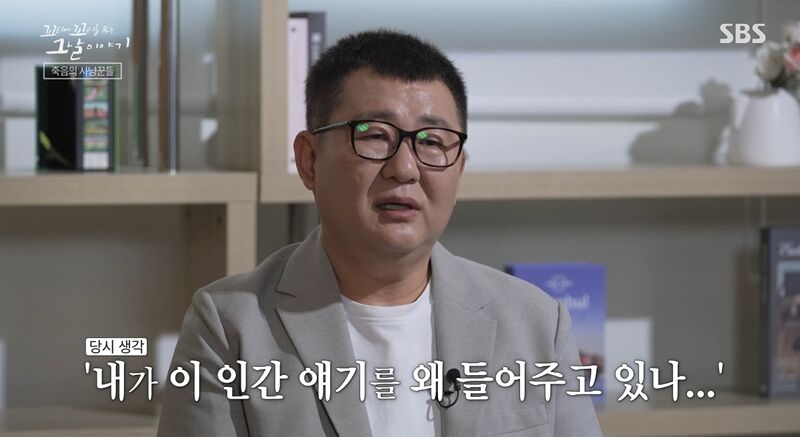
"I wondered, 'Why am I listening to this guy...?' Sitting in a suffocating space talking for 4 or 5 hours made me dizzy, so I sometimes had to step outside for a while before coming back in."
- Kim Tae-yong, detective at the Cheonan Police Station at the time
Then, did his accomplice Shim admit to the additional crimes Noh confessed to? When detectives visited him, Shim said this:
"Yes, I knew you would come. Is it my turn now?"
Noticing that Noh had confessed, Shim seemed resigned and admitted to the crimes. Together, they had committed a total of 18 crimes, including nine murders. And during the investigation, one more fact was confirmed: there were two additional accomplices.
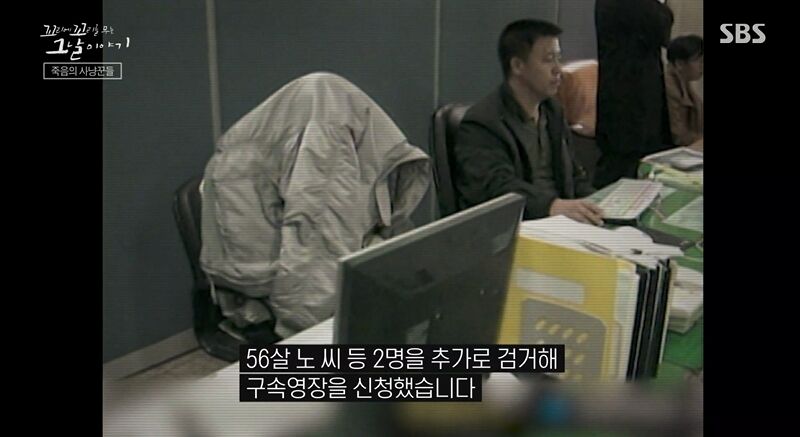
"A defendant on trial for kidnapping and murdering a university accounting manager confessed to additional crimes ahead of the Supreme Court's final ruling. He claimed responsibility for seven unsolved murder cases that had fallen into mystery."
"The seven additional crimes confessed to by the 43-year-old Noh and another individual span the entire country. In 2005 alone, they killed a total of nine people, with seven victims killed in just three months starting from February. Police arrested two additional accomplices, including Noh's 56-year-old older brother, and applied for arrest warrants. It was revealed that after his business failed and he got divorced, Noh drew his older brother and friends into the crimes to make big money."
- From news reports at the time
The accomplice was his older brother. The brothers committed crimes together. This group of four traveled across the country in pairs or trios, committing about two crimes a month. They targeted victims regardless of gender or age, and the locations were indiscriminate—roads, private homes, shops, and even taxis. The motive for their crimes was money.
So how much cash did they steal after killing nine people? It was around 15 million won. If money was the goal in the first place, why did they kill? They said it was because the victims saw their faces. From the start, they committed their crimes without covering their faces. Was taking a human life easier to them than the trouble of covering their own faces?
"Honestly, I didn't feel proud or anything like that. But what occurred to me later was that at least we uncovered who committed the murders in those cold cases. I thought it was a relief for the victims and their families."
- Kim Tae-yong, detective at the Cheonan Police Station at the time
▲ Those Left Behind
And a short while later, someone received a call from the police. It was a victim's family member. 'Kokomu' met this person directly. They agreed to the interview, sharing what kind of person the victim was, what they meant to their family, and hoping that no more crimes take away cherished loved ones. Let's listen to this story.
"Well... he was kind and such an honest person he could live without laws. He was that good of a person. He was great to the kids. He treated us well. We didn't even fight. Every time it was mealtime, he would call me to ask if I had eaten. He called every day."
- Wife of victim
On the day of the incident, her husband left home around 3 p.m. He drove a taxi and worked 12 hours a day until dawn the next morning. As mentioned, her husband always called during mealtimes. But that day, the wife couldn't answer the phone. She was sick in bed, and the call came on the home phone. The children answered it instead.
"Dad, Mom? Mom isn't feeling well, so she's lying in the room. Okay, Dad. I'll take good care of Mom."
Lying in the room listening to this conversation, the wife felt so hurt by the situation that day.
"If I was lying down sick, he could have called my cell phone. But he just hung up and didn't call again. I felt so hurt by that. So what I regret is, I was holding my cell phone. I could have just called him myself... But I didn't. Because he was always the one who made the habit of calling."
- Wife of victim
That call was her husband's last contact. The wife says it still breaks her heart that she couldn't say, "Did you eat? Be careful on your way home." And early that morning, the police came to her home. She was told her husband's body had been found. Later, when she met the detectives in charge of her husband's case, she was astonished.
"Two weeks before my husband had the incident, we went hiking. A police car siren kept blaring. So as we came down the mountain wondering what was happening, there were detectives. Those exact detectives. When we asked what happened, they said someone had died on the mountain. And then two weeks later, when our incident happened, those same detectives were assigned to it. So two weeks prior, those detectives had seen my husband and everything. They remembered. You have no idea how hard they worked on the investigation. They went through so much and worked so hard."
- Wife of victim
Although the lead detectives put all their efforts into the investigation, two years passed without knowing who the culprit was. Only now did she find out who took her husband away and why. But since the motive was money, why did they target a taxi, rather than a luxury sedan or an imported car?
"They targeted a taxi because they planned to steal it, drive to Gangnam, kidnap wealthy people, and steal their money..."
- Kim Tae-yong, detective at the Cheonan Police Station at the time
And that was why they took away the precious life of a family's breadwinner. Since her husband passed away, she says he occasionally appears in her dreams.
"He appeared in my dreams sometimes. When he did, whenever I tried to talk to him, he would say, 'I have to go earn money quickly.' He said he had to earn money to give it to me. That's what he said in my dreams."
- Wife of victim
Wasn't this how the husband remained in his wife's memory? A husband who worked hard every day for his family. He wanted to earn money to eat good food with his family, occasionally go on outings holding hands, and enjoy the ordinary happiness of sitting on the sofa watching TV together for a long time. Crime does not just take away the life of a single victim.
"I completely lost my mind. I couldn't tell if it was a dream or reality; it felt like I was walking inside a dream. My body felt floating. At the time, when it happens, anyone wouldn't fully grasp it, but as time passes, reality sets in. That's when it gets even harder."
- Wife of victim
How many people did the crimes they committed hurt? Did the criminals even know whose lives they had destroyed?
On the day of their final meeting, Detective Kim asked Noh a question: "Do you have anything to say to the victims?"
"Even at the end of the final interrogation, he said, 'I have never felt sorry to the victims, and I have no intention of ever feeling sorry in the future.' That's what he said."
- Kim Tae-yong, detective at the Cheonan Police Station at the time
▲ 9 Plus Alpha
Noh and his accomplices had to pay proper retribution for their crimes. Shim was sentenced to life imprisonment once again. Receiving two life sentences, it became virtually impossible for him to ever return to society. Noh's older brother was also sentenced to life imprisonment, while the remaining accomplice received a 7-year prison sentence. What about the outcome of Noh's trial?
"According to the death certificate issued by a physician attached to the record, it is clear that the defendant passed away on March 5, 2007, and therefore the prosecution in this case is dismissed."
- From the written verdict
Noh had taken his own life in the detention center. Noh was once reported to have said this:
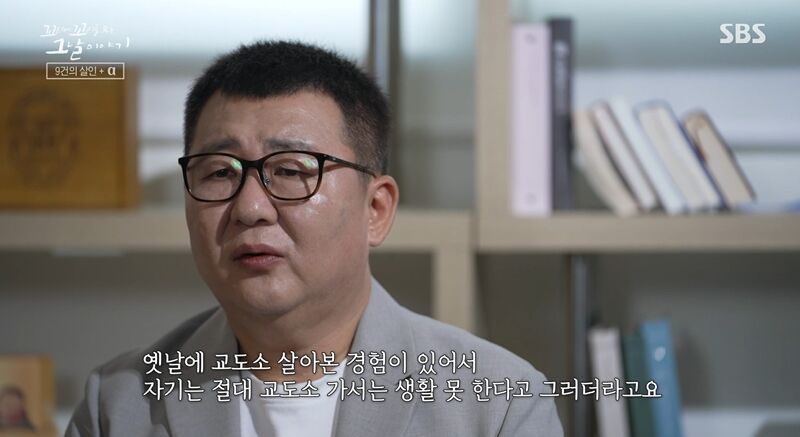
"He said he couldn't survive if he went to prison. Having experienced prison life in the past, he said there was no way he could live in prison again."
- Kim Tae-yong, detective at the Cheonan Police Station at the time
But is today's story really over here?
9 plus alpha. On the last day of their meeting, Noh left Detective Kim with a chilling remark.
"Detective, if things go as I want, there will be a Part 3, so look forward to it."
Part 1 was the two murders initially uncovered. Part 2 was the seven additional murders he confessed to. And Part 3: 9 plus alpha. Does this mean there are more unsolved cases? But there is no longer any way to verify this from Noh.
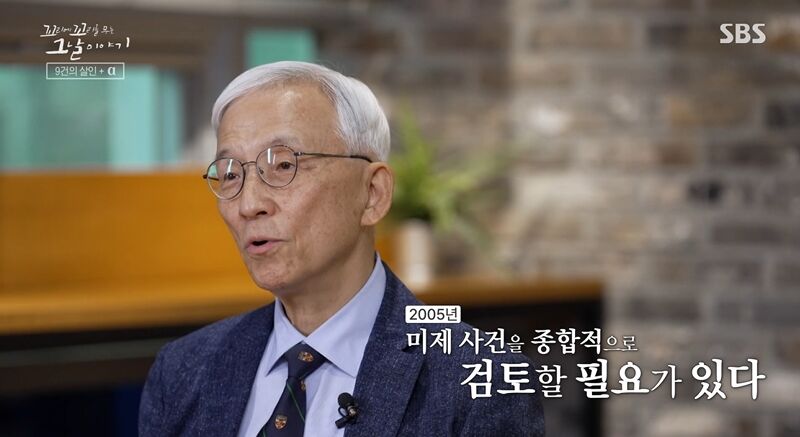
"9 plus alpha. There is a very high possibility that there was another Part 3. His foreshadowing that he would reveal something was by no means an empty boast. People like Noh, who have strong desires for self-ostentation and control, do not play all the cards they hold at once. Normally, even when we play cards, we save the decisive card for last. There is a possibility he held a decisive case with a very strong impact in terms of content—one that, if revealed, would draw immense attention from the world. However, linking all those robbery-murders across the country and assuming they were committed by a single perpetrator is not easy. Moreover, their modus operandi varied greatly: some were centered around vehicles, others involved impersonating police officers conducting checks, or posing as meter readers or TV producers covering a story. Because they used such diverse criminal methods, analyzing the connections is no easy task. What matters is the timeframe. The timeframe is fixed. The crimes were concentrated in 2005. It is necessary to comprehensively re-examine unsolved cases within that fixed timeframe once again."
- Professor Oh Yoon-sung, Department of Police Administration, Soonchunhyang University
This is precisely why 'Kokomu' revisited this case today. Because if there is indeed a '9 plus alpha' among the unsolved cases of 2005, it must be brought to light.
What are your thoughts 'today' after hearing the story of 'that day'?
(Reporter Kang Seon-ae, SBS Entertainment News)
※ Please note: This article was translated by AI and may contain errors.





 Video News
 Video News