
 KOR
KOR
Former Chairman Kim said he was someone who truly wished for the success of the Lee Jae-myung administration. Having interviewed him every few months, it really seemed that way to me as well. This was also evident in the interviews conducted earlier this year and right after the June local elections.
<From SBS 'Discovery of Knowledge' last January>
Reporter Jeong Yu-mi: When will we be able to hear your assessment of the Lee Jae-myung administration?
Former Chairman Kim Jong-in: At least a year has to pass to make an assessment, doesn't it?
Reporter Jeong Yu-mi: We will hear from you again after a year passes. How do you feel about it so far?
Former Chairman Kim Jong-in: I think they have done relatively well so far.
Reporter Jeong Yu-mi: Hearing you say that sounds like high praise to me.
Former Chairman Kim Jong-in: I think President Lee Jae-myung himself already has a relatively good understanding of how to perform his duties as president more effectively while observing our country's current political situation.
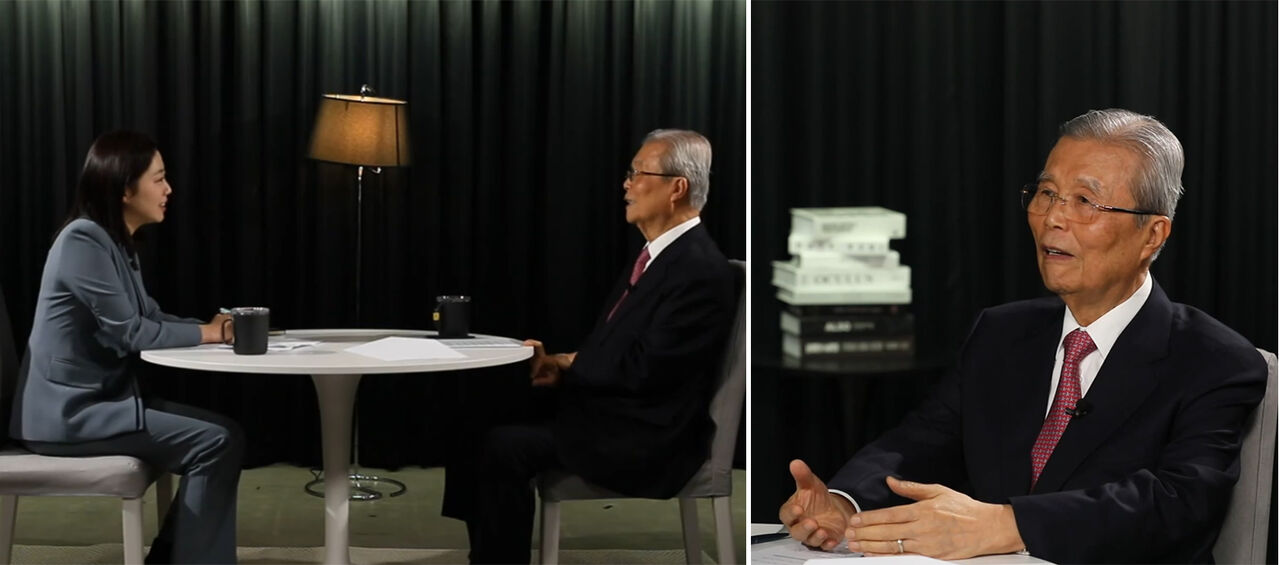
<From SBS 'Discovery of Knowledge' on June 4>
Reporter Jeong Yu-mi: Looking back over the year, is the Lee Jae-myung administration doing well?
Former Chairman Kim Jong-in: If I were to evaluate the past year, they haven't done much wrong, nor have they done anything particularly well.
Reporter Jeong Yu-mi: If you were to give a score, what would it be?
Former Chairman Kim Jong-in: One can't help but think it's fair enough.
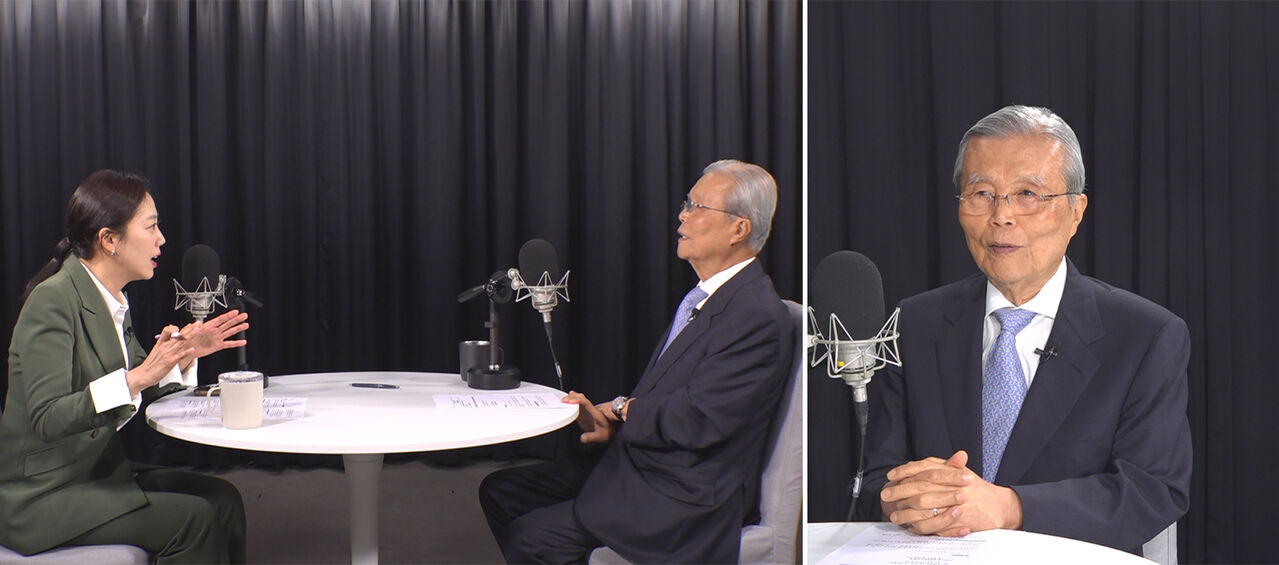
Although he had clearly refrained from criticizing or pointing fingers at the government, saying it was doing fair enough, former Chairman Kim Jong-in seemed firmly angry when I met him again about two months later. Below is a summary of the live interview conducted with former Chairman Kim Jong-in on August 12, focusing on content regarding the president and the Democratic Party's national convention, to see what made him turn around.
Q. The day after the local elections ended, I asked you for your evaluation of the Lee Jae-myung administration. How do you see it these days?
Former Chairman Kim Jong-in: Although I said he spent a fair first year after taking office, the issues President Lee Jae-myung brought up during what he called conversations with the public seem to be having a counterproductive effect on the general public. I think that's why his approval ratings keep falling and negative public opinion is increasing, as shown in recent polls.
Q. There was a town hall discussion on real estate chaired by the president. You are referring to that, right?
Former Chairman Kim Jong-in: In my view, the idea that real estate issues can be solved through a town hall discussion is fundamentally flawed. In fact, if you review the real estate issue continuously starting from past administrations, an answer can easily emerge.
The real estate issue that has recently become problematic centers around housing issues in Seoul, which have become a hot issue. However, as long as people hold the mindset that this problem exists simply because speculation is taking place, I think it becomes even harder to solve the problem.
The current housing problem in Seoul is caused by the concentration of population in the metropolitan area, and as the economy develops and living standards rise, demand for housing has increased. Prices rose because supply could not meet demand, but if one thinks that price increases occurred as if rampant speculation caused them, the problem cannot be solved.
Reporter Jeong Yu-mi: Are you saying the diagnosis itself was wrong?
Former Chairman Kim Jong-in: That is how I see it.
Q. The president's approval rating is on a downward trend, and negative public opinion on real estate is cited as the main reason.
Former Chairman Kim Jong-in: Well, that's obvious. Why did the Democratic Party lose the Seoul mayoral election, which is most affected by the central government? I once mentioned that the cause lies in President Lee Jae-myung's real estate tax policy.
Reporter Jeong Yu-mi: Yes, at that time you were concerned about President Lee Jae-myung continuously putting out messages regarding real estate taxation.
Former Chairman Kim Jong-in: I said I hoped they wouldn't do that if possible, but they kept talking about it, seemingly confident for some reason. I believe that ultimately played a decisive role in Mayor Oh Se-hun getting elected.
Q. So you believe real estate was ultimately decisive in the Democratic Party's loss in the Seoul mayoral election during the last local elections.
Former Chairman Kim Jong-in: Then, after the election ended, shouldn't they have conducted a detailed review of the election results? Why did they lose in Seoul when other areas were fine? Even within Seoul, areas related to real estate taxes gave many votes to then-candidate Oh Se-hun, leading to his election. Even after confirming that, they keep talking about that issue.
However, the most problematic thing is that President Lee Jae-myung needs to know how to distinguish between what he can do and what he cannot do, but he doesn't seem able to make that distinction. So he thinks that if the president speaks about an issue with interest, the problem will be solved. But he needs to realize that this doesn't solve the problem—it only gradually loses the general public's trust in him—yet he doesn't seem to realize this.
Q. Are you saying that the president mentioning the real estate issue itself undermines trust?
Former Chairman Kim Jong-in: That's right. President Lee Jae-myung's tendency is to keep talking about every economic variable, thinking that doing so will quickly solve things, but that actually backfires.
For example, regarding real estate, he keeps talking about taxes, but in my view, President Lee Jae-myung is no tax expert. I don't know who is advising President Lee on taxes, but if President Lee receives that kind of advice and keeps making official statements based on it, he will inevitably drift further away from the public. Talking about holding taxes, imposing heavy taxes on high-value properties, or imposing the comprehensive real estate holding tax even on properties under joint marital ownership—I view these statements as falling below common sense.
In my view, I believe I knew well enough whether the Tax Office of the Ministry of Finance and Economy was being operated in accordance with the basic principles of taxation. I don't think the Tax Office of the Ministry of Finance and Economy submitted a proposal like the current one on its own initiative, but during the process of reporting to the president, since the president said something else, the Tax Office ended up following along, which I think led to resistance from the public.
Q. You mean the Tax Office ultimately moved in the direction the president wanted?
Former Chairman Kim Jong-in: I don't think the president is someone who has firm convictions about taxation. He seems to be hearing such things from someone and repeatedly talking about them, but to be honest, if the president talks this way and that about economic variables, it will only produce side effects, and no positive results can be expected.
Q. However, it's not that they will stick strictly to the tax reform proposal as is; the president also said if there are issues, they will complement and adjust it.
Former Chairman Kim Jong-in: My point is: who started it in the first place, and why are they saying something else after seeing the result? In my view, if the president hadn't said anything, I don't think the Tax Office would have put out such a tax reform proposal.
Q. Then what should be done now? The reform plan has already been announced.
Former Chairman Kim Jong-in: To be honest, what I want to advise President Lee Jae-myung is that I hope he properly recognizes the relationship between tax policy and politics.
What President Lee Jae-myung needs to consider most important right now is how to win the 2028 general elections for his side. But if they mess up taxation now and finalize tax legislation in the regular session of the National Assembly at the end of this year, the tax imposition will begin next year. Then, after people pay those taxes, he should clearly realize what impact that will have on the next general elections before doing anything. Didn't we thoroughly experience under the previous Yoon Suk-yeol administration that regretting later after a general election goes wrong is useless? Looking at how President Lee Jae-myung has handled real estate and tax issues so far, there is no way to guarantee that a repeat won't happen.
Q. But the president's argument was this: "When the tax system changes, those who originally benefit remain quiet, while those whose burden increases inevitably harbor strong resentment."
Former Chairman Kim Jong-in: That is not something a president should say. Taxation may seem at first glance to affect only a specific class, but the effects it brings are not that simple.
And looking at it, after talking about taxation regarding real estate, recently he suddenly started talking about tax equity issues again. So he compares income tax with capital gains tax and says it's not equitable, but does capital gains tax prevent real estate transactions? That's absolutely not the case.
When thinking about tax issues, one must consider that imposing taxes creates a reaction against the tax itself. It would be a big mistake to delude oneself into thinking that imposing taxes is the end of the story.
Q. You mentioned the importance of the general elections. But what if his position is that he won't care about that as much and will just do what must be done?
Former Chairman Kim Jong-in: That is not something a politician should say. Once a politician suffers a political defeat, no amount of regret afterward is of any use.
For example, an instance where taxes affected politics in our country was the 10th general election in 1978. Despite the ruling party being so powerful at the time, it lost to the Democratic Party by 1.2% nationwide. The defeat of the then Democratic Republican Party in that 10th election was even linked to President Park Chung-hee's death. The most important factor in that defeat was forcibly implementing value-added tax when the public knew nothing about it. One must know that the backlash against it played a major role.
Q. Real estate issues are really difficult to handle for every administration, not just this one.
Former Chairman Kim Jong-in: Basically, when population is concentrated in the metropolitan area naturally, many people want to live in Seoul, but because housing supplied in Seoul falls short of demand, prices have no choice but to rise. This is fundamentally a situation driven by market principles, so how can anyone force a change?
Looking at recent developments, they say they will increase supply and try to build houses wherever there is even a bit of vacant land, but shouldn't a city have a certain amount of open space for it to function as a city? Can a city function if every bit of space is used only to build houses?
Q. You mean building housing on idle land alone is not the answer.
Former Chairman Kim Jong-in: Even so, whether supply will be sufficient afterward is unlikely. In reality, that problem is also extremely difficult to solve politically. So while they say they are doing this to break through the current situation, I hope they speak after thinking deeply about what long-term impact it will ultimately have.
Q. I asked for your assessment of the Lee Jae-myung administration, and it led all the way to real estate. So you view real estate as the most unsatisfactory aspect, in other words, where the biggest problem lies?
Former Chairman Kim Jong-in: It's not just real estate. President Lee Jae-myung is very interested in the stock market, isn't he? Because the president is so interested in the stock market, the policy chief assisting the president introduced single-stock leveraged ETFs, and when that became a problem again, he had to make excuses for it—that's how things go.
As I always say, the stock market is an organized market, so it is a place where market principles operate most efficiently. If the government keeps speaking this way and that in such a market, it only brings confusion to the stock market, and as a result, normal stock market development becomes impossible. That's why over the past few months, stock prices went near 10,000 before dropping down to the 6,000 range now, isn't it? Because the drop was so large, the stock market has instead moved into an unstable situation.
Q. To summarize, you mean that on economic issues like real estate and the stock market, the president needs to refrain from making remarks as much as possible.
Former Chairman Kim Jong-in: I think it is wise for the president to absolutely refrain from talking this way and that about economic variables.
Former Chairman Kim Jong-in: Since it depends on how the trial outcome turns out, I cannot make a definitive statement. However, assuming a Seoul mayoral election is held next year, if it were held under current conditions, I think it would be very difficult for the ruling party to win.
Q. The Criminal Procedure Act was revised, completely abolishing the prosecution's investigative powers, wasn't it? Although public opinion was actually higher against abolition, this outcome was reached. I am curious how you view this situation.
Former Chairman Kim Jong-in: Isn't it common sense among the general public that 'complete abolition of supplementary investigative authority should not happen'? The president promulgated it through a Cabinet meeting resolution, and then the president says that if something is wrong with it, it needs to be modified, doesn't he? That is why I believe it would have been proper for President Lee Jae-myung to review such issues more thoroughly in advance to prevent problems from arising before processing them. It is the exact same as the current tax issue.
Reporter Jeong Yu-mi: You mean the approach of "let's do it first and modify it later" fails to inspire trust, right?
Former Chairman Kim Jong-in: That's right. Then the public cannot help but grow increasingly distrustful. Whether the president spoke while properly knowing what he was talking about, or whether he just received advice from someone unilaterally and made those remarks... So in fact, I think it is wise for the president to minimize his remarks as much as possible.
Q. I understand your point to mean that it would be better for the president to reduce not only SNS messages but public statements in general.
Former Chairman Kim Jong-in: President Lee Jae-myung's enthusiasm for being proactive and trying to do everything diligently is good, but politics is not something solved by willpower and power alone. If he falls into the illusion that everything can be solved if the president speaks with interest, in my view, it will be hard for him to succeed.
So unless the president makes statements as cautiously as possible, I think the side effects will be too severe. To be honest, I have served a president myself, and what I always told the president was this: "Please do not talk about things that you yourself do not know properly or lack conviction in."
Q. Even about two months ago, you seemed to be trying to view the Lee Jae-myung administration favorably.
Former Chairman Kim Jong-in: To be honest, I was someone who hoped the Lee Jae-myung administration would do well for the future of the nation when it launched. I thought they would do relatively well, but after seeing them announce the 4,755 trillion won (three major) mega projects on June 29 this year, I felt, 'Ah, that gentleman is also misjudging something.'
Furthermore, looking at how things are being handled recently with issues like real estate taxes, he keeps talking about things he doesn't know well as if he knows them best, so when the president speaks, the so-called administrative bureaucrats underneath have no choice but to follow along. So it has become extremely difficult to determine whether the Tax Office of the Ministry of Finance and Economy, which has managed the tax system for decades, released a tax policy like the current one because they genuinely judged it to be right or not.
Q. You mean because the president's message is so strong, they have no choice but to move accordingly?
Former Chairman Kim Jong-in: That's right. If the president speaks, administrative bureaucrats have no choice but to follow along, don't they?
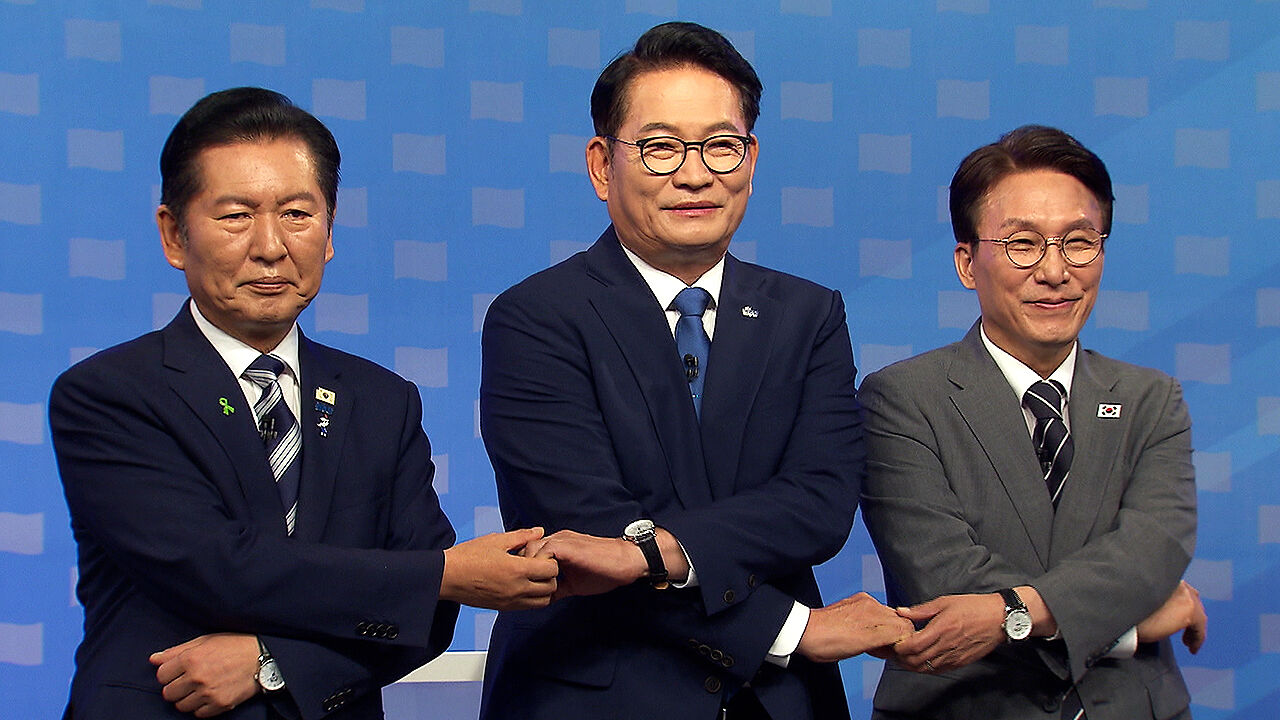
Former Chairman Kim Jong-in: Even so, in my view, predicting it might not be that difficult. To be honest, what would it mean if candidate Jung Cheong-rae becomes leader instead of candidate Kim Min-seok? Doesn't it mean that even party members do not support the president? The president put forward candidate Kim Min-seok hoping he would win, and if that doesn't happen, doesn't it end up looking like the party distrusts President Lee Jae-myung? I don't think such a phenomenon will occur.
Party members believe that the Lee Jae-myung administration must do its job properly and succeed for them to win the next general elections and retain power afterward. So if someone who is out of step with President Lee Jae-myung becomes party leader and presents various obstacles to the president performing his duties, they will think that goal is hard to achieve. I think party members will make at least this level of judgment. On that premise, in my view, even if it's by a small margin, candidate Kim Min-seok will likely become party leader.
Think back to the last Supreme Council election. When President Lee Jae-myung ran for party leader at the time and Kim Min-seok and others ran for the Supreme Council, Kim Min-seok initially lagged considerably behind candidate Jung Bong-joo, but in the end Jung Bong-joo failed to make the Supreme Council and Kim Min-seok became chief Supreme Council member, didn't he? To be honest, that is the inclination of general party members. If the president prefers Kim Min-seok, I think party members ultimately have no choice but to follow President Lee Jae-myung and move accordingly.
Q. If candidate Kim Min-seok becomes leader, he will become a strong presidential contender. But this time candidate Jung Cheong-rae also got a high vote share considering the president openly backed candidate Kim Min-seok. Should candidate Jung Cheong-rae also be considered a strong presidential contender for the Democratic Party in the next presidential election?
Former Chairman Kim Jong-in: If candidate Jung Cheong-rae loses in this party leadership election, in my view, I think that hope will no longer exist.
Reporter Jeong Yu-mi: Still, isn't there the personal clout he demonstrated during the election process?
Former Chairman Kim Jong-in: That power is current power; whether that power is maintained after the election results are finalized is a separate matter.
Q. During the national convention process, divisions and conflicts within the Democratic Party were revealed very plainly. That's why voices expressing deep concern about the Democratic Party's situation afterward are strong, regardless of who becomes party leader.
Former Chairman Kim Jong-in: In my view, I don't think Jung Cheong-rae will leave the party just because he doesn't become leader. When former lawmaker Jung Cheong-rae was cut off during nominations for the 20th general election in 2016, he didn't leave the party back then either and campaigned hard in his own way. I saw that his loyalty to the party was remarkable, so I don't think someone who has served as party leader this time would storm out of the party just because he failed to get re-elected as leader.
Q. How will the Supreme Council be composed?
Former Chairman Kim Jong-in: Looking at the current voting results, isn't it going to be three so-called pro-Lee faction members and two pro-Jung faction members?
Reporter Jeong Yu-mi: For example, I'm curious what the atmosphere of the Supreme Council would be like when party leader Kim Min-seok and Supreme Council member Choi Min-hee meet.
Former Chairman Kim Jong-in: Once the balance of power tilts to one side, they have no choice but to follow that direction. No matter how much one or two Supreme Council members struggle, they cannot exert much influence.
Q. Becoming the ruling party leader in the second year of power—what role will be needed if elected this time?
Former Chairman Kim Jong-in: For example, if candidate Kim Min-seok becomes party leader and the government comes out with a tax reform proposal like the current one that is completely detached from public sentiment, the party has no choice but to present opposing views and demonstrate efforts to correct it. If the party does not make such efforts to rectify it, bringing about a proper victory in the next general elections will become difficult.
While the party cooperates with the government, there are areas where the party should not interfere, and in legislative matters directly connected to public sentiment, I think the party needs to strongly express its opinions. Political parties right now don't seem to have much of that capacity. Then they will inevitably run counter to public sentiment.
Q. There are many analyses saying that fighting as if their lives depended on it at this national convention is ultimately because nominations for the general elections two years from now are at stake. So if candidate Kim Min-seok wins this time, the pro-Jung faction is out for the next general elections, and conversely if candidate Jung Cheong-rae wins, the pro-Lee faction is out...
Former Chairman Kim Jong-in: They won't be able to completely eliminate the pro-Jung faction like that either. Because nominations must be made based on winning electability, right? In areas where the Democratic Party can win just by putting up a stick, maybe, but in other areas they have no choice but to focus on electability, so a result where everyone is excluded cannot happen.
※ Please note: This article was translated by AI and may contain errors.



 Video News
 Video News
 Video News
 Video News
 Video News