
 KOR
KOR
▲ U.S. President Donald Trump
While the U.S. Donald Trump administration is using heavy sanctions and a naval blockade to pressure Iran into submission, the Iranian leadership has shifted the national economy into a "survival mode" to prepare for a protracted conflict, The Wall Street Journal reported on the 11th (local time).
According to the report, Iran is rationing scarce goods, restricting the use of foreign currency, cutting investments, and passing a significant portion of the economic burden onto households.
However, it is barely keeping the economy afloat by maintaining strategically vital imports and core functions necessary to run the state, pushing back against U.S. pressure.
Experts note that while Iran's economic hardships are expected to deepen, the room for the Iranian leadership to hold out by delaying negotiations with the U.S. will also increase.
Tensions surrounding Iran have escalated to a point where even the embers of resumed negotiations are disappearing.
As Iran announced six harsher demands on the 8th—stricter than the previous end-of-war memorandum of understanding (MOU)—as conditions for reopening the Strait of Hormuz, the U.S. neutralized a Panama-flagged vessel attempting to violate the naval blockade against Iran on the same day by firing a helicopter missile.
Following the resumption of the U.S. naval blockade against Iran in response to Tehran's closure of the Strait of Hormuz, Iran's crude oil exports, the source of its national wealth, have effectively halted.
According to British economic analysis firm Capital Economics, Iran's crude oil exports, which stood at $4.5 billion (approx. 6.4 trillion won) in June, dropped to near zero in July.
Economic pain inside Iran is reaching extreme levels.
The annual inflation rate has surpassed 80%, and the prices of chicken and milk have surged 190% and 150%, respectively, compared to a year ago.
The International Monetary Fund (IMF) projected Iran's economic growth rate to record -5.4% this year, and experts estimate that 2 million to 3 million jobs will disappear within the country.
To prepare for power shortages, the Iranian government has taken steps such as allowing factories to operate on holidays, while reaching out to the public by introducing a credit purchase system for daily necessities for low-income families and increasing food voucher distributions.
On the 9th, President Trump claimed that the U.S. naval blockade has further worsened the economic crisis of the Iranian regime, stating, "We are just watching the situation in Iran, which is suffering from massive inflation and has no money."
While President Trump's strategy is to impoverish Iran's economy to force it to the negotiating table, the WSJ pointed out that as Iran's internal political landscape reorganizes around hardliners, the room for compromise is shrinking further.
Hadi Kahalzadeh, a researcher at the Quincy Institute, a U.S. think tank, explained, "U.S. pressure will gradually turn Iran's economy into a 'survival mode' that barely functions," adding, "Because of the coercive state structure, economic pain is unlikely to act as enough pressure to change national security."
Mediators in the Middle East also point out that since Iran has already endured decades of sanctions, it is difficult to expect concessions from Iran through economic pressure alone.
If the U.S. forces a reckless airstrike on Iran despite its depleted inventory of Patriot (PAC-3) missiles—its core air defense system—there are concerns that the war could be prolonged.
The problem is that the longer the battle of attrition drags on, the more pressure it will bring back to President Trump.
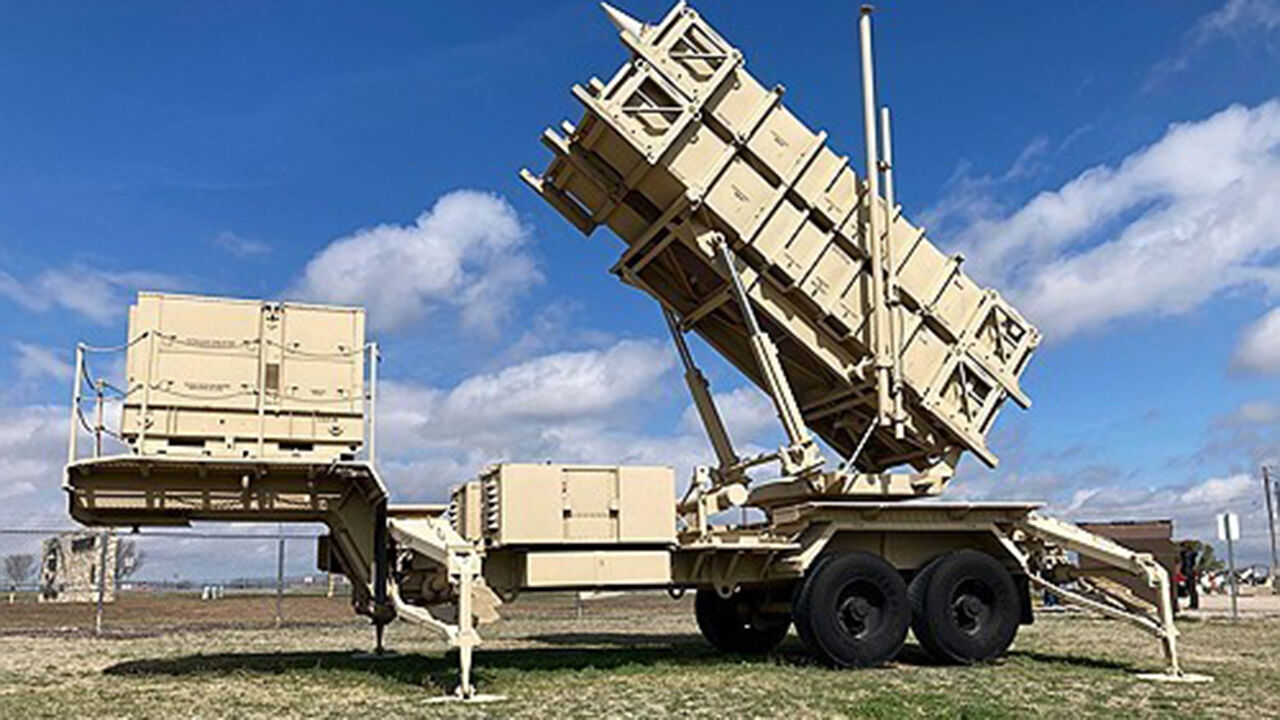
If energy supply instability and logistics disruptions originating from the Middle East stimulate global inflation, it could act as a negative factor for the Trump administration ahead of the U.S. midterm elections in November.
"The U.S. believes long-term economic pressure will suppress Iran, while Iran believes a prolonged conflict will inflict political burdens on the U.S.," Kahalzadeh said. "Both sides may be misjudging the speed at which the other will collapse."
(Photo: AP, Yonhap News)
※ Please note: This article was translated by AI and may contain errors.




 Video News
 Video News

![[현장영상] 9명 '정원 초과'로 탄 엘리베이터…바닥으로 꺼져버린 아찔한 '3초'](http://img.sbs.co.kr/newimg/news/20260812/202211700_300.jpg) Video News
Video News