
 KOR
KOR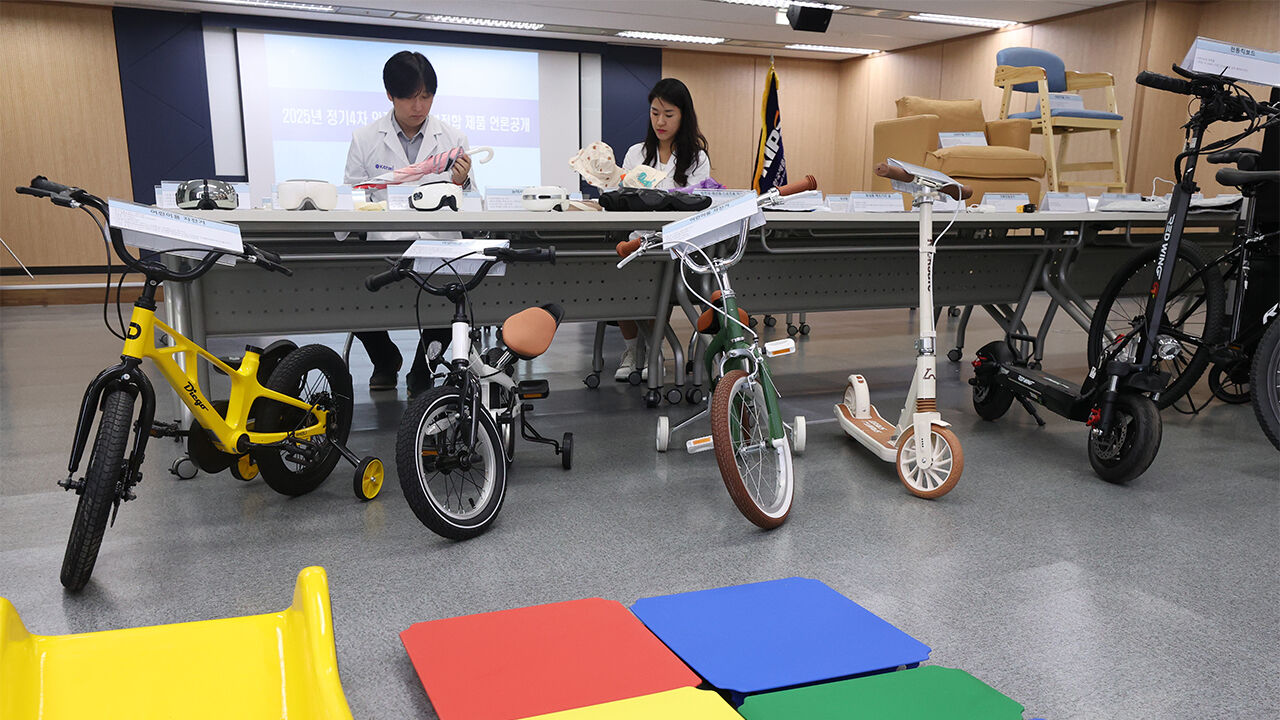
▲ Researchers examine children's textile products and batteries that fail to meet safety standards at the Korea Product Safety Management Institute in Seocho-gu, Seoul, on October 30 of last year. (File Photo)
The number of product recalls due to defects increased slightly last year.
The Fair Trade Commission (FTC) announced on the 10th that an analysis of last year's recall performance by central administrative agencies, local governments, and the Korea Consumer Agency totaled 2,656 cases.
This is a 4.7% increase from the previous year (2,537 cases), though it is down from 2,813 cases two years ago in 2023.
Looking at specific types, there were 905 recall orders, 865 voluntary recalls, and 886 recall recommendations.
By underlying law, recalls under seven laws—including the Framework Act on Consumers, the Medical Devices Act, the Pharmaceutical Affairs Act, the Act on Safe Management of Household Chemical Products and Biocides, the Automobile Management Act, the Food Sanitation Act, and the Framework Act on Product Safety—accounted for 2,530 cases, or 95.3% of the total.
Among them, recalls under the Framework Act on Consumers rose 41.6% to 851 cases, driving the overall increase in recalls.
The FTC analyzed that this was the result of an increase in overseas recalled products being distributed on domestic open markets, prompting authorities to take active measures to block their sales.
Recalls under the Food Sanitation Act surged 103.9% to 259 cases.
Since last year, authorities have been actively recalling items even when consumers are likely to still possess them, such as frozen products.
On the other hand, recalls based on the Act on Safe Management of Household Chemical Products and Biocides dropped by 165 cases (36.3%) to 290 cases.
The FTC stated that it has made efforts to preemptively block hazardous products from being distributed in the market through the operation of market monitoring teams and online monitoring.
By major category, recalls increased for general goods (1,282 cases, up 8.6%) and medical devices (308 cases, up 8.5%), while decreasing for automobiles (300 cases, down 24.8%).
Recalls for pharmaceuticals (295 cases) also fell by 13.5%.
Recalls by local governments increased 144.2% to 254 cases.
These were analyzed to be primarily food-related recalls.
The number of cases where the distribution of hazardous overseas products was blocked through monitoring by related organizations rose 13% to 12,902 cases.
(Photo: Yonhap News)
※ Please note: This article was translated by AI and may contain errors.





 Video News

 Video News