
 KOR
KOR
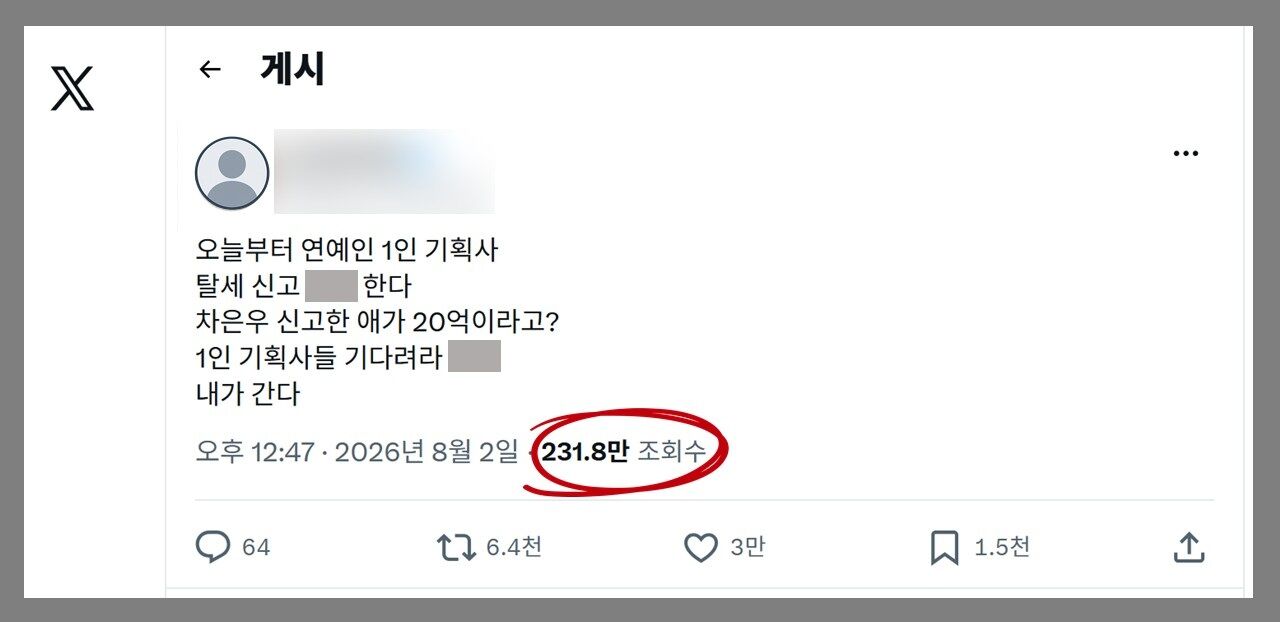
Rumors have recently spread across social media claiming that "the informant who reported singer and actor Cha Eun-woo for tax evasion received 2 billion won in reward money."
In January of this year, after allegations of tax evasion emerged regarding a one-person agency established under his family's name, Cha was reported to have paid additional taxes and penalties amounting to around 13 billion won. Cha is currently serving in the military.
The social media post in question easily surpassed 2 million views.
The government operates a "Tax Evasion Reporting Reward System" to ensure tax justice. Under this system, if someone reports tax evasion suspicions involving an individual or corporation, a portion of the additional tax levied after the charges are confirmed is paid as a reward.
So, is the rumor true that the informant who reported Cha Eun-woo's tax evasion allegations received 2 billion won in reward money?
The SBS Fact Check team looked into the claim.

First, we submitted an inquiry to the National Tax Service (NTS) requesting fact-checking. The NTS responded that it is difficult to confirm whether a specific report was submitted. Article 81-13 of the Framework Act on National Taxes stipulates that "tax officials shall not provide or leak data obtained for the assessment and collection of national taxes to others."
However, legally, paying a reward to an informant is impossible at this point. As recently reported by media outlets, Cha's side, which had paid approximately 13 billion won in additional taxes, recently appealed the tax assessment and requested a tax tribunal adjudication.
The NTS also explained, "Discussions and payment procedures for rewards begin only after the evaded tax amount is paid and either the period for filing an appeal or lawsuit under the Framework Act on National Taxes has expired, or all related procedures are completed and the tax assessment becomes final."
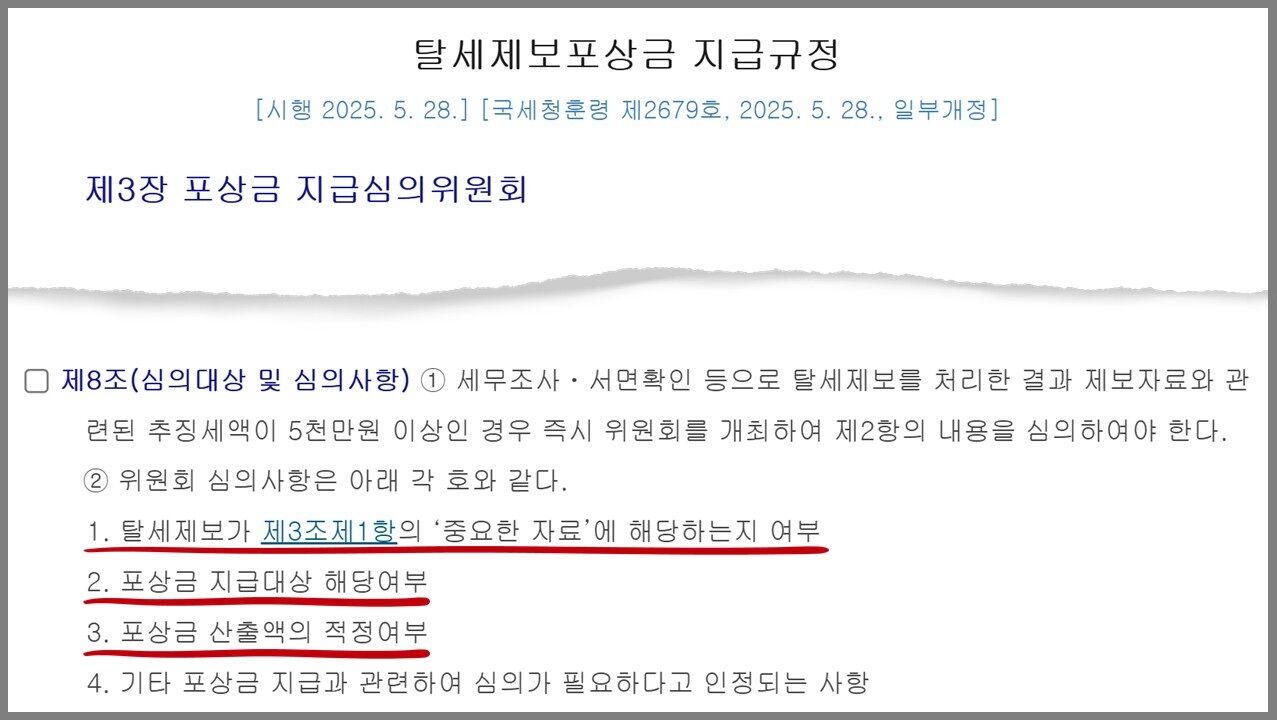
The procedure for paying rewards to tax evasion informants is also quite strict. According to the NTS <Regulations on Payment of Rewards for Tax Evasion Reports> shown above, if the additional tax levied is 50 million won or more, the NTS must convene a review committee to conduct a strict evaluation for reward payment. This process involves examining each document to determine whether the report was truly decisive and calculating the contribution level.
For instance, Cha is known to have paid around 13 billion won in additional taxes. If the review committee concludes during the evaluation process that the informant's contribution contributed to 3 billion won of that amount, the reward is calculated based on that 3 billion won figure. The process is quite complex.
Let us make another assumption. If Cha's additional tax assessment is finalized at 13 billion won and the review determines that the informant's contribution accounts for the entire 13 billion won, how much would the reward be?
Article 4 of the same regulations, "Criteria for Payment of Reward Money," specifies the following:
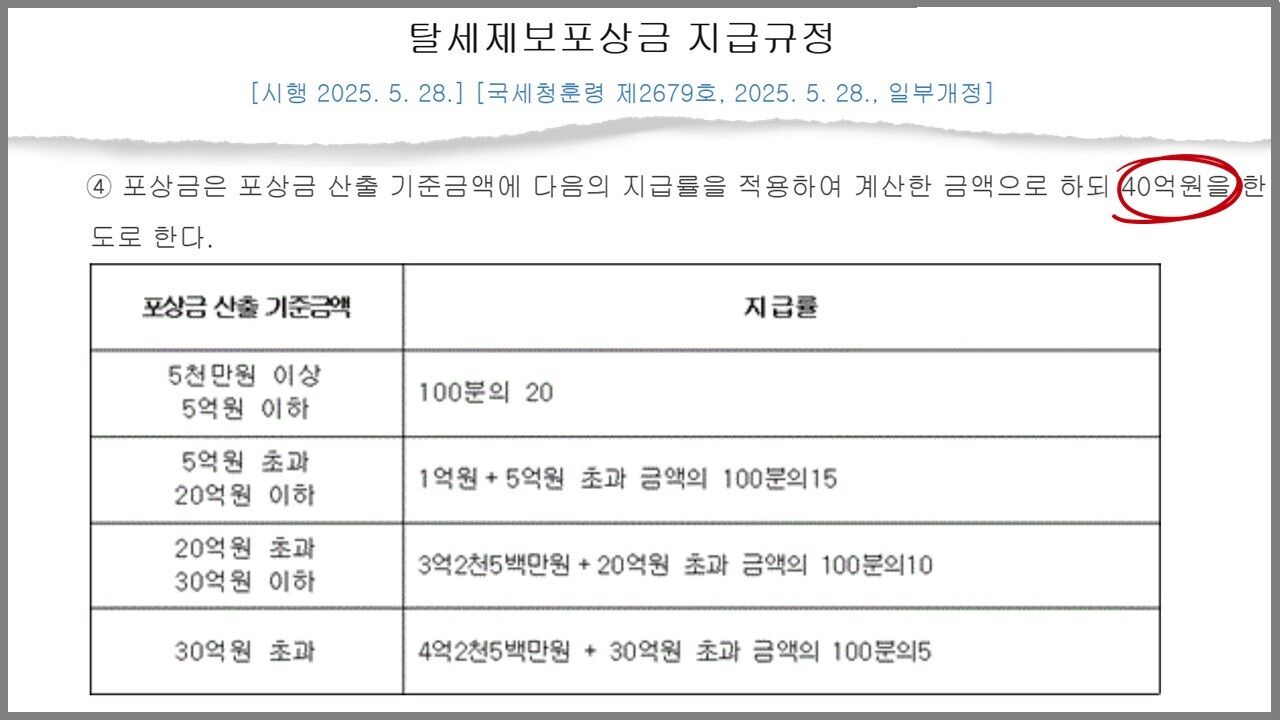
The calculation criteria vary significantly depending on the bracket. Since the additional tax is around 13 billion won, the bracket for base calculation amounts exceeding "3 billion won" in the table above applies.
The calculation results according to the regulations are as follows:
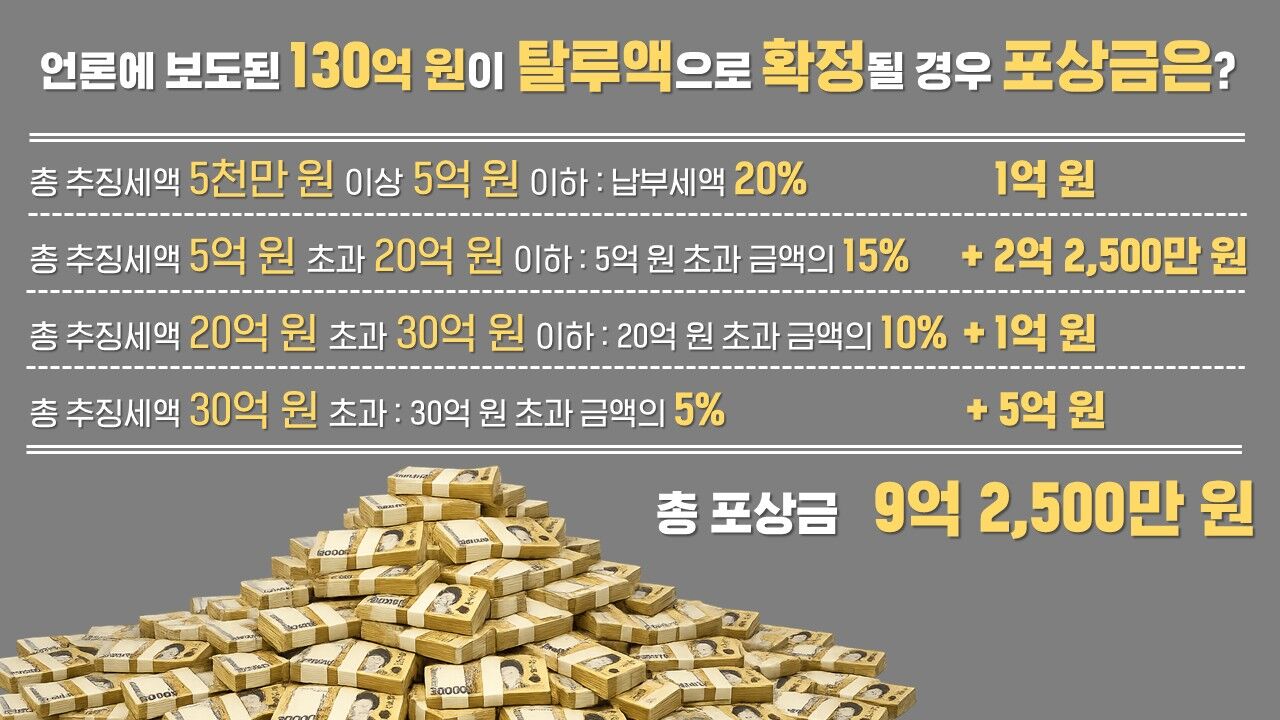
Under the extreme assumption that the additional tax amount is finalized at 13 billion won and the informant's contribution is 100%, the reporting reward is calculated to be around 1 billion won.
For reference, although the tax reform proposal announced three days ago abolishes the 4 billion won cap and raises payout rates per bracket, reports filed before the reform follow the previous regulations. This is because the changes cannot be applied retroactively.
To summarize: First, since Cha has appealed the tax assessment and requested a tax tribunal adjudication, meaning the tax amount is not finalized, discussions regarding a reward cannot be said to have properly taken place yet. Second, even if reward discussions begin, a rigorous process to strictly evaluate the informant's degree of contribution remains. Third, even if NTS deliberations under that process ultimately finalize the informant's contribution as the full 13 billion won, the reward amount is calculated to be around 1 billion won.
Ultimately, the rumor claiming that "the informant who reported singer and actor Cha Eun-woo for tax evasion received 2 billion won in reward money" cannot be considered true.


In the meantime, another rumor surfaced. This time, claims spread on social media that the informant in Cha Eun-woo's tax evasion case was a tax official. Because the maximum reward for public officials is 20 million won, rumors claimed that the official received 20 million won.
This post also easily gathered over 2 million views.
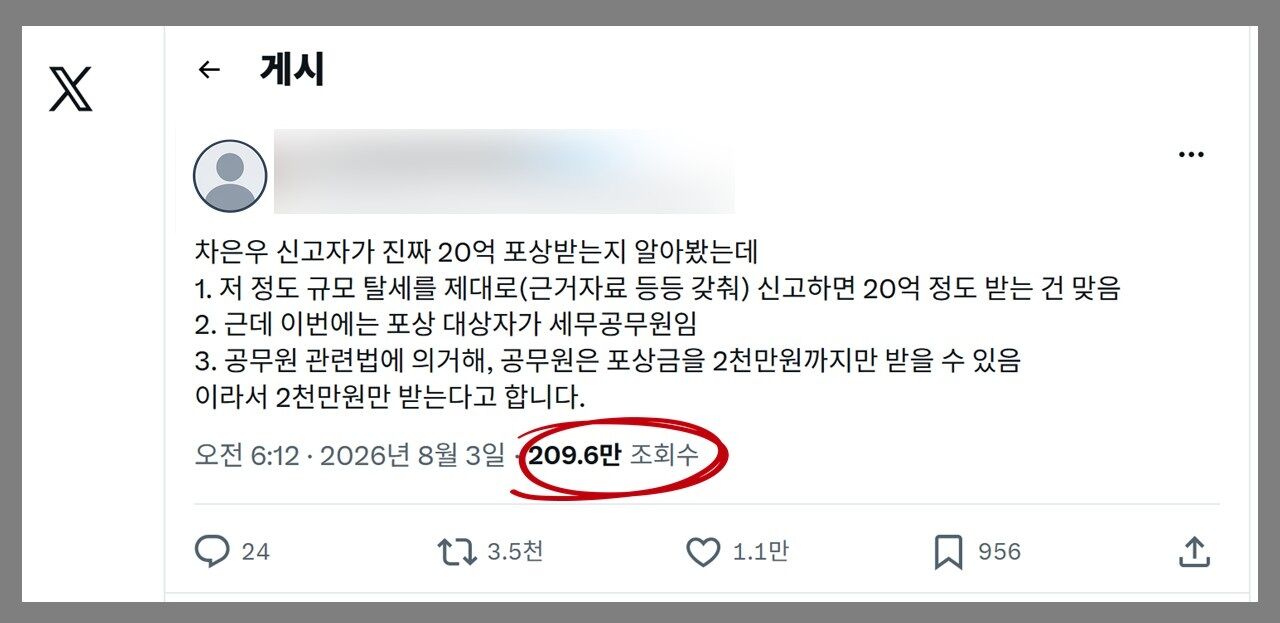
We also checked whether this claim was true.

As mentioned earlier, because procedures are still ongoing, no reward money has been paid out yet. However, we examined each detail closely.
Under the <Framework Act on National Taxes>, it states that if a public official provides data "in connection with their duties," no reward is paid.
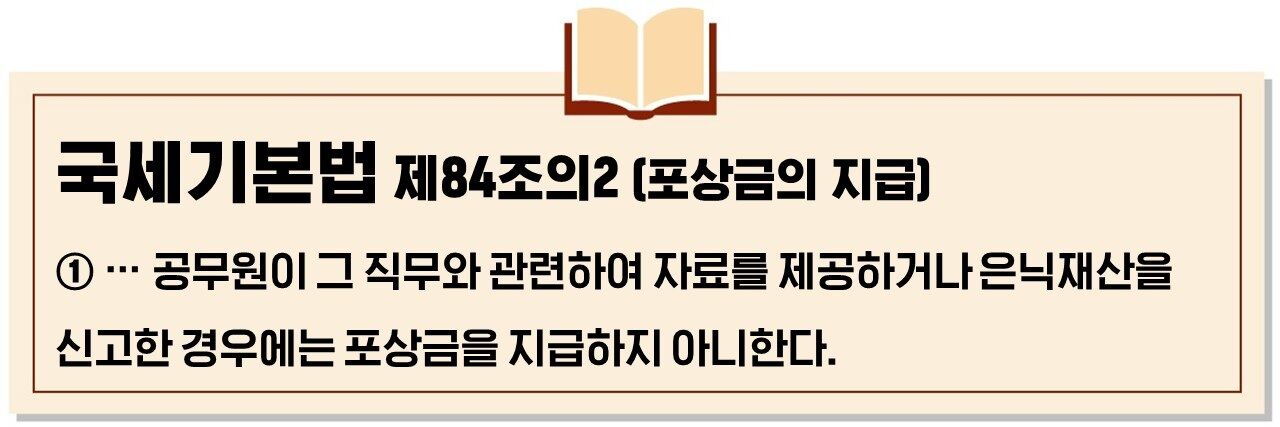
How should this law be interpreted? In fact, when we inquired with the NTS, they noted that the phrase "in connection with their duties" is key.
Public officials whose duties are unrelated—that is, officials not involved in tax evasion investigations—can receive rewards, but conversely, officials whose duties are directly related, such as 'tax officials,' are interpreted as ineligible to receive rewards even if they provide crucial tax evasion tips.
"Reward payments are not restricted simply because an individual is a general public official. However, if a public official related to duties submits a report, tax officials are restricted from receiving reward payments."
- National Tax Service, <Response to Inquiry from SBS Fact Check Team>, August 4, 2026
This stands to reason, as conflict of interest concerns could arise.
Ultimately, claims that a tax official received a 20 million won reward are also unfounded. The NTS hinted, "While confidentiality provisions prevent us from providing specifics, even if a tax official had submitted a report, reward money could not be paid under current regulations."
Then, where did the 20 million won figure circulating on social media come from?
First, we found provisions related to rewards for tax officials in the Framework Act on National Taxes. Additionally, its subordinate Enforcement Decree contained more specific reward regulations.
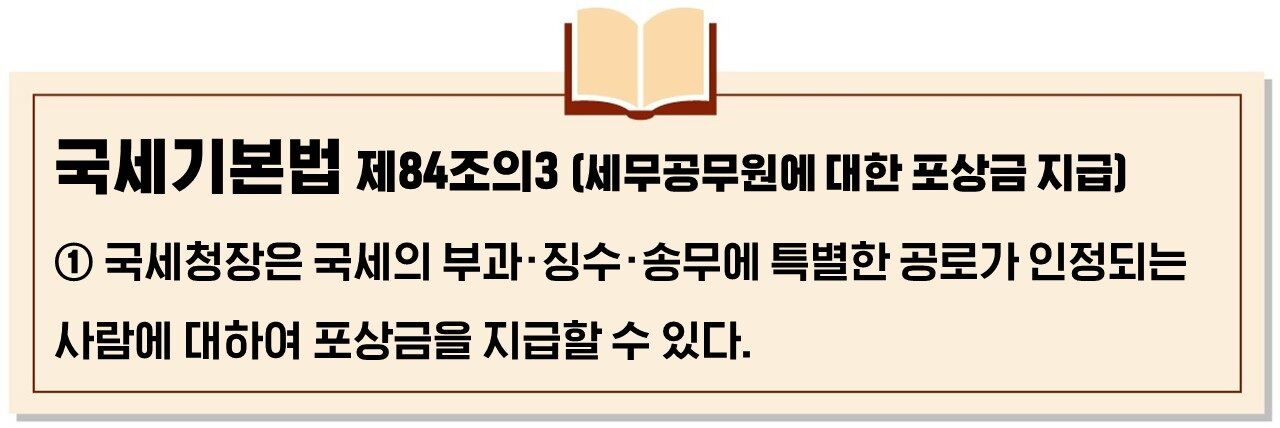
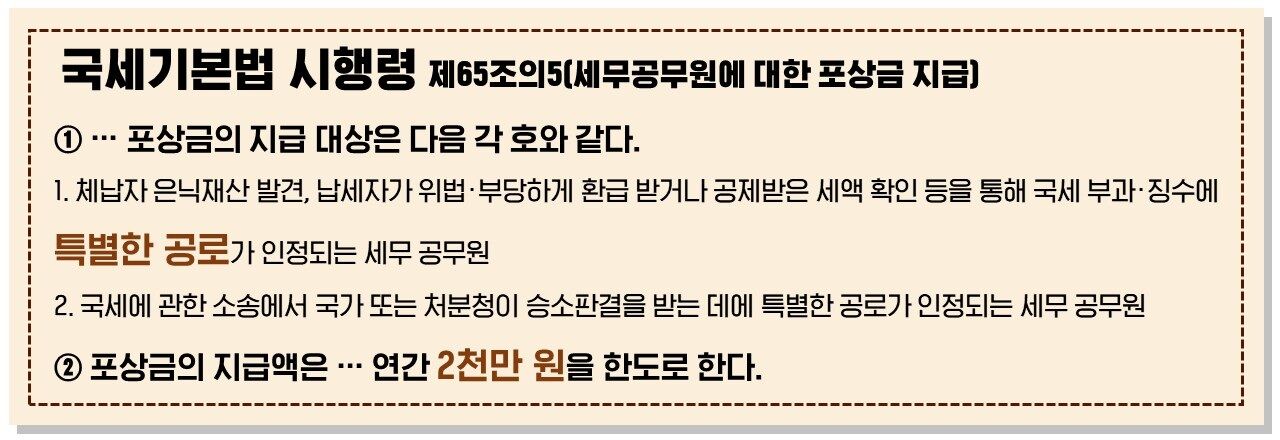
While the principle states that tax officials cannot receive rewards even if they provide crucial reports, the Enforcement Decree contains reward provisions. The amount is up to 20 million won, matching the information circulating on social media. This might seem contradictory.
However, the intent of the Enforcement Decree is a reward regulation for tax officials who have demonstrated "special merit." While rewards of up to 20 million won are possible, this does not mean providing a crucial tax evasion report automatically leads to payment, but rather covers a broader scope of "special merit" recognized by the NTS Commissioner. The decree defines this scope as "tax officials recognized for special merit in the assessment and collection of national taxes" and "tax officials recognized for merit in securing favorable court rulings for the state in national tax-related lawsuits."
To summarize: First, as explained earlier, since the additional tax amount is still not finalized, no reward payment procedure has begun, whether the informant is a tax official or anyone else. Second, even if reward deliberation procedures were completed, an informant who is a tax official would, in principle, be ineligible for a reward. Third, while there is a provision allowing tax officials to receive up to 20 million won, this applies to cases of "special merit" recognized by the NTS Commissioner, and submitting a decisive tax evasion report does not directly result in a reward payment.
Ultimately, claims that "the informant in Cha Eun-woo's tax evasion case received 20 million won because they were a tax official" are unfounded.

As mentioned earlier, the payout of tax evasion reporting rewards involves rigorous procedures under the <Framework Act on National Taxes>. Specific evidence demonstrating that a report was decisive must be submitted and verified. In this process, a reward review committee is formed, followed by a strict evaluation assessing the credibility of the report. The informant's share of contribution is then calculated, and payment is calculated based on a bracketed formula corresponding to that contribution.
Narratives suggesting that "reporting yields 2 billion won" or "someone hit the jackpot with one report" without specific context not only create distorted perceptions of public tax administration, but can also cause a surge in baseless reports and speculative complaints to tax authorities. In particular, with the recent announcement of tax reform measures abolishing the reward cap and raising payout rates per bracket, the potential for similar false or exaggerated information to spread is high. Therefore, the SBS Fact Check team concludes that caution is needed now more than ever.
<References>
· Original post: https://x.com/6hourmyhome/status/2083897588856807470
· Original post: https://x.com/hailmaryloki/status/2084160415291023731
· Regulations on Payment of Rewards for Tax Evasion Reports: https://www.law.go.kr/admRulLsInfoP.do?admRulId=21057&efYd=0
· Framework Act on National Taxes: https://www.law.go.kr/법령/국세기본법
· Enforcement Decree of the Framework Act on National Taxes: https://www.law.go.kr/법령/국세기본법시행령
· National Tax Service, <Response to Inquiry from SBS Fact Check Team>, August 4, 2026.
(Writer: Kim Hyo-jin | Intern: Park Geun-ho)
※ Please note: This article was translated by AI and may contain errors.






 Video News
