
 KOR
KOR
The image appears to be a photo of a real-time CCTV monitor at a station escalator, showing a green box and a number for each passenger. Sharing the photo along with the sentence "Beginning of nationwide surveillance?", the user raised suspicions that a mass surveillance infrastructure was being introduced.
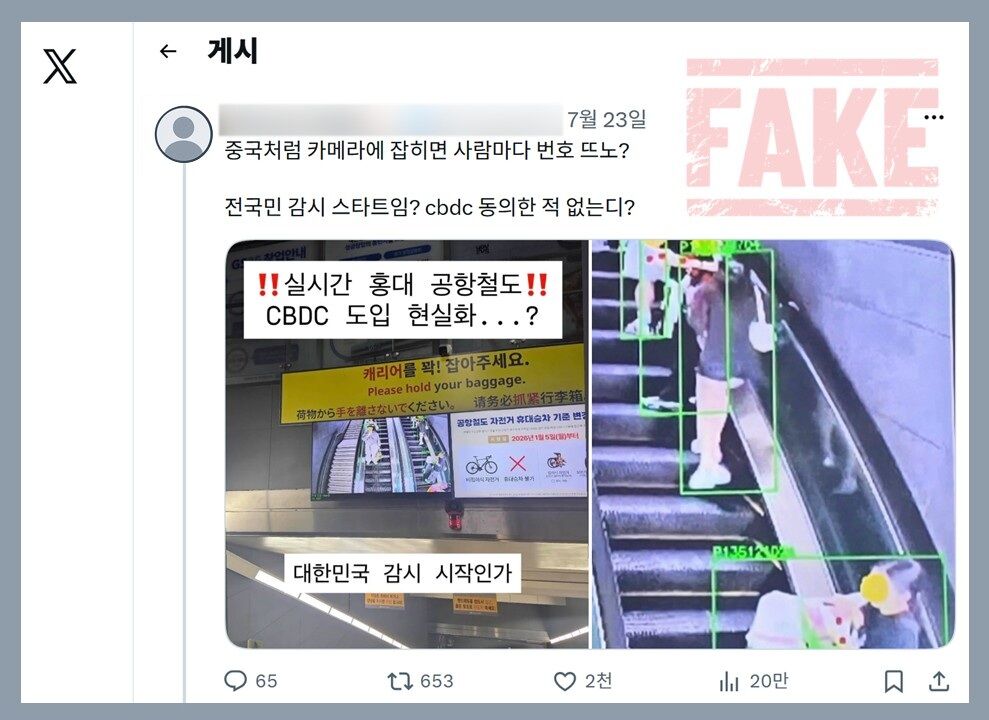
The post spread rapidly, accumulating nearly 200,000 views. Heated comments followed, such as "It eventually came to this," "Are we just supposed to stand by helplessly?", and "There is no other way than tearing it all down."
The SBS Fact Check team investigated what was actually happening.

First, the poster claimed that this was a case similar to China.
China is known to have started developing a criminal tracking system using CCTV, known as "Tianwang" (Skynet), back in 2004. Domestic media in China also reported on this. China's state broadcaster CCTV reported on the status in detail as far back as nine years ago. The report stated that China was installing over 20 million intelligent CCTV cameras nationwide, building a system capable of identifying individuals not only through facial recognition but also through features such as clothing and gait.
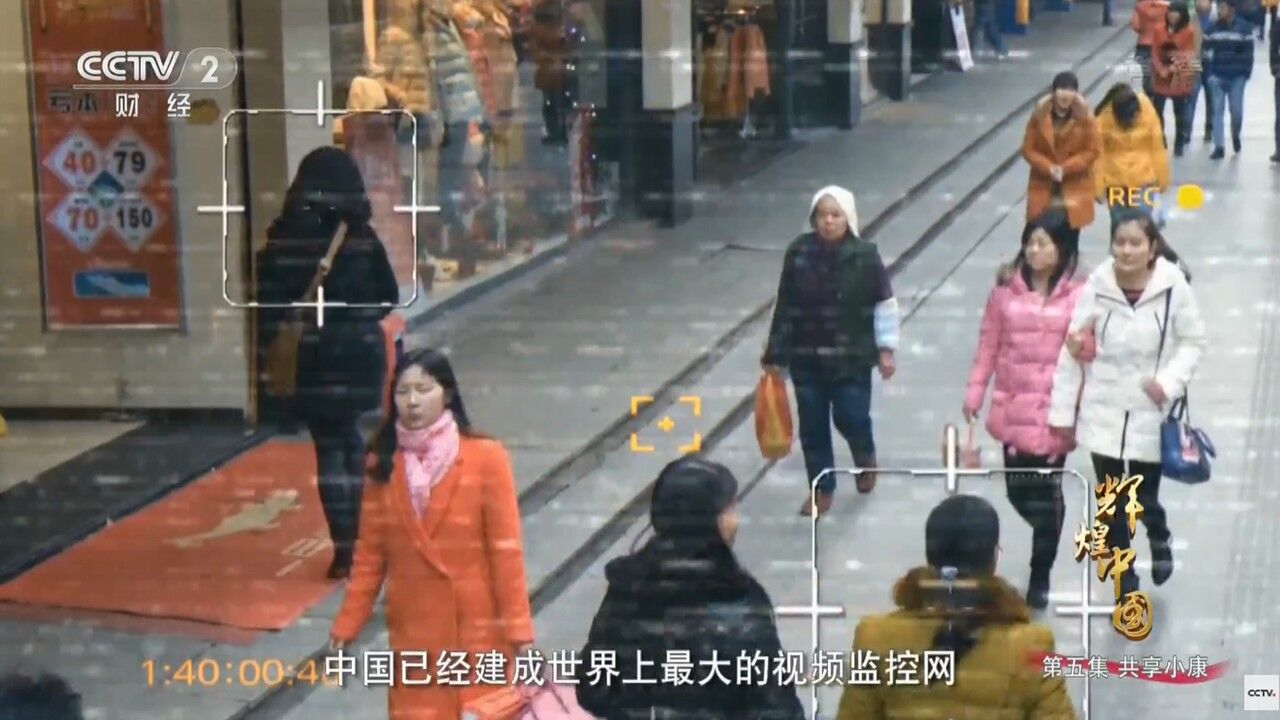
"China has already built the world's largest video surveillance network."
中国已经建成世界上最大的视频监控网
- China CCTV's six-part documentary <Glorious China>, Episode 5 "Sharing Moderately Prosperous Society," September 2017.
Naturally, concerns were raised. Multiple reports emerged stating that facial recognition technology was being used to monitor dissidents.
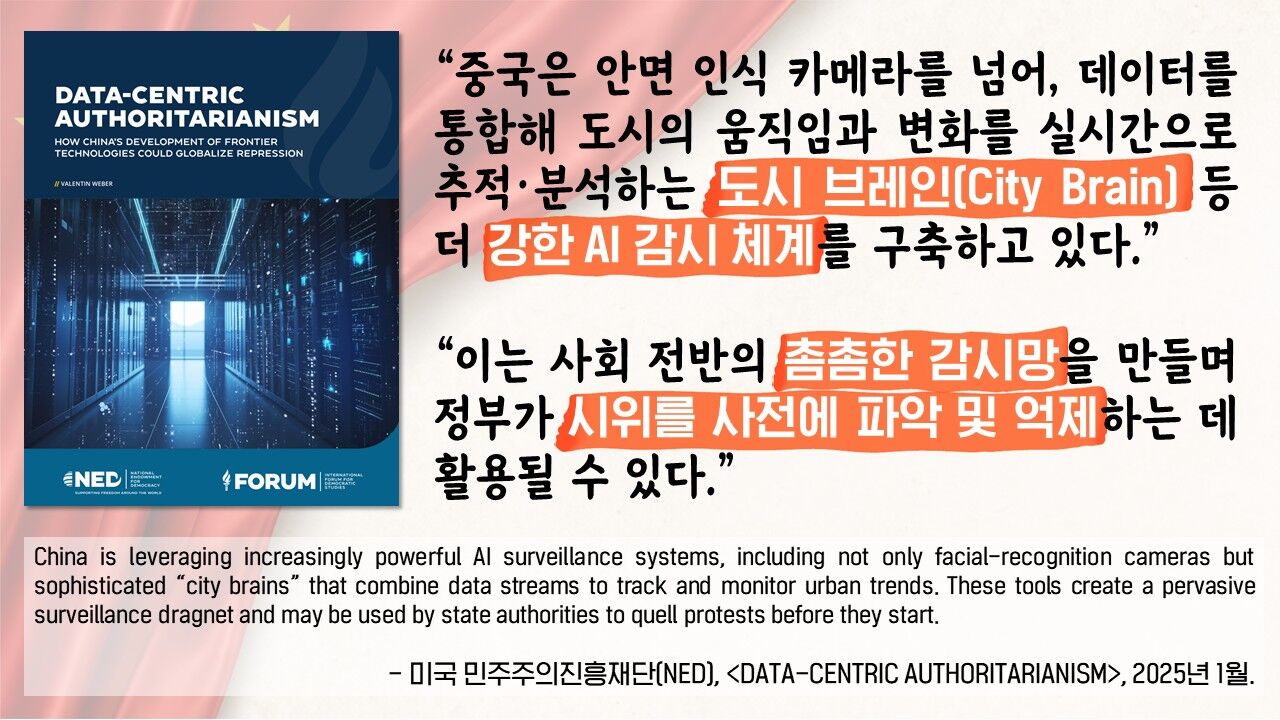
In February 2025, the National Endowment for Democracy (NED) in the United States released a report, writing that such nationwide surveillance networks would shrink democracy.
So, what about the CCTV at Hongik University Station on the Airport Railroad?
Upon researching data regarding the CCTV at Hongik University Station, it was true that when a person is identified by CCTV around the escalators, a green box and a number appear, just as claimed on social media.
The SBS Fact Check team sent a written inquiry directly to Airport Railroad Co., Ltd. asking about its purpose. Airport Railroad responded as follows:
AI CCTV uses trained object recognition technology to distinguish between passengers and luggage in video footage and determines whether a passenger's hand is contacting the luggage handle. If it determines that the passenger is not holding the luggage handle, it displays that situation on a safety guidance screen to alert the passenger. When passengers are displayed on the guidance screen, their faces are blurred so they cannot be recognized. This system performs only the following functions:
· Distinguishing passenger and luggage objects
· Determining contact between hand and luggage handle
· Displaying caution screens in hazardous situations
- Airport Railroad Co., Ltd., <Response to Inquiry from SBS Fact Check Team>, July 2026.
Given the nature of the Airport Railroad, which has many airport travelers, luggage-related safety accidents on escalators are frequent. The explanation is that when AI detects that a passenger is not holding their luggage handle, the system displays a caution screen to prompt the passenger to hold the handle again. Because continuous warning broadcasts could increase fatigue and cause passengers to become desensitized to warnings, the intention is to improve it into a "responsive" system that alerts people only in hazardous situations.
They added that green rectangles and numbers appearing for each person during this process are merely temporary identification markers assigned by the AI to distinguish and track human movements in the video, and that faces are processed to render them unrecognizable.
In fact, Airport Railroad has publicly announced its AI CCTV accident prevention system multiple times. For instance, in November last year, it issued a press release announcing a Memorandum of Understanding (MOU) with the Korea Transportation Safety Authority for intelligent AI CCTV technology development, which received extensive media coverage.
Last June, at the "Symposium on Strengthening Inter-agency Cooperation in Railway Safety Management Systems" hosted by the Korea Transportation Safety Authority, Airport Railroad presented materials titled <Establishment of Object Recognition Intelligent AI CCTV System at Hongik University Station>, which contained the same information.
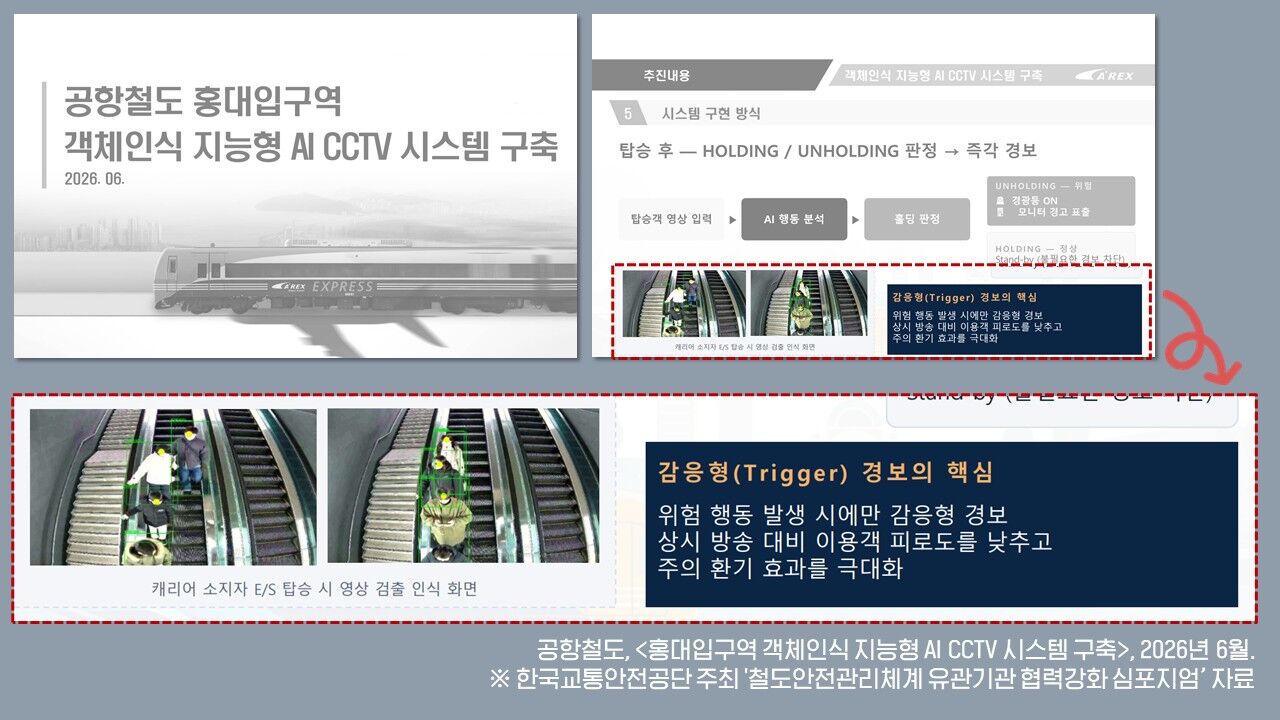
Looking at the symposium materials, faces are processed so that identification is impossible, and the real-time CCTV photos circulating on social media were no different. Passengers' faces can be seen obscured in yellow.
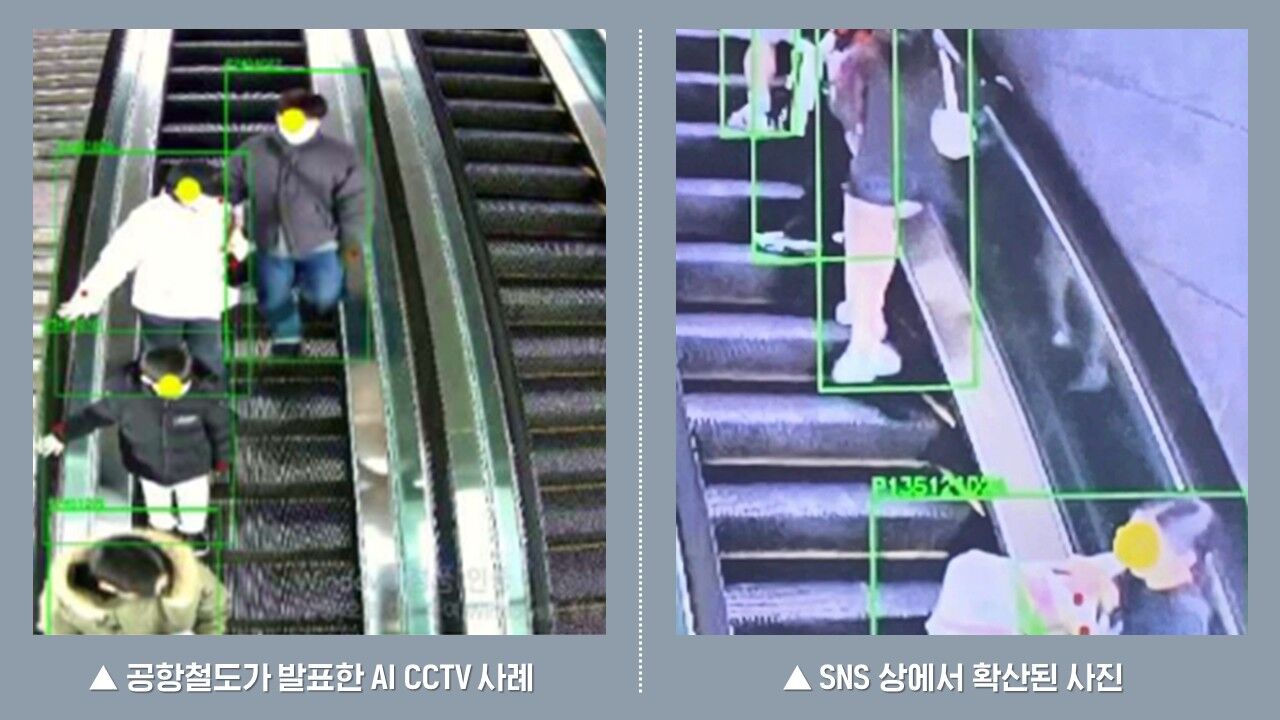
In response to SBS's inquiry, Airport Railroad elaborated, "The AI CCTV currently undergoing pilot operation at Hongik University Station has no function for facial recognition or verifying personal identity. Furthermore, the AI CCTV installed at Hongik University Station operates strictly on an independent internal network physically separated from the external internet, so data is not transmitted outside, nor is video footage recorded."
According to data from the Ministry of the Interior and Safety, around 650,000 CCTV cameras are installed at integrated control centers in 217 local governments nationwide, monitoring every corner 24 hours a day. AI technology has been introduced in about 37.5% of these, but officials explain that this is not used to identify specific individuals or track their movements. Instead, the purpose is to prevent disasters by quickly detecting abnormal signs such as urban flooding or wildfires.
In the AI era, growing concerns over surveillance and personal data leaks are natural. People hesitate even to scan a single QR code, and many voices express suspicion that AI might be monitoring individuals without their knowledge. A public attitude that constantly scrutinizes power and technology while raising questions can be a healthy posture.
However, such suspicion must naturally stand on reasonable grounds. If groundless speculation spreads into conspiracy theories, it excessively fuels social distrust, which could ultimately harm the health of democracy. In the AI era, what is truly needed may be neither blind trust nor unconditional fear of technology, but healthy suspicion based on facts.
The claim that "Hongik University Station on the Airport Railroad has CCTV cameras that monitor citizens like in China" is rated as "False" by the SBS Fact Check team.

<References>
· Original post: https://x.com/morrisoi37/status/2080256340866515208?s=20
· China Central Television (CCTV) six-part documentary <Glorious China>, Episode 5 "Sharing Moderately Prosperous Society": https://youtu.be/5VE8-UJ1x5Q?si=BpJiPG9dNLj25Rw4
· National Endowment for Democracy (NED), <Data-Centric Authoritarianism>: https://www.ned.org/wp-content/uploads/2025/02/NED_FORUM-China-Emerging-Technologies-Report.pdf
· Radio Free Asia (RFA) "Chinese Police Use Facial Recognition to Track Dissident Xu Zhiyong": https://www.rfa.org/english/news/china/facial-recognition-02172020173026.html
· Airport Railroad Co., Ltd., Response to Query from SBS Fact Check Team (June 2026)
· Airport Railroad Press Release <Airport Railroad-Korea Transportation Safety Authority Sign MOU for Intelligent AI CCTV Tech Development>: https://www.arex.or.kr/contentView.do?menuNo=MN202602270000000001&etcNo=&contentNo=CT202511120000000002&searchCondition=0&searchKeyword=AI&pageIndex=1
· Airport Railroad <Establishment of Object Recognition Intelligent AI CCTV System at Hongik University Station>: https://www.railsafety.or.kr/data/board/KnowledgeData_BoardList.do
· Ministry of the Interior and Safety AI-based CCTV Control Support System official website https://www.mois.go.kr/frt/sub/a06/b10/cctvBasedonAi/screen.do
(Writer: Kim Hyojin, Intern: Park Geun-ho)
※ Please note: This article was translated by AI and may contain errors.



 Video News


 Video News
