
 KOR
KOR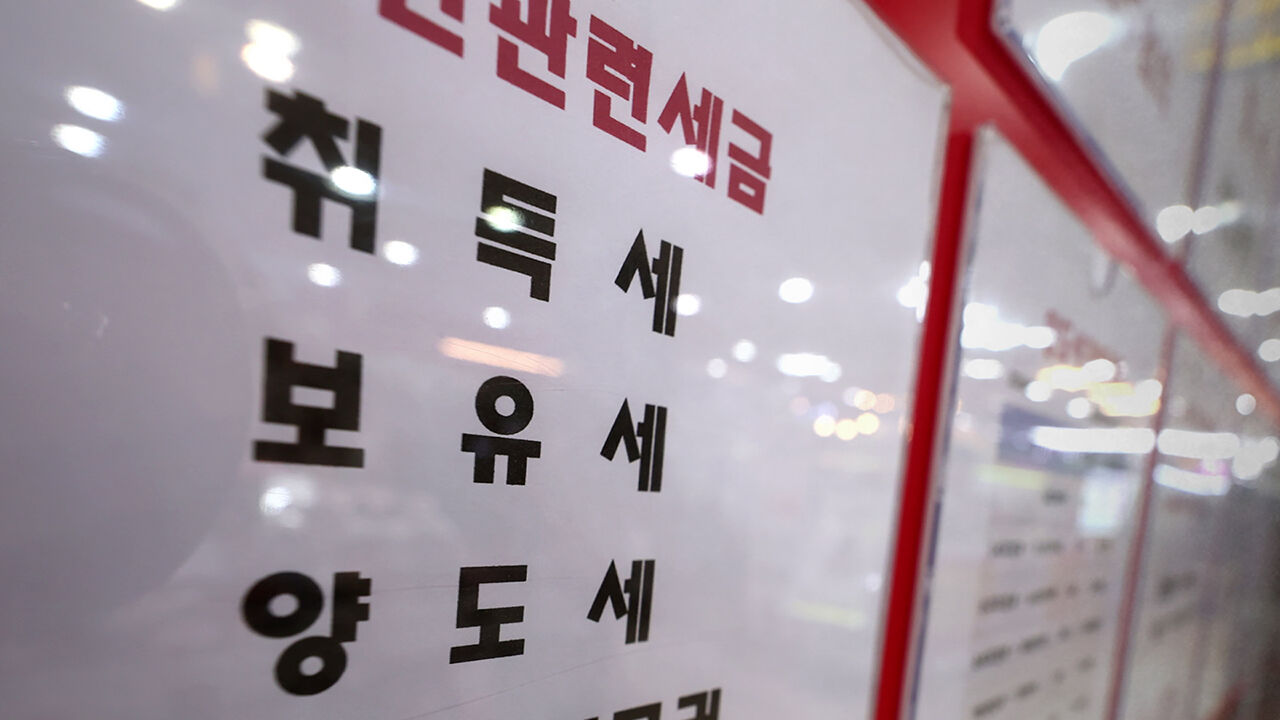
Comprehensive real estate holding taxes will be increased for ultra-high-value and non-owner-occupied homes, while the long-term holding special deduction for capital gains tax will be capped at 1 billion won.
The criteria for tax deductions applied based on the holding period when calculating holding and capital gains taxes will be revised to focus on the period of actual residence.
The government aims to "rationalize" real estate taxation so that the perception that a home is a place for "living" rather than "buying" (for investment) takes deep root.
The government finalized and announced the 2026 tax code revision plan today, which includes a plan to eliminate direct differences in holding tax rates based on the number of homes owned and unify them around a tax base centered on property value.
Currently, tax rates for owners of one or two homes range from 0.5% to 2.7%, which is lower than the 0.5% to 5.0% applied to those with three or more homes. However, starting in 2028, the rates will be unified to 0.5% to 5.0% regardless of the number of homes owned.
For owners of one or two homes, the rate will be raised to 0.5% to 3.5% next year.
Beginning in 2028, once the tax base is the same, there will be no difference in tax rates based on the number of homes.
For owners of three or more homes, there will be no changes to tax rates except for the bracket with a tax base exceeding 600 million won up to 1.2 billion won, where the rate will rise from 1.0% to 1.3%.
In contrast, for single-home owners, tax rates will increase across all five brackets exceeding 600 million won.
In particular, the ultra-high-value brackets will see substantial increases.
The bracket where tax rates begin to exceed current levels is for a tax base over 600 million won up to 1.2 billion won (1.0% to 1.3%), which currently translates to single-home owners holding apartments valued at roughly over 3.3 billion won.
For the bracket exceeding 1.2 billion won up to 2.5 billion won (1.3% to 1.5% to 2.0%), the rate will increase by 0.7 percentage points over two years.
For single-home owners, this means that holding tax for apartments with a market value exceeding 4.6 billion won will increase steeply.
The magnitude of the tax rate hike becomes greater in higher tax base brackets.
The system is designed so that holding taxes for ultra-high-value homes will increase correspondingly more.
The elimination of differences in tax rates based on the number of homes reflects criticisms that the holding tax for individuals owning a single ultra-high-value home was significantly lower than that of individuals owning multiple homes with the same combined value.
Tax rates will be reorganized around combined value rather than the number of homes.
However, the number of homes will still indirectly affect tax rates even after the revision.
Other factors determining the tax amount, such as the basic deduction amount and the fair market value ratio, are being revised together.
Non-residents and multi-home owners will be placed at a disadvantage compared to residents and single-home owners.
The basic deduction amount is currently 1.2 billion won for single-home households and 900 million won for others. Starting next year, single-home owners will also be divided into residential and non-residential categories, with differentiated deductions of 1.4 billion won and 900 million won, respectively.
However, the taxpayers liable for the holding tax are defined as those with a publicly announced official price exceeding 1.4 billion won (an apartment market value of about 2.0 billion won) for single-home households, and those with a combined official price exceeding 900 million won (an apartment market value of about 1.3 billion won) for other property owners.
Even as a single-home owner, if one is a non-resident, they will be disadvantaged compared to residents in the basic deduction, but holding tax will only apply if the apartment price exceeds 2.0 billion won.
For those who are not single-home households, the system is designed so that a basic deduction ranging from over 400 million won to less than 900 million won is applied based on the proportion of the residential home within the total value.
The fair market value ratio, currently at 60%, will be raised uniformly to 70% next year.
For property owners in regulated areas (excluding single-home households) and owners of three or more homes, it will be raised to 80% in 2028.
Requirements that alleviate the holding tax burden are being altered or scaled back.
Single-home households currently receive a tax credit of up to 80% combined based on the holding period (5 years or more) and age (60 or older). Starting in 2028, the residence period will be applied instead of the holding period.
Additionally, a new limit on the tax credit amount (6 million won) will be introduced.
The tax burden ceiling, which is set at 150% of the previous year's holding tax (property tax plus holding tax), will be raised to 200% starting next year.
Deputy Prime Minister and Minister of Economy and Finance Koo Yun-cheol explained, "For residential single-home owners, we will reduce taxes for properties valued between 20 billion won and 30 billion won, and keep tax fluctuations minimal for those between 30 billion won and 40 billion won to protect them as much as possible," adding, "We will normalize taxation for homes exceeding the 40 billion won to 50 billion won range."
The long-term holding special deduction will put the brakes on a structure where the deduction amount increases in proportion to the capital gains by introducing a limit "amount" on deductions.
Following a one-year grace period, the cap will be set at 2 billion won in 2028 and 1 billion won starting in 2029.
Holding period deductions will be phased out and transitioned into residence period deductions ("long-term residence income deductions").
Currently, single-home owners who have held a property for 3 years or more and resided in it for 2 years or more receive a deduction of 4% per year for both holding and residence, up to a maximum deduction of around 80% with a 10-year limit.
Starting in 2029, holding deductions will be eliminated, and an 8% deduction per year of residence will be applied, allowing a maximum deduction of 80%.
Holding deductions for multi-home owners in non-regulated areas, which are capped at 30%, will also be phased out and converted into residence deductions.
Through this series of revisions, authorities expect the anticipated returns on holding a "single prized home" to decrease.
Cho Man-hee, tax official at the Ministry of Economy and Finance, explained, "Individuals with a transfer value of around 3 billion won and whose home values have tripled will not hit the 1 billion won cap, whereas those with high transfer values of 4 billion or 5 billion won will hit this cap."
To account for the burdens arising from real estate tax revisions, an exit path and buffer mechanisms are being provided for multi-home owners.
Heavy capital gains taxation on properties in regulated areas held by multi-home owners for 2 years or more will be temporarily eased until 2028 to provide opportunities for disposal.
Heavy taxation resumed on May 10 of this year, but for owners of two homes, the rate will be lowered by 15 percentage points next year and 10 percentage points in 2028 compared to the current level.
For those holding three or more homes, the rate will be lowered by 20 percentage points in 2027 and 15 percentage points in 2028.
The income criterion among the payment deferral requirements for single-home households will be lowered from total annual earnings of 70 million won or less to 80 million won or less.
When calculating capital gains and holding taxes, periods during which residency was not possible due to unavoidable reasons such as schooling, job relocation, medical treatment, school transfer, overseas stay, or supporting elderly parents will be recognized as residence periods.
The tax revision plan will be submitted to the regular session of the National Assembly after going through legislative notice and cabinet deliberation.
※ Please note: This article was translated by AI and may contain errors.
Comprehensive Real Estate Holding Tax to Rise for Ultra-High-Value and Non-Owner-Occupied Homes; 1 Billion Won Cap on Long-Term Holding Deductions Introduced



Trending Now
-

Man in His 20s with Intellectual Disability Missing for Five Days in Geumcheon-gu: Last Seen in Striped Short-Sleeve T-Shirt
-
Supreme Court Rules Properties Given to Children for Filial Care Excluded from Legally Reserved Portions
-
Ariana Grande Steps Back From Activities Following Malicious Comments Over Weight Loss
-
Video News
"Grab the Money": Employee Killed in Explosion After Returning to Building Following Evacuation
-
"Even Cold Tap Water Feels Warm"... Accounts Pour In Amid 40°C Heat Wave


 Video News
