
 KOR
KOR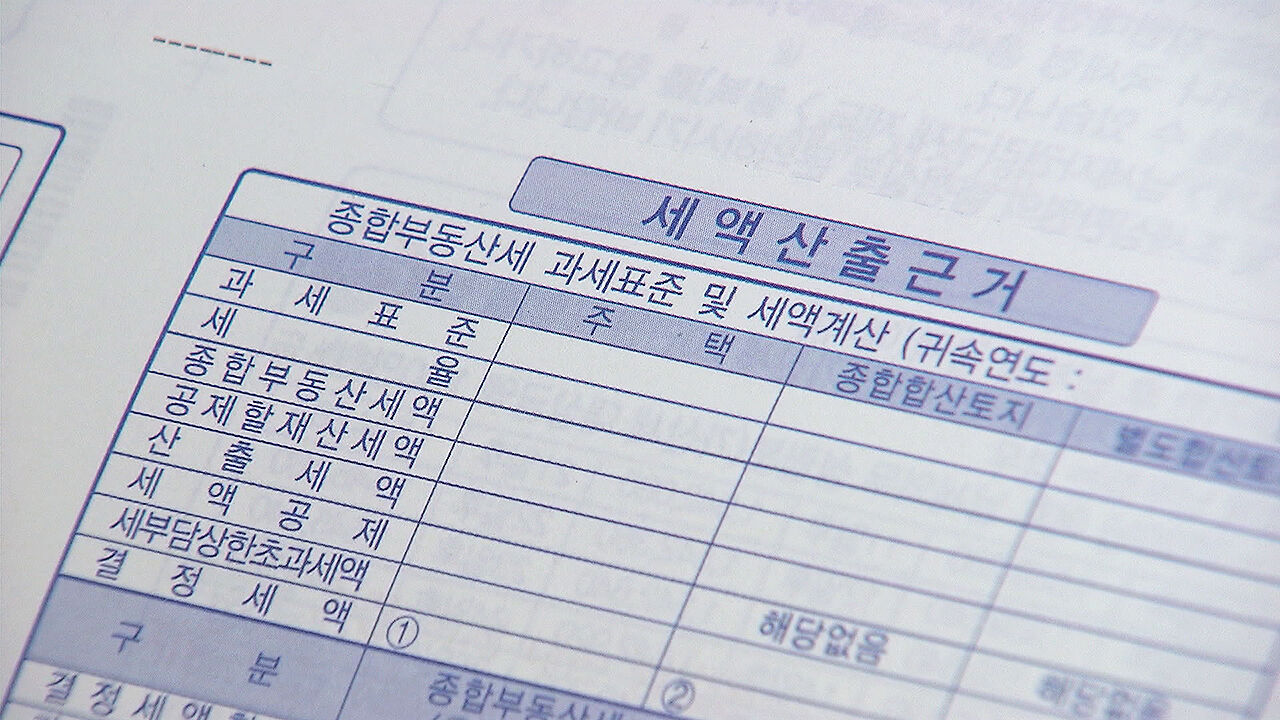
▲ Comprehensive Real Estate Tax (Photo: Yonhap News)
The government has projected that its tax law revision bill, centered on the normalization of real estate taxation, will increase tax revenue by about 3.4 trillion won over a five-year period.
While income and corporate taxes are expected to decrease due to expanded earned income tax credit (EITC) payments and strengthened tax deductions for regional investments, the comprehensive real estate tax is predicted to increase by a larger margin.
According to the 2026 Tax Revision Plan announced by the Ministry of Economy and Finance today (August 3), the government estimates that if the revision passes the National Assembly, tax revenue will increase by 3.443 trillion won over the next five years starting next year, based on the net method compared to the previous year.
The net method calculates changes relative to the immediate preceding year, which the government uses as the official yardstick for tax revenue fluctuations.
The tax item projected to increase the most under this revision is the comprehensive real estate tax.
It is forecasted to increase by a total of 2.1815 trillion won over the next five years.
Because the adjustments to the comprehensive real estate tax housing value criteria, tax rate modifications, and increases to the fair market value ratio will be implemented in phases through 2028, the tax revenue effect of the comprehensive real estate tax is expected to grow from 822.7 billion won next year to 1.0966 trillion won in 2028, before shrinking to 262.2 billion won in 2029.
The government also predicts that value-added tax revenue will increase by 607 billion won over the five years.
This is the result of reducing the preferential credit rate for credit card sales value-added tax deductions from 1.3% to 1.2% while extending the application period by three years, and deciding not to extend the application period for the preferential deduction limit.
In addition, the elimination of the system that granted individual consumption tax reductions of up to 70,000 won per hybrid vehicle is another factor contributing to the tax revenue increase.
Conversely, income tax is projected to decrease by 557.9 billion won over the five years.
This is due to raising the income requirements for the Earned Income Tax Credit (EITC) in line with minimum wage increases and raising the maximum payment amount in accordance with the inflation rate.
The system favoring regional workers in income tax reductions for small and medium-sized enterprise (SME) employees is also a factor contributing to the decrease in income tax revenue.
The government also forecasts that corporate tax will decrease by 163.6 billion won over the five-year period.
This is because the deduction rates for research and development (R&D) cost tax credits and integrated investment tax credits are set to be higher for regions located further outside the capital area.
The government analyzed that the tax burden will decrease by 1.2258 trillion won for ordinary citizens and the middle class, defined as those with an average worker's wage of 200% or less (total salary of 89 million won or less).
On the other hand, the tax burden for the remaining high-income earners is projected to increase by 122.6 billion won.
For corporations, the government expects the tax burden to decrease by 79.1 billion won for SMEs and 57.8 billion won for large enterprises.
The tax burden classified under "others" is projected to increase by 4.6831 trillion won.
This includes the increase in the comprehensive real estate tax and the fiscal transition of tax expenditures (1.1 trillion won).
Based on the cumulative method, which shows the total accumulated tax revenue effect of the tax revision compared to the base year (2026), the government analyzed that the tax revenue effect from 2027 to 2031 will increase by a total of 13.3 trillion won.
If this tax revision bill passes the National Assembly as proposed, the comprehensive real estate tax is expected to increase by 9.3 trillion won and the value-added tax by 2.8 trillion won over the five years.
Conversely, income tax is expected to decrease by 3.9 trillion won and corporate tax by 900 billion won.
Under the cumulative method, the tax burden for ordinary citizens and the middle class is projected to decrease by 6.3 trillion won.
However, the government forecasts almost no change for high-income earners.
The tax burden is expected to decrease by 300 billion won for SMEs and 200 billion won for large enterprises.
Others are projected to increase by 20.1 trillion won.
The government plans to make a legislative notice for a total of 11 tax law revision bills until the 20th of this month, go through the Vice-Ministers' Meeting on the 27th and the Cabinet Meeting on the 1st of next month, and submit them to the National Assembly by the 3rd of next month.
※ Please note: This article was translated by AI and may contain errors.





 Video News
