
 KOR
KOR
▲ Massive Wildfires in Europe
As the world suffers from severe heatwaves, including a record-breaking temperature of 42.5°C (108.5°F) recorded in Yangsan, South Gyeongsang Province, on the 2nd, extreme weather events such as heatwaves, droughts, and massive wildfires are running rampant across the globe due to climate change.
UN agencies, including the World Meteorological Organization (WMO) and the World Health Organization (WHO), have issued consecutive, high-intensity warnings regarding natural disasters linked to El Niño, which is directly tied to high temperatures.
The WMO stated on the 31st of last month (local time) that El Niño has already developed significantly, adding, "While many regions worldwide face temperatures higher than normal and significant changes in rainfall patterns, a strong El Niño is projected to intensify further."
Scientists suspect that the extreme El Niño currently threatening global public health is a consequence of climate change driven by global warming.
Experts generally analyze that the trend of extreme levels of heat, cold, rainfall, snowfall, storms, and droughts striking more frequently is also related to climate change.
According to multi-model ensemble forecasts from major global meteorological prediction agencies, seasonal average sea surface temperature anomalies in key monitoring areas are expected to exceed +2.9°C above normal between August and October this year.
This corresponds to a very strong El Niño.
An anomaly of +0.5°C or higher is considered the occurrence of an El Niño event, while +1.0 to 1.5°C is generally evaluated as moderate to strong, and +2.0°C or higher as "very strong."
According to the WMO seasonal outlook, there are strong signals suggesting high-temperature phenomena will occur in many parts of the world, including East Asia, including South Korea, from August to October this year.
Africa, southern Europe, the Arabian Peninsula, the Indian subcontinent, Central America, the Caribbean, southern Africa, most of South America, and all of New Zealand are also included in the regions expected to experience high temperatures.
When a very strong El Niño occurs, regional disparities in precipitation patterns also become extremely large.
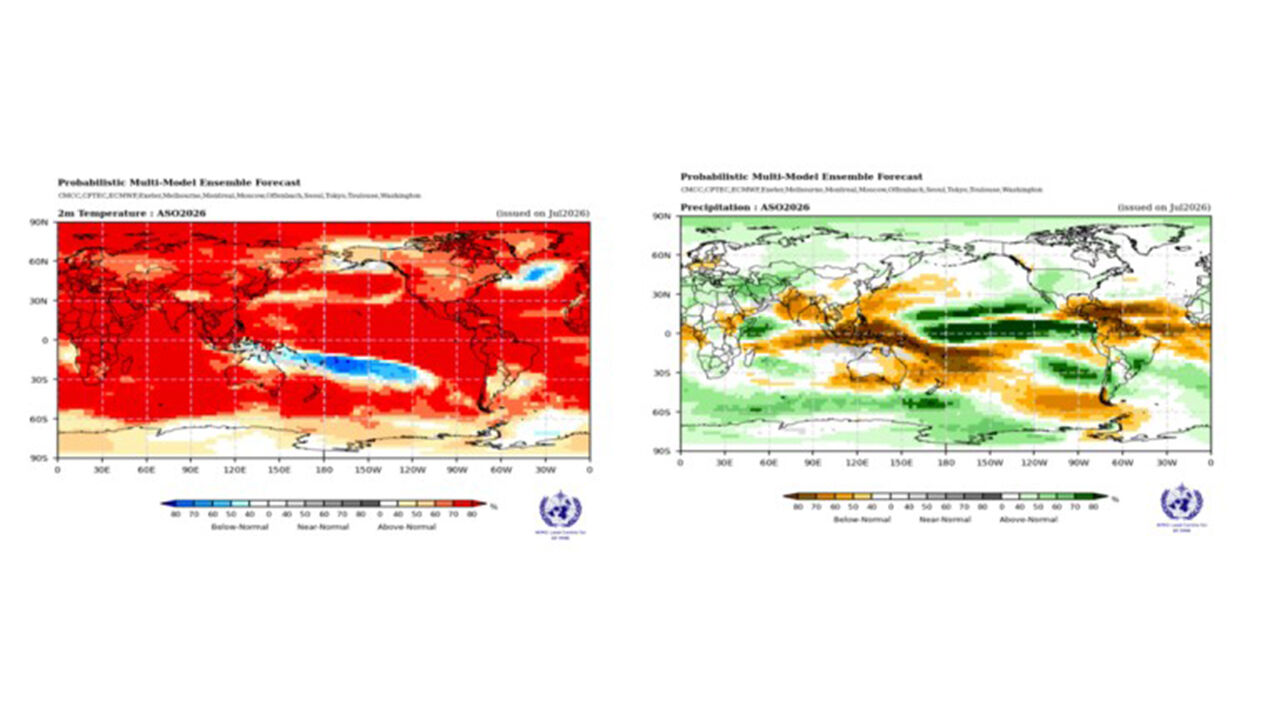
Accordingly, from August to October 2026, some regions such as the Horn of Africa in northeastern Africa, parts of Central Asia, southern Europe, western North America south of 45 degrees north latitude, and southeastern South America are likely to receive more rainfall than normal.
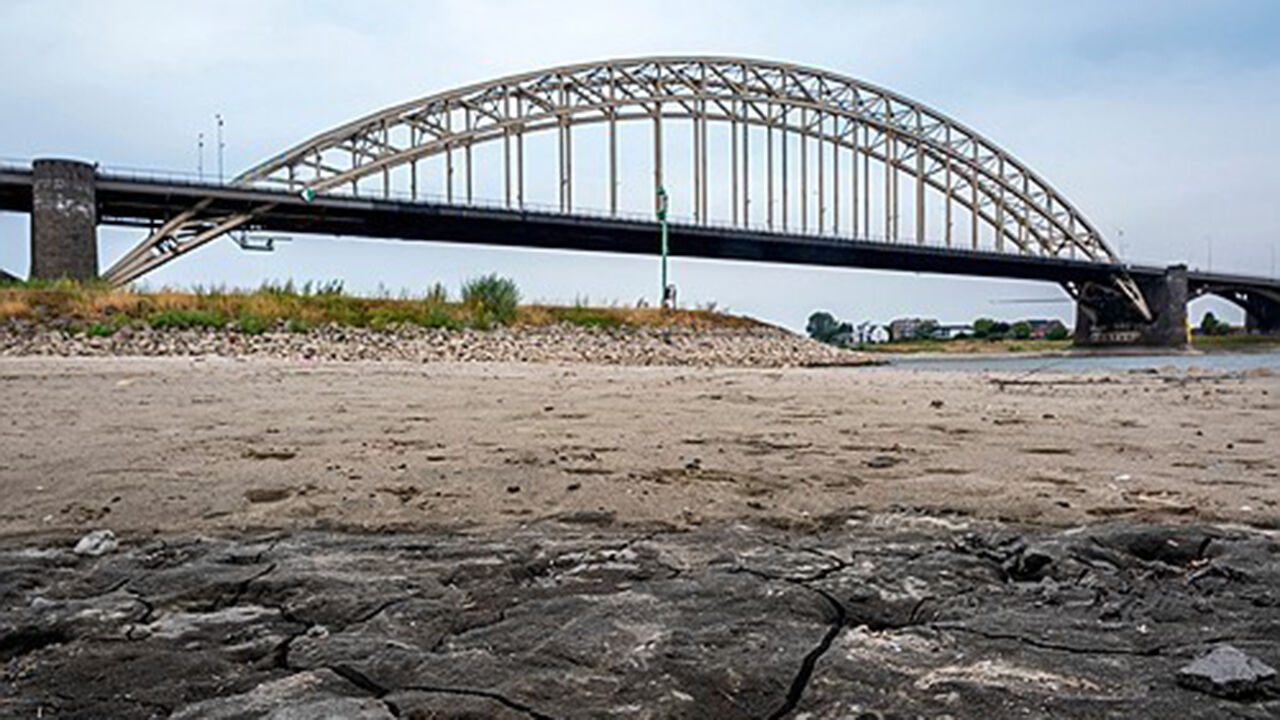
In contrast, the Indian subcontinent, southern and western Australia, southern Central America, parts of the Caribbean, northwestern South America, and northern Europe may face an increased risk of deficient rainfall and drought.
In addition, concerns over amplified meteorological volatility are growing further as a phenomenon known as the positive Indian Ocean Dipole develops.
This refers to a phenomenon where sea surface temperatures in the western tropical Indian Ocean are warmer than normal, while those in the eastern tropical Indian Ocean are cooler than normal.
Countries around the Indian Ocean are already feeling the impact of these combined extreme weather events.
Although India's monsoon rainy season has begun, rainfall in some central regions is at 50% of the usual level, and in some severely affected areas, rainfall remains at 25% of normal levels.
The India Meteorological Department has warned that rainfall this year could hit a low not seen in about a decade, raising concerns that this could also impact crop yields and cause global food prices to skyrocket.
In Indonesia, where recent El Niño conditions have coincided with the dry season, over 5,000 wildfires have occurred between January and July this year, showing a faster upward trend than in past El Niño years such as 2015, 2019, and 2023.
The Indonesian Agency for Meteorology, Climatology and Geophysics expects the risk of wildfires to be highest in August and September.
Following heatwaves in late June and early July, Europe has recently suffered large-scale wildfire damage in countries such as France, Spain, and Portugal, while fires continue to spread in Greece and Turkey.
Not only in South Korea but also in Japan, heatwaves exceeding 40°C (104°F) have continued day after day in various regions.
According to Kyodo News and other sources, temperatures exceeded 40°C (104°F) for five consecutive days starting from the 21st of last month, primarily in the Tokai region of Honshu, Japan.
This is the first time since relevant statistics began that temperatures have hit 40°C (104°F) or higher for five straight days.
On the 2nd, temperatures also exceeded 40°C (104°F) in parts of Wakayama, Honshu, and Kochi Prefecture in Shikoku.
Central Tokyo also recorded temperatures exceeding 36°C (97°F).
In Kumamoto Prefecture on Kyushu, which suffered a strong earthquake on the 28th of last month, a report emerged of a woman in her 70s living in a car to evacuate from earthquake damage who died from suspected heatstroke symptoms.
China also experienced continuous heatwaves throughout July, breaking record-high temperatures in various places.
Among major cities, Chongqing recorded 26 consecutive days with daily maximum temperatures of 35°C (95°F) or higher, peaking at a maximum temperature of 41.6°C (107°F).
In particular, Chongqing's maximum temperatures exceeded 40°C (104°F) from the 21st to the 27th of last month.
In the Xinjiang Uygur Autonomous Region, some areas recorded daytime highs of 49.8°C (122°F) and nighttime highs of 36.7°C (98°F).
In China, casualties poured in as three typhoons—Babi, Maysak, and Noru—passed through last month, and approximately 2 million people were evacuated across various parts of China during Babi's landfall.
The prevailing observation is that the biggest public health crisis facing the global community at this point is heatwaves.
Heatwaves are dubbed "silent killers" because, unlike natural disasters like storms or torrential downpours, their destructive power is not visibly striking, yet they unknowingly claim countless lives by inducing heat-related illnesses.
On the 31st of last month (local time), the WHO warned in a factsheet titled "Heat and Health" that "the number of people exposed to extreme heatwaves due to climate change is increasing exponentially in all regions of the world."
According to the WHO, the heat-related mortality rate for people aged 65 and older increased by approximately 85% over a 17-year span when comparing the 2000–2004 period to the 2017–2021 period.
Annual heat-related deaths averaged 489,000 from 2000 to 2019, with 45% occurring in Asia and 36% in Europe.
Prior to this year, notable heatwaves with heavy casualties since the 2000s included the European heatwave in the summer of 2003 (70,000 excess deaths), the Russian heatwave in 2010 (56,000 excess deaths), and the European heatwave in the summer of 2022 (61,672 excess deaths).
(Photo: Materials including the WMO Global Seasonal Climate Update report, AP, Yonhap News)
※ Please note: This article was translated by AI and may contain errors.






 Video News
 Video News