
 KOR
KOR
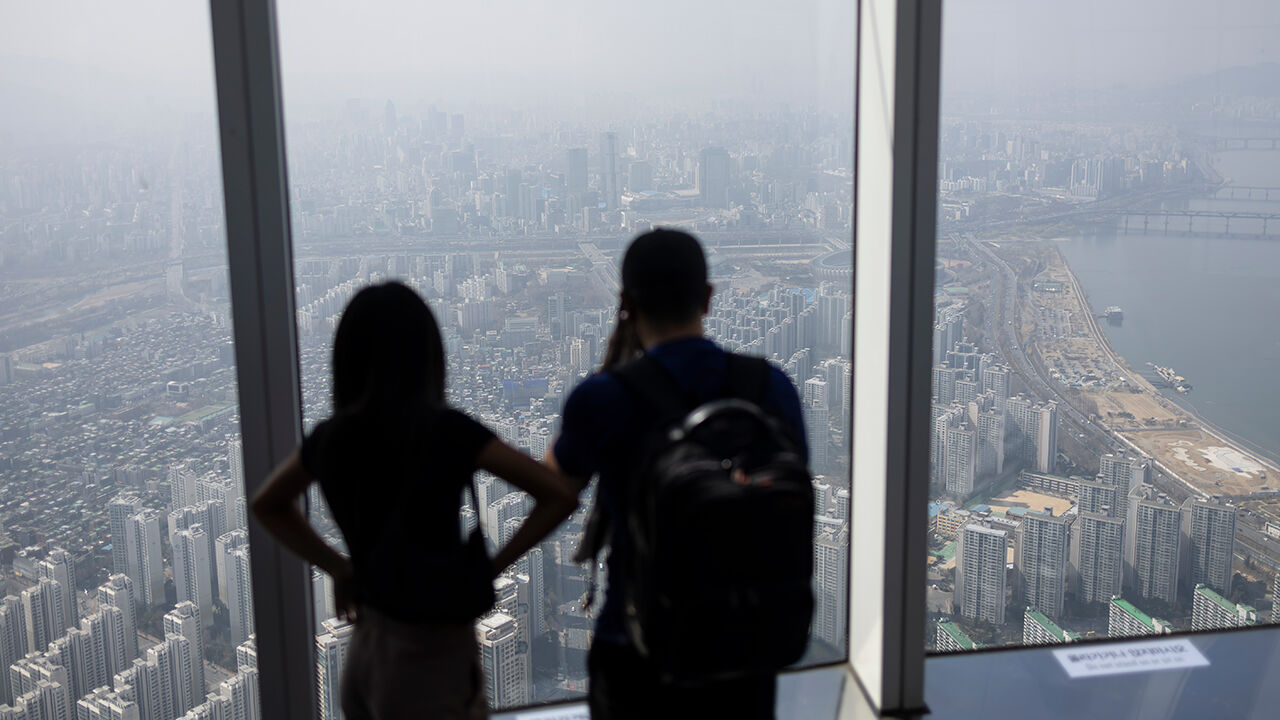
▲ Apartment complexes and residential areas along the Han River viewed from Namsan in Seoul
Luxury community facilities within apartment complexes are increasingly becoming the focal point of resident conflicts nationwide.
Some interpret this trend as the latest phenomenon in South Korea's so-called apartment republic, where decades of development history have resulted in over half of all households living in apartment complexes.
Today (August 3), resident convenience facilities such as fitness centers and golf practice ranges at an apartment complex in Seongdong-gu, Seoul, which was completed last year, suspended operations for about three weeks starting July 1.
According to the Seongdong-gu Office, this temporary closure stemmed from structural difficulties including operating deficits, compounded by issues such as replacing the management company.
Every household in this complex pays a monthly basic facility usage fee of 25,000 won.
On top of this, additional individual usage fees are charged if residents use facilities like fitness rooms or saunas beyond the permitted number of times, or take separate lessons.
Facility operation details from May, which served as the basis for the closure decision, showed that basic resident usage fees brought in 23.95 million won, while individual usage fees generated 42.56 million won.
However, combined expenditures including facility maintenance costs and personnel expenses for instructors exceeded 80 million won, resulting in a deficit of 1.715 million won.
Ultimately, covering this shortfall fell on the residents.
In fact, the management office issued a notice on July 22 stating that an additional assessment of 18,000 won per household was required.
Reactions within the complex communication app included criticism that imposing the surcharge across all households was unreasonable, along with complaints that residents were drawn to move in by the luxury facilities only to find their operation unstable.
One resident filed a complaint with district authorities arguing that even if there were operational cost issues, the shutdown preventing residents from using the facilities was excessive, and asked officials to review procedural flaws in the residents' representative council's decision.
Such disagreements among residents over the operation of community facilities are a nationwide phenomenon.
An apartment complex in Deogyang-gu, Goyang, Gyeonggi Province, completed in 2022, announced on July 28 that it would pursue a resident vote on a proposal to additionally charge for the use of its gymnasium and GX room (for yoga, dance, etc.).
Every household in this complex has been paying a monthly basic facility fee of 15,000 won.
However, to cope with heating and cooling cost burdens, the complex devised a plan to collect extra individual fees from users only during the summer and winter months, and sought to survey the opinions of all residents.
This proposal has also faced backlash.
Residents are dissatisfied with the gradual shift toward charging for facilities, having expected that paying only the basic usage fee upon moving in would grant them free access to all shared spaces.
One resident left a comment in the resident-exclusive community stating, "It is frustrating as the facilities increasingly feel like burdensome white elephants."
A complex in Dongnae-gu, Busan, completed in 2024, has also faced community facility deficits as a hot topic, with posts venting about additional maintenance fee burdens steadily appearing in the online resident cafe for months.
The widespread occurrence of deficits is closely tied to a housing market trend where shared facilities have become larger, more luxurious, and diverse following fierce apartment sales and promotional competition.
Some complexes have gone beyond libraries, cafes, and fitness centers to introduce saunas, movie theaters, and swimming pools, significantly expanding the scale of their facilities to luxury levels.
Consequently, operating costs have grown so large in some complexes that they cannot be covered even by collecting tens of thousands of won in usage fees every month from every single household.
In fact, a study conducted last year by researchers at Soongsil University analyzing 12 complexes with over 1,000 households in Seoul's three southern districts (Gangnam, Seocho, and Songpa) revealed that some have diversified their amenities to include indoor climbing walls, indoor jogging tracks, bowling alleys, ecological study greenhouses, music practice rooms, and pet washing stations.
The economic feasibility of community facilities is also emerging as a major topic in the architectural academic community, with research papers being published on methodologies to prevent operating deficits.
In August of last year, Hanyang University published a paper emphasizing "sustainability"—suggesting that when building community facilities, expected profit and loss should be analyzed to adjust scale while accounting for maintenance and replacement costs over a period of 10 years or more.
Academic perspectives on the proliferation of these community facilities are mixed.
While some view today's apartments as having evolved beyond physical living spaces into comprehensive welfare hubs that satisfy the diverse daily needs of modern people, others diagnose them as evidence of infrastructural polarization within the apartment republic.
This is because people who cannot enter the "fence" of newly built apartments cannot enjoy these benefits.
Some analyze community facilities as a self-initiated response by apartment residents to ongoing chronic thirst for living infrastructure, reflected in relentless petitions to local governments for more libraries and playgrounds.
Park In-seok, professor emeritus in the Department of Architecture at Myongji University and former chairman of the Presidential Commission on Architecture Policy, who has studied South Korea's apartment culture, noted, "The implication of the emergence of high-end community facilities in recent years, amid more than 60 years of apartment development history, is the paradox that basic living infrastructure has not been sufficiently supplied at the public level."
"People have self-funded resources to satisfy their elevated public expectations regarding living standards, but there are many neighborhood alleys outside these complexes lacking infrastructure," Professor Park said. "To continuously enjoy such upscale infrastructure, increases in burdens like management fees are inevitable. In a way, operational deficits appearing in some complexes are a natural phenomenon."
(Photo: Yonhap News)
※ Please note: This article was translated by AI and may contain errors.





 Video News
 Video News
 Video News