
 KOR
KOR
▲ Criminal Procedure Act Amendment Passed in National Assembly
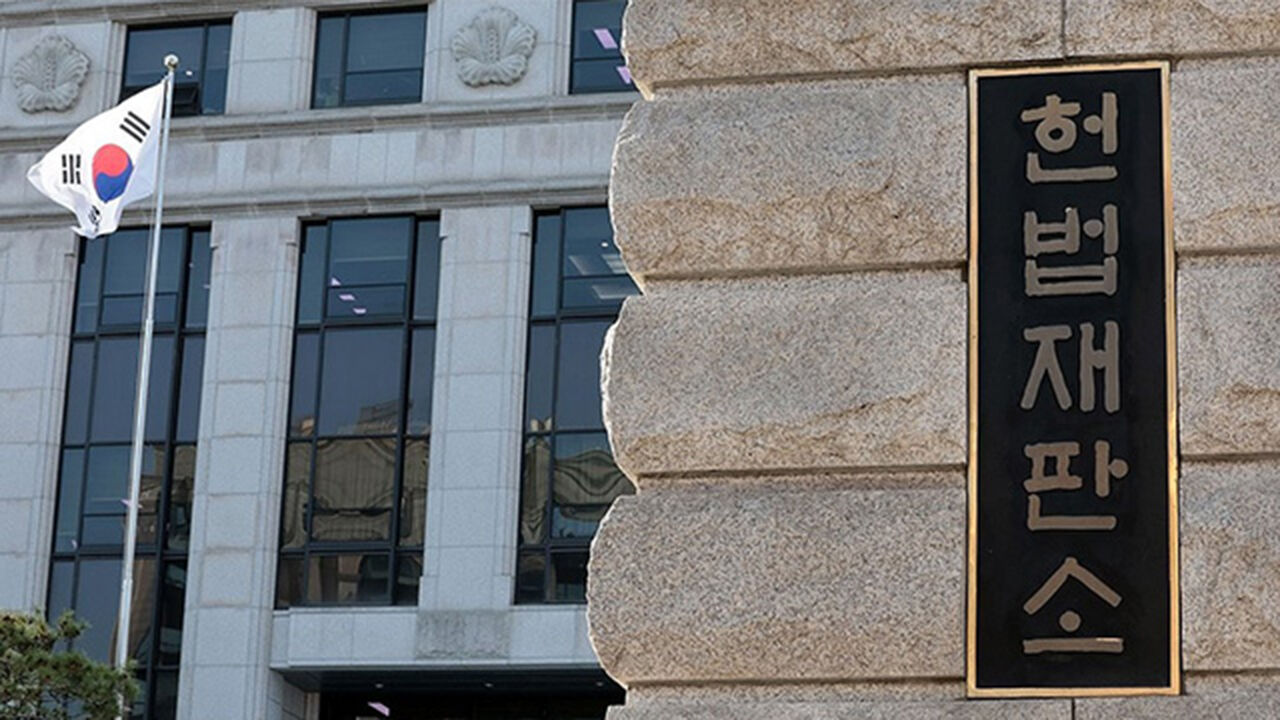
As controversy continues over the amendment to the Criminal Procedure Act, which abolishes prosecutors' supplementary investigation powers and restricts even their direct warrant request authority, the final decision is expected to rest with the Constitutional Court.
Park Chan-woon, a professor at Hanyang University Law School who served as an advisory committee chair for the prosecution reform task force, posted on Facebook on August 2, saying, "This Criminal Procedure Act must cross the river of the Constitution," and adding, "To prevent confusion, the Constitutional Court must reach a conclusion as quickly as possible."
Lawyer Park Seung-ok also pointed out the potential unconstitutionality of the amended Criminal Procedure Act, stating, "If the distribution of powers between investigative and prosecuting agencies alters whether criminal charges can be discovered in a timely manner, whether illegal and unfair acts by investigative agencies can be controlled, and whether victims' rights can be effectively protected, this is a constitutional issue directly related to the basic rights of citizens."
Following the passage of the bill, the People Power Party also signaled legal action, stating, "We plan to legally contest the matter through competent authority disputes, constitutional complaints, and trials on the constitutionality of statutes," suggesting that the legal battle will continue at the Constitutional Court.
In 2021, the adjustment of investigative powers between the prosecution and the police abolished prosecutors' command of investigation and restricted direct investigations to six major types of crimes. In 2022, the scope of direct investigation was narrowed further to corruption and economic crimes through the legislation completely stripping prosecutors of investigative powers.
And with the passage of the Criminal Procedure Act amendment at the end of July, even prosecutors' direct supplementary investigation powers have disappeared, completing the total removal of investigative authority.
Back in 2022, the Ministry of Justice and the prosecution filed a dispute over jurisdictional powers regarding the reduction of prosecutors' investigative sphere to six major crimes.
The argument was that the Democratic Party of Korea, the majority party in the National Assembly, had unilaterally pushed through the bill, and as a result, restricting the prosecution's investigative and indictment functions would lead to unconstitutional consequences that ruin the criminal justice system.
However, in March 2023, 11 months after the legislation, the Constitutional Court dismissed the petition for a competence dispute with a 5-to-4 opinion among the justices.
The majority opinion that led to the dismissal concluded that "it is difficult to logically and inevitably derive 'the prosecutor's investigative power under the Constitution' from the constitutional provision on the prosecutor's right to request warrants."
The rationale was that although the right to request warrants belongs to prosecutors, it was introduced into the Constitution to control the possibility of abusing coercive investigations, and it is a stretch to directly link this to a constitutional investigative power for prosecutors.
However, while the previous legislation only partially reduced the scope of prosecutors' investigations to corruption and economic crimes, the latest Criminal Procedure Act amendment prevents prosecutors from conducting investigations entirely.
In particular, regarding the provision that prohibits prosecutors from directly requesting warrants and requires judicial police officers to apply for them before a warrant can be requested from the court, the legal community voices strong concerns that it infringes upon the prosecutor's constitutional right to request warrants.
Article 12, Paragraph 3 of the Constitution stipulates that "in case of arrest, detention, seizure, or search, a warrant issued by a judge upon application by a prosecutor shall be presented in accordance with proper procedures."
In an explanatory document released on July 29, the Supreme Prosecutors' Office pointed out that "regulating matters so that prosecutors cannot request warrants without an application from judicial police officers hollows out the prosecutor's constitutional right to request warrants."
In their minority opinion, four constitutional justices stated that the amendment procedures and content of the previous legislation "infringed upon the prosecutors' constitutional prosecution and investigation powers and the Minister of Justice's authority over affairs related to prosecutors."
In addition, they viewed that the power of prosecution and investigation are state functions that cannot be abolished by statute, and that the state organs performing these functions are prosecutors.
However, it is understood that the Ministry of Justice and the Supreme Prosecutors' Office have not yet decided on an official stance to directly file a competence dispute.
In 2022, as power transitioned from the Moon Jae-in administration to the Yoon Suk Yeol administration, active raising of issues was possible, but this time, it is not easy to voice differing opinions within the same administration.
Some opinions suggest that citizens who are subject to investigations filing constitutional complaints claiming infringement of their basic rights would have a higher likelihood of being accepted than a competence dispute contesting powers between government agencies.
A prosecution official stated, "Since it is difficult for agencies within the government to dispute among themselves, it seems far more effective for citizens who are the parties involved to challenge it through constitutional complaints," adding, "Parties such as victims or suspects can file constitutional complaints claiming that their right to secondary relief from the prosecution has been infringed."
Nevertheless, the option for individual prosecutors to file competence disputes remains open.
Previously, Song Yeon-gyu, a senior prosecutor at the Seoul High Prosecutors' Office, filed a competence dispute and applied for an injunction to suspend effect, arguing that the Public Prosecution Office Act and the Major Crime Investigation Office Act infringe upon prosecutors' prosecution, investigation, investigation control, and warrant application powers.
Prior to this, Kim Sung-hoon, a senior prosecutor at the Cheongju District Prosecutors' Office, also filed a constitutional complaint regarding the Government Organization Act amendment that abolishes the prosecutors' office, but the Constitutional Court dismissed it during the preliminary review stage, citing no possibility of basic rights infringement.
(Photo: Yonhap News)
※ Please note: This article was translated by AI and may contain errors.




 Video News
 Video News
 Video News
 Video News