
 KOR
KOR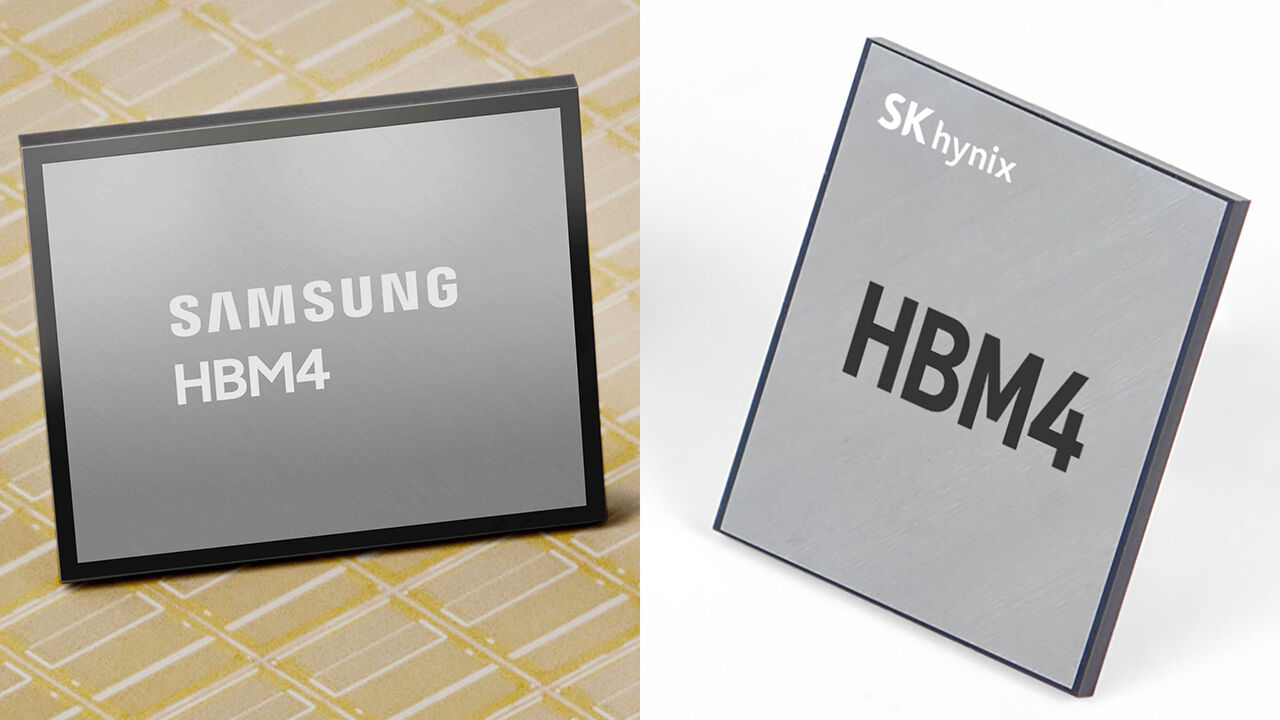
▲ HBM4 by Samsung Electronics and SK Hynix
Samsung Electronics proved the robust demand for memory chips in the global artificial intelligence (AI) market once again by recording nearly 90 trillion won in operating profit from its semiconductor business alone in the second quarter of this year.
Led by the two semiconductor giants, SK Hynix and Samsung Electronics, South Korea's chip industry wrote a new chapter by generating close to 250 trillion won in operating profit in the first half of this year alone.
Samsung Electronics announced in a regulatory filing today (the 30th) that it recorded 171.5 trillion won in revenue and 89.5 trillion won in operating profit for the second quarter of this year.
Among them, the Device Solutions (DS) division, which is in charge of the semiconductor business, generated 89.2 trillion won in operating profit, accounting for about 99.7% of the total operating profit, practically driving the company-wide performance.
The operating profit margin of the DS division stood at 70%, and the securities industry estimates that the operating margin would have exceeded 80% if calculated based on the DRAM business alone.
The two companies representing South Korea's semiconductor industry, Samsung Electronics and SK Hynix, posted a combined operating profit of about 100 trillion won in the first quarter and about 150 trillion won in the second quarter.
The previous day, SK Hynix announced that its second-quarter operating profit was tallied at 60.5426 trillion won.
Its cumulative operating profit for the first half stood at 98.1529 trillion won.
Samsung Electronics recorded an operating profit of 146.7 trillion won over the same period.
This stellar performance is attributed to a significant rise in the prices of general memory products as well as high-bandwidth memory (HBM) due to supply-demand imbalances following major global big tech companies' expanded investments in AI infrastructure.
As Samsung Electronics possesses the largest production capacity among the three major memory makers, it benefits the most from soaring prices of legacy DRAM and NAND flash.
The industry estimates Samsung's DRAM-based wafer production capacity at around 650,000 to 700,000 sheets per month.
Based on this, analysis suggests that the company can configure an optimal portfolio mix to enhance profitability centered on high-value-added HBM and general memory.
In addition, unlike past memory cycles that fluctuated sharply depending on front-end IT device demand, securing stable demand by entering into long-term supply agreements (LTAs) with major clients has also been a positive factor.
In the second half of the year, the supply of HBM4 is expected to get into full swing, showing a steeper performance improvement trend than the second quarter.
As of the first quarter of this year, Samsung Electronics ranked second (21%) following SK Hynix (58%) in the global HBM market.
By staying a step ahead of competitors with HBM4, which has begun supplying to clients, and HBM4E, which is scheduled for mass production next year, Samsung is expected to engage in a fierce competition with SK Hynix for the top spot in HBM.
According to Infomax, which compiled consensus figures from 20 securities firms that published reports within the past month, Samsung Electronics' annual operating profit for this year is estimated at about 386 trillion won.
Some projections even suggest that Samsung Electronics could rake in an annual operating profit of 400 trillion won.
As of the second quarter of this year, Samsung Electronics surpassed companies like NVIDIA and Apple to rank first in operating profit among enterprises worldwide.
(Photo provided by Samsung Electronics and SK Hynix, Yonhap News)
※ Please note: This article was translated by AI and may contain errors.





 Video News

 Video News