KOR
KOR
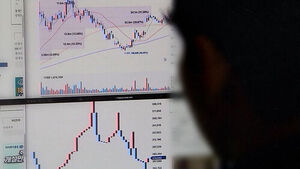
An analysis suggests that the extreme volatility of South Korean semiconductor stocks, including Samsung Electronics and SK hynix, is shaking up even the Japanese stock market.
The report notes that as trading increases in leverage ETFs that track South Korean semiconductor stocks at a 2x rate, the stock prices of South Korean and Japanese chipmakers are influencing each other.
According to the Nihon Keizai Shimbun, the intraday volatility of the Nikkei 225 index—calculated by dividing the difference between the intraday high and low by the previous day's closing price—averaged 2.5% this month.
It also recorded 2.6% last month, exceeding 2% for three consecutive months.
This marks the first time that the intraday volatility of the Japanese stock market has exceeded 2% for three consecutive months or more since the period between September 2008 and April 2009, immediately following the global financial crisis.
This unusually high volatility is persisting despite the absence of any major financial market shocks.
The media outlet pointed to South Korean semiconductor stocks as one of the causes.
South Korea and Japan share the same time zone and overlapping stock market trading hours. The analysis indicates that the movements of South Korean chip stocks have become even more turbulent with the recent increase in single-stock leverage ETFs that follow the ups and downs of Samsung Electronics and SK hynix by a factor of two.
These movements are immediately spilling over into Japanese semiconductor stocks.
In particular, AI and semiconductor-related shares in Japan, such as NAND flash memory maker Kioxia, are reportedly reacting sensitively to the movements of Samsung Electronics and SK hynix.
In fact, on the 27th, both the KOSPI and the Nikkei index turned downward at almost the exact same time.
On top of this, leverage ETFs tracking Kioxia's stock price are awaiting listing on the U.S. stock market.
According to Bloomberg, at least nine ETFs that track twice the daily return of Kioxia's stock price or American Depositary Receipts, or conversely inverse 2x ETFs, are awaiting approval.
Some of these products are scheduled to be listed as early as next month.
Turtle Capital, the firm preparing the products, stated that interest is high not only in the U.S. but also among South Korean investors, noting that funds originating from South Korea account for about one-third of the company's assets under management.
Kioxia's own stock price is already exhibiting extreme volatility.
Meanwhile, margin trading loan balances—where individual Japanese investors borrow money to buy stocks—have surpassed JPY 6 trillion, swelling to an all-time high.
With South Korean and Japanese semiconductor stocks mutually impacting one another, alongside a surge in leveraged products and debt-financed stock investments, concerns are rising that the volatility could spread across the entire Japanese stock market.
(Reported by Kim Minjeong, Video edited by Jang Yu-jin, Designed by Lee Jeong-ju, Produced by SBS Digital News)
※ Please note: This article was translated by AI and may contain errors.
Blaming Korea? Nikkei Flashes Warning as JPY 6 Trillion Margin Trading Debt Rocks Japanese Stock Market

Copyright Ⓒ SBS & SBSi. All rights reserved.
Copying, redistribution, and unauthorized use in AI training are strictly prohibited.
Copying, redistribution, and unauthorized use in AI training are strictly prohibited.

Trending Now
-
 Video News
"Sentiment Was Already Weak, and This Is Another Blow": Variables That Will Determine the Direction of Samsung and SK Hynix
-
Video News
"Eyeing the CCTV"... Footage Released of 'Tongyeong Murderer' with 100 Million Won Bounty
-
Baseball Bats and Sickles Used in Group Brawl in Downtown Residential Area
-
Video News
Attempted to Grab 'Rolex' Covered in Blood... Mother Said 'Could Have Sold It'
-
"Electricity Bill Alone Tops 7 Million Won"… Livestock and Workers Suffer Amid Heat Wave
 Video News
 Video News

 Video News